At the end of March 2002, Queen Elizabeth the Queen Mother died at Royal Lodge, the pale country house in Windsor Great Park that she had called home for fifty years. She was 101 years old. The house had been her refuge since the death of her husband, King George VI, in 1952, and she had filled it with half a century of dignified habit: the gardens she tended, the little Welsh cottage playhouse given to her young daughters in 1932, and the Sunday walk to the Royal Chapel of All Saints. She had never owned the house outright, but the country felt she had earned it by loving it and living in it well.
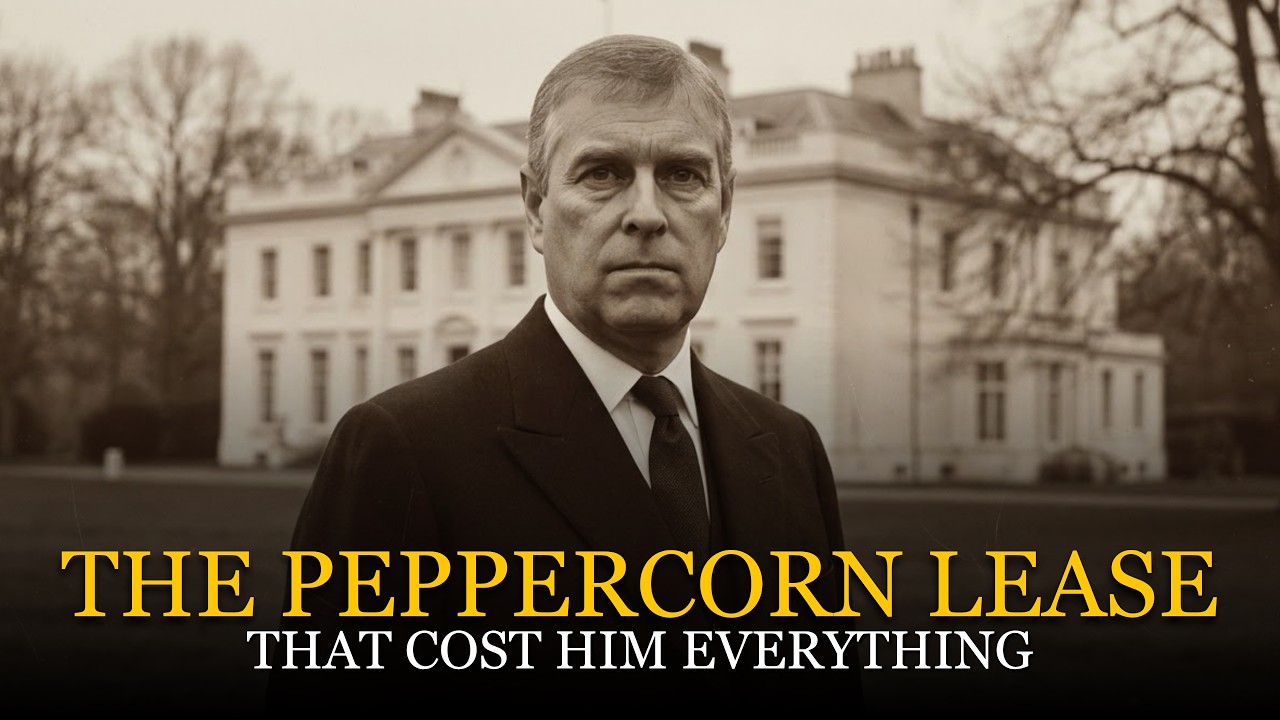
The next keeper of Royal Lodge was her grandson, Prince Andrew, the Duke of York. In 2002, he was a decorated Falklands War helicopter pilot, a working royal, and a trade envoy. He wanted the Queen Mother’s house, and he got it. In 2003, an arrangement was struck with the Crown Estate, the body that manages land and property held by the crown.
Andrew took Royal Lodge on a 75-year lease, running to 2078. He paid a lump sum of one million pounds, and thereafter his rent was set at one peppercorn a year, if demanded. A peppercorn rent is an old legal device, a token payment that makes an arrangement a tenancy while charging the tenant almost nothing. In exchange for these terms, Andrew agreed to undertake a major renovation of the house and to maintain it to a high standard.
He spent more than seven million pounds restoring the thirty-room house, making a total personal outlay in the region of eight and a half million pounds. The lease also contained protections that seemed formidable. He could not be evicted before it expired in 2078, and if he surrendered it within the first 25 years, he would be entitled to compensation for what he had put into the property. For a few years, the arrangement worked as intended.
Andrew lived at Royal Lodge with his family, and the business of the house was a private matter. But the friendship he had formed years earlier with Jeffrey Epstein, a financier later convicted as a sex offender, began to darken his standing. When the full scale of Epstein’s crimes became public, one accusation reached Andrew directly. Virginia Giuffre accused him of sexual assault, an accusation he has consistently and firmly denied.
What could not be denied was the friendship itself, and that association proved ruinous. By November 2019, Andrew agreed to sit for a televised interview about the scandal, believing he could clear his name. The interview was judged a disaster. Within days, he announced he was stepping back from public duties.
The work that had justified his privileges was gone, but the house remained. He still held Royal Lodge on his 75-year lease, still paying his peppercorn rent. The public noticed, and the public did not forget. The years that followed were a slow stripping away.
In January 2022, his honorary military affiliations and royal patronages were returned to the Queen. Shortly afterward, he reached a civil settlement with Giuffre without admitting liability. Still, he held the house. The lease said he could stay, and he stayed, year after year, through growing pressure and public contempt.
He was not living at Royal Lodge in comfort; he was besieged in it. The house that had once advertised his importance now advertised his disgrace. The year 2025 broke the stalemate. In April, Virginia Giuffre died.
Her death did not fade the scandal; it sharpened it. Further material connected to the Epstein affair emerged, including reporting of an email that appeared to contradict Andrew’s account of when he had cut off contact with Epstein. The public mood hardened past the point of mercy. The monarchy, unable to force him out through the lease, found another lever.
On October 17, 2025, Andrew announced he would no longer use his titles and honors. It was not enough. Thirteen days later, on October 30, King Charles III formally removed his brother’s royal titles and royal style. Andrew would no longer be a prince.
He would be known as Andrew Mountbatten-Windsor, and he would be required to leave Royal Lodge. On December 2, the London Gazette published the cancellation of his remaining honors: the Order of the Garter and the Knight Grand Cross of the Royal Victorian Order. Andrew surrendered the lease and gave twelve months’ notice, with the surrender set to take effect on October 30, 2026. But he did not wait out the year inside the house.
He vacated Royal Lodge in late October 2025, barely a year after the decision to strip him was announced. He was reported to be relocating to private accommodation on the Sandringham estate, supported by the king rather than paid for from the public purse. The man who had refused to move for a decade left almost at once once staying became impossible. The surrender brought a final financial blow.
Under the terms of his lease, Andrew was entitled to compensation for leaving early. The figure was precise: £488,342. 21. But the Crown Estate also stated that Royal Lodge had been left in poor condition.
It described the house in a single word: dilapidated. The cost of repairs and dilapidations would be assessed by experts, and once that cost was taken into account, Andrew would be owed nothing. The compensation entitlement was swallowed entire. The press estimated the repair bill at some five million pounds, a figure the Crown Estate has not confirmed.
What is certain is that the cost of putting the house right cancelled his payment completely. More than eight million pounds invested, more than twenty years lived within those walls, and at the end, no title, no honors, no house, and not a penny. The questions raised by the affair reached beyond the house itself. The terms of the lease, once private, became public knowledge and matter of formal investigation.
The National Audit Office and the Public Accounts Committee of Parliament began scrutinizing how the arrangement had ever been agreed. The peppercorn rent, the lump sum, the 75-year term, the compensation clause all became a case study in how crown land is handled on the public’s behalf. Members of Parliament demanded to know how such a deal had ever been thought reasonable. Royal Lodge now stands empty in its park, its future unsettled.
The Royal Chapel of All Saints still stands beside it, and the little Welsh playhouse remains in the grounds, having outlasted a queen, a reign, and a scandal. The house was not lost to war or death duties or the slow ruin of an old estate. It was undone by the disgrace of its keeper and the terms of an extraordinary lease. It was a house lent, never truly given, and it belonged to whoever proved worthy of it.
By that measure, the queen who died in it at 101 kept it forever, and the prince who lost it never truly owned it at all.