On a quiet Sunday in February 2024, the silence of the British aristocracy was shattered by a single gunshot in the Cotswolds. The tragedy did not strike the king, nor the heir, but the family of the most controversial woman to ever walk the halls of Kensington Palace: Princess Michael of Kent.
For 50 years, she was known simply as Princess Pushy, the villain of the Windsor soap opera who wore racist jewelry to meet Meghan Markle and allegedly told diners to "Go back to the colonies." She spent a lifetime building a fortress of arrogance, convinced that titles and tiaras were the ultimate protection against the chaos of the real world. But when her golden son-in-law was found dead by his own hand, that fortress collapsed from the inside.
This is not merely the story of a royal snob. It is the autopsy of a Greek tragedy, revealing how a woman who spent decades fighting to be the most important person in the room ended up standing alone in the wreckage of a grief she could not spin, could not control, and could not survive.
To find the source of the anxiety that drives the Princess Pushy persona, one must travel back to the smoldering ruins of Central Europe in 1945. Marie Christine was born in Carlsbad, in the Sudetenland, mere months before the collapse of the Third Reich. She arrived in a world that was ending.
Her father, Baron Günther von Reibnitz, was a Silesian nobleman, but he was also something else: a secret that would hang over Marie Christine's head like a guillotine blade for decades. He served as an officer in the SS Cavalry Corps, with some records listing him as holding the rank of major. While Queen Elizabeth II was driving ambulances for the Allied war effort, Marie Christine's father was an officer in the organization responsible for the darkest crimes in human history.
Marie Christine was born into displacement. As the Red Army advanced, the Reibnitz family fled, losing everything. The castles, the estates, the entire infrastructure of their nobility vaporized overnight.
The baroness did not grow up walking the grounds of an ancestral home. She grew up in the dust and heat of suburban Australia.
Following her parents' divorce, a young Marie Christine was taken by her mother to Sydney. She went from being a scion of European nobility to being the daughter of a hairdresser in a working-class neighborhood. Imagine the cognitive dissonance of a young girl who is told at the dinner table that she is a baroness, descended from kings and queens, but who has to go to school in a rough-and-tumble Australian suburb where no one cares about heraldry.
It bred a ferocious hunger in her. She felt like a queen in exile, a diamond wrapped in newspaper. It instilled in her a lifelong terror of being ordinary.
To be ordinary was to be poor, to be forgotten. To be royal was to be safe.
When she returned to Europe in her late teens, she was not just looking for a career or a husband. She was looking for a restoration. She arrived in London in the swinging '60s, but Marie Christine was not interested in the Beatles or the miniskirt revolution.
She was interested in the old world.
She stood out immediately. She was 6 ft tall, strikingly beautiful, and possessed a booming, authoritative voice that sounded more German than English. She worked as an interior designer, a job that allowed her access to the homes of the wealthy, where she could observe, learn, and replicate the codes of the upper class.
Her first attempt at securing her fortress came in the form of Thomas Troubridge, a banker from a prestigious British family. They married in 1971. It gave her a British passport and a foothold in society, but for Marie Christine, sensible was not enough.
She had a grander vision of herself.
It was during this period of marital dissatisfaction that she crossed paths with Prince Michael of Kent. Prince Michael was the Queen's first cousin, the younger son of the dashing Prince George, Duke of Kent, and Princess Marina of Greece and Denmark. He was not the heir, but he had the blood.
He was a grandson of King George V and Queen Mary.
But there were obstacles, massive constitutional obstacles. First, she was still married to Thomas Troubridge. Second, and perhaps more explosively, she was a Roman Catholic.
The Act of Settlement of 1701 specifically forbade anyone in the line of succession to the British throne from marrying a Catholic. If Prince Michael married her, he would automatically lose his place in the line of succession.
For Marie Christine, this dramatic hurdle only added to the romance. She pursued the annulment of her first marriage with a ferocity that stunned her lawyers, eventually securing it from the Pope himself. Prince Michael, utterly captivated by this whirlwind of a woman, agreed to forfeit his rights to the throne.
The wedding took place in Vienna in 1978. It was a civil ceremony followed by a ball. The Queen did not attend.
Prince Charles did not attend. The absence of the senior royals was a polite but icy signal from the establishment: We tolerate this, but we do not celebrate it.
This snub is essential to understanding the chip on Princess Michael's shoulder. She entered the family feeling already marginalized, already judged. It was this insecurity that birthed Princess Pushy.
Upon her return to London, she did not adopt the strategy of quiet assimilation. Instead, Marie-Christine decided to out-royal the royals. She insisted on being addressed properly at all times.
She adopted a style of dress that was more Versailles than Windsor: furs, capes, massive jewels. She spoke about her own lineage constantly, reminding anyone who would listen that she was descended from Charlemagne and Madame de Pompadour.
But the grand performance hit a very mundane reality wall: money. Prince Michael was a second son. He received no parliamentary annuity.
Yet the couple moved into apartment 10 at Kensington Palace, a royal residence that came with the status, but also with the expectation of a lifestyle they could not afford.
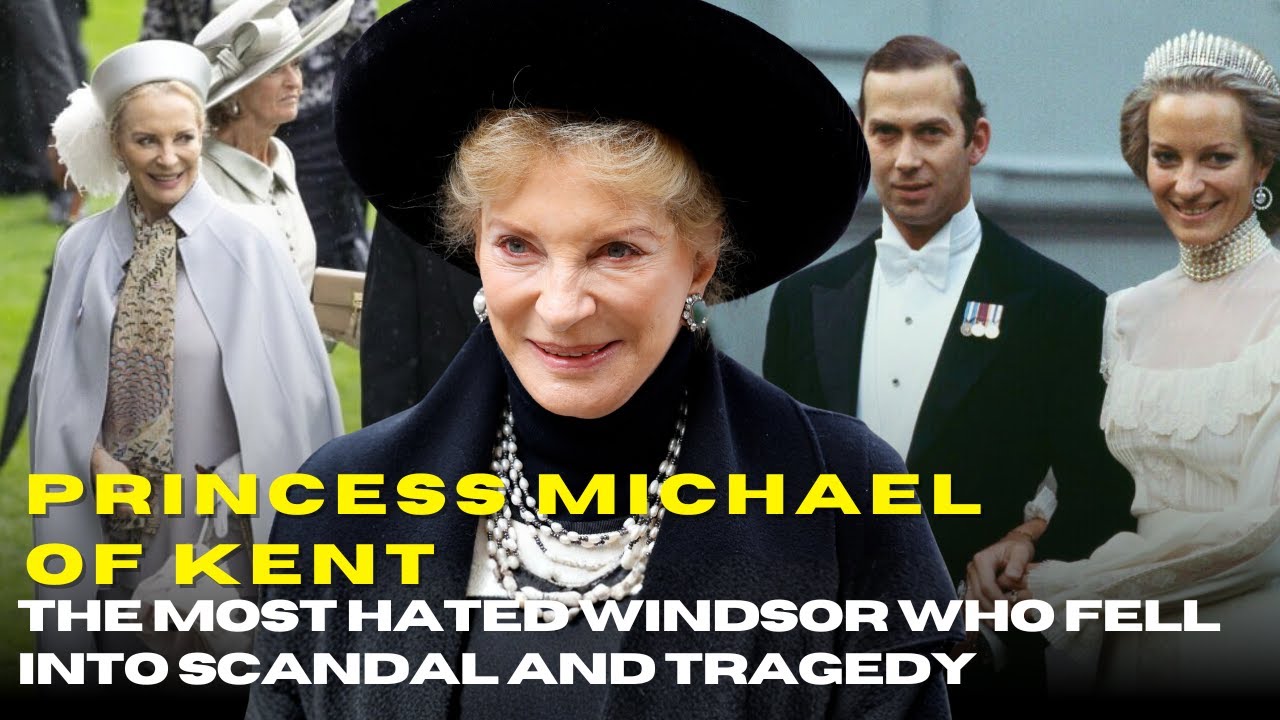
This is where the grift began. She monetized her title. She began writing books, histories of royal women, queens, and mistresses.
But along with the books came the favors. The Kents became known in London society as the couple who would attend the opening of an envelope if there was a free dinner involved.
This behavior horrified the Queen's courtiers. It was seen as vulgar, a dilution of the royal brand. But Marie-Christine didn't care.
She had bills to pay, and she was determined to live like a queen, even if she had to hustle like a commoner to do it.
By the mid-1980s, the Princess Pushy nickname had stuck. It was allegedly coined by Princess Anne, a woman who had zero patience for pretension. Stories began to leak out of the palace staff quarters.
They whispered of a woman who would snap her fingers at servants, who would throw tantrums if the car wasn't ready.
But the most damaging revelation of this era was the resurrection of her father's ghost. In 1985, the Daily Mirror published proof of Baron von Reibnitz's SS membership. For a member of the British royal family, the family that had stood on the balcony while London burned during the Blitz, to be the daughter of an SS officer was a PR nightmare.
Marie-Christine went on television to defend herself. In a famous interview, she wept. She claimed she hadn't known the extent of his involvement.
"My shoulders are broad," she said. "I shall have to carry it." But even then, the public sympathy was limited.
Yet she survived. She survived because in the 1980s and '90s, the royal family had bigger problems. The War of the Waleses was consuming all the oxygen.
The Kents were a sideshow.
As the new millennium approached, and the world became more sensitive to privilege and prejudice, Marie-Christine did not evolve. She stayed frozen in the amber of her own self-importance. She was walking toward a cliff edge, blinded by her own reflection in the mirror.
By the turn of the millennium, the protective membrane that had long shielded the minor royals from harsh economic realities had begun to disintegrate. The scandal that erupted in 2002 was about real estate. It was revealed that Prince and Princess Michael had been living in apartment 10 at Kensington Palace, a prime central London residence with five reception rooms and seven bedrooms, for a mere 69 pounds per week.
The revelation that the taxpayer was essentially subsidizing the housing of a couple known for their extravagant taste triggered a wave of populist fury. She was cast not just as Princess Pushy, but as Princess Freeloader.
The Queen stepped in, agreeing to pay the market rent for the apartment out of her own private income for a period of 7 years. For Marie Christine, a woman whose entire self-worth was constructed around the idea of her own grandeur, this was a bitter pill. She was being treated like a charity case.
This financial precarity fueled a new phase in Princess Michael's career: the era of the Rent-a-Kent. She became the president of a gallery, she consulted for luxury brands, and she continued to churn out historical novels. Every gala dinner she attended, every ribbon she cut for a fee, chipped away at the very exclusivity she prized.
The incident that would permanently alter her reputation and shift the narrative from snobbery to racism occurred in New York City. The date was May 2004. The venue was Da Silvano, a trendy Italian restaurant in Greenwich Village.
According to eyewitnesses, Princess Michael became increasingly agitated by the noise from a nearby table of African-American media executives and bankers. She slammed her hand on the table. Then, she allegedly turned to the group and shouted, "You need to quiet down.
You need to go back to the colonies."
The phrase "go back to the colonies" is not a generic insult. It is a specific, loaded weapon of colonial supremacy. The backlash was immediate.
The New York Post ran the headline, "Royal Bigot."
Princess Michael issued a denial, but it was a denial that only deepened the hole. She claimed she had not said, "Go back to the colonies," but rather, "You should remember the colonies," implying that during colonial times people had better manners.
In a disastrous attempt to clear her name, she agreed to a television interview on ITV. Trying to prove her lack of prejudice, she uttered the now infamous line, "I even pretended years ago to be an African, a half-caste African, but because of my light eyes, I did not get away with it. But I dyed my hair black."
She went on to say, "I traveled on African buses. I wanted to be a writer. I had this adventure with these absolutely adorable special people, and to call me racist, it's a knife through the heart because I really love these people.
These people."
The phrase hung in the air, patronizing, othering, and deeply revealing. She spoke of Africans not as equals, but as adorable subjects of her anthropological curiosity. She had proven that her racism was not the burning cross variety, but the paternalistic condescending racism of the old European aristocracy.
The colonies scandal of 2004 was a turning point. Before this, Princess Michael was a figure of fun. After this, she was a figure of toxicity.

She became radioactive. Yet remarkably, Marie Christine did not retreat. She viewed the criticism not as a valid moral judgment, but as the impertinence of the unwashed masses.
The arrival of Meghan Markle, a biracial American divorced actress, was the ultimate stress test for the Windsor establishment. The stage was set for the Christmas lunch of 2017. It was Meghan's first introduction to the wider clan.
Princess Michael, deciding on her outfit for the day, reached into her jewelry box. She chose a brooch. It was a piece of blackamoor jewelry, a style of decorative art from the 17th and 18th centuries that depicts African men and women, often in positions of servitude or exoticized submission.
To wear such a brooch to a lunch where you are meeting the first mixed-race member of the royal family was an act of breathtaking aggression. Whether or not it was intentional, wearing a blackamoor brooch to meet Meghan sent a message that millions found impossible to see as accidental.
The apology that followed felt hollow. Once again, she had proven that she was incapable of seeing the world through any lens other than her own outdated aristocratic monocle.
But while the public raged, a quieter, more corrosive reality was eating away at the Kent family from the inside. The scandals were loud, but the silence of their irrelevance was deafening. Princess Michael was becoming a relic.
Her health began to falter. In the early 2020s, she was struck down by COVID-19. Reports surfaced that she was suffering from blood clots and extreme fatigue.
The invincible baroness was mortal after all.
She retreated to the countryside, to her garden. She had her daughter, Lady Gabriella, who was the shining light of her life, a beautiful, well-adjusted woman who had married Thomas Kingston, a handsome financier, in a wedding that looked for a brief moment like a happy ending.
It seemed that perhaps the drama was over. But the fates were not done. They were simply waiting for the most devastating act of all.
In May 2019, the eyes of the world turned to St. George's Chapel at Windsor Castle for Lady Gabriella's wedding. It was the apotheosis of the old guard style: elegant, aristocratic, and steeped in quiet tradition.
For Princess Michael, this day was her masterpiece.
The Queen was there. Prince Philip made a rare appearance. The presence of the monarch was the ultimate signal of dynastic forgiveness.
For Marie Christine, watching her daughter walk down the aisle to marry Thomas Kingston, it must have felt like a vindication.
Thomas Kingston was, on paper and in person, the platonic ideal of a royal spouse. Handsome, with the chiseled jawline of a 1940s film star, he was a man of substance. A financier with a history in diplomatic relations, he had worked in Baghdad for the International Center for Reconciliation, negotiating the release of hostages.
To Marie Christine, Thomas Kingston was a dream realized. He validated her worldview. He was a man of the establishment, a man who understood the codes of high society.
The years following the wedding felt like an Indian summer for the Kents. Photographs from this era show a family that looks, for the first time in decades, genuinely at ease. Thomas Kingston had become a stabilizing force in the chaotic energy of the Kent household.
However, beneath the surface of this newfound peace, biology was beginning to extract its toll. Princess Michael contracted COVID-19 severely. The physical transformation was startling.
The woman who had always been a statue of Teutonic strength suddenly looked diminished.
This physical decline forced a psychological shift. For the first time, Marie Christine had to rely on others. Reports from the palace suggested a mellower Princess Michael.
It felt like the natural, quiet ending to a loud life. But the universe is rarely so neat, and the human mind is a labyrinth that even the highest walls of a palace cannot secure.
From the outside, the marriage looked stable and affectionate. Friends and family later told the coroner they had seen no obvious warning signs that Thomas was close to a crisis. But depression is a democrat.
It does not check the guest list before it enters the room.
Thomas Kingston was a man who had seen the darkest corners of the world in Iraq. As a successful financier and royal son-in-law, he inevitably lived under heavy expectations. One must always be on.
One must always be charming. The stiff upper lip is not just a cliché, it is a survival mechanism, and sometimes it is a prison.
Then came the date that will be etched into the history of the Kent family forever: February 25th, 2024. It was a Sunday. The location was the Kingston family home in the Cotswolds.
Thomas had visited his parents for lunch. It was a routine domestic scene. He simply told his father he was going to lock up the outbuilding.
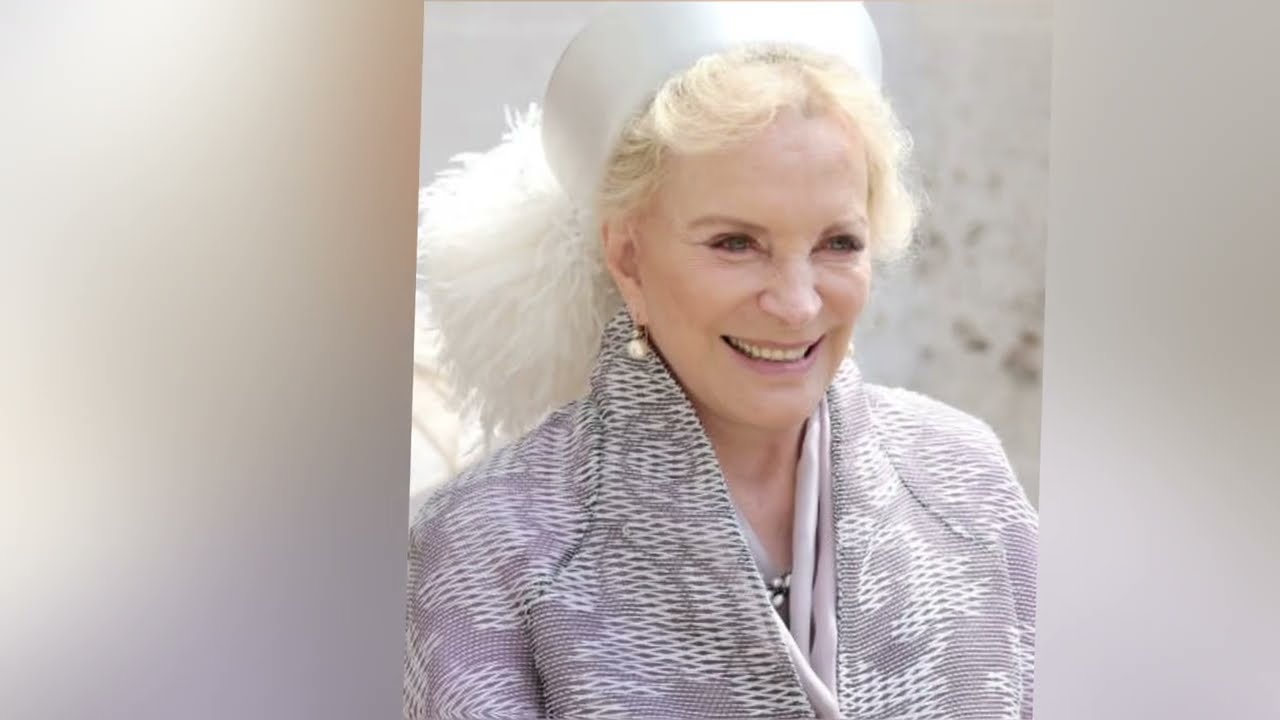
Minutes turned into an hour. His father went to look for him.
He found him in the outbuilding. A gun was found at the scene. Thomas Kingston, the golden boy, the survivor of Baghdad, the man who had seemingly won the game of life, was dead at the age of 45.
The cause of death was confirmed at the inquest: a traumatic wound to the head. Suicide.
The news hit Kensington Palace not as a ripple, but as a tsunami. For Princess Michael, the news must have been incomprehensible. She belongs to a generation and a class that views suicide as the ultimate taboo.
The days following the announcement were a blur of black morning dress and shell-shocked faces. But it was the image of Princess Michael that was most haunting. The woman who had spent 50 years perfecting the art of the haughty glare was suddenly looking at nothing.
The fire had gone out.
This tragedy did something that no scandal had ever achieved. It stripped her of her narrative control. You can spin a racist comment.
You can spin a rent scandal. But you cannot argue with a suicide. It is a full stop.
It forced the world to look at the Kents not as cartoons, but as human beings standing in the wreckage of a profound mental health crisis. She had spent her life trying to build a fortress of status to keep out the chaos of her childhood. She had finally built it.
And then, with one pull of a trigger in a Gloucestershire barn, the fortress collapsed from the inside.
The tragedy of Thomas Kingston recontextualized everything about Princess Michael's ambition. All the pushing, all the desperate grasping for precedence, all the anxiety about being royal enough. What did it matter now?
It hadn't saved her daughter from widowhood at 42.
The funeral of Thomas Kingston, held in March 2024 at the Chapel Royal in St. James's Palace, was a masterclass in the very specific suffocating discretion that defines the British upper class in moments of crisis. There were no television cameras, no cheering crowds.
There was only a small procession of black cars and the devastating sight of the coffin.
For Princess Michael, stepping out of the car into the gray London light, this moment marked the final irrevocable collapse of the world she had spent five decades constructing. She had spent a lifetime worrying about precedence, about who bowed to whom. And here, in the face of a wooden box and a grieving daughter, those concerns evaporated into the mist.
In the months that have followed the tragedy, a profound silence has descended upon apartment 10 at Kensington Palace. The frenetic energy that once defined Princess Michael has been extinguished. She is reportedly frail, her mobility limited, her days spent in the quiet company of her husband.
The Princess Pushy narrative has run out of road. There is nothing left to push against. The irony is Shakespearean.
She spent her life demanding to be seen. Now, in her moment of greatest human suffering, the world has finally looked away, not out of malice, but out of an awkward, respectful pity.
If we strip away the titles, the jewels, and the scandals, what remains? We see a woman who was running from the moment she left the dust of post-war Europe and the shame of her father's SS past. She treated the British monarchy not as a job, but as a bunker.
Her snobbery was the barbed wire she strung around the perimeter.
The racism scandals were the dark byproducts of this mindset. To maintain her sense of superiority in a world where she had no money and no real power, she had to believe in the inherent superiority of her blood. Her prejudice was the crutch that held up her fragile self-esteem.
Now, looking at the wreckage of 2024, we see the ultimate failure of that strategy. The royal status she worshipped offered no immunity against the darkness of mental health struggles. It did not protect Thomas Kingston.
The fortress she built didn't keep the danger out. It locked the danger in.
Lady Gabriella, the innocent bystander in her mother's opera, is now a widow at 43. Marie Christine must now look at her daughter and realize that the legacy she fought so hard to secure is cold comfort in the face of such loss. You cannot hug a coat of arms.
History will likely not be kind to Princess Michael of Kent. She will be remembered as a figure of controversy, a caricature of the wicked princess. Future historians will cite her as an example of the old world's resistance to the new.
But if they are diligent, they should also write about the fear. They should write about the girl from the shattered nobility of Germany who tried to reconstruct a fallen empire in a Kensington apartment. They should write about the mother who in the end stood by a grave stripped of all her pretensions, reduced to the universal heartbreaking common denominator of human suffering.
The story of Princess Michael is not a fairy tale, it is a ghost story. It is the story of a woman who spent her life haunting the corridors of power only to find that in the end she was the one being haunted. And the moral of her story is as old as the Greek tragedy she so resembled.
You can conquer the social ladder, you can marry the prince, and you can wear the crown, but you cannot outrun yourself.