For thirty-one years, a Raleigh County Sheriff’s Office patrol car drove past the white clapboard house at 114 Beckley Road twice a day. The route ran by it on the way to the shift briefing and again at the end of the day. It had been that way since 1992, the same year Deborah Lynn Sheets was found strangled in a drainage ditch less than two miles away. The man who lived in that house, Carl Ernest Blevins, was thirty-eight then.
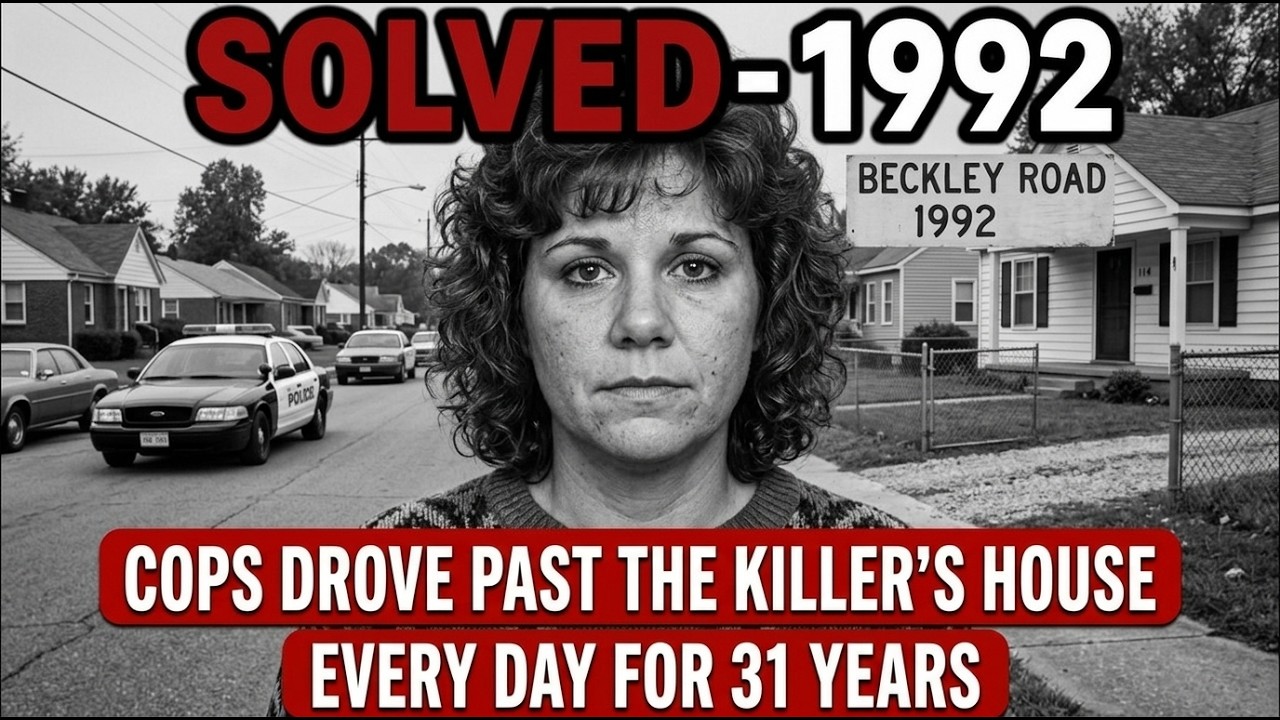
He was sixty-nine in 2023, when a detective submitted a preserved biological sample from the case to a genealogy database and received a result six weeks later that ended three decades of patrol cars passing a house where the answer had been living the entire time. Beckley, West Virginia, in 1992 was a city of about eighteen thousand in the heart of the southern coal fields. It had been built by coal and had spent the previous two decades navigating the industry’s contraction. Deborah Sheets had grown up in a holler community twelve miles outside the city, the youngest of five children.
She married Wayne Sheets in 1980, and they had two daughters, Tamara and Crystal. They lived in a rented house on a quiet residential street, three blocks from the Dollar General where Deborah worked part-time three days a week. Her manager, Paty Elkins, described her as the kind of employee you spent years trying to hire—reliable, pleasant with customers, precise with the register. She had turned down full-time work twice because the hours conflicted with her daughters’ school schedule.
On the morning of Thursday, May 14th, 1992, Deborah dropped Crystal at school at 7:40 and walked six blocks to work. She arrived at 7:53. She spoke briefly with Paty about the gray, cool weather, then went inside. Her shift ended at 1:00 in the afternoon.
She said goodbye to Paty at 1:15, took her jacket from the hook by the back office, and walked out the staff side door. She never arrived home. Wayne called the store when he got back from his route. He called the school.
He called neighbors. At 7:00 that evening, he called the Raleigh County Sheriff’s Office. Deputies dispatched immediately drove the six-block route between the store and the Sheets house three times. On the second pass, one officer turned down a side street behind a row of older commercial properties and found a drainage ditch along a slope covered in scrub pine.
Deborah Sheets was there. She had been strangled. Her jacket was over her shoulders. Her purse was gone.
The route from the store’s side door to the ditch was four and a half blocks—a shortcut someone who knew the area well would understand. Detective Sergeant Roy Dunar was assigned the case at 8:15 that evening. He was forty-four, with seventeen years on the job. He worked the scene until midnight, canvassed the commercial strip and neighboring blocks, and by the following morning had found two witnesses.
A man loading his truck behind a hardware store had seen a woman matching Deborah’s description walking toward the drainage area at about 1:20, accompanied by a stocky man in his mid-thirties to early forties in work clothes. A woman in her backyard had heard raised voices from the brush between 1:30 and 2:00 but had assumed it was kids. Physical evidence collected from Deborah’s clothing included biological material. In 1992, the state crime lab could extract only a partial profile.
The technology for a CODIS submission did not yet exist. The sample was preserved. Dunar developed six persons of interest in the first month. The witness description—stocky, mid-thirties to early forties, work clothes—fit a substantial portion of the adult male population in the area.
He narrowed it through proximity. Three men on adjacent streets had unverifiable accounts of their Thursday afternoon. He eliminated two through subsequent evidence. The third was Carl Ernest Blevins, who lived at 114 Beckley Road and worked intermittently in construction and general labor.
He said he had been home all afternoon. No witnesses, no receipts, no calls. Dunar interviewed him twice. Blevins was neither cooperative nor uncooperative.
He confirmed he knew the area, said he had not been near the Dollar General or the drainage ditch that day, and offered nothing more. Dunar noted him as not eliminated. The case file reflected it. The biological profile was submitted to CODIS in 1998 when the national database became operational.
No match. Blevins had no criminal record. Resubmitted in 2005. No match.
Resubmitted in 2012. No match. Dunar retired in 2001. Every time a new detective was assigned the case, he reviewed the Blevins notation and said the same thing: his home-alone account is the only thing he has.
If new technology develops, start with him. The new technology took longer than Dunar expected. But he was still alive in 2023 to receive the phone call. In 2022, the West Virginia State Police Cold Case Unit initiated a statewide review of unmatched CODIS profiles from unsolved homicides, submitting qualifying cases for forensic genealogical analysis through a partnership with the Attorney General’s Office.
The Sheets case was in the first batch. Detective Marcus Webb of the Raleigh County Cold Case Unit received the genealogical results in March 2023. The profile matched into a family network concentrated in Raleigh and Wyoming counties. He built the family tree over five weeks, eliminating branches.
One name remained: Carl Ernest Blevins. He was sixty-nine and still at 114 Beckley Road. Webb pulled Dunar’s case file and found the 1992 interview notes: home alone, no witnesses, account unverifiable, cannot eliminate. He found Dunar’s supplementary memo from 2001, addressed to his successor: start with Blevins.
He called Dunar, seventy-six and still living in Beckley, and read him the DNA result. There was a silence long enough that Webb asked if he was still there. Dunar said he had been waiting for that phone call for thirty years. “He’s still at the house?
” he asked. Webb said he was. Dunar said, “Of course he is. Where was he going to go?
”
A DNA sample was collected from Blevins through a discarded cup at a Beckley convenience store in April 2023. The state police forensic lab confirmed the match to the 1992 biological evidence in May. Carl Ernest Blevins’s DNA matched the material recovered from Deborah Lynn Sheets’s clothing on the evening of May 14th, 1992. On June 6th, 2023, four officers from the Raleigh County Sheriff’s Office drove to 114 Beckley Road.
They turned off Beckley Road into the gravel driveway for the first time in thirty-one years of driving past it. Blevins was on his front porch. He saw the vehicles turn in and stayed where he was. He watched the officers cross the yard, and when they reached him, he said, “I figured it was coming.
” He was handcuffed on the porch and charged with first-degree murder. He said nothing else. The community absorbed the arrest with the quiet heaviness of people who have carried something for a long time. Paty Elkins, now in her late seventies, told a local news station she had thought about Deborah’s side-door departure every time she worked a closing shift for the next thirty years.
She was glad they had found him. She said she had always believed they would. Roy Dunar attended the arraignment. Wayne and Crystal sat in the gallery on his right.
Tamara had driven from Charleston that morning and sat on his left. Dunar watched Carl Blevins enter the courtroom and enter a not-guilty plea. He said afterward that none of it felt the way he had expected. It felt like a debt being settled, not satisfaction exactly.
Settled. Crystal Sheets’s two children, a boy of twelve and a girl of nine, know their grandmother’s name. Crystal has made sure of it the way Wayne made sure Crystal knew. The boy knows what a Deborah was: someone who managed everything without making the management visible, who worked part-time because her daughters’ school schedule mattered more than a full-time wage, who walked six blocks to a job she was good at on a gray Thursday in May and did not come home.
He knows she would have been eighty-five now. He knows she never met him. He knows her name. The West Virginia Cold Case Genealogical Initiative has since submitted twenty-six additional unmatched profiles from unsolved homicides across the state.
Eight have returned actionable matches in the fourteen months since Deborah’s case broke. Roy Dunar’s instruction—start with Blevins—is now cited in West Virginia State Police training materials for cold case handoffs as an example of the value of a named, documented, undismissed person of interest left as a first instruction to the next detective. His memo survived four handoffs. It arrived at the right desk in 2022.
It did what he wrote it to do.