In April 1985, a Buckingham Palace spokesman delivered two sentences that contradicted each other in the space of a single breath. Princess Michael confirmed that it was true that her father had been a member of the SS. And she was completely surprised by this news. She had confirmed the story the Daily Mirror had just published, and simultaneously claimed she had no idea it was true.
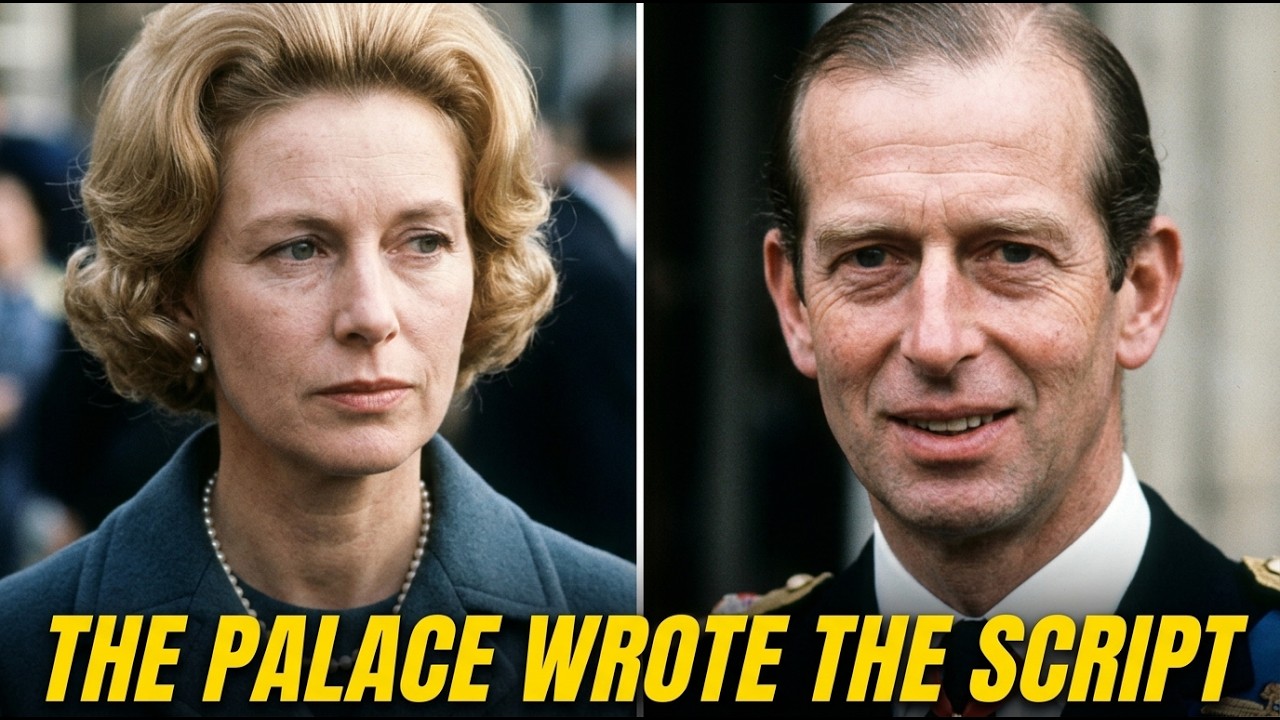
The palace had managed this marriage and its most dangerous secret for seven years, and this two-sentence statement was the moment the management finally slipped into public view. The historian Philip Hall had found the evidence years earlier at the Berlin Documentation Center while researching a book about the royal family. He found that Baron Günther von Reibnitz, Princess Michael’s father, had joined the Nazi Party in 1930 and the SS in 1933 on the recommendation of Hermann Göring, Adolf Hitler’s right-hand man. He rose to the rank of major.
When the Mirror published the files, Hall said it struck him that someone had been covering something up. The royal family had vetted Marie-Christine von Reibnitz before allowing Prince Michael to marry her in 1978. They vetted every potential spouse. Genealogists who examined the process afterward were explicit: the family had almost certainly found the SS files, found the Nazi Party membership, found the Göring connection, and approved the marriage anyway.
Prince Michael of Kent was born on July 4, 1942, at Coppins, the Kent family country house in Buckinghamshire. He was the third child of Prince George, Duke of Kent, and Princess Marina of Greece and Denmark. His father died six weeks later in an air crash in Scotland, leaving Michael to grow up at the edge of the institution rather than at its center. He was not a working royal in any practical sense; he was fifteenth in line to the throne.
He was educated at Eton and Sandhurst, served in the army for twenty years in Germany, Hong Kong, and Cyprus, and learned Russian through military intelligence training. That language would define the rest of his life. When he retired from the military in 1981, he had no institutional income. The center of the royal family received the civil list and official duties.
The edge received a title and a social world, but nothing to live on. He had to find another way, and that search produced the commercial consultancy, the Russian connections, and, years before that, the marriage. Marie-Christine von Reibnitz was born on January 15, 1945, in a town then part of the Greater German Reich, now in the Czech Republic. Her mother, Countess Maria Anna von Reibnitz, had been released from a Nazi prison camp on the day of her daughter’s birth, arrested for participating in an anti-Nazi demonstration.
Her father was being held as a prisoner of war. The contradiction inside her family was total: a mother imprisoned for opposing the regime her father served. The father had joined the Nazi Party in 1930, joined the SS in 1933 on Göring’s recommendation, and was dismissed from the SS in 1944 for writing to Himmler that he would choose the Church over the SS. He was tried by a denazification court in 1947 and classified as a lesser offender.
He then left for Africa, acquired two more wives, and spent the rest of his life at a considerable distance from his daughter. Marie-Christine grew up without him. Her mother took her to Australia, then to Austria and Mozambique. She arrived in London in her early twenties, studied the history of fine and decorative art at the Victoria and Albert Museum, and moved through a social world where her bearing, her appearance, and her intelligence made her someone who was noticed.
She married an English merchant banker in 1971. That marriage ended in annulment, granted by the Catholic Church in 1978, the same month the marriage to Prince Michael was arranged. The couple met in 1973. For five years, the palace assessed the match.
The Catholic faith was a legal problem; the Act of Settlement required Prince Michael to renounce his succession rights. The divorce was a problem; the abdication of 1936 had established what a marriage to a divorced person cost the institution. And the background was a problem; the vetting process found the SS files. Lord Mountbatten served as intermediary, managing the Queen’s reservations.
The marriage was approved. The ceremony was held as a civil service in Vienna on June 30, 1978, deliberately outside British jurisdiction and away from the full visibility of a London church wedding. Marie-Christine became Princess Michael of Kent, a title that replaced her own name, her own history, and her own formation. The nickname arrived before the decade was out: Princess Pushy.
She told an interviewer, I have more royal blood than any other bride or bridegroom who has married into the royal family since Prince Philip. She wrote books on European royalty, worked as an interior designer, and performed the role of a royal at the edge of the institution with formidable energy. The Queen found it difficult. She was not at the institution’s center, and she manufactured the visibility that the edge does not automatically provide.
The public funding question surfaced in 2002, when the House of Commons Public Accounts Committee discovered the couple was paying £69 per week in rent for their Kensington Palace apartment. The palace responded that the Queen was paying the commercial rate of £120,000 annually from her private funds, in recognition of the royal engagements they undertook at their own expense. They were not working royals, the palace insisted. They received no public funding.
They were supported by the Queen’s private money, by police security, and by the unmentioned costs of the royal engagements they performed. The committee called for eviction and market rent. Nothing changed. In 2004, Princess Michael was accused of telling a group of black diners at a New York restaurant to go back to the colonies.
She denied it, saying she had said she would be ready to go back to the colonies herself. In 2017, she arrived at the Queen’s Christmas lunch wearing a blackamoor brooch, a stylized image of a black man’s head, on the day Meghan Markle attended her first royal family Christmas. She apologized for causing offense. She kept two black sheep at her country property, named Venus and Serena.
In 2021, Channel 4 and the Sunday Times sent undercover reporters posing as South Korean gold investors to meet Prince Michael. He offered them his royal endorsement for $200,000 and his Kensington Palace home as a backdrop to impress clients. His business partner, the Marquis of Reading, explained the arrangement to the undercover reporters: We wouldn’t want the world to know that he is seeing Putin purely for business reasons, if you follow me. Prince Michael’s office responded that he had no special relationship with President Putin.
He said he had not been in contact with the Russian president since 2003. Buckingham Palace said it could not speak on his behalf, as he was not a working member of the royal family. The couple had two children, Lord Frederick Windsor and Lady Gabriella Windsor. Gabriella married the financier Thomas Kingston in 2019.
He died in February 2024 at age 45, found at his parents’ house in Gloucestershire from a self-inflicted gunshot wound. In the autumn of 2024, Princess Michael fell down a staircase at Kensington Palace while carrying several overcoats, breaking small bones in both wrists. She had heart surgery in 2023. In 2025, a friend told the Daily Mail she had suffered a stroke and was now bedridden.
Prince Michael attended a Christmas carol service at Westminster Abbey in December 2024 in a wheelchair, without his wife. The palace had written this marriage’s cover story before it began, approving it with knowledge of the SS files, the Catholic faith, the divorce, and the succession waiver. Then it managed each chapter as it arrived: the total surprise and total shock of 1985, the explanation rather than reform of the financial arrangements in 2002, the deep regrets about the brooch, the no special relationship response to the Putin sting. Each incident was handled as an isolated problem, never as a pattern.
The mechanism was always the same: the institution managed the information in the direction of its own presentation rather than the honest accounting. The palace knew in 1978 what the files in Berlin contained. It decided the marriage was worth managing anyway. The lesson of these forty-seven years was not that the marriage should never have happened.
The lesson was that the concealment cost more than the disclosure would have. A transparent account in 1978 would have produced a single day of difficult coverage. The concealment produced seven years of private management, then the 1985 revelation, then decades of managing the public record. The cover story ran for forty-seven years, and the final chapter was written not by the palace, but by the staircase, the stroke, and the wheelchair.
The institution continued to manage what it had never been able to unmanage, through the Queen’s private funds and the King’s private funds, the explanations and the continuations. And the cover story was still running.