In 1971, Bob Andren was forced to leave Vietnam while his wife, Linh, was six months pregnant. A 23-year-old Air Force sergeant from Haverhill, Massachusetts, Andren had arrived in Vietnam not with a weapon but with chalk and a blackboard. As an English specialist, he trained South Vietnamese pilots in language skills rather than combat. Yet he found himself swept up in the storm of war, both professionally and personally.
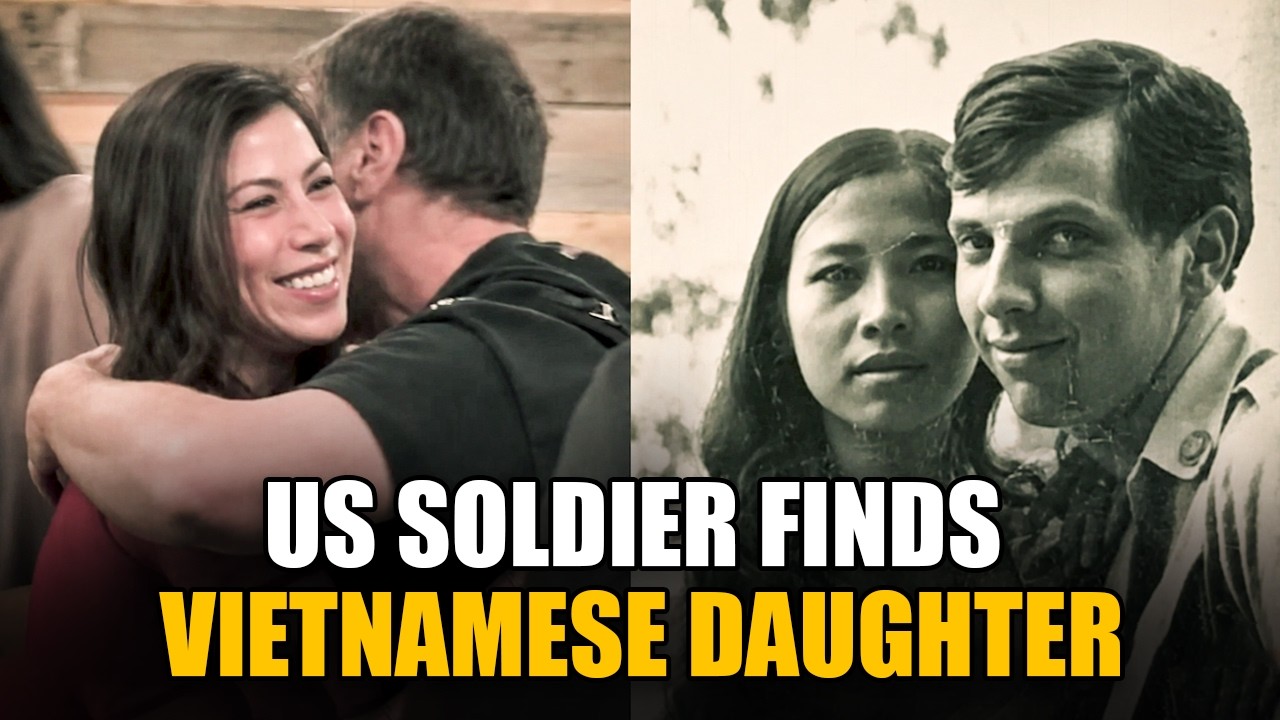
In the sweltering heat of Saigon in early 1970, the war may have dominated the headlines, but for a young American pilot and a gentle Vietnamese woman, love blossomed in quiet corners. Andren met Linh among the students, soldiers, and civilians moving through the base and the city. She was not just another face in the crowd. She carried a quiet gentleness, as if she had tasted life’s bitterness and its resilience.
Andren was drawn to her kindness, her intelligence, and the reassurance she gave him amidst the chaos of a foreign land drowning in war. Their courtship was brief but profound. Like many wartime love stories, their bond grew under the shadow of uncertainty. They married in Vietnam, not out of convenience or paperwork, but out of genuine love and a shared belief that beauty could survive even the harshest conditions.
But war does not wait for love. In January 1971, after a year of service, Andren’s time in Vietnam came to an abrupt end. The American withdrawal was underway, and he had to return home. At that moment, Linh was six months pregnant.
He had no control over the timing, nor over communication. Worse still, he left Vietnam without knowing Linh’s family name, a mistake that would cost him dearly. For more than fifty years, Andren lived with unanswerable questions. Was the child born?
Was it a boy or a girl? Did Linh survive? Did the child know he existed? Would they ever find him?
These were not fleeting thoughts but silent companions in his heart, always present, never answered. He searched and wondered for decades, but the fog of war had torn apart more than political ties. It had ripped apart the bonds of a young family. Meanwhile, in post-war Vietnam, Linh gave birth to a daughter named Linda.
Life was not easy for her. As an Amerasian child, she was one of tens of thousands of children fathered by American soldiers and left behind after the war ended. Many of these children faced discrimination, poverty, and a persistent sense of not belonging. Some were told little about their fathers; others were given only a name.
But Linda’s mother, Linh, kept a single photograph, a picture of a young girl who was Bob’s niece. That photograph was all she had, a thin thread connecting past to present. Linda grew up with a question that followed her throughout her life: Who was her father, and would she ever find him? For decades she searched for answers, hoping one day to uncover the truth about the man she had never seen.
Then, one day, the phone rang. On the other end of the line was Christie Maes, a genealogist who had dedicated herself to reuniting Vietnam War veterans with the children they had unknowingly left behind. She had been working with Linda, now a 51-year-old woman living in the United States, who had always believed her father was an American soldier. When Maes matched Bob’s name with Linda’s birth records, a spark of hope lit up both their lives.
Andren, now 77 years old and living a quiet life as an architect in Massachusetts, was cautious. He had hoped and dreamed, but he never expected this moment to arrive. Still, he agreed to speak with Linda. Their first phone call was not emotional at first; it was careful and measured.
Linda had questions; she needed to know the truth. She asked Andren about the name of the girl in the photograph that Linh had kept all those years. He answered without hesitation: it was his niece. She asked him about her mother’s name.
He answered without hesitation. Then she asked him one final question: what was his name back then, the name he had used before he became known as Bob? When he answered, the last barrier between them fell. They both knew the truth.
Linda had found her father, and Bob had found the daughter he had never stopped dreaming about. A few weeks after that phone call, just before Father’s Day 2021, Linda and Bob arranged to meet in person. They chose to share the moment with those closest to them: Linda’s partner, Phung, who was also of Amerasian descent and on his own journey to find his family, and Bob’s son, Lee, who had grown up as an only child. Lee filmed the reunion on Facebook Live, but what the camera captured was not for views or clicks.
It was history, memory, and healing, all combined into one tender, unforgettable moment. When Bob appeared, Linda froze in place. She was holding a notebook, perhaps as a crutch in case the moment became too overwhelming. But the moment she saw him, truly saw him, she dropped the notebook and rushed toward him.
They embraced with a passion understood only by those whom war and time have separated. They wept as they held each other, as if trying to reclaim every one of the fifty-one lost years. It was not merely a meeting; it was a resurrection. Since that day, their lives have intertwined in ways neither could have imagined.
Bob and Linda speak almost every day. Their conversations are not limited to the past but reach toward the future. They have shared family meals, birthdays, and quiet moments of rediscovery. Linda introduced her daughter Jenny to Bob, and in one of life’s remarkable gestures, Bob walked Jenny down the aisle at her wedding.
There, among the flowers and music, stood the man who had missed every birthday, every school play, and every scraped knee of his daughter’s life, now standing proudly beside his granddaughter, holding her hand. Redemption did not come through words but through presence. Most astonishingly, that wedding gave Bob the chance to meet Linh again, the woman he had married in Vietnam, the woman whose face he had not seen in half a century. There were no bitter words, no regrets, only a quiet acknowledgment of a love that had existed, and a family that had grown despite decades of silence.
As Bob prepared for the holidays, he looked forward to spending Christmas at Linda’s new home, a house she helped design, a detail that touches Bob deeply given his career as an architect. There is poetry in it: a father and daughter, both builders of homes, finally building a shared life together. Lee, once an only child, now delights in having a half-sister. Their relationship is smooth and natural, proof that blood may define kinship, but love gives it life.
Bob hopes that this reunion, this miracle, will inspire others to search anew, to open their hearts, to answer the phone when it rings with an unfamiliar voice. Reflecting on that first meeting, Bob said, “I think the pictures say it best. I was extremely happy. We hugged.
It was very special. It was amazing. She’s beautiful. She’s my daughter.
I’m so proud of everything she’s accomplished. ” Then, in the voice of a father who had waited his whole life to say it: “I fell in love with her at first sight. Because love, no matter how long it takes, always finds its way.
”