On April 15, 1945, British soldiers entered the gates of Bergen-Belsen concentration camp in northern Germany. What they found defied comprehension: thousands of unburied corpses, survivors reduced to skeletons, and a camp staff attempting to blend in with the prisoners they had tormented. Among those arrested was Franz Hößler, a man whose career in the SS had made him one of the most prolific executioners of the Third Reich. Yet when confronted by his interrogators, this man who had sent thousands to their deaths insisted he was merely a simple soldier, caught up in events beyond his control.
Hößler’s path to Bergen-Belsen began in 1906, in the town of Oberndorf. His childhood unfolded against the backdrop of the First World War, and his youth was shaped by the bitter nationalist resentments that gripped Germany in the years that followed. Like many of his generation, he absorbed the rhetoric that blamed the Weimar Republic, the Allies, and German Marxists for the nation’s humiliation and poverty. He left school without graduating and found work as a warehouse loader, but his true talents lay elsewhere.
He was a skilled photographer, and this skill brought him to the attention of the Nazi Party. In the early days of the Hitler regime, as Germany transformed into the Third Reich, the Nazis examined Hößler’s views and issued him a party card. He quickly became a cog in the punitive machine of Greater Germany, despite his later claims at trial that he had never shared Nazi ideology. Leaving Oberndorf behind, he moved to Dachau, drawn by the promise of a large salary, rations, and privileges.
He married a woman deemed a true Aryan, and soon three children were born. The Nazi state encouraged such prolific reproduction among its loyal followers. Hößler never served as a frontline soldier. Instead, he joined the SS, but in auxiliary units rather than combat detachments.
He rose to the rank of Oberstleutnant, advancing not through exceptional ability but through a simple willingness to follow orders without question. He did not ask what was right or wrong when SS superiors pointed at people in the streets of European cities and told him to shoot. He looked at humanity through a camera lens and through the sights of a weapon. The name of his first victim is lost to history; in those years, no one recorded the names of the dead.
But once he had committed his first murder, Hößler found that his conscience no longer troubled him. There would be thousands more. His first assignment as a guard was at Dachau, the camp built near the Bavarian town of the same name in 1933. Dachau was one of the first concentration camps, initially serving as a network of prison blocks for political prisoners.
In its first days, the SS brought in leftists, socialists, and communists, the only groups that had systematically opposed Hitler’s rise. Even some of the party’s own storm troopers ended up behind its barbed wire, those who had not been killed during the Night of the Long Knives. Dachau itself was built on the site of a former gunpowder factory, abandoned after Germany’s defeat in the First World War had forced the nation to cease weapons production. Hößler began as an overseer of all these opponents of the Nazi regime.
From Dachau, Hößler was transferred to Auschwitz, the largest concentration camp in human history. There he took charge of the kitchens. This position, which controlled the distribution of food, placed him in a position of near godlike power. It was within his authority to decide which prisoners would starve.
Hunger, at first, was his instrument of execution. When new transports arrived, Hößler greeted the prisoners with a speech that became routine. He told them this was not a resort but a labor camp. He spoke of soldiers risking their lives on the front lines for Germany’s victory, and said the prisoners would work for the benefit of a new Europe.
He promised medical care, generous pay, and fair treatment after the war. He instructed them to undress, hang their clothes on numbered hooks, and remember those numbers when they took a bath. A bowl of soup and coffee, he said, awaited them. He asked them to prepare their certificates and diplomas so that each could be assigned according to ability.
He even mentioned that diabetics who could not use sugar should report to the duty staff. Thousands of Jews from Holland and other European countries listened to these words and were led directly to the gas chambers. In addition to his kitchen duties, Hößler became head of the Auschwitz-Birkenau sub-camp, which served as a massive furnace for hundreds of thousands of Jews and Gypsies. He acted as a technical director, overseeing the transportation of unfit prisoners to the sites of secret mass murder.
This was referred to as Operation 14f13. In June of one year, he personally supervised the transport of 575 prisoners selected for disposal. Two months later, he supervised the construction of a sub-camp in the city of Fürstengrube. Later, as head of the Sonderkommando, he oversaw the excavation of 107,000 bodies so they could be burned in a newly built crematorium.
The Sonderkommando itself was composed of prisoners who, after completing their gruesome task, were also subject to disposal. Hößler supervised that as well. He also developed a directive in collaboration with two SS officers of equal rank, after which all three traveled to Chełmno, the oldest Polish extermination camp, to gain experience from a colleague there. In Chełmno, architect Paul Blobel had tested machine-gun systems for mass shootings, methods later used at Babi Yar, where tens of thousands of bodies were buried.
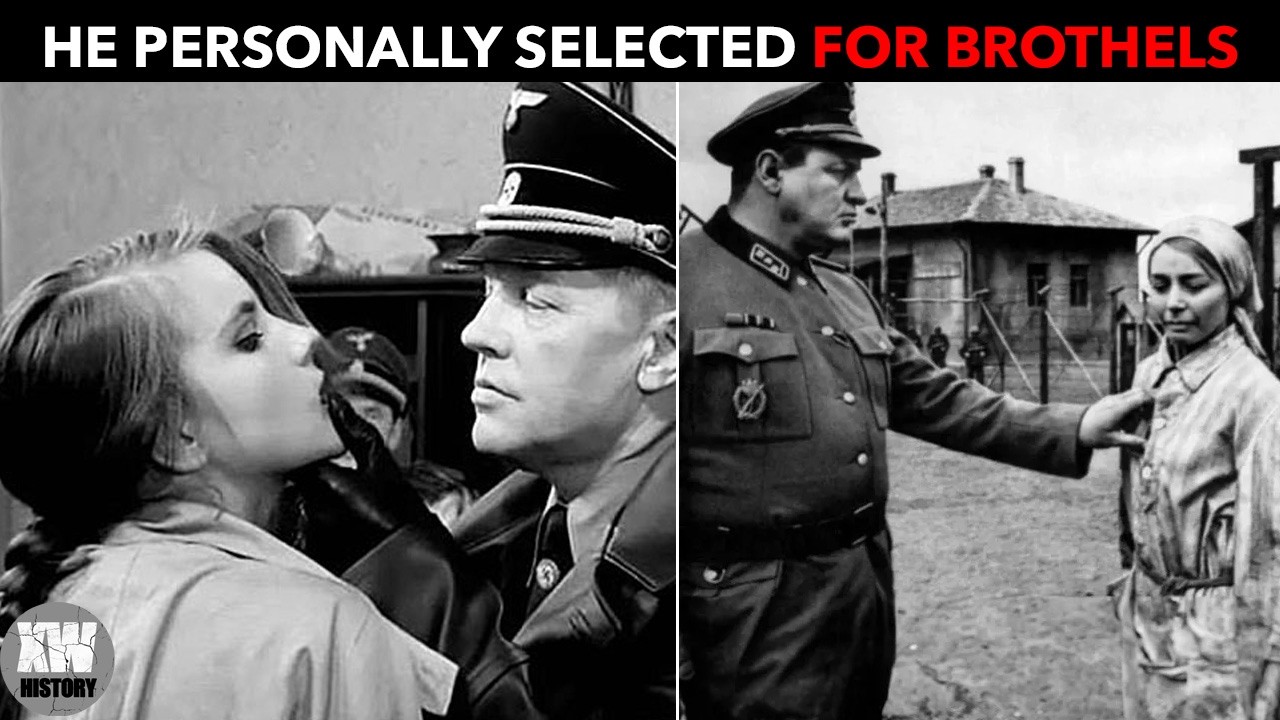
By January 1945, Hößler was serving as the bodyguard of Richard Baer, the commandant of Auschwitz, and head of the guard for the entire camp complex. Within Auschwitz, he commanded selections of women prisoners, choosing those with Nordic features, socialists, prisoners of war, resistance fighters, and criminals. These women were destined for brothels that served SS men. In this role, he replaced SS selector Paul Möller.
It was not the first time Hößler had decided who would escape the gas chamber at the cost of losing honor, health, and often life itself. His method for determining which prisoners were useless was brutally simple. Those suspected of infirmity, illness, malnutrition, or the consequences of beatings were pushed out of bed in the morning or pulled from work. Those who could not get up were recorded for disposal.
By 1945, the Nazis no longer had enough ammunition to shoot such people on the spot, and there was no need to carry corpses. The doomed prisoners themselves walked in uneven formation to the gas chambers, sometimes accompanied by music. As the Soviet army advanced, Hößler forcibly evacuated prisoners from Auschwitz to railway stations for transport to Bergen-Belsen, which was still functioning. During the last stage of the journey, prisoners were marched on foot for tens of kilometers.
Anyone who fell was shot with automatic fire, and the column continued without stopping. Hößler arrived at Bergen-Belsen on April 8, 1945. Located in the historical province of Hanover, the camp was convenient for transporting Jews from Germany, Belgium, Holland, and Denmark. As the right hand of the camp commandant, Hößler personally supervised the nonstop shooting of prisoners.
The SS planned to liquidate all those deemed unnecessary, after which the remaining prisoners were to be moved west. But they did not have time. British soldiers entered the camp on April 15. In the chaos of liberation, some guards changed into prison robes and attempted to blend in with the survivors.
Hößler did not even have time for that. He put on a camouflage uniform and denied any connection to the SS, claiming he was a simple soldier who had been confused with a man named Hößler. The British quickly received information from the true prisoners, and Hößler was thrown into a barracks with 43 other accomplices. The trial of the Bergen-Belsen staff took place in the camp itself, where the evidence of their crimes surrounded them, and witnesses were still alive.
These witnesses included not only prisoners but also kapos, prisoners who had gained privileges by cooperating with the camp administration, who were promised reduced sentences in exchange for testimony. Some of these collaborators were also under lock, accused of involvement in reprisals. Of the 133 collaborators brought into the courtroom, one was released because he was openly dying. Others did not live long either.
Typhus was rampant in the camp, some were shot while trying to escape, and others committed suicide. At the trial, Hößler’s defense rested on several acts of mercy. He claimed that young girls often came to him, begging for the release of sisters or friends held in Block 25, and that he had tried to save them by writing notes and crossing names off lists. He claimed to have saved several hundred people.
He insisted that he had nothing against the Jews and had risked execution for disobeying orders. He said he did not see how anyone mistreated prisoners. The court did not find these excuses sufficient. Witness after witness testified against him.
One woman testified that Hößler supervised the execution of four girls, having personally given the order to take their lives. The prosecutor presented testimony about his direct orders to send thousands of prisoners to the gas chambers. The tribunal found Hößler guilty and sentenced him to death by hanging. Along with his fellow convicts, he was required to participate in transporting the bodies of Bergen-Belsen prisoners to burial sites and to take part in the burial procedures.
Photographs exist of him standing against a cart piled high with dead bodies, a final documentation of his work. British executioner Albert Pierrepoint carried out the sentence on December 13, 1945, at the gallows in the prison in Hameln. Hößler and 43 other members of the Bergen-Belsen staff met their end there. As the trapdoor opened, the man who had sent thousands to their deaths without hesitation twisted and struggled in the noose for too long, desperately clinging to life.
Whatever final words he may have spoken were never publicly recorded. For the families of his victims, there was no mercy, no explanation, and no remorse. Only the hollow sound of a gallows in a German prison, and the knowledge that justice, however delayed, had finally been done.