Hans Kammler walked through Auschwitz in 1943 like a foreman checking a construction site. He pointed out flaws, demanded improvements, and complained that the new gas chambers were not being used to full capacity. The design called for 2,000 people per session. They were only killing 1,500.
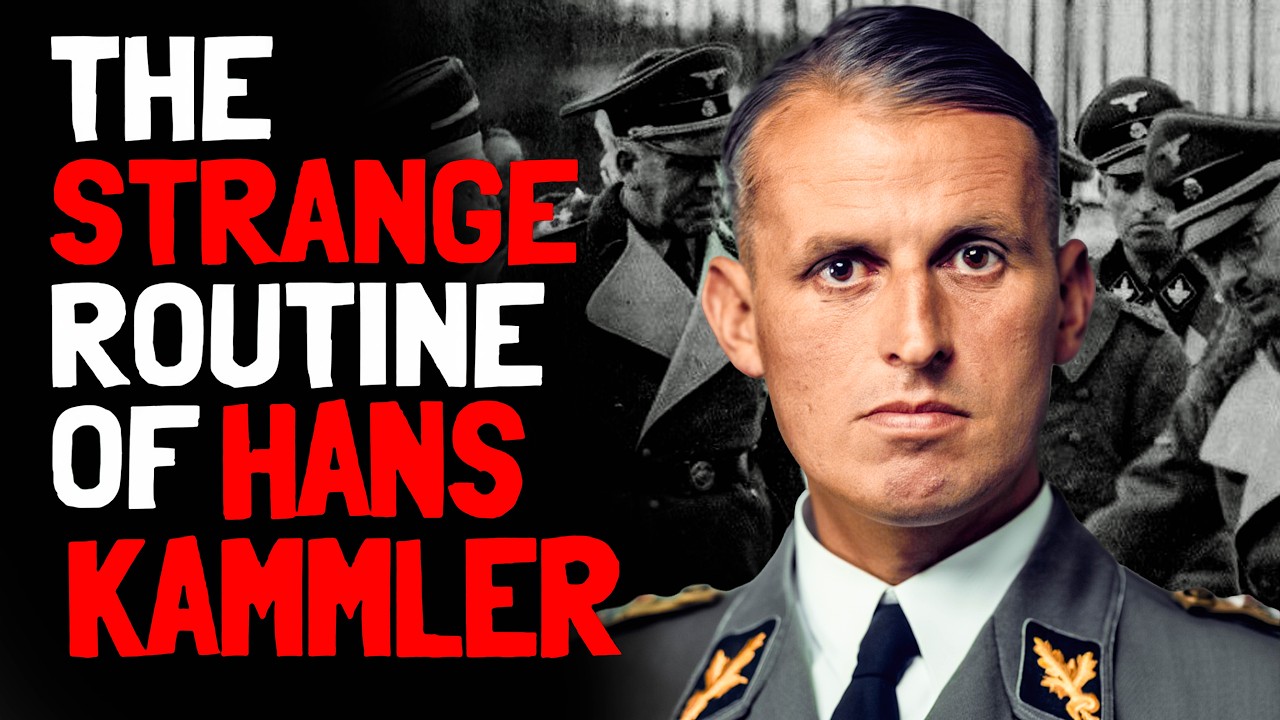
Survivors who saw him that day remembered a cold, businesslike figure who showed no emotion as he discussed the technical specifications of buildings designed for mass murder. He walked past emaciated prisoners without glancing at them. His attention was entirely on whether the construction was on schedule. This was not a man who saw himself as a monster.
Kammler was a technocrat, a civil engineer with a doctorate who approached genocide as a series of logistical problems. How do you kill thousands of people per day? How do you dispose of that many bodies? How do you build factories inside mountains using slave labor?
These were the questions that occupied his mornings. Born in 1901, Kammler joined the SS in 1933, just as the Nazis took power. He quickly proved useful by actually getting things done. While other officers talked and politicked, he built.
He constructed SS barracks, administrative buildings, and military installations with impressive speed. By the late 1930s, Heinrich Himmler had noticed this quiet, competent engineer who never complained and always delivered results. In 1942, Kammler was given responsibility for construction at Auschwitz-Birkenau, where over one million people would be murdered. The existing facilities were not efficient enough.
The gas chambers were too small. The crematoriums could not handle the volume of bodies. There were bottlenecks in the killing process. Kammler approached it like any engineering problem.
He analyzed the workflow, identified the inefficiencies, and designed solutions. He reviewed blueprints for new, larger gas chambers that could kill up to 2,000 people at once. He improved ventilation systems so Zyklon B gas could be introduced and removed more quickly. He designed crematoriums with multiple ovens that could operate continuously, burning bodies around the clock.
The new facilities included undressing rooms, underground gas chambers, elevators to lift corpses to the ovens above, and rooms where gold teeth could be extracted before cremation. Every aspect was planned for maximum efficiency. Kammler corresponded with companies like Topf and Sons, which manufactured the crematorium furnaces, negotiating prices and specifications as casually as someone ordering kitchen equipment. The surviving letters between his office and these companies are among the most chilling documents of the Holocaust because of how mundane and businesslike they are.
They discussed processing capacity and operational efficiency as if they were talking about a bakery, not an extermination facility. Kammler was hands-on with his projects. He did not just design these facilities from an office. He visited the camps regularly, walking through Auschwitz and Dachau, supervising modifications and work on the ground.
One survivor recalled him complaining that corpses were piling up in work areas, not because it was horrific, but because it was inefficient. He ordered better procedures for corpse removal so production would not be slowed down. By 1943, Kammler’s role expanded far beyond the concentration camp system. Hitler was desperate for wonder weapons that could turn the tide of the war.
Germany was losing, and the Führer believed advanced technology might save the Reich. Kammler was put in charge of the V2 rocket program, the world’s first long-range ballistic missile. This was cutting-edge technology decades ahead of anything the Allies had. But building these rockets required massive underground factories to protect them from Allied bombing, and building those factories required an enormous workforce.
Kammler’s solution was characteristically brutal. He used concentration camp prisoners as slave labor and worked them until they died. He oversaw the construction of Mittelbau-Dora, a vast complex of tunnels carved into mountains where V2 rockets would be manufactured. The conditions there were among the worst of any Nazi camp.
Prisoners, mostly brought from Buchenwald, were forced to dig tunnels into solid rock with minimal tools and no safety equipment. They worked 12-hour shifts, sometimes longer, in darkness and choking dust. There was no ventilation. The rock dust destroyed their lungs.
They slept in the tunnels themselves, never seeing sunlight. They were given starvation rations and beaten constantly by guards who demanded faster work. The guards called it the tunnel of death. In the first year of operation, nearly one in three prisoners died.
About 20,000 people died building and operating Mittelbau-Dora. More people died making the V2 rockets than were killed by the rockets when they were fired at Allied cities. The weapon killed about 9,000 people in its attacks on London and other targets. The factory that built it killed more than twice that many.
Kammler received daily reports on production numbers, which included casualty figures for the workforce. When he noticed that death rates were so high they were affecting production schedules, his response was not to improve conditions. He simply requested more prisoners from other camps. If you lose 100 workers per week, you need to bring in at least 100 new workers per week to maintain production.
Human beings were just numbers on his spreadsheets. Former prisoners who survived Mittelbau-Dora testified about Kammler’s visits. They described him walking through the tunnels, stepping over dead bodies, completely focused on technical problems and production quotas. One survivor recalled Kammler examining rocket components and becoming angry that the quality was not meeting specifications.
He could not understand why starving, dying prisoners working 16 hours a day in darkness might not produce perfect work. He blamed the prisoners for being lazy rather than recognizing that he had created conditions where quality work was impossible. What made Kammler particularly dangerous was his competence. He was not just evil, he was effective.
Other SS officers knew that if Kammler was assigned to a project, it would get done. He did not make excuses. He did not blame others for failures. He found solutions, no matter how brutal those solutions might be.
He believed in clear chains of command, regular progress reports, and measurable objectives. He kept detailed documentation of everything, including cost analyses showing how much it cost to kill each person. These documents, discovered after the war, provided prosecutors with an incredibly detailed paper trail of his crimes. Those who worked with him described Kammler as cold, but not cruel in the traditional sense.
He did not enjoy causing suffering. He simply saw human beings as resources to be utilized and discarded when no longer useful. This emotional detachment may have been more dangerous than sadism because it meant there were no limits to what he would do. By 1944, as Germany’s military situation became desperate, Kammler’s authority expanded even further.
He was given control over virtually all of Nazi Germany’s secret weapons programs, not just the V2, but also jet aircraft development and other classified projects. Some historians believe he may have been involved in Nazi nuclear research, though the extent of his role remains debated. What is certain is that by the final year of the war, Kammler controlled more advanced technology and held more secrets than almost anyone else in the Reich. As the war entered its final weeks in April 1945, Kammler was still frantically working on secret weapons projects, still believing that German wonder weapons might somehow change the outcome.
He had access to incredible knowledge about advanced technology. He knew about jet engines, rocket science, and possibly other classified programs that both the Americans and Soviets were desperate to acquire. And then Hans Kammler vanished. Unlike other top Nazi officials who were captured or whose deaths were documented, Kammler simply disappeared.
The official story provided by his driver and another SS officer claimed he committed suicide near Prague on May 9, 1945, just days after Germany’s surrender. But there are massive problems with this story. No body was ever found. No grave was ever located.
The accounts of his death contradict each other in significant ways. And Kammler does not fit the profile of someone who would kill himself. He was a pragmatist and a survivor. He would negotiate.
He would make deals. He would try to save himself. Multiple theories have emerged about what really happened. Some historians believe he was captured by American intelligence and given a new identity in exchange for his knowledge about rockets and advanced weapons.
Operation Paperclip brought hundreds of Nazi scientists to America, many with horrific pasts. Wernher von Braun, who worked directly under Kammler on the V2 program and knew all about the slave labor, became the father of the American space program and a national hero. If the Americans were willing to overlook von Braun’s complicity, would they have hesitated to protect Kammler if he had valuable enough information? Others suggest he escaped to South America like Adolf Eichmann and Josef Mengele, living out his life under an assumed identity.
He would have had the resources and connections to facilitate such an escape. Still others believe the SS killed him themselves to prevent him from falling into Allied hands with all his secrets. The mystery remains unsolved to this day. Various investigations by German authorities, American intelligence, and independent researchers have failed to definitively determine Kammler’s fate.
He remains one of World War II’s most enduring mysteries, a ghost who may have escaped justice entirely. Kammler represents a particular form of evil, the evil of bureaucracy, of efficiency, of treating morally catastrophic decisions as mere technical problems to be solved. Hannah Arendt, the political philosopher who observed Eichmann’s trial, coined the phrase the banality of evil to describe this phenomenon. Eichmann, like Kammler, was not a monster in appearance or demeanor.
He was a bureaucrat who organized train schedules and logistics. The fact that those trains carried people to death camps was, in his mind, simply part of his job. Kammler took this even further. He did not just facilitate genocide.
He optimized it. He made it more efficient. He woke early every morning, maintained the discipline of a military engineer, and believed in punctuality, order, and efficiency. He was not interested in luxury or indulgence.
Food was merely fuel for the day ahead. By 6:30 a. m. , he was dressed in his perfectly pressed SS uniform, ready to begin another day of overseeing industrial-scale murder and slave labor.
He was calm, organized, and effective. And that made him in many ways more disturbing than the obvious monsters of the Nazi regime.