The marriage of Prince Charles and Princess Diana was presented to the world as a fairy tale. A future king, a young and beautiful princess, and a union that seemed designed to secure the monarchy’s future. But behind the palace walls, the relationship was unraveling from the start.
Charles was not merely unhappy with Diana. He was developing a deep resentment toward her, and the reasons went far beyond the presence of another woman.
From the outside, they appeared to be a perfect balance. He was the heir to the throne, trained from childhood to carry the weight of duty. She was young, elegant, and emotionally open, capable of bringing warmth to a distant institution.
Together, they seemed to complete each other. But the reality was that they entered the marriage expecting completely different things.
Charles had been shaped by a world where personal feelings came second. Duty came first. Tradition mattered, restraint mattered, and problems were contained rather than exposed.
Emotion was something to master, not surrender to. He assumed any woman joining his life would eventually learn to live by those same rules.
Diana was different. She did not simply want the position. She wanted the marriage behind it.
She wanted reassurance, affection, and the feeling that her husband would protect her when royal life became overwhelming. She was expressive where Charles was guarded, instinctive where he was controlled, and emotionally direct where he often retreated into silence.
During courtship, those differences could remain hidden behind distance and ceremony. Marriage changed that. Suddenly, there was nowhere for the mismatch to disappear.
Diana expected Charles to notice when she was frightened or lonely. Charles expected Diana to adapt without constantly needing reassurance. Each began waiting for something the other did not naturally know how to provide.
That frustration slowly hardened. Diana interpreted his distance as rejection. Charles interpreted her emotional needs as pressure.
Neither reaction solved the original problem. Instead, every disappointment made the next one more painful.
The deeper mystery, however, lies in what Diana represented. Her resentment may not have grown because Diana failed inside royal life. The opposite may have been true.
She possessed an instinctive ability to connect with people that could not be taught through protocol or inheritance. At first, that gift may have seemed harmless. It would not remain harmless for long.
Once Diana stepped before the public, Charles discovered that the young woman he believed would stand quietly beside him was capable of something the future king could never fully control. Charles had been prepared from childhood to become the center of royal attention. Then Diana walked into a room and suddenly photographers turned away from the future king.
Crowds screamed her name. Headlines celebrated her.
What seemed like public affection soon exposed a private wound Charles could no longer hide. Diana’s appeal looked like an advantage for the monarchy at first. She had warmth, vulnerability, and a natural way of making people feel noticed.
She smiled easily, reacted openly, and connected with ordinary people in a way that felt immediate rather than rehearsed.
That quality became powerful very quickly. Crowds were not simply waiting for the royal couple. Many were waiting for Diana.
Reporters followed her expressions. Newspapers studied her clothes. Commentators praised her instincts.
Charles could stand beside her discussing serious causes he had spent years trying to understand, yet the next day’s headlines could still belong almost entirely to his wife.
That imbalance carried a deeper sting because Charles had been raised to believe that his position naturally commanded attention. He was not merely another royal. He was the heir.
His entire life had been built around preparation, duty, and the belief that one day the institution would revolve around him. Yet now in public, the emotional center seemed to be shifting.
Diana did not necessarily create that rivalry. Her popularity appeared spontaneous. She was not required to announce herself as the star because the public had already decided.
But every comparison added pressure. Whenever journalists described her as modern, fresh, compassionate, or the future of the monarchy, Charles risked being cast as the opposite: distant, stiff, and trapped in another age.
That comparison could turn admiration into humiliation. The more Diana was loved, the more Charles may have felt measured against her. Her success did not simply raise her profile.
In his mind, it may have reduced his own. He could begin to see her popularity not as something they shared, but as something that weakened his authority inside the marriage and outside it.
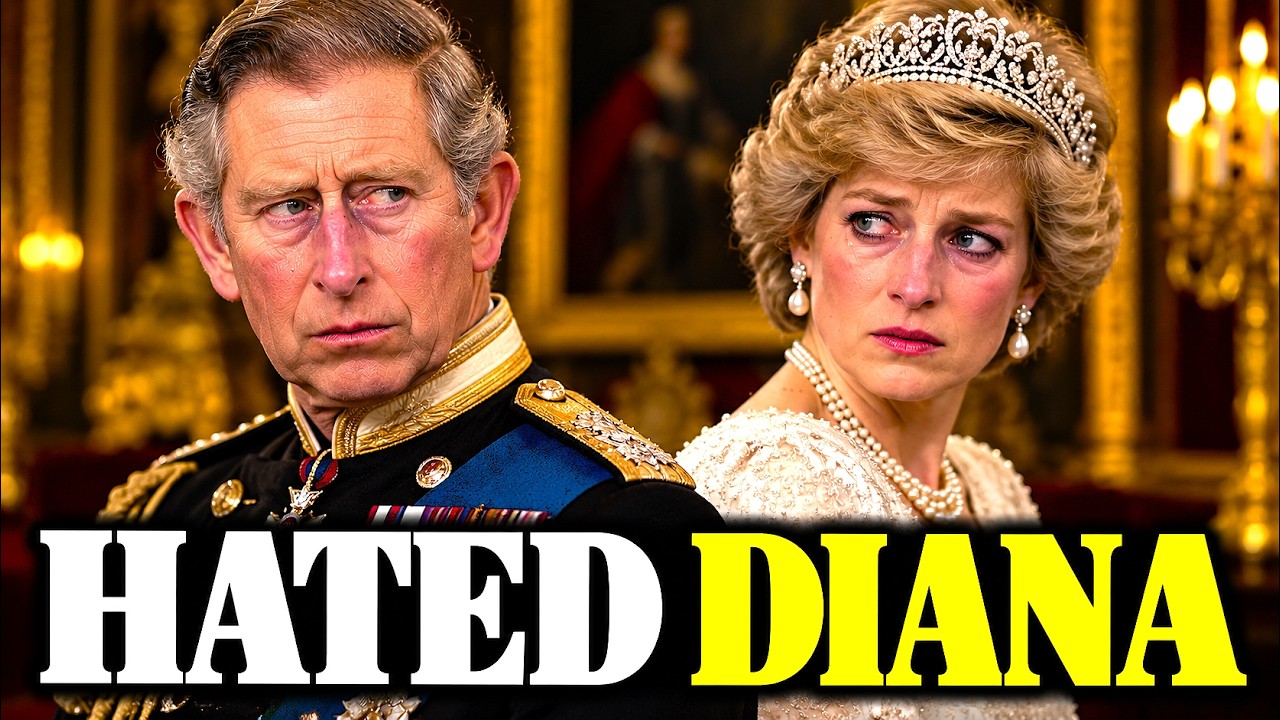
Once that feeling took hold, every public appearance carried a hidden tension. Every cheer for Diana could sound like a judgment on Charles. Every flattering headline could feel like another reminder that the crown he would inherit could not guarantee affection.
But popularity alone did not create the deepest fracture. Diana was beginning to question something far more sacred than Charles’s public image: the very rules that had shaped him since birth. Her greatest offense may not have been breaking royal protocol.
It was refusing to disappear inside it.
The palace expected discipline, silence, and emotional control. Diana wanted affection, honesty, and reassurance. Every time she resisted the old rules, Charles was forced to confront the system that had shaped his entire identity.
For Charles, emotional restraint was not necessarily coldness. It was duty. He had been taught that royal life demanded control, especially when private feelings threatened public responsibility.
Complaints were contained. Pain was carried quietly. Personal needs were expected to bend around the larger institution.
Diana experienced the same system very differently. The schedules, expectations, and constant pressure could make royal marriage feel more like an assignment than a partnership. What she wanted from Charles was simple in theory but difficult inside that world.
She wanted reassurance. She wanted to know that when the palace felt overwhelming, her husband would become the one place where she did not have to perform.
But the more intensely Diana asked for emotional closeness, the more Charles appeared to withdraw. He could interpret her distress as pressure or unpredictability. Diana could interpret that withdrawal as proof that he did not love her enough to understand what she was going through.
That created a brutal cycle. The more rejected she felt, the harder she reached for reassurance. The harder she reached, the more trapped Charles could feel.
Soon, their arguments were no longer about one conversation or one misunderstanding. They were fighting over what a marriage was supposed to be. Charles seemed to believe stability came from restraint.
Diana seemed to believe intimacy required honesty, even when that honesty was uncomfortable. And Diana increasingly refused to play the polished royal wife while privately feeling ignored.
That resistance made her dangerous to the old system. She was not willing to smile endlessly through emotional pain simply because silence protected the institution. Charles, however, could begin to see that very openness as a threat to the structure holding royal life together.
Their conflict had become symbolic. He represented discipline inherited across generations. She represented emotion that refused to stay hidden.
Hanging over all of it was another presence. Camilla Parker Bowles represented familiarity, understanding, and a version of Charles that required less explanation. Diana could sense that emotional refuge existed somewhere beyond her.
Once that suspicion hardened, the marriage would never feel like a struggle between only two people again.
To Diana, Camilla represented betrayal. But to Charles, she may have represented something even more powerful: acceptance and a life where he did not need to explain himself. With Diana, conversations could become charged with questions and demands for reassurance.
With Camilla, Charles could retreat into familiarity. The more difficult his marriage became, the more powerful that refuge may have seemed.
Diana felt the imbalance. She could sense that some part of Charles remained emotionally beyond her reach. That knowledge cut deeper than ordinary jealousy.
She pushed harder for honesty. But every demand for answers could make Charles feel cornered. What Diana saw as a desperate attempt to save the marriage, he could experience as another confrontation waiting for him behind closed doors.
Slowly, each woman came to represent a different life in Charles’s mind. Diana symbolized duty, expectation, and the pressure of being watched. Camilla symbolized privacy and the comfort of an older emotional language.
That distinction was devastating for Diana because she had never designed the royal arrangement she was expected to inhabit. Yet she could begin to feel as though she were being blamed for it.
Charles’s frustration could deepen for the same reason. Diana became tied in his mind to the obligations and scrutiny he felt trapped by. The more trapped he felt, the more resentment could attach itself to the person standing closest to him.
This triangle was no longer staying private. Diana’s pain was becoming visible, and once the public began to sense who was hurting most, the balance of power started to shift. For years, royal marriages survived behind silence.
Diana changed that forever. Her pain did not remain locked inside palace rooms. It entered the public imagination.
Suddenly, Charles was not simply an unhappy husband. He was being cast as the man who had wounded the most beloved woman in Britain. Public sympathy began moving strongly toward Diana.
People did not know every private argument, but they could sense unhappiness. Diana’s openness made that unhappiness feel real.

The palace responded in the language it had always trusted: restraint, distance, and carefully controlled words. But silence no longer protected the institution. It created space for speculation.
The less the palace explained, the more the public filled in the gaps, and Diana’s visible pain gave those suspicions an emotional center.
Charles found himself trapped inside a story he did not fully control. To him, the marriage was complicated, filled with misunderstandings and resentment on both sides. But the public version was becoming much simpler.
Diana was the wounded princess. Charles was the cold husband. That simplification could feel deeply humiliating.
He was being judged by millions of people who had never heard the private conversations or felt the pressure of royal expectations.
Diana, meanwhile, discovered something powerful. Inside the institution, Charles held rank and formal authority. But outside it, Diana had emotional credibility.
When she appeared vulnerable, people listened. When she seemed hurt, they believed that pain meant something. Their struggle was no longer only about love or betrayal.
It was becoming a contest over credibility. Whose version of the marriage would survive?
Charles could now see a danger larger than divorce. Diana had the ability to shape how the public judged him before he ever became king. Every new headline could influence the future image of the monarchy itself.
What had begun as emotional incompatibility was now becoming a battle over reputation, legitimacy, and the future image of the crown.
By this point, love was no longer the only thing collapsing. Control was collapsing too. Private conversations carried political consequences.
Public appearances became tests of loyalty. Charles and Diana were no longer simply husband and wife. They were becoming rival centers of royal influence.
Almost everything now carried a second meaning. A schedule change could feel like a deliberate slight. A public engagement could become proof of who mattered more.
Years of disappointment had destroyed the benefit of the doubt. Small disagreements no longer stayed small because both were carrying the weight of everything that had happened before.
There was one boundary neither could ignore: William and Harry. Whatever anger existed between their parents, both understood that the conflict now touched their children. Parenthood prevented the marriage from becoming a simple battle with a clean winner.
The struggle over public identity only intensified. Charles could fear Diana becoming permanently recognized as the monarchy’s emotional heart, leaving the future king trapped in her shadow. Diana could fear that giving way quietly would erase her voice.
That was the cruelest trap. Their royal positions, once meant to unite them, now made escape harder. An ordinary couple might separate and retreat into private lives.
Charles and Diana could not.
When the palace finally accepted that the marriage could no longer be preserved, separation did not end their conflict. It removed the final barriers containing it. Charles may have believed separation would finally bring relief.
Instead, it gave Diana something the palace had spent years trying to contain: freedom.
Without the daily restrictions of marriage, her voice grew stronger. Her image became more independent. She was no longer seen only as the unhappy wife trapped inside a failing royal marriage.
She began to emerge as a public figure in her own right. She could shape her own appearances and choose the causes she wanted to support.
That freedom made her even more compelling to the public. For many people, Diana now appeared to represent escape from an institution that had wounded her. Her independence turned private suffering into a larger story about survival.
Charles faced the opposite problem. He was still the future king. He could not simply reinvent himself without consequence.
Every decision remained tied to the crown and the expectations surrounding his eventual reign. Diana could move with growing personal freedom, while Charles remained bound to the system that had shaped him from childhood.
That imbalance was dangerous. Diana’s humanitarian work deepened her emotional connection with the public. Charles, meanwhile, faced a painful paradox.
The further Diana moved away from palace control, the more powerful her symbolic influence seemed to become. Even his relationship with Camilla came under harsher judgment because the public now compared it directly with Diana’s pain.

The story was no longer simply about a marriage that had failed. It was about who had suffered, who had escaped, and who seemed responsible. For Charles, that meant Diana could still shape his future even after their relationship had broken apart.
He could separate from Diana, but he could not separate himself from the public stories surrounding her.
Then Diana did what generations of royal spouses had been trained never to do. She allowed the world to hear the emotional truth of the marriage in her own words. For Charles, the greatest humiliation was no longer that his marriage had failed.
It was that Diana could explain that failure to millions before he could reshape the story.
Diana’s willingness to speak about loneliness, betrayal, and emotional pain shattered one of the oldest protections surrounding royal life: silence. For generations, private suffering had been contained behind duty and protocol. Diana refused to keep carrying that burden quietly.
She gave language to feelings the institution preferred to leave unspoken.
That changed everything. The monarchy suddenly faced a problem it was not built to handle. Personal pain was competing directly with institutional dignity, and dignity was no longer automatically winning.
Diana’s openness made people feel that they were hearing something real. Her words were emotional, imperfect, and deeply personal. But that was exactly why they carried so much power.
For Charles, the consequences were enormous. The failures of the marriage could no longer be separated from his future role. What had happened between two people was now being judged as evidence about the character of a future king.
The deeper contrast between them became impossible to ignore. Charles had survived royal pressure by containing emotion. Diana survived it by expressing emotion.
He relied on discipline. She relied on openness. He trusted structure.
She trusted connection. The very qualities that made Charles feel responsible and controlled could make him appear distant beside a woman who spoke directly about pain.
That is why his anger could not be explained by jealousy alone. Camilla mattered. Their incompatibility mattered.
But Diana had exposed something even more threatening. A crown could provide status and authority, but it could not force people to love the person wearing it. Diana proved that emotional loyalty worked by different rules.
She had no constitutional power equal to Charles, yet she could command extraordinary affection. She represented an alternative kind of royalty, one built less on distance and inherited authority and more on emotional connection.
That leads to the most uncomfortable explanation of all. The quality Charles may have resented most in Diana was precisely the quality the world loved her for. The shocking reason was never simply another woman.
It was never only jealousy. Diana represented something Charles could neither inherit nor command: emotional connection without royal authority.
The more naturally she reached people, the more she challenged the system that had taught Charles his position alone would secure loyalty and respect. He had spent his life mastering restraint. Diana succeeded through almost the opposite qualities.
She was spontaneous, emotionally open, and willing to show feelings the monarchy had traditionally hidden.
Her popularity challenged the very logic Charles had been raised to trust. He had inherited position and the promise of a crown. Diana had none of his constitutional authority.
Yet millions seemed to respond to her more instinctively. She proved that the public could respect the monarchy while emotionally separating the institution from the man destined to lead it.
That was a frightening kind of power. Diana did not need command to create loyalty. She did not need rank to create affection.
And because that connection could not be ordered or inherited, it was almost impossible for the royal system to control.
Charles’s resentment then becomes more complicated than simple hatred. It could contain wounded pride, jealousy, guilt, emotional exhaustion, and the constant anxiety of being measured against someone whose strengths exposed his weaknesses. Camilla may have been the most visible fault line, but the deeper fracture was about identity.
Charles felt safest in a traditional world of restraint. Diana was changing that world simply by being herself.
That was Diana’s tragedy too. The qualities that made her difficult for the institution to manage were the same qualities that made people feel close to her. And Charles’s tragedy was that he may have seen those gifts as threats because they highlighted emotional qualities he had never been taught to display.
In the end, they entered the marriage needing different things. Diana needed reassurance, closeness, and emotional protection. Charles needed stability and a partner who could live comfortably inside the system that defined him.
Neither could fully give the other what was required, and the monarchy magnified every weakness until affection became resentment.
Diana’s influence survived because titles could never control love. Beneath the crowns, scandals, and betrayals was a far more human tragedy: two people trapped inside expectations powerful enough to turn love, duty, jealousy, and fear into history.