In May 1977, nineteen-year-old Harold Wayne Lovell, who went by his middle name Wayne, argued with his mother and stepfather in their Chicago home, then left. He never returned. His family assumed he would find construction work, cool off, and eventually get in touch. A year and a half later, in December 1978, John Wayne Gacy was arrested.
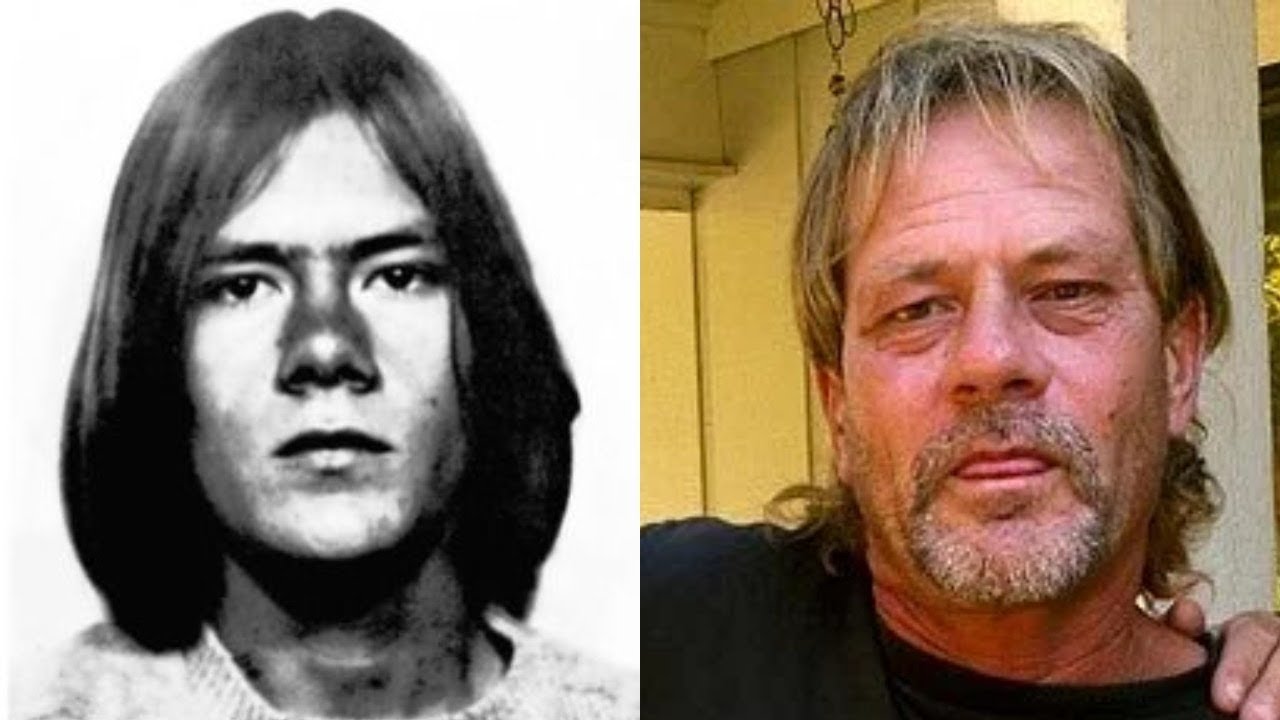
Investigators searched his home in Aurora, Illinois, and found the remains of twenty-nine young men buried under the house and around the property. Four more bodies were recovered from a river nearby. Police identified most of the victims, but eight sets of remains could not be named. Because Wayne Lovell matched Gacy’s victim profile, a young man working in construction, and because Gacy had done work on a fast food restaurant in Aurora around the time Wayne disappeared, Wayne’s family believed he had become one of the unidentified victims.
His brother Tim and sister Teresa kept a scrapbook of clippings about Gacy and read several books about the killer. Their mother died in 2001 still believing her son had been murdered. In the fall of 2011, police exhumed the remains of the eight unidentified victims and asked families of possible Gacy victims to submit DNA for comparison. More than one hundred twenty families came forward, including the Lovells.
But before the test results came back, one family member made a discovery while searching for Harold Wayne Lovell on an online booking photograph database. A mugshot appeared for a man named Harold Wayne Lovell, arrested in Florida in 2006 for marijuana possession. Looking at the photograph, Tim and Teresa knew it was their missing brother. Wayne was alive and had spent most of the thirty-four years since his disappearance in Florida.
After the phone call, he traveled by bus to Ozark, Alabama, where his sister lived, and reunited with his brother and sister. Wayne explained that he left home because he never felt wanted there. He confirmed that he had met Gacy and had done yard work for him. Afterward, he went to Fort Lauderdale because it was hot and sunny.
He worked as a ship builder and landscaper and said he never stopped thinking about his family. He felt terrible that they believed he had been murdered, but described the reunion after thirty-four years as awesome. Only two of the eight exhumed victims have since been identified. In November 2011, the remains were identified as nineteen-year-old William Bundy, missing since October 1976.
In July 2017, another set was identified as sixteen-year-old James Haakinson, who disappeared in the summer of 1976. Police continue to seek family members of the remaining six victims to obtain DNA and finally identify them. In the summer of 1975, thirty-six-year-old Flora Stevens and her husband Robert worked as seasonal staff at the Concord Resort in Monticello, New York. Flora had applied for work as a chambermaid and substitute waitress, listing an address in Seattle, though she came from Yonkers.
On Sunday, August 3, 1975, a checkout day when staff received their weekly tips, Flora collected her pay. At six in the evening, her husband dropped her off at the hospital in Monticello for a scheduled appointment. When Robert returned two hours later to pick her up, she was gone. He reported her missing that evening.
Police interviewed her co-workers, friends, and the hospital staff on duty that night, but no trace of Flora was found. For years, the case remained open. Detectives checked the file and searched missing persons databases from time to time, but found nothing. Robert died in 1985 without ever learning what happened to his wife.
In September 2017, skeletal remains of a female were found in Orange County, New York, adjacent to Sullivan County where Monticello is located. The skull and hands were missing. Checking missing persons reports, the State Police thought the remains could be Flora Stevens. When Sullivan County police were asked to locate a DNA sample from one of her relatives, they hit a roadblock: Flora had no living relatives.
Investigators then searched for activity under Flora’s Social Security number. It turned out that a woman named Flora Harris was using it. Flora Harris lived in an assisted living facility in Lowell, Massachusetts, and had the same birthday as Flora Stevens. Detectives contacted facility officials, who said Flora Harris had lived there since 2001.
She had dementia and could only say one or two words at a time. On October 24, 2017, two detectives traveled to interview her. They showed her a photograph of the Concord Resort, where she had worked when she disappeared. She said, “Wow.
” They showed her a photograph of Robert, her husband. She said, “Robert. ” They showed her a photograph of Flora Stevens. She said, “Me.
” Detectives concluded that Flora Harris was Flora Stevens, found forty-two years after she vanished. Because of her condition, she could not explain why she disappeared or where she went after leaving the hospital. Police speculated that after being dropped off at the hospital, she may have gone to a nearby bus station. They noted she may have been experiencing mental problems at the time or may have suffered amnesia.
Her medical records showed she was given a guardian in 1987, roughly twelve years after disappearing. She lived at least part-time in care facilities in New York City and New Hampshire and suffered some abuse, including one documented assault. In 2001, she moved into the Lowell facility. A worker who cared for her for nearly a decade said Flora was very secretive about her past but did mention she grew up in Yonkers, had once been a hairdresser, and attended the Woodstock Music Festival in 1969.
She said Flora mentioned she had been married once and that the marriage was unhappy, alleging her husband was abusive. Detectives did not comment on that allegation. After finding Flora, they closed her case, though the reasons for her disappearance and the time in between remain unknown. The unidentified skeletal remains in Orange County were never connected to her.
On April 26, 1964, Dora and Chester Fronczak welcomed a baby boy, Paul, at Michael Reese Hospital in Chicago. That night, while the infant slept in the nursery, a woman dressed as a nurse entered, took Paul, walked out of the hospital, and got into a cab. Hospital staff did not notify police or Paul’s parents until the following afternoon. A massive search followed, and by midnight six hundred homes had been searched, but the baby was not found.
Nearly two years later, in March 1966, the FBI sent the family a letter. An abandoned toddler had been found in July 1965, about fourteen months after Paul’s birth, in a stroller in a busy shopping center in Newark, New Jersey. Investigators thought the boy might be Paul. There were no handprints, footprints, or blood samples taken at the hospital.
The only evidence was a photograph of Paul taken hours after birth. The FBI compared the shape of the ear in that photo to the ear of the Newark boy and judged it close enough. The child was sent to live with Dora and Chester. When Paul was ten, he found a box of sympathy cards and newspaper clippings about the kidnapping.
He had never been told. When he asked his mother, she was angry he had been snooping but explained what had happened. As he grew older, he began to doubt that he was their biological son. He did not look like the rest of the family and felt he did not fit in.
Comparing an ear shape to a photograph did not seem like reliable proof. In 2008, his wife’s pregnancy brought questions about family history that Paul could not answer. He wanted a paternity test, but the cost was prohibitive. In 2012, he found an affordable over-the-counter DNA test.
When Dora and Chester visited him in Las Vegas, he asked if they ever wondered whether he was really their son. They admitted they had. They agreed to swab their cheeks, but after returning to Chicago, they called and asked him not to submit the samples. Paul sent them in anyway.
There was no chance he was their biological child. His family was furious and did not speak to him for more than a year. Paul began searching for his real identity, and the FBI reopened the kidnapping case. A team of DNA experts volunteered to investigate.
On June 3, 2015, they identified him as Jack Rosenthal, his birth name. He had been born October 27, 1963, making him six months older than he had believed, and he was born in Tennessee. He reunited with living relatives there. The most shocking discovery was that he had a twin sister named Jill, who had also gone missing.
His birth mother had been a heavy drinker, and his father, a Korean War veteran, returned home with a darker, angrier mood. Paul learned he had two older sisters and a younger brother. Relatives said the children were neglected; one cousin recalled seeing babies locked in cages. In early 1965, when the twins were toddlers, family members stopped seeing them.
When asked, the parents said relatives were looking after them. Eventually people stopped asking. Jack had been found, but his twin sister’s whereabouts remained a mystery for nearly fifty-four years. Jack believes something happened to Jill.
He has searched for any trace of her but found nothing and hopes someday to find a clue. The fate of the real Paul Fronczak, Chester and Dora’s biological son, also remains unknown. One theory points to a woman named Linda Taylor, who became known as the “welfare queen” after articles in the Chicago Tribune and Jet magazine detailed her extensive welfare fraud in 1976. Ronald Reagan referenced her stories in campaign speeches to critique the welfare system.
Taylor used eighty different names, thirty addresses, and fifteen phone numbers to collect benefits. When facing fraud charges, she arrived at the courthouse in a Cadillac wearing expensive clothing and jewelry. Taylor may also have killed a woman named Patricia Parks in 1975. Parks hired Taylor to clean and care for her and her three children, and within six months Parks was dead at thirty-seven.
Taylor told the funeral home Parks had cervical cancer, but blood tests found no cancer; they found high levels of arsenic. Before dying, Parks had been convinced to make Taylor the beneficiary of several life insurance policies and the guardian of her children. Police suspected Taylor but lacked evidence to charge her. At the time of the baby’s kidnapping, Taylor was considered a suspect, though no evidence connected her.
In 2013, the television program 20/20, after airing an episode about the kidnapping, received a tip to investigate Taylor. She had died in April 2002. Reporters tracked down her son, Johnny Harbaugh, who said it was quite possible his mother took Paul. He said she was capable of anything and recalled playing with a baby boy she called Tiger, who was suddenly gone one day.
Taylor told him a boyfriend had taken the baby. Harbaugh said his mother frequently picked up children, claimed them as her own to collect benefits, and then got rid of them. He was not even sure Taylor was his biological mother and thought he might have been stolen from another couple. He said she was a master of disguise, keeping several uniforms and many wigs, including nurses’ uniforms.
Police found in Taylor’s possession a birth certificate for a boy born four months before Paul was kidnapped. The doctor who signed it later gave up his medical license to avoid prosecution for selling prescription drugs to minors. When police asked where the boy was, Taylor said he was in foster care, but no evidence that the child ever existed was found. The theory remains speculative: Taylor may have obtained a fake birth certificate, kidnapped Paul to match it, collected benefits, and then disposed of him.
The true fate of the real Paul Fronczak is still unknown.