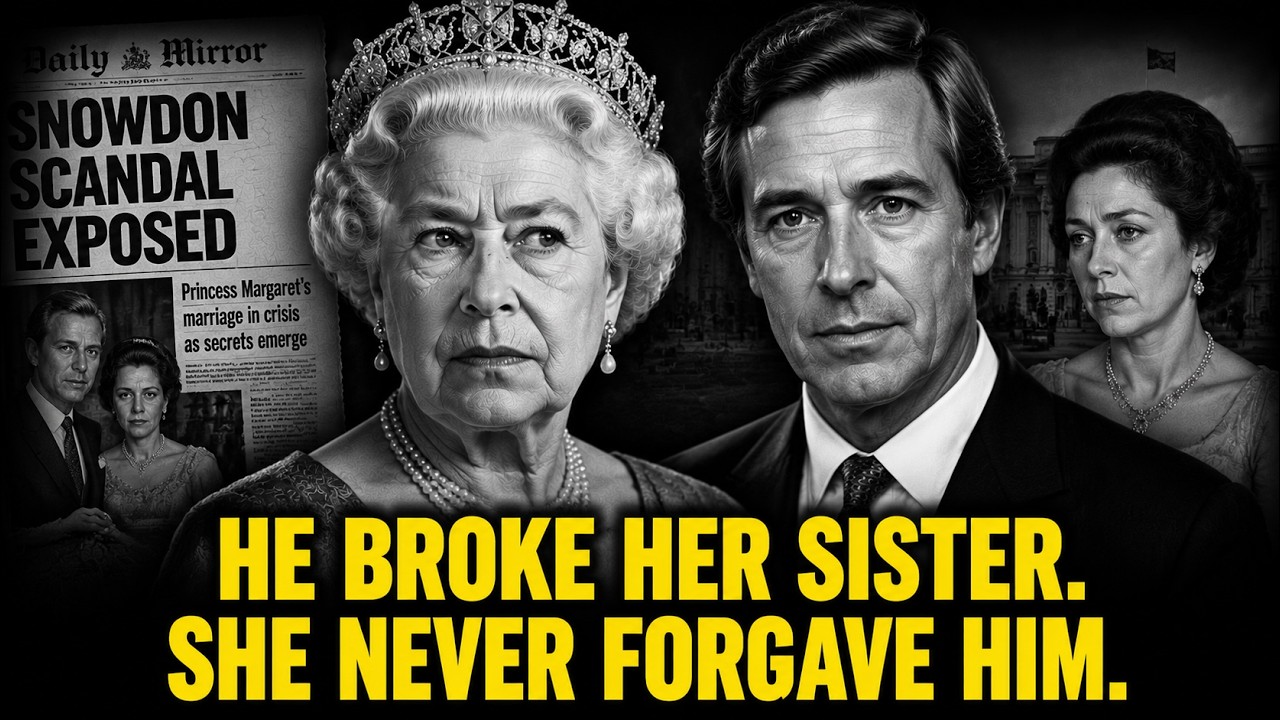
In April 2017, Queen Elizabeth II attended a memorial service at St. Margaret’s Church in Westminster. The service was for Anthony Armstrong Jones, the Earl of Snowdon, who had been married to her sister, Princess Margaret, for 18 years.
The Queen was 90 years old and had outlived most of the people who knew her before she became monarch. She sat through the tributes with her usual unreadable expression.
That blankness was the product of more than half a century of managing what Snowdon had done to her family. He had charmed his way into the most photographed household on earth, received a title and a palace apartment, and then presided over a marriage that destroyed her sister. The Queen had signed off on the first divorce to touch the inner royal family since Henry VIII.
Yet she never cut him off. There was no exile, no public humiliation. He photographed her birthdays, attended family funerals, and kept his place in the machinery.
The people who wrote the serious books about the family concluded that what Elizabeth extended to Snowdon was accommodation. It looked like forgiveness from the outside, but it was cheaper to maintain and protected the institution. The account was never settled.
It was simply never mentioned.
To understand what sat behind the Queen’s face in that church, you have to understand what Snowdon actually did. The usual story says a glamorous princess married a handsome commoner and it did not work out. The fuller record includes a child conceived with his best friend’s wife in the weeks before his wedding, a secret that held for 44 years until a DNA test exposed it.
It includes lists titled “Things I Hate About You” left between the pages of books where his wife would find them. It includes a note that told a princess of the United Kingdom she looked like a Jewish manicurist and that he hated her. It includes affairs conducted on an almost industrial basis, one ending with a woman dead by her own hand on a rooftop on New Year’s Eve, another producing a son when he was 68 and still married to somebody else.
He was also by nearly every account brilliant. He was one of the finest photographers his country produced. He designed an aviary so ahead of its time that architects still write about it.
He staged a medieval ceremony for television and made a thousand-year-old monarchy look modern for one afternoon in 1969. He spent decades fighting for disabled people with a seriousness that shamed the able-bodied politicians around him. He did it because he had dragged a polio-ruined leg through an English boyhood that taught him exactly what contempt felt like.
The villain of this story spent half his life doing genuine good. The Queen knew both halves. That was precisely her problem.
It is easy to close the door on a monster. It is very hard to close the door on a monster who makes you laugh, photographs your children beautifully, and serves your crown well.
Anthony Armstrong Jones was born in 1930 in Belgravia. His father was a Welsh barrister, clever and dry. His mother was Anne Messel, a celebrated beauty from a family of celebrated aesthetes.
The Messels lived for beauty and surface. When Tony was five, his parents’ marriage ended, and Anne married the Earl of Ross and became a countess. She had two more sons, and the arithmetic of her affection was not subtle.
The Ross boys were the children of a countess. Tony was the leftover from the barrister. At her table, her firstborn son was placed below the salt, down among the least important guests in his own mother’s house.
A boy who learns at five that love is conditional on rank and beauty will spend the rest of his life trying to beat the system at its own game. Tony chose that path with both hands. At 16, he contracted polio.
He spent months in a hospital in Liverpool, flat on his back. His mother visited him once during that entire confinement. The disease left his right leg withered and shortened for life.
It also left a private bottomless fury at his own body and a refusal to ever be pitied.
He came out of that ward determined to move faster than everyone, dance longer, climb higher, seduce more. Decades later, he would channel that fury into designing wheelchairs and fighting for access ramps. But in the short term, it built a young man with a hole in the middle of him, shaped like his mother’s approval.
At Cambridge, he failed his exams but found two levers that would lift him the rest of the way. The first was the river. In 1950, small and ferociously competitive, he coxed the Cambridge crew in the boat race, screaming a boat full of larger men down the Thames to victory.
The second lever was a camera. Photography was barely a profession for a gentleman, which is exactly why it was open. By his middle 20s, he had a studio in Pimlico and a reputation that was climbing the walls of London society.
His pictures did not look like anyone else’s. He shot people laughing, moving, caught between poses.
In 1956, the palace came calling. Tony was invited to photograph the Duke of Kent, and then the Queen with Prince Charles and Princess Anne. The resulting pictures showed a monarch who appeared for once like a young mother who found her children funny.
The public loved them.
Princess Margaret was 27 in 1958 and the most talked about woman in the country. Three years earlier, she had given up Peter Townsend, the divorced war hero she loved, after the government, the church, and the palace machine arranged matters so that keeping him would cost her everything. She had made the dutiful choice and been rewarded with nothing.
Now she was glamorous, wounded, bored, and dangerous.
They met at a dinner party in Chelsea. Tony did not bow and scrape. He talked to her as if she were an interesting woman rather than a national monument.
He made her laugh, and then, decisively, did not chase. Margaret had spent her entire life being pursued and would only ever be caught by someone who appeared to be walking the other way.
What followed was a courtship conducted like an intelligence operation. The most watched woman in Britain was slipping across the river to a rented room in Rotherhithe, a single white room in a dockside terrace where the sister of the Queen cooked eggs at a small stove. For Margaret, the room was the first anonymous space she had ever occupied.
For Tony, the situation was the Messel dream taken to its logical conclusion. The boy seated below the salt now had the second lady of the land coming to him on his territory.
In the autumn of 1959, a letter arrived from Belgium. Peter Townsend was getting married. His bride was a Belgian tobacco heiress named Marie-Luce Jamagne, and she was 19 years old.
The resemblance to a young Princess Margaret was close enough to make you put the pictures down. Townsend and Margaret had made a private pact after the renunciation that neither would marry anyone else. He broke it first.
Margaret received the news in October of 1959, and within days, some accounts say within a day, she accepted Tony. Both things can be real at once. She loved Tony.
She also needed that particular October to be someone’s first choice, urgently, publicly, and forever.
The engagement was announced in February 1960. The country made a sound somewhere between a gasp and a snort. A princess was marrying a photographer, a man in trade.
Inside the palace walls, the reaction among the old guard was several degrees colder. The person who did not share the sourness was the Queen. She had met Tony, and Tony had done to her what he did to everyone in the first 20 minutes.
He had made her laugh. She was, by multiple accounts, rather taken with him.
Underneath all that pageantry, things were happening that would have stopped the ceremony dead had any one of them surfaced. Tony’s original choice for best man was Jeremy Fry, his closest friend. Weeks before the wedding, Fry abruptly stepped down.
The official line involved jaundice. The actual reason was that Fry had a past conviction from 1952, a minor charge of the kind the era used against men who were caught with other men.
But the Fry story does not end with the best man switch. Jeremy Fry had a wife, Camilla. And in the weeks around the wedding, as Margaret was being fitted for a gown, Camilla Fry was pregnant and the father was the groom.
Polly Fry was born three weeks after Tony and Margaret’s wedding day while the newlyweds were still on their honeymoon. She was raised as Jeremy’s daughter and was 45 years old before a DNA test in 2004 confirmed what parts of that circle had whispered for decades.
Margaret walked up that aisle not knowing that her husband’s child was days from being born to the wife of the man who was supposed to stand beside him. The marriage was not poisoned slowly. It was poisoned before it began.
The wedding itself on the 6th of May 1960 was a triumph. Margaret wore white silk organza and the Poltimore tiara. The Duke of Edinburgh walked the bride up the aisle in place of her dead father.
An estimated 300 million people watched a fairy tale that had been assembled out of things that were not what they appeared.
The early 60s were kind to them. They moved into Kensington Palace into apartment 1A, which Tony gutted and rebuilt. They threw the best parties in London.
The guest lists mixed ballerinas with novelists, film stars with painters. For the first time since the abdication, a corner of the royal family was fashionable. The children arrived, David in November of 1961 and Sarah in May of 1964.
Tony photographed his own family beautifully, and the pictures show two parents who delighted in their children.
In 1965, London Zoo opened its new aviary, a great angular tent of aluminium and mesh that Tony had designed with the architect Cedric Price. It still stands. In 1969, the Prince of Wales was to be invested at Caernarvon Castle, and the palace handed the problem to the constable of the castle, the photographer the courtiers had sneered at.
Tony stripped the castle of Victorian clutter, designed a canopy of clear acrylic so the television cameras could see the young prince, and designed his own plain dark green uniform. 500 million viewers watched a thousand-year-old institution appear to belong to the modern world. It was one of the great gifts anyone gave the House of Windsor in that century.
There was one more thing growing in him through those years. Tony knew what it was to be stared at and patronized. He made a television documentary about the elderly and disabled people that won awards.
He worked on the design of a powered wheelchair platform. A government would ask him to lead a working party on the integration of disabled people, and its report landed like a slap on a complacent establishment. The fund he set up to help disabled students still hands out grants today under his name.
The marriage was already coming apart. The people who knew them best dated the trouble to within a couple of years of the wedding. A friend of the couple put it in a sentence: they were both center stage people, and only one person can occupy the center at any given moment.

In public, Tony walked behind his wife. But Margaret carried the deal indoors. She was royal at the breakfast table.
Tony, who could not outrank her, had exactly one weapon that always worked. He could withhold. He could go silent for days inside their own apartment while Margaret circled him like someone locked out of her own house.
Then there were the affairs. His came first. Through the 60s, the names accumulated.
In the early 70s came the one that ended the pretense, an involvement with Lady Jacqueline Rufus-Isaacs, a marquis’s daughter 20 years his junior, so poorly concealed that it reached the newspapers. Margaret retaliated in kind. By now, inflicting the knowledge had become part of the exchange.
It is here that the marriage produced the artifacts it will always be remembered by. Tony began leaving notes, small compositions planted where she would find them in the course of an ordinary day. One was a list with a heading, “24 reasons why I hate you.”
Another was a single sentence: “You look like a Jewish manicurist and I hate you.” This was not a man losing his temper. This was a man sitting down, choosing words, and placing them where his wife would find them alone.
The staff at Kensington Palace described shouting that carried through walls, silences that lasted longer than the shouting, and Margaret drinking earlier in the day. Fairness requires the other column. Margaret could freeze him in front of guests with a single sentence about trade.
She mocked his friends, kept him waiting, and spent money in a way that made his earnings look like pocket change. Her cruelty was hot, spoken, witnessed, and over. His was cold, written, planned, and permanent.
In September of 1973, at a house party in Scotland, Margaret was introduced to a young gardener named Roddy Llewellyn. He was 25, she was 43. He was gentle, unfamous, and kind to her.
She took him up with the relief of a woman who had spent 13 years being fenced with. She flew him to the island she had been given as a wedding present, Mustique.
The detonation came in February of 1976. The News of the World published a photograph taken on Mustique, Margaret and Roddy at a beach table, both in swimsuits. A princess, a swimsuit, a garden boy 17 years younger.
The picture said everything the country was already primed to believe about her.
Within weeks, the palace announced that the Princess Margaret, Countess of Snowdon, and the Earl of Snowdon had mutually agreed to live apart. Margaret did nothing. Her code said you do not explain, you do not complain.
She absorbed a hurricane of press moralizing. Members of Parliament rose to call her a parasite. Tony, who happened to be in Sydney when the separation was announced, walked out to the airport cameras and delivered a short statement.
He was desperately sad, he said, for the children above all. He asked for understanding for his wife. He thanked the press for their courtesy.
He wished her well.
It was flawless. It sealed the public verdict for the next 50 years. Ask a Briton of that generation what went wrong between those two and the answer still is Roddy on the beach.
The hate lists were not published. The Fry paternity was a quarter century from surfacing. One spouse had been photographed in a swimsuit, and so one spouse took the fall.
The divorce followed in 1978. No one that close to the throne had legally dissolved a marriage since Henry VIII. The Queen, whose consent had launched the marriage and whose reign now absorbed the precedent, is recorded as regarding the whole business with a sadness she did not perform for anyone.
Within 15 years, three of her own four children would pour through that hole.
Five months after the decree, in December of 1978, Tony remarried. His bride was Lucy Lindsay-Hogg, a film researcher, gentle, discreet, and pregnant. Their daughter Frances arrived the following July.
The man who had spent two years being photographed as the abandoned party had a new wife carrying his child before the ink on the decree had seen a full season.
And then Tony did the thing that by several accounts moved matters between him and the family from sorrow into something colder. He did not stop working for the royal family. After the separation, after the divorce, after the remarriage, the commissions kept coming.
He photographed the Queen herself for official portraits marking her birthdays and her jubilees. When the Prince of Wales became engaged in 1981 to Lady Diana Spencer, the man brought in to take the engagement portraits was the prince’s former uncle, his aunt’s discarded husband.
The Queen Mother adored Tony to the end of her life. She lunched with him, defended him, and treated him for four decades as a kind of son who had merely mislaid his marriage.
The family that did not banish him is the same family whose entire operating manual forbids the alternative. This institution survives on one asset, the appearance of continuity, and it has one nightmare, the insider turned witness. Tony had spent 18 years inside those walls.
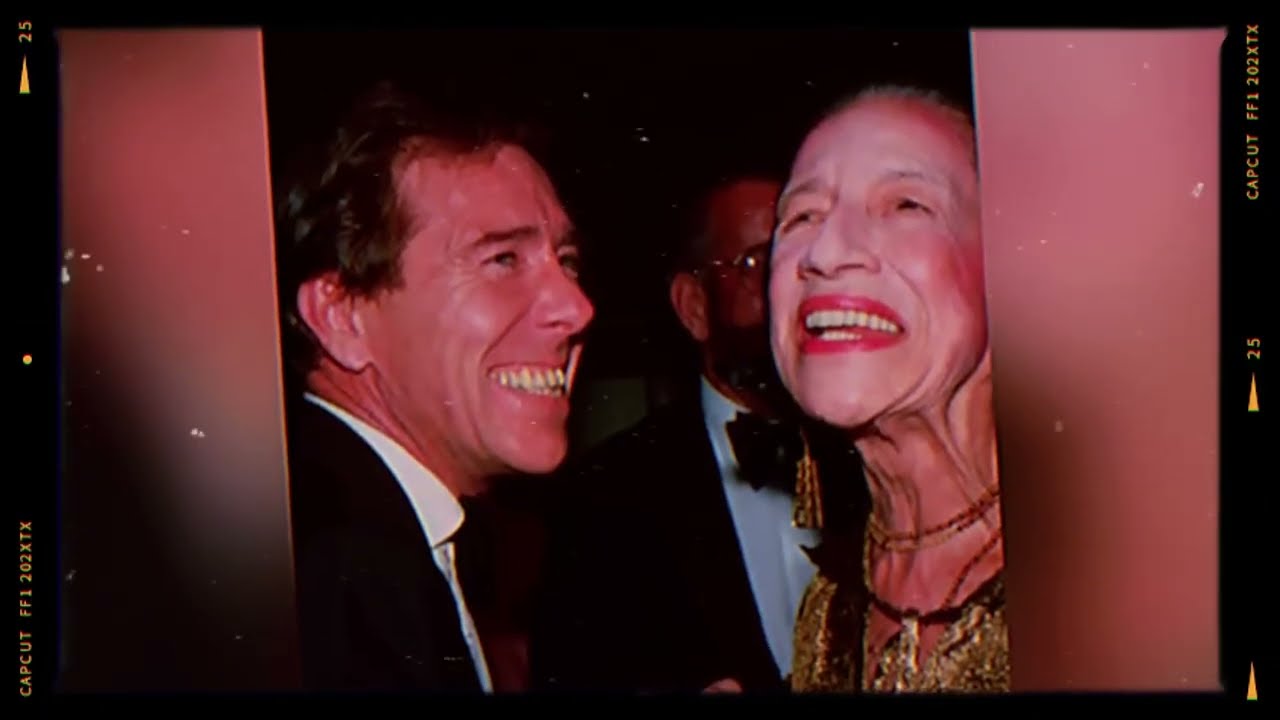
He knew the drinking, the affairs on every side, the finances, the true sequence of the collapse. Publishers would have emptied vaults for his account. He never gave it.
Not a book, not an interview, not a leak that anyone ever traced. For nearly 40 years after the divorce, on the subject of his marriage, the most connected image maker in Britain said nothing at all.
The family in turn kept him warm. You may call that forgiveness if you like. The colder and more accurate word for it is terms.
Both sides understood the terms perfectly, and both sides honored them to the grave.
The Queen was formed before she was formed by anything else by the abdication, by watching one man’s insistence on his private happiness nearly capsize the whole enterprise. From that formation she drew the rule she applied for 70 years: the institution eats the personal, always, without exception. A woman who does not permit herself the luxury of acting on her own resentments does not thereby stop having them.
She files them.
Between the 6th of May, 1960, and the morning she sat in St. Margaret’s church, there is no record of her ever once saying a single word in Tony’s defense. The Queen Mother defended him.
Friends defended him. The obituaries defended him. From the sovereign herself across 57 years, the record preserves courtesy without one syllable of absolution.
Margaret, meanwhile, was dying slowly and in public. The operations began. A piece of lung removed in 1985.
The cigarettes only barely surrendered. A stroke on Mustique in 1998. A bathroom accident on the island the following year, scolding water, her feet burned so badly she never fully walked again.
More strokes followed in 2001, taking her sight. The last photographs of Princess Margaret show her in a wheelchair at her mother’s 101st birthday celebration, dark glasses, swollen, unrecognizable.
On the 9th of February, 2002, she died in hospital after a final stroke. Her funeral was held at St. George’s Chapel, Windsor, 50 years to the day after the funeral of the father she had adored.
Her sister, who wept in public perhaps twice in 70 years, was seen by the congregation to weep. Tony came to the funeral. He was 71, and the polio was reclaiming the leg it had marked six decades earlier.
He was not turned away. He was never once turned away.
In 2004, the wedding day secret finally surfaced. Polly Fry pursued the truth herself, and the DNA test she obtained gave the answer. The man she had grown up adoring as her father was not her father.
Her father was the Earl of Snowdon. Tony’s public response ran true to 60 years of form. First came airy denial, then silence, then in time an acknowledgement made without ever quite being made.
Margaret never knew. She died two years before the test.
Tony died at home in Kensington on the 13th of January, 2017, at 86. He chose to be buried in Wales in the small churchyard of St. Baglan’s at Llanfaglan, within sight of the Menai Strait and a few miles from Caernarvon, the castle where he had staged his masterpiece.
And then in April came the memorial where this story began. In the front pew, 90 years old, sat the Queen.
On one side of the accounting was everything he gave: the laughter in the early years, the photographs that made her family human for half a century, Caernarvon which bought the monarchy a decade of modernity in one afternoon, the silence, 40 years of perfect silence worth more to that institution than any service rendered by any courtier of her reign. And the children, David and Sarah, who emerged from the wreckage kind and steady.
On the other side was her only sister, the one holy personal love of a holy institutional life, collected at 29 by a man who was concealing a child conceived weeks before the wedding, ground down across 18 years by a cruelty that was documented, written, deliberate, and left where she would find it alone. The first divorce at the center of the family since the 16th century, detonating the principle for which her family had already sacrificed Margaret once, and opening the breach through which her own children’s marriages would pour 20 years on.
The Queen was in possession of all of it, longer and more completely than any biographer. Against all of it she maintained for 57 years a courtesy that never warmed into a single recorded word of absolution, and never cooled into a single visible act of reproach.
That is not forgiveness. Forgiveness cancels a debt. This was the permanent carrying of a debt that must never be called in, because calling it in would cost the institution more than the debt is worth.
She kept him close for the same reason central banks hold the bonds of governments they do not trust. Letting go is more expensive.
Look at the official portraits he took of her across the decades. The ones from after the divorce. The Queen at 60, at 70, at 80 by Snowdon.
They are warmer than almost any other pictures of her in existence. She is nearly smiling in most of them. He could still do it even then, even after everything.
Make a guarded woman forget the guard. She let him once a decade for the length of a shutter.
Then the sitting ended, the equipment was packed, the courtesies were exchanged, and the ledger went back in its drawer, where it stayed until the morning she carried it into St. Margaret’s church and out again, and finally five years later to her own grave, unpaid, unspoken, and never in the only sense that ever mattered to her, forgiven.