The morning of April 30, 1970, began like any other at the Hollywood home of Inger Stevens. It was her housekeeper who found her, lying on the kitchen floor, and it was there that the thirty-five-year-old actress was pronounced dead upon arrival at Hollywood Hospital. The cause of death was listed as acute barbiturate intoxication. She had seemed, to nearly everyone who knew her, to be at the very top of her game.
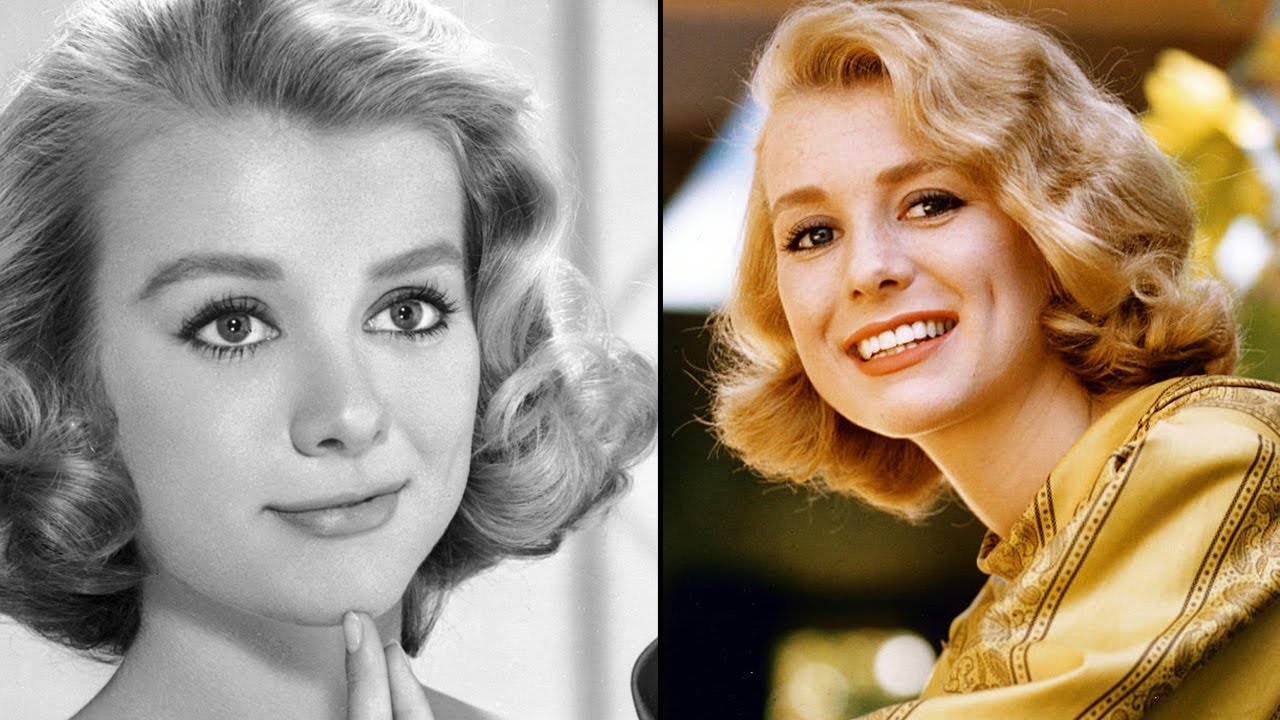
She was coming off the success of a beloved sitcom, she had just finished shooting television movies opposite Burt Reynolds, and her career appeared to be ascending to new and exciting heights. Yet beneath the warm smile and sunny public persona, the real Inger was in turmoil, a contrast so sharp that her death left the public not just grieving, but deeply puzzled. The roots of that unhappiness stretched back to her childhood in Stockholm. Born Inger Stensland on October 18, 1934, she was the eldest child of Gustav, a high school teacher, and Lisbet Pothoff Stensland, who had married just six months before her birth.
Two brothers, Ola and Peter, followed. Her first fascination with acting came from watching her father perform in local amateur theater, but that glimpse of a happy home was short-lived. Within two years, her mother abandoned the family and her father for another man, eventually taking the youngest son, Peter, back to Stockholm. Inger and her brother Ola were left with a stern and emotionally distant father, cared for primarily by a family maid.
When the outbreak of World War II prompted her father to move to the United States in late 1940, he left the children behind entirely. Eventually, they were taken in by a loving aunt, stage actress Karen Stinsland Junker, who provided the only real parenting the young Inger would know. In 1944, their father, having remarried and found work as a teacher at Columbia University in New York, finally summoned his two eldest children. Traveling alone on a freighter to the United States, Inger and Ola docked in New Orleans only to discover that their father was not there to greet them.
A Salvation Army man accompanied the anxious children to New York instead. The young girl, painfully out of place at her new school, applied herself fiercely and learned English quickly. When another teaching position moved the family to Manhattan, Kansas, in 1948, her sense of displacement only grew. Unable to cope with her cold, strict father and the new stepmother, Inger ran away at fifteen.
She was found in a Kansas City burlesque chorus line, earning sixty dollars a week under an alias. Her father brought his rebellious daughter home, but the moment she graduated from high school, she left and never looked back. Inger moved to New York in 1953 to pursue acting seriously. Having outgrown her adolescent awkwardness into a striking Scandinavian beauty, she secured early work as a model but found the assignments empty.
Through an assertive agent, Anthony Sazio, who Americanized her name to Stevens, she booked her first professional job, a detergent commercial, in November 1954. She and a fellow hopeful, Carol Baker, were accepted into Lee Strasberg’s renowned Actors Studio, working alongside names like James Dean, Marlon Brando, and Paul Newman. Her television career took off with appearances opposite the rising Newman, and she quickly established herself as a promising dramatic ingenue. During this time, her professional relationship with her agent turned personal.
They impulsively married in July 1955, but the union proved to be a horrible mistake. His extreme jealousy and abusive tendencies doomed the marriage almost immediately, and the couple separated in January 1956. The divorce, which granted him five percent of her earnings for the next seven years, was finalized in August 1958. Her first Broadway appearance in early 1956 earned her personal praise, though the play itself closed after only five performances.
A brief and disappointing test contract at 20th Century Fox came next, but it was film producer Saul C. Siegel who gave her her first major break. Discovering her in a minor television role, he signed her to a personal seven-picture contract at Paramount. Her debut came in the 1957 family drama Man on Fire, starring opposite Bing Crosby.
On only her second day of shooting, she was rushed to the hospital with an acute attack of appendicitis, and a brief affair with the much older Crosby began during the production. Her second film, Cry Terror, gave her a substantial showcase opposite James Mason, but during a subway chase scene, she and actor Rod Steiger were overcome by carbon monoxide fumes from a defective generator. A dangerously ill Inger was placed in an oxygen tent for two days before she recovered. She continued with The Buccaneer, a lavish period film where she more than held her own, but her off-screen life was becoming increasingly destructive.
Her pattern of affairs with leading men, including a tempestuous relationship with the married Harry Belafonte, was taking a severe toll. Shortly after New Year’s Day in 1959, Inger swallowed an overdose of pills in a near-fatal suicide attempt. She was only saved by sheer luck when a friend from NBC, concerned after she missed a dinner engagement and could not be reached, checked on her. The suicide attempt was the devastating consequence of her deep childhood wounds.
Her promiscuous relations with men who cared little for her only replayed the painful experience of her family’s breakup, and the pattern was building to a deadly explosion. Following her recovery, she entered a period of intense self-examination. She refocused on her career, starring in what became one of the most famous episodes of The Twilight Zone, titled “The Hitchhiker,” in 1960. She returned to television with great success, appearing on hit shows like Bonanza and Route 66, and by June 1961, she had another close call with death.
While on a European vacation, her plane bounced off the runway in Lisbon, skidded, and caught fire. She was one of the last passengers to escape before the aircraft exploded minutes later. Back on the stage, she earned the best reviews of her Broadway career in the hit comedy Mary, Mary. It was a joyous and productive time.
Television audiences adored her, her popularity soared, and she became the pitchwoman for Clairol hair products. Her film career, however, was a different matter. She had bought out her Paramount contract after a dispute, and she suffered notable disappointments, losing the lead in The Misfits to Marilyn Monroe and the coveted role of Holly Golightly in Breakfast at Tiffany’s to Audrey Hepburn. But in the mid-1960s, she found the role that made her a household name.
Cast in the television sitcom The Farmer’s Daughter, she played Katie Holstrum, whose relaxed charm and chemistry across her co-star David Jansen made the show a major hit. The duo were even recipients of a TV Guide popularity poll as the favorite male and female performers of the year. With her high-profile status, Inger used her fame for humanitarian causes. She sponsored art exhibitions to benefit special needs children, did volunteer work for health centers, and served as chairman of the California Council for Children.
Her dormant film career also began to revive. In an effort to break away from her wholesome image, she consciously sought roles that emphasized her maturing sensuality, appearing in films like A Guide for the Married Man in 1967, where she joyfully showed off a lighter side. She unwisely turned down a role in They Shoot Horses, Don’t They? , but wisely declined the lead in the film musical Song of Norway.
She was even beginning to entertain thoughts of directing or screenwriting and had gone into a decorating and antique business with a friend. After filming an adventure movie, The Mask of Sheba, she began work on the television film Run, Simon, Run, opposite Burt Reynolds, who played a formerly imprisoned Papago Indian. A whirlwind fling with Reynolds occurred during the shoot, a relationship that, like so many others, would run hot and then end. The production wrapped, and the affair faded.
On the morning of April 30, 1970, Inger Stevens was found on the floor of her kitchen. She was just thirty-five years old. The cause of death was acute barbiturate intoxication, a tragic end to a life marked by a hidden sadness that few were ever allowed to see.
Though her life was cut tragically short, her contributions to Hollywood, as a strong and consummate dramatic player and light comedienne, remain her true legacy.