In February of 1860, a letter arrived in Syracuse, New York, from Tennessee. It was from Sarah Log, the wife of the man who had once enslaved Jarm Log. She demanded one thousand dollars. If he refused, she said, she would sell him to a slave catcher who could legally drag him back south under the Fugitive Slave Act.
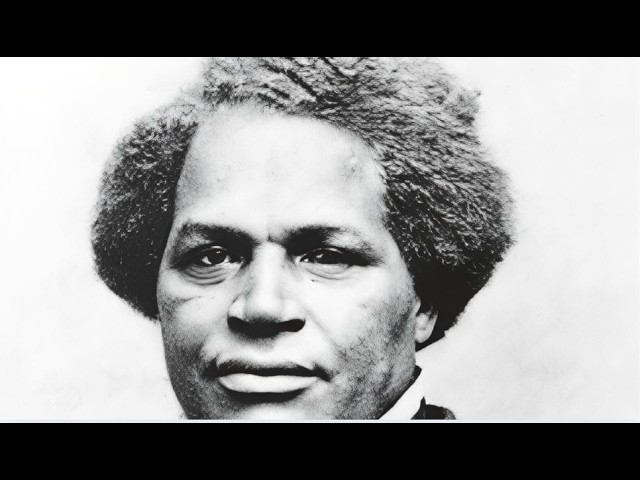
She called him a thief for riding off on her husband’s horse the night he escaped. He wrote back. He did not send money. He told her she had no right to call anything about his own body stolen, and he met her threat with what he called unutterable scorn and contempt.
By then, Germaine Wesley Logan was not hiding from anyone. He was a bishop in the African Methodist Episcopal Zion Church and ran one of the busiest Underground Railroad stations in the country, openly, out of his own home, with his own name printed in the newspaper. Nine years earlier, he had helped lead a mob that broke a man out of federal custody in broad daylight, in direct defiance of the United States government. His story began on a plantation in Tennessee with a mother who made one decision no one could ever take back from her son.
Germaine was born around 1813 in Davidson County, Tennessee, near Nashville. His enslaved mother was named Cherry. His father was David Log, the white man who enslaved her. Germaine grew up on the plantation of Manassith Log, and the exact family relationships between David and Manassith are described inconsistently across sources.
What does not change is the core fact: the boy named Jarm Log was enslaved by his own relatives, with no legal claim to the family name he carried or to anything that name might have entitled a child born under different circumstances. He would spend the rest of his life refusing to let that fact define what he was owed. His first attempt to escape failed. At twenty-one, he tried again.
This time, his mother helped him plan it. Germaine took his enslaver’s horse, an animal Sarah Log would later call the old mare, and rode north. He crossed into Kentucky, then kept moving through the loosely organized network of safe houses and sympathetic strangers until he crossed the border into Canada and reached genuine freedom. He left behind a brother and sister, Abe and Anne, still enslaved on the same property.
He would not see either of them again. Manassith Log later sold both Abe and Anne, along with twelve acres of land, specifically as punishment for Germaine’s escape. The loss of his siblings followed a familiar pattern: an enslaver’s response to one person’s successful escape often fell on the people left behind. Selling a sibling served two purposes.
It punished the escapee even from a distance, and it warned every other enslaved person on the property what their own attempt might cost someone they loved. Germaine carried that loss for the rest of his life, naming Abe and Anne directly in his own writing decades after he had last seen them. In Canada, Germaine began reshaping his identity. He taught himself to read.
He started teaching others. He took a new name, Germaine Wesley Logan, adding Wesley in honor of John Wesley, the founder of the Methodist movement. By 1839, he had moved back across the border to Utica, New York, and started a school for Black children. In 1841, he moved to Syracuse and opened another school.
He was ordained in the African Methodist Episcopal Zion Church the following year. He married Caroline Storm in 1840. Together, they turned their Syracuse home into one of the most active Underground Railroad stations in the country. Caroline managed the household side of the operation, hiding, feeding, and moving fugitives safely onward, often while Germaine was traveling or preaching elsewhere.
People in New York took to calling them the king and queen of the Underground Railroad. Over the following decades, Germaine is credited with personally helping more than 1,500 freedom seekers reach safety. Germaine did something most conductors never dared. He put his own name in the newspaper, publicly describing his work and asking openly for donations.
Most people running escape networks operated in secrecy. Germaine calculated that Syracuse’s abolitionist sympathies ran deep enough to protect him even in the open. He was betting his own freedom on that calculation, repeatedly, for years. In September of 1850, Congress passed the Fugitive Slave Act.
It meant any formerly enslaved person anywhere in the country, no matter how many years they had lived free, could now be legally seized and returned south. Germaine stood up in front of his own congregation and said exactly what he thought of the new law. It outlaws me, and I outlaw it. He said it publicly from his own pulpit, as a man the law had just specifically targeted by name.
Within a year, Syracuse tested how far that defiance could go. William Henry, known to everyone in Syracuse simply as Jerry, had escaped slavery in Missouri years earlier and built a quiet life as a cooper in the city. On October 1, 1851, federal marshals arrested him under the new law. Word spread through Syracuse within the hour.
This was a man the whole city actually knew, seized off the street and locked in a jail cell, waiting to be shipped back into slavery. Germaine joined a committee of abolitionists, Black and white, that moved fast. They stormed the jail. They broke Jerry out.
After an initial escape attempt failed and he was briefly recaptured, the second attempt held. The rescue committee moved him along the same Underground Railroad network Germaine had spent a decade building, all the way to Kingston, Canada, permanently beyond the reach of the law. It became known across the country as the Jerry Rescue. Gerrit Smith, a wealthy abolitionist, helped plan the rescue from his Syracuse office and later used his connections to help secure Jerry’s final passage into Canada.
The speed of the mobilization told the story. A rescue this fast and this coordinated only happens in a city where abolitionist infrastructure had already been built, tested, and trusted for a decade. The federal government did not let the rescue go unanswered. Germaine was one of several people formally indicted for violating the Fugitive Slave Act.
He fled to Canada rather than stand trial, aware that a conviction could mean real prison time. From Canada, he wrote to the district attorney handling the case, denying the charges. He received no reply. Then Frederick Douglass’s newspaper published word that Germaine would likely be safe if he returned to Syracuse.
He decided to trust that assessment. He came back, and nothing happened to him. That outcome changed everything about how he operated. He became confident that the Fugitive Slave Act was effectively nullified within his own city, whatever it technically said on paper.
From that point forward, Germaine and Caroline ran their operation almost entirely in the open. Syracuse itself earned a new reputation during these years, becoming known as the great central depot of the entire Underground Railroad network. In February of 1860, Sarah Log wrote to Germaine. She blamed her financial troubles on his escape, specifically on the loss of the horse he had ridden north twenty-six years earlier.
She demanded one thousand dollars. If he refused, she said, she had buyers ready to purchase him outright, and under the Fugitive Slave Act, they could legally come to Syracuse and take him by force. She even asked whether he read his Bible and what scripture said happened to unrepentant thieves. Germaine wrote back on March 28, 1860, addressing her directly as Mrs.
Sarah Log, with no warmer title offered. He did not plead, apologize, or negotiate. He asked whether she had ever considered that he had a far better right to that old mare than Manassith Log had ever had to him. Then he turned her own logic back on itself.
If Manassith’s ownership of him had been real and legitimate, that ownership had been permanently forfeited the moment Germaine escaped. If Sarah believed she had no remaining claim over him, then the exact same principle applied in both directions. She had forfeited any claim to anything of his in return. He reminded her that she and her husband had sold his brother Abe and his sister Anne, along with twelve acres of land, as direct punishment for his flight.
Then came the letter’s final defining line. If she or any other person wished to know how Germaine regarded his own rights, they were welcome to come to Syracuse themselves and try to lay hands on him. He met her entire proposition with unutterable scorn and contempt. The letter was published in the Liberator, reaching readers across the abolitionist movement.
Historians who study this genre of letters generally place Germaine’s response among the most uncompromising examples that survive. There is no request for reconciliation anywhere in it. There is only a complete rejection of the entire premise that Sarah Log had any claim over him at all. Germaine’s public profile only grew during the 1850s.
He joined the Radical Abolition Society in 1854 and devoted increasing energy to the Fugitive Aid Society. When the Civil War came, the network he had spent decades building suddenly found itself operating inside a different kind of national emergency. The war did not end his work. It changed its shape.
After the war, Germaine turned his attention directly toward the welfare of newly freed Black Americans across the South. In 1868, he was elevated to bishop, given responsibility over the Allegheny and Kentucky conferences. His Kentucky appointment carried a pointed significance. It was the same state bordering Tennessee where Germaine had once been enslaved.
Now he held formal religious authority over congregations there, decades after his own escape through almost identical territory. Germaine and Caroline had six children. One daughter, Sarah Logan Fraser, became one of the first African American women licensed as a medical doctor in the United States. She later moved to the Dominican Republic, where she became the first female doctor in that country’s history.
Germaine Wesley Logan died on September 30, 1872, in Saratoga Springs, New York. He was fifty-nine years old. He had spent thirty-eight of those years as a free man, and every single one of those free years actively working to make someone else’s freedom possible. His own narrative, published in 1859 as Logan, as a Slave and as a Freeman, remains a significant document in the genre of slave narratives.
In 2011, nearly a century and a half after the Jerry Rescue, Syracuse formally inducted him into the National Abolition Hall of Fame and Museum. A historical marker now stands at the former site of his and Caroline’s home at the corner of Pine and East Genesee Streets, the same building that once served as one of the busiest Underground Railroad stations anywhere in the country.