On the night of February 14, 1888, Wendelin Krauthammer lay in his bunk in a one-room cabin above the West Fork of the Bitterroot River, listening to something shake itself dry against the door. He had no dog. He never traveled with one anymore, not since his old pointer had died the previous winter. The sound was wet, rhythmic, persistent, the unmistakable flap of fur against bone.
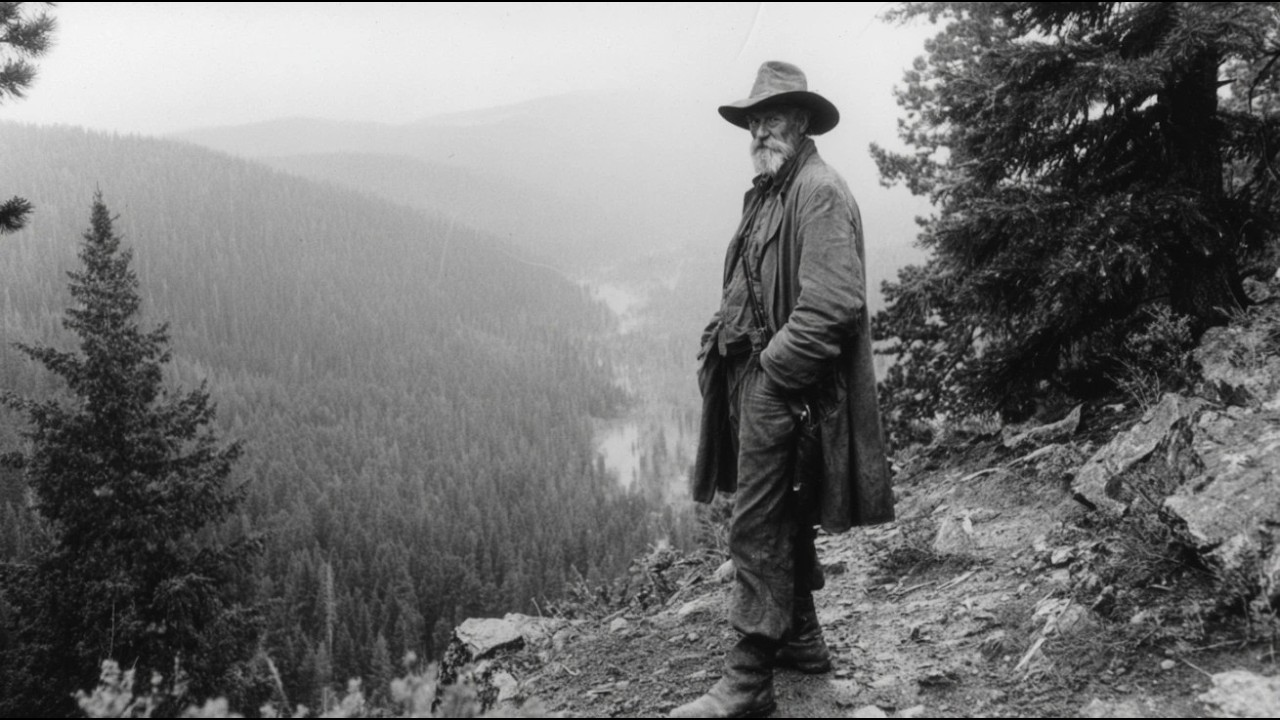
But it was the middle of a frozen Montana winter. There was no water anywhere within a hundred miles that had not turned to solid ice, and the snow outside was three feet deep and crusted hard. This was not the first time. The sound had been coming for years, on and off, always at night, always near the cabin, always leaving no tracks in the morning.
By then Wendelin had learned the rules. You do not look. You do not speak. You do not name it.
And above all, you do not follow the sound outside. An old French-Canadian trapper named Theophrastus Roussel had given him those rules in May 1888, after Wendelin had ridden down to Stevensville to ask him about a strange encounter in the high country the previous summer. That encounter had happened in early August 1887, in a basin south of Lost Horse Creek that Wendelin called Quiet Bowl. He had named the place himself more than a decade earlier because of its strange property: when you stepped down into it, all sound from the outside world stopped.
The wind moved the pines but made no noise. A spring poured into a stone basin without a splash. A fire burned without a crackle. And then a black collie, the kind Scottish ranchers kept up around Hamilton, had walked out of the timber on the far side of the spring.
It drank for a long time without ever raising its head, without ever doing the small check a real dog does when it knows another living thing is watching. Then it looked at him. Wendelin wrote in his account that its eyes were not the eyes of a dog, but the eyes of something that had been pretending. He had gone home that autumn, shaken but alive, and told himself he had seen a stray.
Then the winter came, and the shaking sounds began outside his cabin door, and every morning the snow lay smooth and unmarked. He never found a track. The visits continued through the winter, and by spring he had lost twelve pounds and his hair had gone almost entirely white at the temples. When he went down to Darby for supplies, he sought out Theophrastus, the oldest living man who had worked those mountains.
The old trapper told him that there were places in the Bitterroot high country that did not belong to the world the way the rest of the country belonged to it. The Salish people had a word for them that meant roughly the standing still. In those places, time and sound and the rules of the living world worked differently, and things waited. They were very old, older than the trees, older possibly than the rocks, and they were very good at pretending.
When a man entered one of their places, they would offer him something familiar: a friend, a horse, a dog. Whatever the man had loved or lost, they would shape themselves into it and let him approach. If he approached, they took him. Not necessarily his body, but something else, and the man would never be entirely himself again.
And for the rest of his life, the place would visit him, make small sounds at his door, and wait. At the end of his life, when he was tired and his guard was down, it would try one final time to bring him back. Theophrastus gave him three rules and made him swear he would follow them. Do not look at it.
Do not speak to it. Do not name it, because the name becomes the rope between you and it, and the rope cannot be cut. And never, ever follow the sound out of the cabin. The old man added one final warning: do not bring another person into your house, because what has found you will become curious about him, and you will have done him a harm he did not deserve.
Theophrastus died of pneumonia that autumn. Wendelin went home and followed the rules. For a while, it seemed to work. The shakings came less often, once a week, once a month, until there were whole seasons of silence.
He began to believe he had starved the thing by refusing to feed it with attention. Then, in the summer of 1890, he took on a young apprentice. Oberon Tallifer was twenty-four years old, a tall, thin, soft-spoken fellow from eastern Pennsylvania who had come west to make his fortune in the fur trade a decade too late. He was kind and eager, and Wendelin had been alone too long.
The warning of a French-Canadian trapper three years dead had begun to feel like the warning of a dream he could no longer quite remember. He did not tell Oberon about the bowl. He did not tell him about the shaking. He told himself it was kindness.
In September of that year, while they were running a trap line about six miles north of the cabin, Oberon asked if Wendelin had heard a dog shake itself up the slope. Wendelin said no. Two weeks later, back at the cabin, Oberon mentioned at supper that he had been hearing the same sound outside the cabin wall for several nights. Wendelin understood then, with a cold and terrible clarity, that he had made a mistake the size of a mountain.
He told Oberon the whole story that night and made him swear on his mother’s grave that he would never go outside in the dark to find what was making it. Oberon swore. Wendelin believed him. The winter passed.
The shakings came more often than they had in years, sometimes twice a night. Oberon did exactly what he had been told: he turned his face to the wall, counted his breaths, and did not look. Wendelin began to think they would get through it. On the night of February 14, 1891, the shaking started a little after midnight.
It was different that night. It was closer than it had ever been, right against the door, and continuous, a wet animal flinging itself dry over and over for minutes on end. Then it stopped. And through the door came a woman’s voice.
It said one word. It said Oberon. Oberon sat up in his cot. It is my mother, he said.
She died when I was nineteen. That is her voice. Wendelin moved between him and the door and told him it was not his mother, that the thing had been listening to him every night for almost six months and knew the one word in the world that would make him stand up. The voice came again, using the woman’s words, calling him sweetheart, saying she was cold.
Oberon was crying, his hands on the edge of the cot, staring at the door. Wendelin held out his hands and made him look at his face instead. He told the young man that he would not survive it, that the man who walked out into that snow would not be the man who came back. After a long time, Oberon sat back down.
The voice came once more, and he did not answer it. Eventually it stopped, and it did not come back that night. In the morning there were no tracks, of course. Oberon went outside and wept for almost an hour, then said he wanted to leave.
Wendelin packed the mules and took him down to Darby and put him on the southbound stage with a letter of recommendation and what cash he could spare. Oberon wrote him one letter the following summer to say he had married and was working in Pennsylvania, and that he still heard the shaking sometimes, once or twice a year, always on cold, clear nights. He had learned to sleep through it. Wendelin went back to the cabin alone in the spring of 1891.
He never took on another apprentice. He never invited another man to stay the night. When other trappers came up the trail hoping for shelter, he met them outside the door and sent them back down the mountain before sundown. He earned a reputation as a hard old man, and he did not mind.
The reputation kept them away. The reputation kept them safe. In the last year of his life, something changed. He was seventy-six, slow on his feet, and knew the winter coming was likely to be his last.
He had written his will on the back of an old trapping ledger, set aside a little cash for Oberon under the floorboards, cleaned his rifle one last time. And then, out of the timber behind the cabin, he began to hear his own voice calling to him. Sometimes it was his own name. Sometimes it was the name of a mule who had died years before.
Sometimes it was a small, soft German word from his mother’s kitchen, a word that meant more or less come. He understood what was happening. The visitor had been with him for sixteen years and had finally figured out the one shape that would bring him outside. It had figured out how to be him.
He wrote near the end of his manuscript that he would not go. He had promised the old Frenchman, on his soul, that he would not go, and he would die in that cabin, in that bunk, with the door closed. His last line in the manuscript was a confession that in the small hours he had begun to wonder whether what called from the trees was the visitor pretending to be him, or whether the visitor and he had become the same thing over those long years, and he was only finally calling himself home. Wendelin died in the deep cold of January 1903.
The Methodist circuit writer who held his manuscript, a Reverend who had been instructed not to open it until after his death, read it sitting at his kitchen table and did not move for two days. When he finally rode up to the cabin in the late spring, he found the door barred from the inside. Wendelin was in his bunk, face turned to the wall, hands folded on his chest. He had been dead, the reverend estimated, for somewhere between two and four months.
There were no signs of struggle and no tracks in the snow anywhere within sight of the building. The cabin burned to its foundation in a lightning strike in 1922. The bowl south of Lost Horse Creek is still there, unnamed on the topographical maps. Rangers in that district occasionally mention, off the record, that solo hikers come back from that country changed.
Not hurt, not lost, changed. They hear a dog shake itself in the timber where there is no dog, or a voice call their name from a place where no one is. The rangers nod and smile and let them go home, but they make a quiet note in the log. And once or twice a year, one of those names turns up again, not as a hiker anymore, but as a missing person.
The search teams go out. The dogs lose the scent every time, at the same elevation, in the same kind of country, near a clear spring in a small basin where the wind moves in the pines and makes no sound. Wendelin wrote one last thing in the margin of his manuscript, in a different ink, as if he had added it in the final week of his life: If you hear it shake, do not look. If you hear a voice you love, do not answer.
And if one night you hear your own voice calling you out into the dark, then be the strongest you have ever been, because there is no one I can send to help you.