They scattered his ashes at sea to prevent a shrine. Within months, his sons were preparing for violence. The execution of Adolf Eichmann in 1962 was meant to close the darkest chapter of the twentieth century. Instead, it set the stage for a new one.
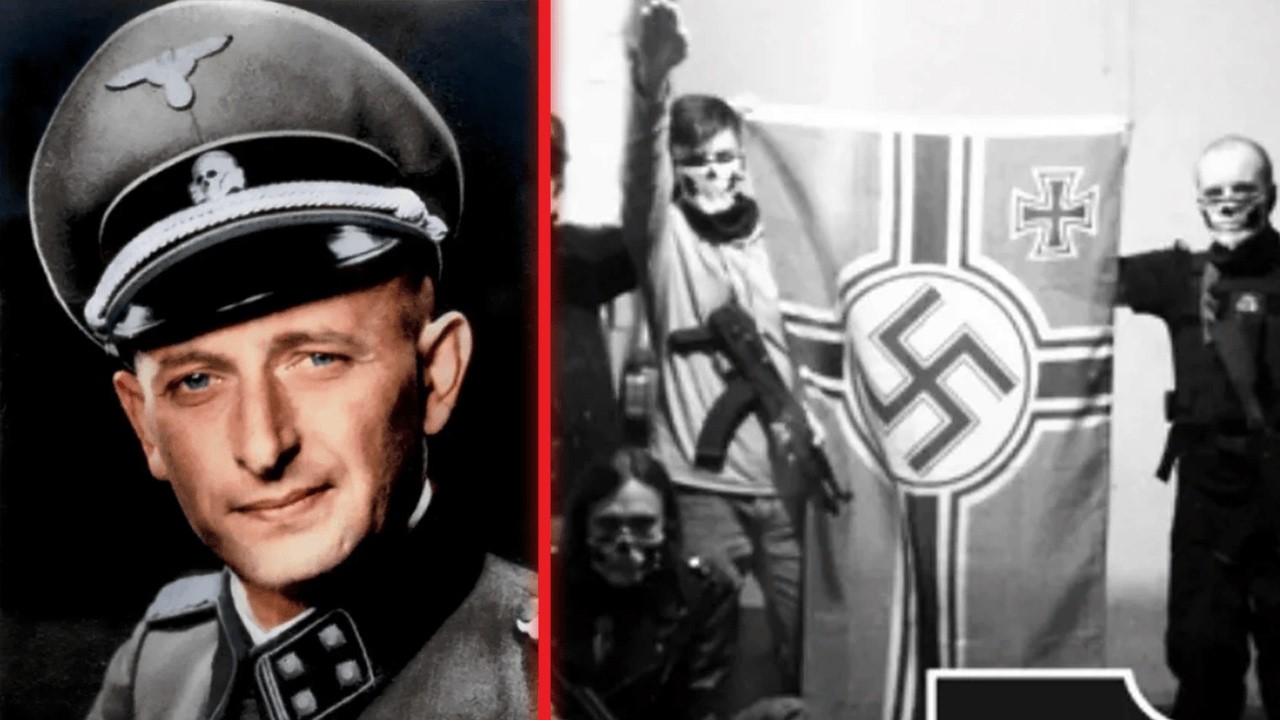
Three of his four sons turned their father’s death into a twisted mission, carrying hatred forward through terrorism, while one son chose to walk away. The life that Adolf Eichmann built in Argentina was an elaborate lie. In 1950, he arrived in Buenos Aires as Ricardo Clement, accompanied by his wife and four sons. He found work at a Mercedes-Benz factory.
He paid his bills on time. Neighbors described him as quiet, disciplined, unremarkable. His sons attended local schools, speaking Spanish with German accents, calling him simply “father. ” They never knew him by his real name.
Eichmann had escaped Europe with help from Catholic clergy and Nazi networks. During the war, he had organized the logistics of genocide: train schedules, deportation quotas, the machinery that carried approximately six million Jews to their deaths. Now he assembled car parts. The change of identity was complete on paper, but ideology does not vanish with a name.
At home, behind closed doors, the lessons continued. Eichmann never recanted and never apologized. He taught his sons that the world had misunderstood him, that history would vindicate their family name. The poison passed from father to sons like an inheritance, and they accepted every word.
The event that destroyed his cover began as a romantic gesture. In March 1960, Klaus Eichmann brought flowers home for his girlfriend, Sylvia Hermann. A simple act. But Sylvia’s father, Lothar, was a half-Jewish German immigrant who had fled the Nazis.
When Klaus mentioned his father’s wedding anniversary, the same date Adolf Eichmann had married, Lothar’s suspicions were ignited. He contacted Fritz Bauer, a German prosecutor hunting Nazi war criminals, who passed the intelligence to Mossad. The Israeli intelligence agency had been searching for Eichmann for fifteen years. Now they had an address.
On May 11, 1960, Eichmann stepped off the bus on Garibaldi Street after his shift at the factory. Mossad agents grabbed him and dragged him into a car. The entire operation took seconds, and neighbors saw nothing unusual. For nine days, he was held in a safe house, where he was forced to confirm his identity and eventually admitted who he was.
The mask of Ricardo Clement dissolved. On May 20, agents drugged him, dressed him as a flight attendant, and smuggled him onto an El Al plane. When he woke, he was in Israel. The trial that followed exposed everything, and his sons were watching.
It began in Jerusalem on April 11, 1961. Eichmann sat inside a bulletproof glass booth, headphones translating testimony into German. Cameras broadcast every moment to millions around the world. Survivors testified about cattle cars packed with human cargo, gas chambers disguised as showers, and children torn from their mothers’ arms.
Eichmann showed no emotion. He claimed he had only been following orders, a bureaucrat doing his job. The trial lasted four months, with more than one hundred witnesses giving testimony. The evidence was overwhelming: documents bearing his signature, orders he had issued, the systematic machinery of death he had coordinated.
On December 15, 1961, the verdict came down. Guilty on all fifteen counts. The sentence was death by hanging. In Argentina, his sons absorbed every word.
To them, the trial was not justice. It was theater, a show trial designed to humiliate their family name. The testimonies were propaganda. Their father was not a war criminal.
He was a martyr being sacrificed to appease Jewish vengeance. The appeals process dragged on for months. Eichmann’s lawyers argued technicalities, and Israel’s Supreme Court rejected every motion. The execution date was set.
In the shadows, three brothers began planning how to make the world pay for what had been done to their father. Just before midnight on May 31, 1962, Adolf Eichmann walked to the gallows at Ramla Prison. His last words were defiant. He declared himself a German officer who had served his country.
He expressed no remorse. The trap door opened, and his neck snapped. Within hours, his body was cremated and his ashes scattered beyond Israel’s territorial waters. The execution was supposed to bring closure.
Instead, it created martyrs in the eyes of his sons. Klaus, Horst, and Dieter Eichmann did not grieve like ordinary children who had lost a father. They radicalized. The trial had exposed their childhood lie: Ricardo Clement was Adolf Eichmann, architect of genocide.
But instead of rejecting their father’s legacy, they embraced it with renewed fervor. They made contact with neo-Nazi networks across Europe, including former SS officers, underground fascist cells, and extremist groups operating in Spain, Germany, and Austria. The brothers attended secret meetings, absorbed propaganda, and studied bomb-making techniques and guerrilla tactics. By 1963, they had become active participants in far-right terrorism.
Klaus worked with groups planning attacks against Jewish targets. Horst developed connections with Arab extremist organizations that shared their hatred of Israel. Dieter, the youngest, served as courier and recruiter. The ideology their father had planted in childhood now bloomed into operational violence.
They did not merely believe Jews were the enemy. They were preparing to act on that belief with explosives and assassination plots. But there were four sons. The fourth, Ricardo Francisco, chose a different path.
While his brothers descended into extremism, he walked away. He changed his name and built a life separate from the poison. The family fractured along the fault line of choice: those who doubled down on hatred and one who refused to carry it forward. By 1964, the Eichmann brothers were operational.
Intelligence agencies across Europe had begun tracking their movements. Horst had made multiple trips to Spain and Austria, meeting with former SS officers who had escaped prosecution. Klaus maintained contact with extremist cells in Germany. Together, they were building something deadly.
The plan they developed was chilling in its deliberate cruelty. They intended to bomb Jewish community centers and schools. The targets were not military installations or government buildings. They were places where children gathered: synagogues during services, cultural centers during holiday celebrations.
The goal was maximum civilian casualties, specifically targeting the children of Holocaust survivors. It was their father’s work continued by different means. Adolf Eichmann had sent children to gas chambers. His sons wanted to blow them apart with explosives.
By 1965, they had acquired bomb-making materials, conducted surveillance on potential targets, and established safe houses and communication networks. The planning was meticulous, methodical, traits inherited directly from their father’s bureaucratic approach to mass murder. But intelligence services were closing in. Mossad had been monitoring the brothers since the execution.
German authorities had opened investigations. The net was tightening. The terror plots were eventually disrupted. The brothers scattered across continents, their hatred intact, but their plans exposed.
Justice hanged Adolf Eichmann, but it could not hang his ideas. The family split down to a single question: does blood determine destiny? Three brothers chose terrorism.
Ricardo Francisco chose silence and distance, changed his name, rejected his father’s ideology, and disappeared into anonymity.