In the winter of 1861, standing on the floor of the United States Senate to announce his resignation, Jefferson Davis warned his colleagues of something almost none of them wanted to hear. If the Southern states left the Union, he said, the result would not be a short, glorious contest settled in months. It would be a long, brutal, devastating war, one that would cost far more blood than either side currently believed. Politicians on both sides dismissed the warning as political theater.
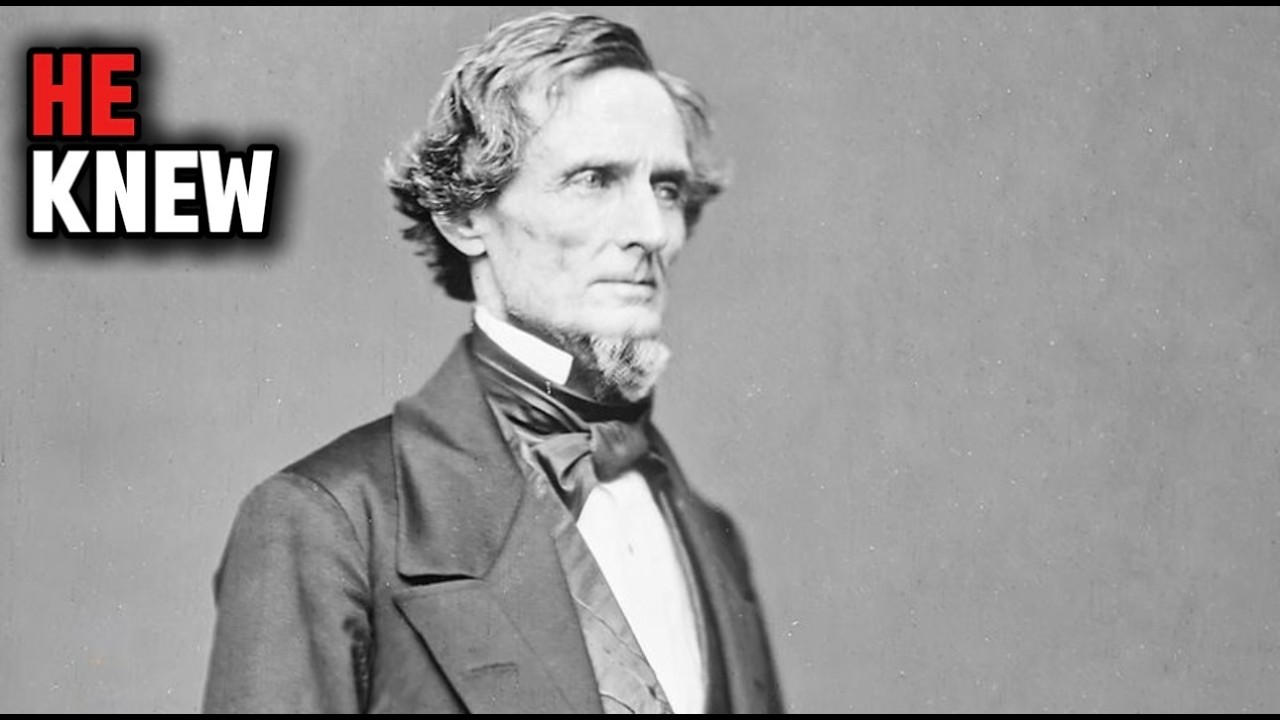
Southern newspapers kept promising readers a quick, triumphant victory. Davis turned out to be right about nearly everything that followed. And yet the same man who correctly predicted how the entire conflict would unfold went on to make some of the worst personnel decisions of the war, repeatedly refusing to listen to the very people trying to warn him once he finally held the authority to act. Few men in the secession crisis had anything close to his level of genuine military expertise.
That gap in experience is exactly what made his warning so uncomfortable for the people who chose to ignore it. Davis had graduated from West Point, led troops in combat during the war with Mexico, and served as United States Secretary of War under President Franklin Pierce. He had commanded soldiers under fire and run a war department. Almost nobody else pushing for secession across the South had anything resembling that resume.
That expertise is also why the Confederacy, somewhat reluctantly on Davis’s own part, turned to him to lead the new government once secession actually happened. Davis had not campaigned for the presidency of the Confederacy. Reportedly, he would have preferred a military command, a role that matched his training far more closely than the political and administrative burden he was about to inherit. By his own account, he received word of his selection while working in his garden in Mississippi, and the news brought him little of the excitement a more ambitious man might have felt.
He accepted the position anyway, carrying into office the same clear-eyed understanding of what the coming war would cost that he had failed to make his own colleagues understand months earlier. That reluctance complicates the simple villain narrative often attached to Davis. He was not a man eager for war, chasing glory or personal power at the head of a new nation. By most contemporary accounts, he was a serious, somewhat humorless administrator who understood with unusual clarity how much suffering the path his region had chosen was about to demand, and who took on the leadership of that doomed effort out of a sense of obligation rather than appetite for the role itself.
Here is where the story turns. Understanding a war in theory and running one in practice turned out to be two entirely different skills, and Davis’s confidence in his own military judgment would soon become one of the Confederacy’s most persistent and costly problems. He took an unusually hands-on approach to military strategy from the earliest days of the war, a habit that grew directly out of his own background rather than any sense of insecurity about his authority. Where other heads of state might have deferred tactical decisions to professional soldiers and limited themselves to broader political and diplomatic matters, Davis saw no reason to step back from questions he genuinely understood better than most of the men reporting to him.
He reviewed troop movements personally, weighed in on promotions and demotions across multiple theaters, and treated his cabinet and field commanders less as independent decision-makers and more as subordinates whose judgment he felt entitled, and often qualified, to overrule. For a man who had genuinely earned his military credentials, that confidence was not entirely unreasonable on its face. The trouble was what happened whenever the people underneath him turned out to be right about something Davis had already made up his mind about. Nowhere does that trouble show up more clearly than in Davis’s relationship with General Braxton Bragg, a man almost every officer who ever served directly under him eventually came to distrust.
Bragg commanded the Confederacy’s primary field army in the Western Theater for roughly two years, and across nearly that entire stretch, his own senior subordinates tried again and again to warn Davis that Bragg’s leadership was actively costing the Confederacy the war in the West. After a disappointing campaign into Kentucky in 1862, criticism grew loud enough that Davis summoned Bragg to Richmond to personally account for his decisions. Davis heard him out, accepted his explanation, and sent him right back to command. The pattern repeated itself after a bloody, inconclusive battle at Murfreesboro that winter.
It reached its most extraordinary point in the fall of 1863, immediately after Bragg’s army won a hard-fought tactical victory at Chickamauga, a battle Bragg then completely failed to capitalize on, allowing a defeated Union army to retreat safely into Chattanooga instead of destroying it outright. What happened next is almost unheard of in military history on either side of the Civil War. A dozen of Bragg’s most senior generals, officers with the rank and standing to know exactly what they were risking, signed a formal petition demanding that Davis remove Bragg from command entirely. Putting a formal complaint like that in writing was itself an extraordinary act of professional risk, the kind of move that could end a career regardless of how the complaint was resolved.
The fact that so many senior officers were willing to take that risk together says something on its own about just how badly they believed Bragg’s continued command was damaging the army’s chances of survival. Davis did not simply read the petition and issue a response from Richmond. He traveled personally to the army’s camp at Chattanooga, sat down face-to-face with Bragg’s own top commanders, with Bragg himself reportedly present in the room for at least part of the conversation, and listened as they laid out, one after another, specific and detailed complaints about Bragg’s competence and judgment. Davis heard every argument directly from the men who had actually served under Bragg in combat.
And then, having listened to all of it in person, in detail, from multiple independent sources pointing toward the same conclusion, he chose to keep Bragg in command anyway. He departed Chattanooga with a pointed warning of his own aimed squarely at the officers who had dared to challenge his decision, cautioning them that sowing discontent in an army only prepared the ground for its eventual slaughter and defeat. That alone might be understandable as a single stubborn misjudgment if it had been an isolated incident. It was not.
Davis’s unwillingness to act on nearly unanimous direct testimony from his own senior officers reveals something deeper about how his confidence in his own judgment operated once real pressure arrived. He had been right about the shape of the entire war back in 1861, publicly, loudly, and against the consensus of nearly everyone around him. That experience appears to have taught him a lesson that worked against him for the rest of the conflict: being right once against overwhelming disagreement meant he could continue trusting his own instincts even when an entire room full of experienced combat officers was telling him something different. The cost of that blind spot did not stay contained to a single army or battle.
Bragg eventually offered his resignation after a crushing defeat at Chattanooga weeks later, a defeat that followed directly from exactly the kind of command dysfunction his own generals had been warning Davis about for over a year. Rather than stepping away from military decision-making after that disaster, Davis brought Bragg to Richmond and installed him as a military advisor working directly alongside the president himself. The very man Davis’s own generals had begged him to remove was now in a position to keep shaping Confederate strategy for the rest of the war. Bragg was far from the only commander whose relationship with Davis curdled into something closer to open hostility.
The clash with General Joseph Johnston reveals a slightly different but equally damaging version of the same problem. Davis and Johnston had a personal history that soured almost immediately after the Confederacy’s founding, rooted partly in a dispute over Johnston’s relative rank compared to other Confederate generals, a slight Johnston never fully got over and one Davis never seemed interested in smoothing over either. What started as a dispute over army seniority lists hardened over time into something closer to mutual personal contempt. Letters between the two men grew increasingly cold and formal as the war progressed, stripped of anything resembling the collegial trust that should exist between a commander-in-chief and one of his most senior field generals.
That friction reached a breaking point during the defense of Atlanta in 1864. Johnston’s cautious defensive strategy against an advancing Union army under William Sherman struck Davis as dangerously passive rather than prudently calculated. Johnston had spent months slowly trading territory for time, falling back toward Atlanta while inflicting casualties on Sherman’s advancing forces without risking his own army in a large-scale battle he was not confident he could win outright. The strategy was built around preserving his army’s fighting strength for as long as possible rather than gambling it away in a single decisive confrontation.
Davis, watching Confederate territory shrink with each passing week, grew convinced that Johnston’s caution had curdled into something closer to an unwillingness to fight at all. Davis removed Johnston from command in the middle of that campaign, replacing him with a far more aggressive commander whose subsequent attacks against Sherman’s forces produced heavy Confederate casualties without meaningfully slowing the Union advance. Atlanta fell within weeks of that change in command, a loss that devastated Confederate morale and significantly boosted President Lincoln’s re-election prospects in the north that same autumn. Johnston’s cautious approach, the exact instinct Davis had grown too frustrated to tolerate, may well have been the more sensible strategy given the actual military situation on the ground, a judgment that history and a good number of later historians have tended to side with.
Taken together, the Bragg and Johnston episodes point toward the same uncomfortable truth. Jefferson Davis really did understand things almost nobody else grasped as clearly, particularly in those final tense months before the war began. When his warnings about the coming catastrophe were dismissed as political theater by men who would spend the next four years learning exactly how wrong they had been to ignore him.
But that same hard-earned confidence, once Davis finally held the power to act on it without needing anyone else’s permission, curdled into something far less useful: a conviction that his own judgment deserved more weight than the direct, detailed, repeated warnings of the men actually watching his strategic decisions fail in real time on real battlefields.