Axl Rose stood at the peak of rock stardom in 1987 when Guns N’ Roses released Appetite for Destruction, an album that would redefine the sound of hard rock. With anthems like Welcome to the Jungle, Sweet Child o’ Mine, and Paradise City, the record captured a raw, reckless energy that set the band apart from the polished glam metal that dominated the airwaves. It topped charts, earned multiple platinum certifications, and became one of the most celebrated rock albums of all time. At the center of it all was Rose, a frontman with a powerful voice, an undeniable presence, and a reputation that would become as infamous as his music.
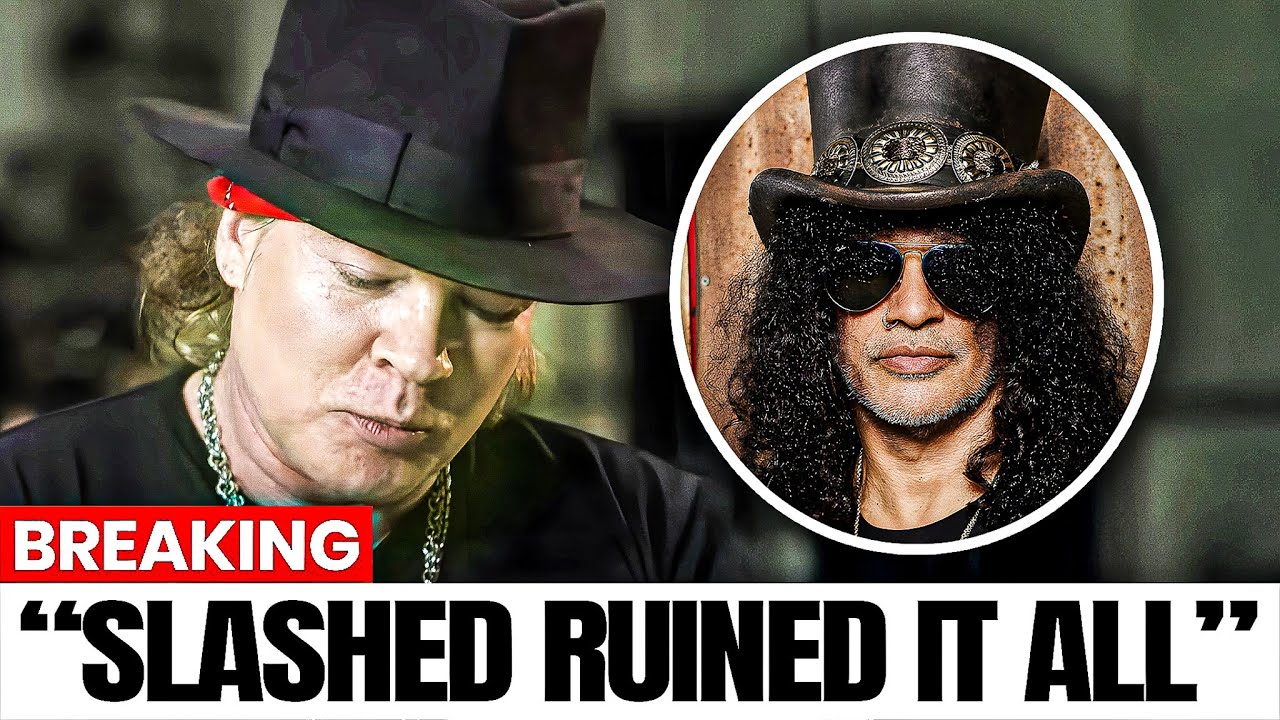
Born William Bruce Rose Jr. in Lafayette, Indiana, in 1962, Axl grew up in a turbulent household, marked by a broken home and a deep sense of alienation. Music became his escape, and drawn to the sounds of Queen, the Rolling Stones, and Aerosmith, he moved to Los Angeles as a teenager. There, in the mid-1980s, he and several musicians formed Guns N’ Roses, a band that quickly built a following in the LA scene for its explosive live shows and unapologetic attitude.
It was Rose’s charismatic but unpredictable stage presence, combined with the raw talent of his bandmates, that set them apart. By the late 1980s and early 1990s, Guns N’ Roses had become one of the biggest rock bands in the world, and Rose was the face of a movement that rejected the polished excess of the era in favor of authenticity and grit. But the same fiery personality that fueled his artistry also fueled chaos. In 1991, during a performance at the Riverport Amphitheater in St.
Louis, Missouri, Rose reached a boiling point. He had spent the evening frustrated with the venue’s security, feeling they were not doing enough to protect the band and the audience. When he spotted a fan in the crowd taking photographs, in direct violation of the venue’s policy, he became agitated. He demanded that security remove the fan, but when no one responded quickly enough, Rose took matters into his own hands.
He jumped off the stage, charged into the crowd, and confronted the fan directly. When he returned to the stage, he was livid. He announced, “Well, thanks to the lame-ass security, I’m going home,” and walked off, leaving the band and the audience in disbelief. The show did not end there.
Fans, enraged by their idol’s sudden departure, erupted. The venue descended into chaos as concertgoers clashed with police, destroyed property, and caused widespread mayhem. Over sixty people were injured, and the amphitheater suffered extensive damage, with broken equipment and trashed seats. Guns N’ Roses faced an estimated $200,000 in damages, and Rose faced multiple lawsuits from the venue and attendees.
An arrest warrant was issued for inciting the riot, and Rose avoided capture by staying out of Missouri for years. He remained largely unapologetic about the night, defending his actions by pointing to the poor security and disorganization he had endured. “It’s not like I just decided to throw a fit out of nowhere,” he later said. “There were reasons, but people don’t see those.
” But the damage was done. The incident cemented his reputation as a volatile and unpredictable performer and added to the narrative of Guns N’ Roses as a band teetering on the edge of self-destruction. The internal tensions within the band were just as destructive. For years, the creative partnership between Rose and guitarist Slash had defined the band’s sound and success.
But as fame grew, so did their differences. Rose, driven by perfectionism and a desire to push musical boundaries, wanted to experiment with new sounds and evolve the band’s style. He saw this as a way to shape a legacy that transcended hard rock. Slash, by contrast, believed in preserving the raw, untamed rock energy that had made Guns N’ Roses famous in the first place.
He resisted Rose’s experimental leanings, and the two could no longer collaborate effectively. Their creative friction spilled into personal animosity, and in 1996, Slash left the band. His departure marked the end of an era. Fans were devastated, and the chemistry that had driven the band’s success was gone.
In the years that followed, bassist Duff McKagan and drummer Matt Sorum also left, leaving Rose as the only original member. He later acknowledged that the split was the result of irreconcilable differences, admitting, “We were just two different people with two different visions. But maybe there were better ways to handle it. ” Despite his reflection, the damage to the original lineup was permanent, and the band’s glory days seemed over.
Rose’s relentless perfectionism soon found a new outlet, one that would test the patience of fans and the music industry alike. In 1994, during the peak of Guns N’ Roses’ success, he promised a follow-up to the massive Use Your Illusion albums. That promise became Chinese Democracy, one of the most delayed and highly anticipated albums in rock history. What was meant to be a quick project stretched into a decade-long production saga, plagued by constant lineup changes, a revolving door of producers, and Rose’s obsessive need to get every detail right.
He frequently scrapped material, reworked songs, and pushed the band to experiment with industrial, electronic, and orchestral sounds. The album’s production cost an estimated $13 million, making it one of the most expensive albums ever made at the time. Fans grew skeptical, wondering if the project would ever see the light of day, and the industry began to question whether the album had become a myth. Finally, in 2008, Chinese Democracy was released.
The reaction was mixed. Some praised it as an ambitious and daring evolution of the band’s sound, while others criticized it as overproduced and lacking the raw energy of the early work. The album’s fragmented, polished production reflected both Rose’s ambition and his inability to let go. It was a monument to his vision, but also a cautionary tale about the dangers of overthinking in the creative process.
While it never fully lived up to the astronomical expectations surrounding it, Chinese Democracy became a symbol of Rose’s personal journey and his determined, often costly, pursuit of perfection. Rose’s relationship with the media was equally fraught. From the early days of the band, he was known for being hostile toward journalists, believing his words were often distorted or misrepresented. In 1992, during an interview with Rolling Stone, he abruptly stormed out after being pressed about his personal life, cementing his reputation as temperamental and difficult.
By the early 2000s, his mistrust had only deepened. At a 2002 press conference promoting a tour, he responded to questions about Chinese Democracy’s delay and the band’s turbulent history with profanity-laced rants, dismissing the inquiries as irrelevant. He became increasingly selective about public appearances, reducing interaction with journalists to a minimum. This behavior fueled the public image of him as a reclusive, unpredictable figure, one who not only avoided meaningful dialogue but also reinforced a cycle of negativity around his name.
His reputation for showing up late to concerts, or cancelling them outright, became one of the most controversial aspects of his career. Fans grew accustomed to long delays, and those delays became a defining characteristic of Guns N’ Roses live performances. In 2006, at the Download Festival in the UK, fans waited over an hour past the scheduled start time before the band took the stage, only to face technical issues and a performance that left the audience visibly upset. In 2010, in Dublin, Rose showed up late again, prompting a chorus of boos.
The band briefly left the stage before reluctantly returning to finish the set. Critics and fans alike questioned whether Rose had any regard for his audience, and the relationship between the band and its fans began to deteriorate. Concert promoters and venues grew wary of booking Guns N’ Roses, knowing that performances might be plagued by delays or cancellations, and the logistical challenges of organizing shows strained relationships within the industry. Rose maintained that the delays were often caused by technical issues or circumstances beyond his control, but the public remained skeptical.
Despite the turmoil, the story of Guns N’ Roses took an unexpected turn in 2016. After nearly two decades of separation, Rose and Slash reunited on stage. To the surprise of many, the two had mended their relationship, and the classic lineup of the band was back together. The reunion tour was a massive success, with tickets selling out in minutes and shows drawing enormous crowds around the world.
For Rose, the reunion was both professional and personal. He spoke openly about the opportunity to move forward and acknowledged the personal growth that had taken place over the years. Slash was equally vocal about the significance of the reunion, expressing how much he had missed the chemistry between himself, Rose, and the other band members. The performances were electric, bringing a sense of nostalgia while still feeling fresh.
Fans who had waited decades to see the band in its original form were not disappointed. Axl Rose’s career remains a study in contradictions. His creative vision shaped an era, and his contributions to rock music are undeniable. But his behavior often overshadowed his genius.
He was a frontman who could ignite chaos with a single outburst, yet his journey ended on a note of reconciliation, proving that even the most volatile figures can find redemption. Through every feud, every riot, and every delay, his legacy endures. His influence on rock music is secure, and his place in its history is permanent.