The orange you peel without a second thought is a biological impossibility, a piece of genetic engineering that took millions of years of chaotic natural evolution and roughly four thousand years of deliberate human intervention to produce. Travel back eight million years to the foothills of the Himalayas and try to eat the ancestor of that orange, and your mouth would burn. The fruit would have been the size of a berry, packed with bitter seeds and so acidic that your body would physically reject it. It was a messy, genetically mixed wild plant clinging to a mountainside.
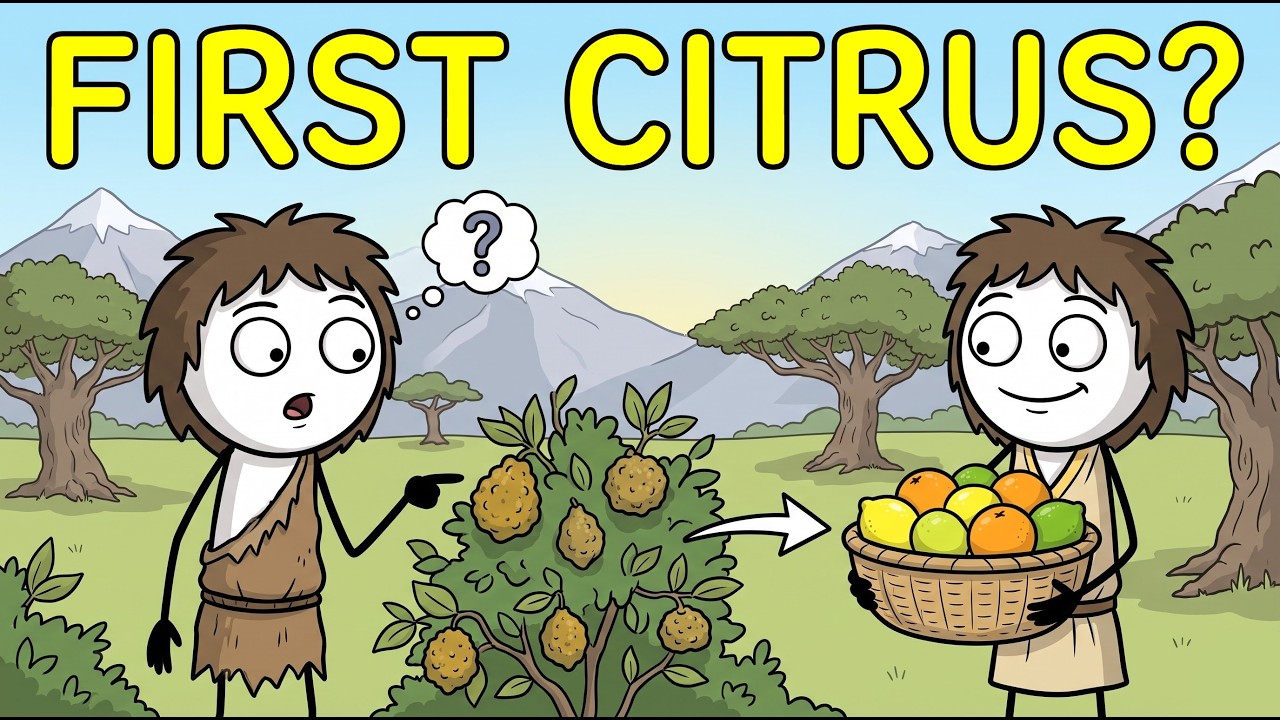
And yet, humans turned it into the largest fruit crop on the planet. The answer to how this happened begins with a genetic puzzle so complex that scientists only solved it a few years ago. In 2018, researcher Guohong Albert Wu, working with an international team at the US Department of Energy’s Joint Genome Institute, published a landmark study in Nature that finally mapped the chaos. They sequenced the genomes of sixty different citrus varieties from around the world and traced every citrus fruit on Earth back to a single time and place, the late Miocene epoch, roughly eight million years ago, in the southeastern foothills of the Himalayas.
Specifically, the region encompassing eastern Assam, northern Myanmar, and western Yunnan in modern China. During that period, the monsoons were weakening, the climate was drying, and in response to this pressure, the ancestral citrus plant underwent a rapid evolutionary radiation. It spread from those mountains and split into ten original species, ten wild primordial forms. Seven remained in Asia, and three somehow made it to Australia.
For the story of human domestication, only three of those ten originals truly matter: the citron, the pomelo, and the mandarin. These are the primary colors of the citrus world. Every other citrus fruit you have ever eaten is just a combination of those three. The citron is the thick-skinned, intensely aromatic, mostly dry fruit that spread west toward India.
The pomelo is the massive, thick-rinded, mildly bitter fruit that adapted to the rivers and coasts of Southeast Asia. And the mandarin is the small, loose-skinned, sweeter fruit that spread across the mountains of southern China. Nature, however, began mixing the primary colors before humans ever touched them. Natural pollination between the pomelo and the mandarin produced the sour orange.
Another pollination between the citron and the sour orange produced the lemon. A cross between the pomelo and the sweet orange produced the grapefruit. The lime is a complex hybrid involving the citron and a lesser-known wild species called the papeda. The genetic history is so messy that calling the lemon a distinct species is scientifically inaccurate.
The lemon is not a species; it is an event, a specific genetic collision that happened to taste good. This created a serious problem for early farmers. If someone found a delicious wild hybrid and wanted to grow more of it, they could not simply plant its seeds. Because of all that genetic mixing, the seeds would not grow into a sweet orange tree.
Pollen from a nearby citron or pomelo would cross with the flower, and the seed would grow into an unpredictable sour or bitter mutant. Planting citrus seeds was a genetic lottery, and the house almost always won. The answer the ancients discovered was cloning, and they did it in two completely different ways. One was a human invention, the other was a biological trick the plant itself provided.
The biological trick is called apomixis, specifically a form known as nucellar embryony. In most plants, a seed is the result of sexual reproduction. But citrus developed a way around that. Inside the developing seed, the maternal tissue surrounding the embryo, called the nucellus, can spontaneously generate embryos without any fertilization at all.
These nucellar embryos are genetic copies of the mother tree. Modern geneticists now know precisely how this works. It is driven by a specific gene, and in asexual citrus varieties, a small DNA insertion in that gene’s promoter region triggers maternal cells to start forming embryos without mating. The plant literally bypasses the lottery and copies itself.
Ancient humans did not know about DNA insertions, but they noticed the result. They observed that some trees produced seeds that reliably grew into identical copies of the original. They found a glitch in the reproduction system and exploited it. But this method only worked with certain varieties, mostly mandarins and sweet oranges.
For other species, like the citron and the pomelo, humans had to invent the second method of cloning: grafting. Grafting is the physical joining of two plants. You take a branch from a tree that produces excellent fruit, the scion, and fuse it onto the roots of another tree, the rootstock, usually a hardy wild variety. The vascular tissues heal together, and the branch continues to grow, producing its original fruit while feeding off the borrowed root system.
Grafting allowed early farmers to take a perfect chance hybrid, cut it into one hundred pieces, and create an entire orchard of identical copies. Every navel orange tree on Earth today is a grafted copy of one specific genetic mutation. It is physically the same organism stretched across millions of acres. The earliest written records of citrus cultivation take us to China during the Han Dynasty, roughly from 206 BC to 220 AD, though its cultivation goes back much further.
A classical text called the Tribute of Yu, dating from about four thousand years ago, mentions citrus as tribute offered to the imperial court from the Yangtze River region. Citrus was not just food; it was luxury, a symbol of refinement. By the twelfth century, during the Southern Song Dynasty, citrus cultivation in China had become highly sophisticated. In 1178 AD, an official named Han Yan Zhi wrote the Record of Citrus, the world’s first monograph on citrus.
He carefully classified twenty-seven different varieties growing in the Wenzhou region, describing their flavors, ideal soil conditions, and cultivation techniques. He also documented something genuinely surprising: biological pest control. Centuries before modern agriculture discovered it, Chinese orchardists were dealing with harmful insects by introducing certain species of predatory ants into their citrus groves. They bought yellow ant nests from markets, tied them onto the branches of citrus trees, and extended bamboo poles between trees so the ants could travel like highways across the orchard to hunt caterpillars and other pests.
While early engineers in other parts of the world were building primitive defensive walls for their cities, these Chinese farmers were deploying biological armies. Chinese growers also selected for extreme aesthetic mutations. The most famous is the Buddha’s Hand citron, a variety whose fruit does not fuse into a single sphere but instead splits into long, finger-like protrusions. It has almost no juice and no pulp; it is entirely rind.
But the rind is packed with aromatic oils. They bred it purely for its scent and its striking religious symbolism. They took a fruit and turned it into a living, fragrant sculpture. While the Chinese were perfecting the mandarin and pomelo, the citron was making its way west.
It was the first citrus fruit to leave Asia and reach the Mediterranean. The traditional story says that Alexander the Great’s soldiers brought it back from their campaigns in the Persian Empire around 331 BC. However, archaeological evidence, including fossilized pollen, suggests it may have arrived a bit earlier via ancient trade routes, perhaps in the fifth or fourth century BC. Whether thanks to Alexander’s army or Phoenician traders, the citron reached the classical world and puzzled everyone.
The Greek philosopher Theophrastus, writing in the fourth century BC, described it as the Persian or Median apple and noted that no one actually ate it. It was too bitter, too dry, too sour. But they loved its scent. They placed it in clothing chests to repel moths and worms.
They believed it was a powerful antidote to poison. In the Roman world, the citron, and later the early lemon, became the ultimate status symbol. The wealthy built walled gardens and used sheets of mica, a transparent mineral, to create early greenhouses called specularia. This was advanced climate control technology for the ancient world, developed only to protect a fruit tree from frost.
They were not growing food; they were displaying their wealth and their control over nature. The citron also gained deep religious significance. In Judaism, a specific type of unblemished citron, the etrog, became one of the four species used in the ritual observance of the Feast of Tabernacles. The demand for the perfect etrog drove intensive cultivation across the Middle East and Mediterranean for thousands of years.
But the real explosion of citrus in the West came later, during the Islamic agricultural revolution between the eighth and thirteenth centuries AD. As the Islamic Empire expanded from India to Al-Andalus, modern Spain, it created a vast, interconnected network of trade and botanical exchange. Bitter oranges, sour lemons, and pomelos traveled these routes. But bringing a tropical plant into the dry Mediterranean climate required more than just seeds; it required water.
Muslim agricultural engineers spread highly sophisticated irrigation techniques. While European agriculture relied heavily on unpredictable rainfall, Muslim engineers built qanats, massive underground water systems, and norias, enormous water wheels that lifted river water into irrigation channels. Writers like Ibn al-Awwam in Seville produced detailed agricultural manuals describing exactly how to grow these new thirsty trees in foreign soil. They transformed the landscape of the Mediterranean basin, planting extensive groves in Sicily, North Africa, and Spain.
This brings us to the science of taste. Why were these early fruits so sour? The acidity of citrus comes from a massive accumulation of citric acid inside the fruit cells’ vacuoles. Modern genetics has identified exactly how the plant controls this.
It is managed by a master regulatory complex called the WMBW complex, which stands for the WRKY, MYB, bHLH, and WD40 transcription factors. This complex switches on specific proton pumps, essentially CitPH1 and CitTPH5. These pumps physically push protons into the vacuoles, lowering the pH and making the juice extremely acidic. For millions of years, that extreme acidity was a defense mechanism.
But as humans selected for sweeter fruits, they were unconsciously selecting for mutations that disabled that system. When the WMBW complex is suppressed, the proton pumps slow down, the vacuole becomes less acidic, and the fruit becomes sweet. Ancient farmers were unconsciously reprogramming the plant’s proton pumps every time they picked a sweeter fruit. The sweet orange, Citrus x sinensis, did not reach Europe until the fifteenth and sixteenth centuries, brought by Portuguese traders returning from India and China via the new maritime routes around Africa.
Unlike the citron or the bitter orange, this fruit was delicious raw. It was sweet, juicy, and brightly colored. It became the most sought-after luxury commodity in Europe, and the aristocracy went mad for it. Because the sweet orange could not survive the harsh winters of northern Europe, the elite invented a new kind of architecture to keep it alive: the orangery.
The most famous was built at the Palace of Versailles for King Louis XIV in the 1680s. It housed over a thousand citrus trees planted in tubs of pure silver. In the summer, the trees were moved by cart onto the outdoor terraces. In winter, they were moved back inside and kept warm by massive stoves.
The orangery was not a farm; it was a display of power, a way for the king to prove he was powerful enough to control the climate itself and force a tropical tree to bear fruit in the harsh winter of northern France. But while kings ate oranges in glass palaces, ordinary sailors were dying by the thousands from a disease that the same orange could cure: scurvy. By the eighteenth century, scurvy was the leading cause of death at sea, killing more sailors than storms, shipwrecks, and battles combined. The disease results from a severe deficiency of vitamin C, leading to the breakdown of collagen in the body.
Your gums bleed, your teeth fall out, old wounds reopen, and eventually, your heart stops. In 1747, a Scottish naval surgeon named James Lind was serving aboard HMS Salisbury. Tired of watching men die slowly, he conducted what is now considered one of the first controlled clinical trials in medical history. He took twelve sailors suffering from acute scurvy and divided them into six pairs.
Each pair received a different purported remedy: cider, sulfuric acid, vinegar, seawater, a medical paste, and, for the last pair, two oranges and one lemon a day. The results were indisputable. Within six days, the men who ate the citrus were almost fully recovered. Lind published his findings in 1753 in a treatise on scurvy.
He proved that citrus cured the disease, but here lies the tragic part. He did not know why. Vitamin C was not discovered until the 1920s. Lind himself believed scurvy was caused by blocked sweat glands and poor digestion.
Because the underlying science was missing, the British navy ignored his results for decades. It was not until 1795, one year after Lind’s death, that the Royal Navy enforced a daily ration of lemon juice for all sailors. This decision changed naval warfare forever, allowing British fleets to stay at sea for months without their crews dying, giving them a tremendous strategic advantage over the French and Spanish. Empires were built on the back of a sour fruit, and as the global empire expanded, so did the citrus industry, sometimes in dark and unexpected ways.
In the nineteenth century, the British navy’s demand for lemons to fight scurvy triggered an economic boom in Sicily. Sicily was uniquely suited for year-round lemon cultivation, but citrus farming required continuous irrigation and careful protection. Water was scarce, and newly wealthy citrus farmers became prime targets for thieves and extortionists. According to economic historian Dr.
Arcangelo Dimecco, this sudden explosion of wealth in a region with weak law enforcement directly led to the rise of the Sicilian Mafia. Wealthy landowners hired private guards to protect their lemon groves and water supplies. These guards quickly realized that power was in their hands. They began extorting farmers, demanding protection money, and monopolizing water sources.
The origins of organized crime in Italy are directly linked to the European demand for a hybrid fruit that prevented sailors’ collagen from breaking down. Meanwhile, on the other side of the Atlantic, citrus was taking root in the Americas. Christopher Columbus had brought citrus seeds to Hispaniola in 1493. Spanish missionaries brought them to Florida in 1565 around the settlement of St.
Augustine. The trees escaped cultivation and grew wild in the Florida swamps, laying the foundation for what would become a massive agricultural empire. In the nineteenth century, two specific mutations changed the commercial market forever. The first occurred in Brazil sometime between 1810 and 1820 in a monastery garden near Bahia.
A spontaneous mutation in a Selecta orange tree produced fruit that was completely seedless, very sweet, and had a strange secondary fruit growing out of its blossom end, looking like a human navel. The navel orange. Because it was seedless, it was an evolutionary dead end, unable to reproduce. But humans took cuttings from that mutated branch and grafted them onto rootstocks.
In 1870, twelve of these grafted trees were sent to Washington, DC. From there, a few were sent to Eliza Tibbets in Riverside, California. She planted them, they thrived under the California sun, and launched the entire California citrus industry. Every navel orange you buy today is a direct genetic clone of that one mutated tree in Brazil.
Millions of trees, one genetic fingerprint. The second mutation occurred around the 1840s in Palestine, near the city of Jaffa. A mutation in a local baladi orange tree produced a fruit that was oval-shaped, nearly seedless, and had a thick, tough rind. That thick rind was a commercial miracle because it meant the fruit could survive long sea voyages without bruising or rotting.
The Jaffa orange, or Shamouti, became a massive export commodity, shipped in millions of crates across Europe and the Middle East. But here the story takes a dark turn, because the very thing that made the modern citrus industry possible, cloning, is now the thing that may destroy it. When you graft millions of trees from a single clone, you create a genetic monoculture. Every tree has exactly the same strengths, and every tree has exactly the same weaknesses.
If a pathogen figures out how to kill one orange tree, it knows how to kill them all. And right now, that pathogen is winning. Called Huanglongbing, or HLB, also known as citrus greening disease, it is a bacterial infection spread by a tiny insect called the Asian citrus psyllid. When the insect feeds on leaves, it injects the bacteria into the tree’s vascular system, specifically the phloem.
The bacteria multiply, blocking the flow of nutrients from the leaves to the roots. The tree starves from the inside out. Leaves turn yellow, fruit falls prematurely, and what remains is small, misshapen, and intensely bitter. There is no cure.
HLB has devastated the global citrus industry. In Florida alone, production has dropped by more than 70 percent since the disease was discovered in 2005. Millions of trees have been pulled from the ground and burned. Brazil is fighting it, Asia is fighting it.
It is the most serious threat citrus has faced in its eight-million-year history. Researchers are desperately seeking a solution. They are trying genome editing with CRISPR. They are searching the DNA of wild Australian finger limes and remote Himalayan ancestral species for natural resistance genes that could be re-bred into commercial crops.
The genetic diversity that made citrus a nightmare for taxonomists may be the only thing that saves it, allowing scientists to cross wild resistant traits back into the fragile cloned orange trees we depend on. The answer to how humans discovered and domesticated citrus is that we found a messy, intensely sour wild berry from the Himalayas and learned how to bypass its sexual reproduction through apomixis and grafting. We rewired its cellular proton pumps for sweetness, and we built empires, mafias, and massive global industries on the backs of its clones. We exploited biological loopholes to force a tangled web into a straight line.
Tomorrow, you might peel an orange or squeeze a lemon into your water. You will not think about eight million years of evolution, or Islamic trade routes, or Roman glasshouses, or sailors dying on a British warship. You will just eat it, and that is the triumph of domestication.
We took a biological puzzle that did not want to be eaten and made it so common, so reliable, so perfect, that you forgot it was a miracle in the first place.