Cornelia Vanderbilt was thirteen years old when she learned that even the richest man in her world could be taken from her in an afternoon. In March 1914, George Washington Vanderbilt II went into the hospital for a routine appendectomy and never came home. Within days, the only child of the richest branch of America’s richest family was alone inside Biltmore, the largest private house ever built in the United States, a 250-room monument her father had constructed as a private kingdom. It held a library of twenty-three thousand books, an indoor pool of seventy thousand gallons, a bowling alley, and acres of gardens designed by the man who laid out Central Park.
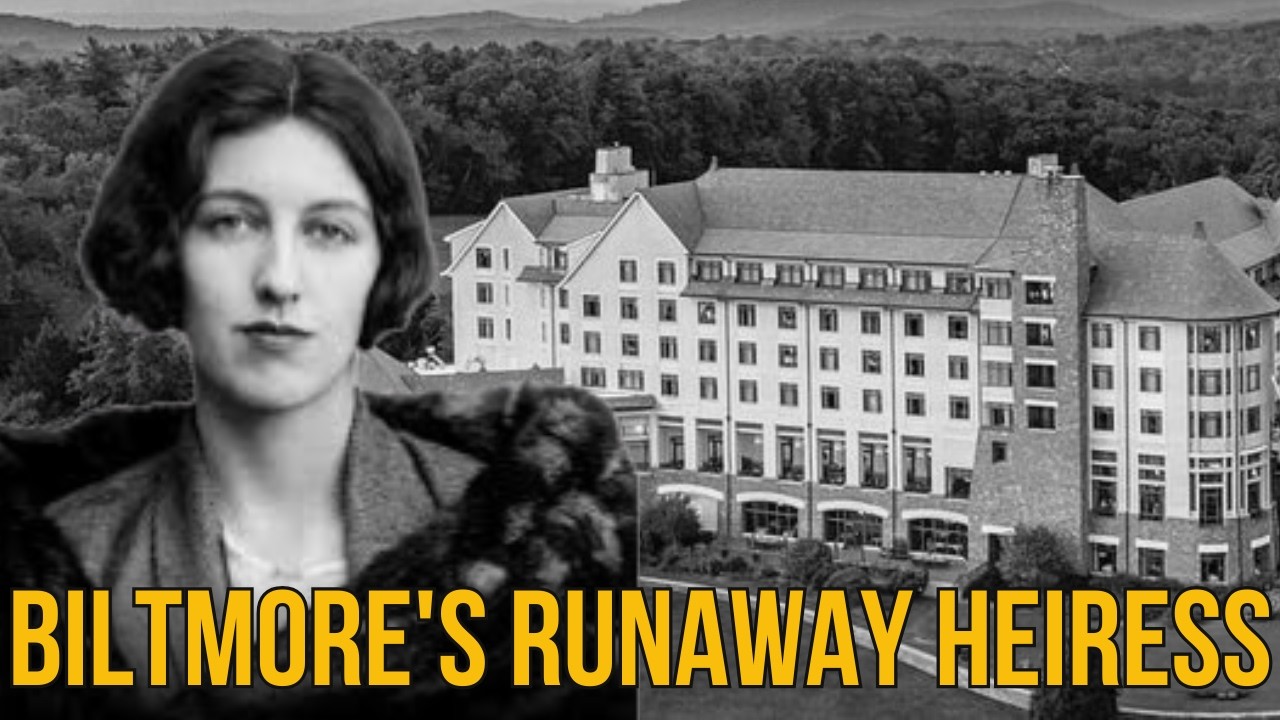
At the center of it all stood a grieving girl who had just learned the cruelest lesson wealth can teach a child, that none of it could keep the one person she needed from disappearing without warning. Cornelia grew into the most eligible heiress in America. At twenty-one she received an annuity of two million dollars a year, and at twenty-five she came into the principal, fifty million dollars, a fortune so vast in the 1920s that it defies translation into any modern figure that feels real. In 1924 she married John Francis Amherst Cecil, a British aristocrat ten years her senior who had served as a diplomat in Egypt, Spain, and Czechoslovakia before arriving in Washington as first secretary at the British embassy.
The wedding was staged like a coronation. Five hundred guests filled All Souls Cathedral, and twenty-five hundred crowded into Biltmore House for the reception. In the grand Louis XV bedroom where Cornelia herself had been born, she gave birth to her first son, George Henry Vanderbilt Cecil, in 1925, and three years later, in that same room, her second son, William Amherst Vanderbilt Cecil, arrived. On paper, she had the complete set: the titled husband, the two healthy sons, the fortune, the palace.
But beneath the surface, the fairy tale was already misaligned. Before her marriage, Cornelia had run the estate herself, managing the accounts, the staff, and the endless machinery of keeping a 250-room house alive. It had given her something her gilded life rarely offered, a purpose. When John Cecil arrived, he took over the management entirely.
Contemporary accounts put it plainly: with her husband taking the reins of the estate, the usual outlet for Cornelia’s energy was abruptly cut off. The one role that made her feel useful inside her own palace had been taken from her. She was once again a centerpiece, admired, displayed, and with nothing of her own to do. The trigger for what followed was not a scandal or an affair.
It was the collapse of the American economy. In October 1929 the stock market crashed, and the Great Depression descended. A house the size of Biltmore is not a treasure; it is a bottomless mouth. Two hundred fifty rooms to heat, acres of gardens to maintain, a village to support, hundreds of employees to pay.
By the early 1930s the Vanderbilt fortune was straining under the weight of the very house it had built. In 1930, desperate for tourism revenue, the family opened Biltmore to the public. For the first time, paying strangers walked through the family’s home. The private palace became, out of financial necessity, an attraction.
Underneath that strain, the marriage was failing in earnest. In 1932 Cornelia left Biltmore and did not come back. Two years later the divorce was made final. John Cecil retained custody of the boys, then roughly nine and six years old, and kept a wing of the house as his residence.
Cornelia took her freedom and her share of the fortune. The historical record is almost completely silent on how she justified leaving two young boys behind. She never wrote a memoir, never gave an explaining interview, left no diary. Her actions, however, all point in one direction: toward escape and reinvention, toward a woman so desperate to stop being the centerpiece of someone else’s monument that she was willing to pay the highest price a mother can pay.
What she did next was stranger than fiction. She dyed her hair a vivid, attention-grabbing pink, a radical declaration for a woman of her era and station. Then she changed her name. Fascinated by numerology, she concluded that the famous Vanderbilt name carried the wrong vibration for her fate.
She began calling herself Nilcha, a name with no meaning, no history, no dynasty attached, a name she essentially invented. She did not just leave the Vanderbilt house; she tried to leave the Vanderbilt self. For years she drifted across Europe, living in Paris and London, moving through a cosmopolitan bohemian world as far from the formal grandeur of Biltmore as it was possible to get. She married again, more than once.
She reinvented herself so completely that she became unrecognizable to her own sons. There is no record that she ever fully reconciled with them, no documented reunion, no restored relationship. The two boys she left behind did not, however, grow up to be wreckage. George was sent to school in England, as was William, and both were raised between two worlds, American by blood, English by education.
The elder son, George Henry Vanderbilt Cecil, eventually took the working side of the family inheritance, the vast dairy operation and surrounding lands, and built them into Biltmore Farms, a major enterprise that shaped the growth of Asheville. He married and stayed married for sixty-one years, raised children and grandchildren, and lived to the remarkable age of ninety-five, dying in 2020. The younger son, William, made the decision that would define his life. In 1960 he returned to Biltmore determined to do what no one believed could be done: make the largest house in America pay for itself.
Historic houses of that scale across the world were being demolished or handed to governments precisely because no private family could afford them. William looked at the same impossible math his mother had fled, and instead of running, he treated the palace not as a monument to be admired but as an enterprise to be run. He developed tours, then a winery, then hospitality, building Biltmore into a destination that drew visitors from across the world. Under his leadership, the house that had been hemorrhaging money for decades became one of the most successful historic home operations in the entire world.
He did not just preserve it; he resurrected it. He died in 2017 as the man who saved an American treasure. Biltmore today is still owned by the family, still private, still in the hands of Cornelia’s descendants. William’s children and grandchildren now run the estate their father saved.
In an age when nearly every other great Gilded Age mansion was demolished, donated, or lost, Biltmore remains what George Vanderbilt built it to be: a family’s house, held by the family, kept alive by the family’s own hands. Where Cornelia saw a cage, William saw a responsibility. Where she reinvented herself to get away from it all, he rebuilt himself around the very thing she abandoned. The lasting image of this story is not the runaway heiress with the pink hair or the invented name.
It is two boys left behind in a great empty house who grew up and decided that the legacy their mother fled was worth saving. They chose presence over escape, responsibility over reinvention, family over flight. They took the deepest wound a parent can inflict and refused to inflict it on anyone else. Cornelia Vanderbilt was given the largest house in America and every dollar a person could want, and she spent her life trying to give it back.
Her sons were given her absence, and they spent their lives building something that would last. The mother chose freedom and is largely forgotten. The sons chose responsibility and are woven permanently into the story of an American treasure.