Doris Day embodied the early 1960s paradox. She was hailed as the Girl Next Door, capable of bringing a room to life with her infectious joy, but her life did not always align with her sunny image. She once confessed that the image she carried was completely unrelated to the life she had lived. In the midst of the sexual revolution, she held on to her wholesome film roles, earning the teasing title of the world’s oldest virgin from critics in the 60s and 70s.
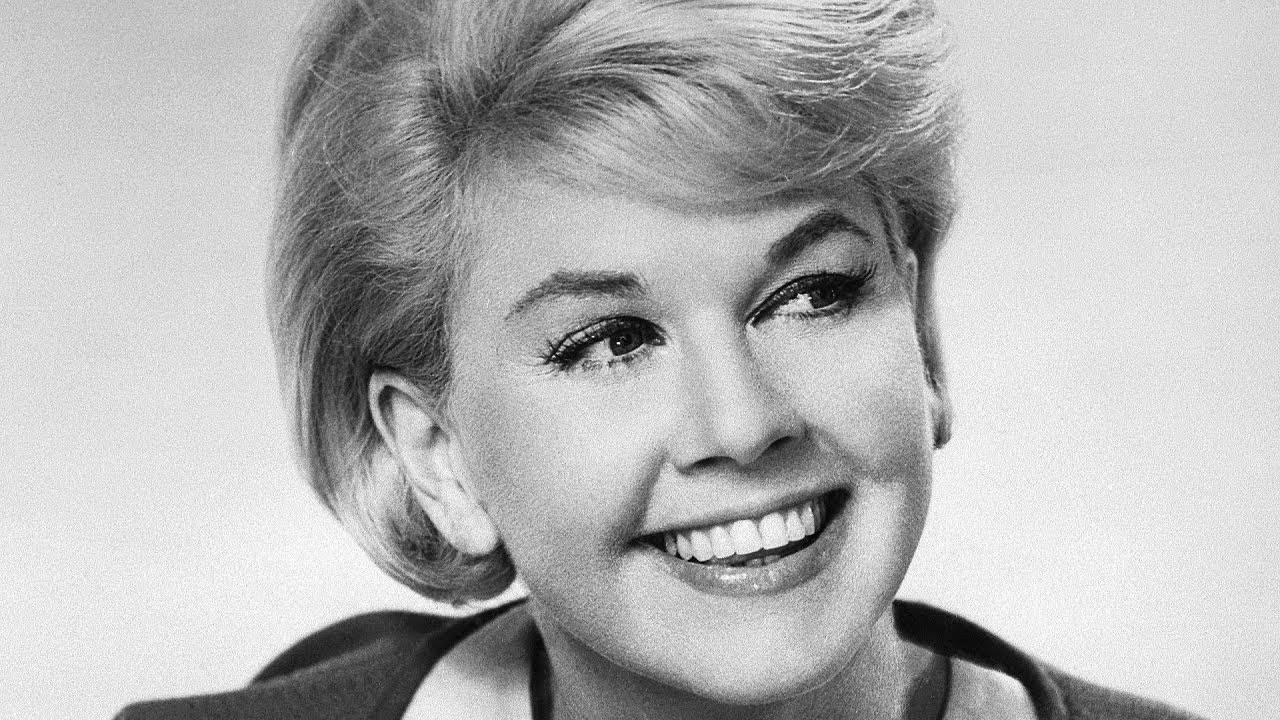
The 1950s and 60s shaped women’s images through society’s expectations and deeply rooted gender roles. Beauty standards were high, and women were expected to be the ultimate homemakers with little room for career aspirations or independence. Gender roles were clear-cut. Men were the providers, while women took care of the family.
Submissiveness was the norm. Doris Day embodied the ideal woman with her effortless charm and wholesome femininity, balancing contradictions of innocence and allure, ambition and homemaking, sophistication and approachability. Her cheerful All-American image hid a reality that was quite different. Doris Day’s destiny was sealed from the beginning.
At the tender age of ten, she stumbled upon a life-changing revelation. Her father, a music teacher, was having an affair with her best friend’s mother. It had a deep impact on her, destroying her view of men and, in her opinion, becoming the root of her series of bad decisions in relationships. In 1937, a tragic car accident struck her at just 15 years old.
Cruising with friends, their car collided with a train, shattering her right leg. Day was unaware of the full extent of her injuries. She managed to crawl out of the car, but her legs failed her, forcing her to drag herself to the roadside. As she checked her leg, her fingers touched the sharp ends of shattered bones protruding from it.
Overwhelmed, she passed out, only to awaken in the hospital. The crash left her bedridden for months. During her recovery, she unveiled her singing talent as she sang along to the radio. Ella Fitzgerald had a special place in her heart.
She was fascinated by the quality of Fitzgerald’s voice and tried to catch the subtle way she shaded her voice and sang the words. Her singing teacher, Grace Raine, had the biggest influence on her career and personal style. Raine was so awed by Day’s tremendous potential that she gave her thrice-weekly lessons for the price of one. Day still had to get a stage name.
Jazz musician Barney Rapp suggested she change it because her birth name, Kappelhoff, was too long. She took her stage name after the song Day After Day. When she dropped her first mega-hit, Sentimental Journey, it became an anthem for wartime America. She instantly kickstarted her extensive film career.
Michael Curtiz cast her in Romance on the High Seas, landing the role surprised her because she had zero acting experience. But she was exactly what Hollywood craved at the time, an authentic and all-American girl. Day soared to stardom as the queen of 1950s romantic comedies, winning hearts at the box office. She had a unique talent to paint a picture of captivating innocence within sexuality.
Even in her spicier films, Day balanced sexual allure with unwavering virtue. In a scene from Pillow Talk, she hilariously freaked out at the sight of a bachelor pad and any hints of premarital intimacy. Though she had opportunities for more dramatic roles, such as playing James Stewart’s wife in Alfred Hitchcock’s thriller The Man Who Knew Too Much, Day chose to embrace her type casting in lighter romantic comedies, often referred to as sex comedies at the time. In all her romantic comedies, a distinct formula was at play.
Her spirited, confident, yet conservative persona would captivate a slew of charming leading men like Rock Hudson, Clark Gable, and Cary Grant. She would win them over, convincing them to forsake their playboy lifestyles and propose marriage. This allowed for enticing scenarios while avoiding explicit sensuality. Critic Pauline Kael dubbed it the Doris Day routine of flirting with bed but never getting there.
Her image became a cultural punchline, best captured in a quote attributed to comedic pianist Oscar Levant: I knew Doris Day before she was a virgin. Doris Day’s bedroom secrets were far from pure. She dated Ronald Reagan, sharing the screen with him before he became commander-in-chief. Reagan was head over heels for Day, even though he was seeing Marilyn Monroe at the same time.
Reagan had a reputation as a 40-minute man. The two were both under contract with Warner Brothers and ended up co-starring in two films together, Storm Warning and The Winning Team. Day revealed she was dating several men during that time, including Reagan. She explained how she met him through a mutual friend from New York who had moved to Los Angeles.
Ronnie had recently divorced Jane Wyman and lived alone in an apartment high above Sunset Strip. They would discreetly retreat to his place, engaging in marathon love-making sessions while enjoying breathtaking views of the city. She noted two things stood out about Ronnie: his love for dancing and his gift for conversation. Ronnie was the only man she knew who adored dancing, and he had a charming personality.
Reagan wanted to propose to Day, envisioning her as the ideal wife to complement his future political career. He joked that if folks ever tired of his long-winded speeches, she could step in and belt out a tune. Nonetheless, as was often the case with Reagan, his enthusiasm for Day gradually faded. Day’s private life was plagued by tragedy.
Her first marriage to trombonist Al Jordan turned into a nightmare. She fell for the Jordan she had known while working together in various bands, but soon she realized that the man she had married was not who she had thought. What she had received as love turned out to be jealousy, a pathological jealousy that would turn the next few years of her life into a nightmare. She claimed that just two days into their marriage, Jordan struck her for the first time after seeing her accept a wedding gift from one of his bandmates.
The abuse lasted for months. She would have left him had she not become pregnant with their child, Terry. Despite the constant abuse, even during her pregnancy, Day stayed secretly planning her escape. In 1943, she finally kicked him out of their home.
Jordan tragically ended his own life in 1967, and upon learning of his death, Day felt more relief than sorrow. Her second marriage to saxophonist George Weidler could not handle her fame. On her 29th birthday, she tied the knot for the third time with Martin Melcher, her manager. She thought she had found the happiness she had longed for.
I felt like I’d finally found the stable, serene life I’d been searching for, she said. But that illusion shattered. Melcher even adopted Day’s son Terry, who took his last name. Their love story endured until Melcher’s death in 1968.
Day also faced the loss of a dear friend. Doris Day and Rock Hudson were lifelong buddies who often shared the big screen. Day made a brief return to TV to champion her beloved cause of animal rights with the show Doris Day’s Best Friends. It aired on the Christian Broadcast Network owned by the famously homophobic televangelist Pat Robertson.
But it was what unfolded during the show that grabbed the headlines. Hudson’s health was deteriorating. It was evident during a press conference where he announced his upcoming appearance on Day’s show. They wrapped up the special, which aired in July 1985.
That same month, Hudson became the first major celebrity to reveal his AIDS diagnosis, also sharing his lifelong secret, his sexual orientation. The filming was bittersweet. They shed hugs and tears, knowing it was the last time. Day cherished Hudson’s words: The best moments of my career were making comedies with you.
A quirky twist of fate brought her and her fourth husband, Barry Comden, together. Their love story began with a simple doggy bag. Barry, a maître d’ at one of Doris’s favorite restaurants, knew about her love for dogs. As she exited the eatery, he charmed her by handing over a bag filled with doggy treats.
But after just six years of marriage, Barry realized that Doris’s devotion to her furry friends was greater than her love for him. After losing her third husband in 1968, Doris faced another harsh reality. It turned out that her late spouse, along with his partner Jerome Bernard Rosenthal, had squandered all her hard-earned money. In her own words, it was a nightmare.
Marty had actually committed her to a TV series without consulting her. Her third husband had taken on the role of her agent, a decision that would haunt her. Melcher had full control over her finances, leaving her with an eye-popping debt of $500,000. What’s more, he had secretly locked her into a five-year TV series on CBS, The Doris Day Show.
She had no choice but to recover from her husband’s financial mismanagement. Throughout the 1980s and 90s, Doris found herself entangled in a series of embarrassing and complex legal battles. In 1987, she became a codefendant in a lawsuit filed by her late husband’s business partner, painted as an unwilling participant in a $30 million real estate dispute. She remained a steadfast defender of her late third husband until her final days, believing he had good intentions and had simply misplaced his trust in the wrong person.
Doris Day’s connection to Charles Manson reveals the complexity behind her pristine image. Day’s son Terry worked as a music producer and crossed paths with Manson. Terry was close friends with Brian Wilson, who had befriended Manson. Wilson introduced Manson to Terry, and Manson hoped for a record deal through him.
But Terry quickly recognized Manson’s lack of talent and rejected his music ambitions. Despite this, they remained connected. Terry even paid Manson a visit in the summer of 1969, when Manson and his followers were planning their horrifying attacks. Around that time, Terry was dating the up-and-coming Hollywood star Candice Bergen, who was renting a house on Cielo Drive in Benedict Canyon.
Concerned about their friendship, Day urged Terry and Candice to leave the Cielo Drive house where Manson had visited. Manson was aware of their move but fixated on the house as a symbol of Hollywood’s corruption. In June 1969, when Terry declined to sign Manson, he directed his rage toward Hollywood itself, targeting the Cielo Drive house. He ordered his followers to attack the house on August 8th, 1969.
Day’s advice ensured her son’s safety, but tragically she couldn’t protect everyone. When Manson attacked the house, they found Roman Polanski’s pregnant wife, actress Sharon Tate. Terry, deeply affected by the incident, could only testify at the trial under sedation. Day’s life was far from the pure and innocent image she projected.
Years later she revealed that her iconic public image was more make-believe than any film part she had ever played. She lived as a facade, admired by the world, portraying a character that didn’t truly exist. She had the chance to channel the love she received as a fictional character into her real self, yet it seems that Doris’s two sides often clashed, with her innocent persona usually prevailing. Initially they wanted her to play Mrs.
Robinson in The Graduate, but Doris Day, known for her conservative values, turned it down. She found the script vulgar and offensive, and Anne Bancroft got the role and even snagged an Academy Award nomination for it. The toughest blow came when her son Terry passed away. It left her shattered.
She sought comfort in her loyal fans and dedicated staff. Her friend Carol Johnson recalled her conversation about her failed marriages. Doris quipped, Boy, I know how to pick them, don’t I? She once believed in marriage but found it too confining.
In her final years, concerns lingered about the events surrounding her last years and the exclusion of friends and family in her will. Doris Day specified no funeral service or grave marker. She wanted her fortune to support the Doris Day Animal Foundation, reflecting her deep love for animals over humans. Doris Day represented the classic mid-century woman, forward-looking yet holding traditional values.
Her portrayal was simply enduring. While she dazzled as America’s sweetheart on screen, her off-screen reality was no fairy tale. Marriages, personal battles, and the heartbreaking loss of her son unveil the lesser-known facets of this beloved actress. Behind the iconic Hollywood veneer lay a woman who confronted life’s hardships and heartaches head-on.
Doris Day’s narrative stands as a stark reminder that silver-screen personas often obscure the intricate layers of real life. As you revisit Doris Day’s timeless films, keep in mind the genuine individual behind the Girl Next Door facade. She wasn’t merely a Hollywood icon.
She was a tenacious woman who gracefully navigated life’s trials and tribulations.