Most gunfighters of the American frontier faded into obscurity for a simple reason: they were not particularly good with a gun. The men whose names survive in legend, Wyatt Earp, Doc Holliday, Billy the Kid, were often only average shots, remembered more for the company they kept or the drama they were caught in than for any true mastery of the pistol. But one man, a quiet Irish immigrant named Jim Levy, may well have been the deadliest of them all. He survived sixteen gunfights, a record that would have made him a household name if history had been kinder to his memory.
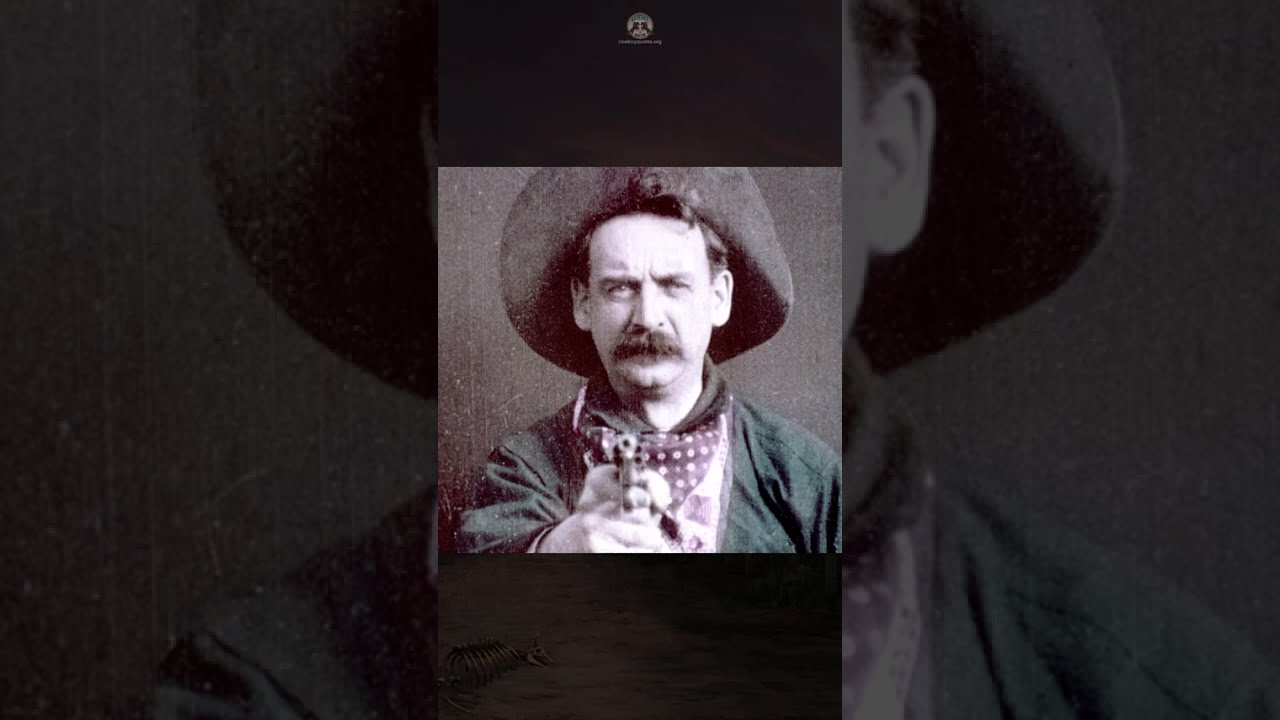
Instead, he was nearly forgotten entirely. Levy was born in Ireland, though the exact circumstances of his early life remain unclear. He arrived in the American West as so many did, a young man seeking fortune and a fresh start in a land where the laws were loose and the stakes were often lethal. Unlike the swaggering, quick-tempered gunslingers who dominated the saloons and the tall tales told about them, Levy was a professional.
He was calm, disciplined, and methodical. His approach to a fight was almost clinical. Where other men reached for their revolvers at the first sign of an insult, Levy waited. He allowed his opponent to draw first, trusting his own composure and his deadly accuracy to carry the moment.
It was a strategy that defied conventional wisdom, and it worked. Over the course of his life, he stood in the line of fire sixteen times and walked away from every single engagement. His reputation as a man who could not be beaten spread quietly through the mining camps and cow towns where he made his living. Levy was not a showman.
He did not court fame or seek out trouble. But trouble found him with remarkable regularity. In the rough-and-tumble world of the post-Civil War West, a man who was known to be fast with a gun was often challenged by those who wanted to prove themselves against him. Levy met each challenge with the same unnerving patience.
He waited for the other man to commit, then ended the fight with a single, precise shot. One story from his life illustrates his method. In a saloon, a notorious local bully, a man who had killed several opponents in duels, confronted Levy. The bully drew his weapon first, confident in his speed.
Levy did not flinch. He drew his own revolver, took careful aim, and fired. The bullet struck the man in the forehead, killing him instantly. It was not the fastest draw, but it was the surest.
That was Levy’s entire philosophy: speed could be beaten, but accuracy, patience, and nerve were far more reliable. Despite his lethal skill, Levy was not a cold-blooded murderer. Those who knew him described him as a quiet, intelligent man, one who avoided violence when he could and met it without hesitation when he could not. He made his living in the mines and in various trades, not as a hired gun.
He did not seek out conflict to build a reputation. His reputation built itself, one duel at a time, whether he wanted it or not. The contradiction at the heart of Levy’s story is that his very success may have doomed his place in history. The men who became legends, Wyatt Earp, Doc Holliday, Wild Bill Hickok, were men whose stories were told and retold by journalists, dime novelists, and their own self-promotion.
They were figures who courted attention and whose escapades were recorded for posterity. Levy was different. He was a private man who did his work quietly and moved on. He had no chronicler, no close friend to spin tales of his exploits, and no interest in making himself a public spectacle.
When he finally died, his story went with him, surviving only in scattered court records, newspaper mentions, and the fading memories of the men who had seen him fight. Historians who have studied the gunfighters of the Old West have come to a striking conclusion when they examine the evidence of Levy’s life. They believe he may have been one of the greatest pistol fighters of his era, perhaps the greatest of all. Unlike the legends whose accuracy is often exaggerated by storytelling, Levy’s reputation is supported by a documented record of sixteen gunfights, all of which he survived.
The exact details of each fight have been partially lost to time, but the pattern is consistent: Levy faced an armed opponent, he waited, he fired, and he won. His later life is harder to trace. He drifted through the West as the frontier began to close, finding less and less room for a man whose primary skill was lethal combat. The era that had made him was fading.
The railroads, the telegraph, and the arrival of law and order were turning the wild territories into settled states, and a gunfighter’s services were no longer in demand. Levy, like many of his kind, became a man out of time, a relic of a world that was disappearing around him. The end of Jim Levy’s life is not recorded with the same clarity as his famous duels. He vanished from the historical record, his death unmarked and largely unnoted.
It was an ironic fate for a man who had faced death sixteen times and had beaten it every single time. In the end, it was not another gunfighter who finally brought him down. It was time, forgetfulness, and the closing of the very frontier that had made him. Today, his name is barely known outside a small circle of historians and dedicated students of the American West.
When the great gunfighters are listed, he is rarely mentioned. Wyatt Earp stands immortalized, Doc Holliday lives on in film and fiction, but Jim Levy rests in an unmarked historical grave, remembered only by those who have taken the time to look past the legends and find the truth. His story matters because it challenges the way the Old West is remembered. The men who became famous were not always the most skilled.
They were often the loudest, the most connected, or the most fortunate. Levy was the opposite. He was a professional who treated gunfighting as a grim necessity rather than a glamorous career. He was successful beyond almost any of his contemporaries, and he remains almost entirely forgotten.
For historians, that is the most fascinating part of his legacy. The greatest gunfighter of the Old West may well have been a quiet Irishman who never wanted the fame, never got the fame, and paid for his skill with a lonely and largely unremembered death. His record of sixteen surviving gunfights stands as a testament to his ability, even if the world never learned his name.