In the summer of 1689, William III, newly seated on the English throne, went looking for somewhere to breathe. The old royal palace at Whitehall sat low on the Thames, and the damp river air left the asthmatic king gasping. Within weeks of taking the crown, he found higher ground a few miles west of London, in the village of Kensington, where the fields began and the air ran clean. There stood Nottingham House, a solid two-story brick mansion belonging to the Earl of Nottingham.
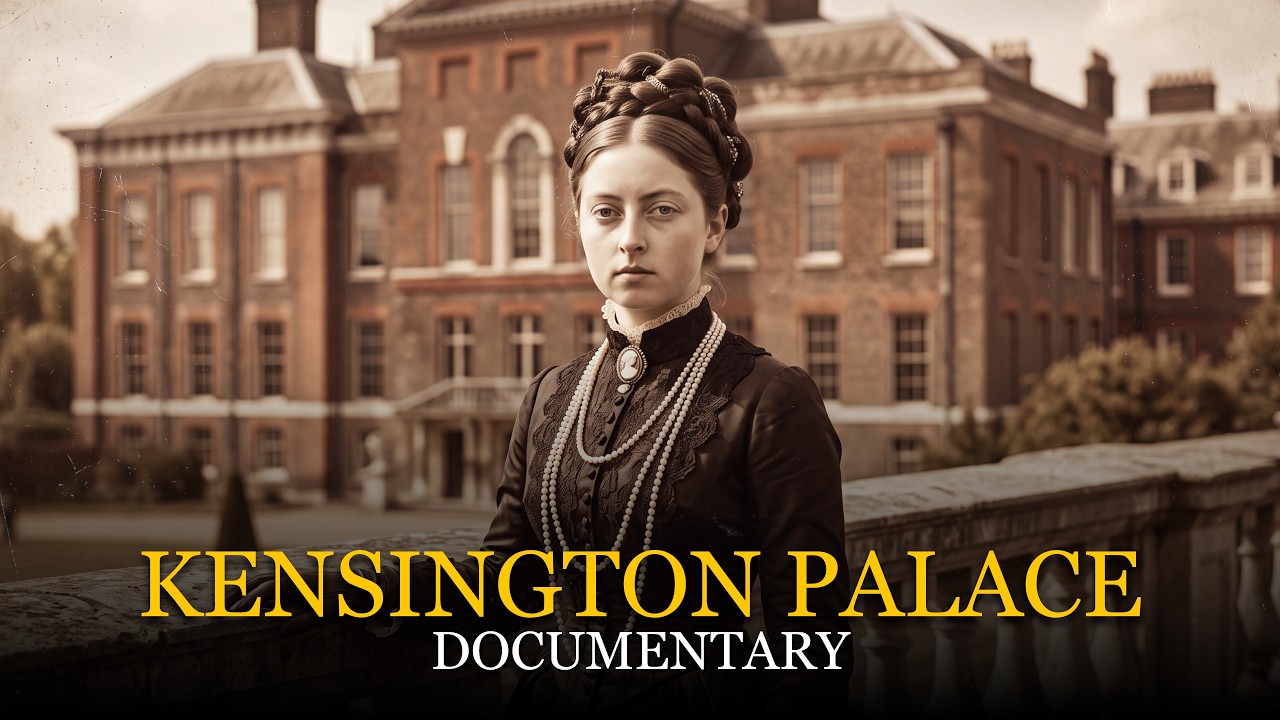
It was handsome, private, and unremarkable. That was precisely its appeal. William and Mary bought the house for £20,000, a colossal sum, the price of a great landed estate. Yet what the money purchased was not a palace at all, but a private home chosen for its clean air and quiet.
Across the Channel, Louis XIV was building Versailles as a statement of absolute power. William and Mary chose the opposite. Their monarchy was limited by Parliament, Protestant, and careful not to look too grand. A converted country house suited that image far better than a marble colossus.
Kensington was conceived as a retreat, the home behind the throne, and from its first day it was built around a division that never left it. The split between the palace you showed the world and the home you actually lived in. The king handed the task of rebuilding to Sir Christopher Wren and told him to work fast. Through the autumn of 1689, the craftsmen labored at a frantic pace.
In November, a wall collapsed moments after Queen Mary herself had walked the very spot. The fall of masonry killed a workman and injured others. Had the queen lingered a few minutes longer, the palace’s history might have ended in its first autumn with a dead monarch under the rubble. The house that was meant to be a gentle retreat had begun by burying one of the men who built it.
Not long after, in 1691, fire broke out and destroyed part of the royal lodgings. Still, the couple pressed on, moving in on Christmas Eve of 1689 into rooms barely finished, with the smell of new plaster in the air. Wren had thrown out from each corner of the old mansion a tall three-story pavilion, turning the modest house into something far grander. He turned the building to face west and laid out formal gardens in the neat Dutch style Mary loved.
Mary filled her rooms with porcelain and fussed over the gardens. For the first time in years, she had a house truly her own. It did not last. In the winter of 1694, only five years after they moved in, smallpox came for Mary.
She was 32 years old. She died inside the palace she had made, and William, who had grown to depend on her utterly, was left broken in the house they had built together. For the next seventy years, Kensington was not a retreat at all, but one of the true centers of power in Britain. Under the first two Hanoverian kings, the palace reached its height.
George I poured money into it and commissioned a new suite of state rooms, handing their decoration to the young painter William Kent. Kent painted a domed ceiling in blue and gold for the Cupola Room, and on the king’s staircase he painted the walls with a crowd of about forty-five life-sized figures, courtiers and servants of the king’s own household, looking down over the shoulders of anyone who climbed the stairs. The cost was enormous. The gilding alone consumed fortunes.
The money flowed only one way, out of the treasury and into the fabric of the house. Under George II and above all his wife, Queen Caroline, Kensington became a place of real intellectual life. Caroline gathered the finest minds of the age into her drawing rooms, and she reached beyond the walls to reshape the land itself. With the royal gardener Charles Bridgeman, she carved out the great round pool before the palace, the wide straight walk, and the long stretch of water later famous as the Serpentine.
Londoners still walk through the parks she made. Yet behind the glitter, the palace was a machine that ran on hidden labor. It was built as two buildings folded into one. There was the palace of display, the state rooms and grand staircases.
And there was the palace of service, a second skeleton of narrow passages, cramped back stairs, basements, and attics through which the servants moved so they need never cross the path of a great person. The building was cold for most of its life. The only heating was the open coal fire, one at a time, room by room. The coal had to be hauled up from the cellars in heavy scuttles up the narrow back stairs before the family woke.
The ash and soot settled over everything. For most of the people ever inside Kensington, life was work and cold and the constant careful effort of staying invisible. In 1760, a king died inside these walls, and no reigning monarch ever lived there again. George II was the last sovereign for whom Kensington was a true home.
His heir, George III, did not like the place. He bought Buckingham House and made his homes there and at Windsor. The great receptions stopped. The state apartments fell quiet and began to gather dust.
But the palace did not close. Instead, the crown began to carve it up into separate apartments, handed out to other members of the royal family. This became known as the grace and favor system. The residents were the spare parts of the royal family, given comfortable rooms out west where they could live in dignity and be conveniently out of the way.
Edward VIII later cast a cool eye over the collection of aging royal widows and relatives and called it the aunt heap. The name stuck. Through the 19th and 20th centuries, the palace filled with minor royalty, and in particular with royal women living out long widowhoods and unmarried old age. They aged together in their separate apartments, a whole community of princesses growing old under one roof.
Prince Augustus Frederick, the Duke of Sussex, filled his apartment with one of the great private libraries of the age, said to run past 50,000 volumes. Later came Princess Louise, a daughter of Queen Victoria, a working sculptor. The palace was a gilded, gentle sort of exile, lived out within sight of Buckingham Palace and a whole world away from it. But the single most extraordinary life ever lived inside these walls belonged to a child.
In 1819, Victoria was born at Kensington, the daughter of Edward, Duke of Kent. Her father died when she was an infant, leaving her mother isolated, deep in debt, and dangerously dependent on an ambitious adviser named Sir John Conroy. Conroy looked at the little girl who might one day be queen and saw his own path to power. If Victoria came to the throne as a child, there would have to be a regent, and that regent would be her mother, and through her mother would rule Conroy.
Out of that calculation grew the Kensington system, a deliberate regime of control built around a single little girl. She was never at any moment to be alone. She slept every night in her mother’s bedroom. She was forbidden to walk down a staircase without an adult holding her hand.
Her friendships were forbidden. Every person she was permitted to meet was chosen for her. In all that controlled and lonely world, she had one true ally, her governess, Baroness Lehzen, who gave the isolated girl the steady affection that her mother and Conroy were trying to strip away. As the throne came closer, Conroy and the Duchess pressed harder, trying to force Victoria to promise that she would make Conroy her private secretary.
There were episodes of open browbeating, of threats and pressure applied to a girl who was sometimes ill and exhausted. But the isolation meant to break her had hardened something in her instead. Even sick, even frightened, she refused. She would not sign herself over.
Before dawn on the 20th of June 1837, the Archbishop of Canterbury and the Lord Chamberlain climbed the stairs to Kensington to wake the girl who was now the most powerful woman in the world. King William IV had died in the small hours, and the crown had passed to his eighteen-year-old niece. And here, in the very first minutes of her reign, Victoria did the thing that undid eighteen years of control. She came out to receive them alone, not with her mother at her side, not with Conroy hovering, but by herself, as a sovereign.
It was a small thing, and it was everything. Within days she held her first Privy Council. She gave the order that her bed be moved out of her mother’s room at last. She banished Conroy from her presence, cutting him out entirely.
Then she left. Within weeks of her accession, Victoria departed Kensington for Buckingham Palace and did not go back to live there again. With the young queen gone, the grandest rooms fell silent. For a stretch of the 19th century, Kensington was a tired and decaying building whose future was genuinely in doubt.
The state apartments sat empty, gathering dust and decay decade after decade. What saved it was the public. As Victoria’s own long reign turned Kensington into the sacred birthplace of the queen, a sense grew that the palace was part of the nation’s story. The money was found, the rooms were restored, and the state apartments were opened to the public in the later part of the 19th century.
The same building became both jobs at once. Museum and home, show and secret, separated by nothing more than a wall and a locked door. For more than forty years, one apartment behind these walls ran its own glittering, wounded little court. It belonged to Princess Margaret, the younger sister of Queen Elizabeth II.
In 1960, she married the photographer Antony Armstrong-Jones, and the couple were given Apartment 1A at Kensington. They renovated it at a cost of around £85,000, and Snowden, with a professional eye for design, helped shape the look. Margaret drew a court of her own around her, artists, actors, musicians, writers, celebrities mixing with aristocracy in her drawing rooms. For a while, Apartment 1A was the most interesting address in royal London.
But the marriage curdled into unhappiness and ended. The bohemian freedom shaded into something lonelier. Her health failed by degrees, and the bright rooms that had once held the most glamorous nights in London held instead a proud woman in her decline. She stayed to the very end, four full decades in the same set of rooms.
When she died, she had lived there longer than she had lived anywhere else on earth. And still, in the end, it had never been hers to keep. It was a grace and favor apartment, granted and held at the crown’s pleasure, exactly as the aunt heap’s rooms had been granted and held two hundred years before. While Margaret held her court, a young woman had moved into the apartments along the way as a bride.
In 1981, Diana came to Kensington as the Princess of Wales, newly married to Prince Charles. The apartments made ready for the couple were among the grandest private rooms in the palace. Two separate apartments, numbers 8 and 9, were combined into a single large home at a cost in the region of £900,000. The two sons were born, William and then Harry, and Kensington became their childhood home.
For a few years, the top floor held something like ordinary family happiness. But the marriage was in trouble almost from the start. Outside the gates, the image was of the golden couple in the golden palace. Inside the same walls, the reality was loneliness.
The most photographed woman in the world was profoundly alone in it. The apartment was both her refuge and her cage. In August 1997, Diana died suddenly and shockingly. The gates of Kensington became the place where the public came instead, and a vast sea of flowers grew against the palace railings.
Her coffin was carried out through the same gates she had passed through as a bride sixteen years before. Today, thousands walk the state rooms every week, never knowing that a few feet away, families are still living behind the same brick. The public palace is cared for by the charity Historic Royal Palaces, which receives no direct government funding, paying for the upkeep out of what visitors pay to enter. In 2012, the state apartments reopened after a restoration costing around £12 million.
The Prince and Princess of Wales keep Apartment 1A, the very rooms that were once Princess Margaret’s, as their official London home after a renovation completed in 2013 that cost about £4. 5 million of public money. The palace today shelters something like fifty residents, royals, courtiers, and staff. The aunt heap never really ended.
It simply changed its residence. Almost no one who lived inside this palace ever owned a single brick of it. Mary made the house a home and it took her life, and she never owned it. Victoria was born and imprisoned here and had to seize a throne simply to get out, and she never owned it.
Margaret spent forty years in an apartment she was granted, not one she held. Diana spent her last lonely years in grand rooms prepared for a marriage that had ended, in a home that was never hers. All of them were kept by it. Victoria herself looked back on her Kensington childhood and called it melancholy, full of scenes she described as painful and disagreeable, the unhappiest years of her life spent in the grandest of homes.
The gold on the ceilings was for the visitors. The cold in the corridors, the loneliness in the grand rooms, the childhoods and the griefs and the secrets, those were the truth. Kensington was never the throne.
Only ever the home behind it.