In 1978, a 22-year-old woman sat down to lunch with two journalists and told them she kept newspaper clippings. Every story published about her and the man who would one day become king was saved in a scrapbook. Then she said the other thing.
There was no chance she would marry him. She was not in love with him, and she would not marry any man she did not love, whether he was a garbage collector or the King of England.
Three years later, her younger sister walked down the aisle of St. Paul’s Cathedral to marry the same man. And 19 years after that lunch, the woman who said no sat beside him on a plane bound for Paris to bring that sister home.
This is the story of the Spencer sister who said no first.
Elizabeth Sarah Lavinia Spencer was born on March 19, 1955, at Park House on the Sandringham estate in Norfolk. The house had ten bedrooms, a tennis court, and a swimming pool. It was not merely near the royal family.
It sat on their land, rented from the Crown, with the Queen’s country home directly across the park. When the royal court came to Norfolk, the Spencer children and the royal children played together, as neighbor children do.
Her father, Johnny Spencer, was heir to one of England’s greatest peerages. He had served as an equerry to King George VI and then to the young Queen. When he married Frances Roche in Westminster Abbey in 1954, the Queen was among the guests.
Sarah arrived less than a year later. From her first day, the royal family was not a distant idea. They were the family in the house next door.
Sarah was the first. Jane arrived in 1957. A son, John, was born in 1960 and lived only a few hours.
Diana came the following year. Finally, in 1964, came the boy the aristocratic family needed, Charles. Three daughters and an heir in a family built on the assumption that the heir comes first.
Being the eldest meant being ahead of everyone in everything and being watched while doing it.
Biographer Sarah Bradford writes that young Diana considered her older sister a heroine. Sarah was quick and loud while Diana was cautious. Sarah attended Riddlesworth Hall, then West Heath, a boarding school near Sevenoaks.
Diana followed her to both and grew up watching the girl who had gotten there first.
Then the marriage collapsed. Frances left in 1967 when Sarah was twelve, and the divorce came in 1969. Johnny went to court for custody of the four children and won.
The story passed down through generations is painful. Frances’s mother, Ruth, Lady Fermoy, is said to have sided with him. Ruth had served the Queen Mother for more than three decades.
Even the girls’ grandmother lived half her life inside the royal world.
Whatever effect that had on the Spencer children, it taught them something early. In their social class, marriage is not a private arrangement. Lawyers argue about it, newspapers pass it around, and people you have never met decide it.
Frances later married Peter Shand Kydd, heir to a wallpaper fortune, and the children stayed with their father.
Sarah’s school days ended early. According to some later press accounts, West Heath expelled her after an incident involving vodka. Whatever the reason, she headed to London.
Her father believed his children should earn their own money, regardless of their titles. By nineteen, she was working and managing a property he owned, collecting rent herself. She was not a girl sitting at home waiting to be chosen.
In June 1975, her grandfather died, and her father became the 8th Earl Spencer. The family moved to Althorp in Northamptonshire, a house of about 90 rooms and the Spencer seat since the early 16th century. At twenty, Sarah became Lady Sarah overnight.
A year later, her father remarried. His new wife was Raine, Countess of Dartmouth, daughter of novelist Barbara Cartland, and not all his children welcomed her.
Sarah was living her own life in London by then. She was about to enter the most watched romantic situation in the country. There is a part of this story the newspapers did not highlight, one more important than most of what they printed.
In her early twenties, Lady Sarah Spencer suffered from anorexia nervosa. Put that on a timeline and something uncomfortable appears. She was ill in the very months the whole country was invited to look at her as a future queen.
She suffered through parties, country weekends, and photographers waiting on the pavement. In the mid-1970s, there was almost no public language for the condition. It was widely seen as a rich girl’s vanity, a matter of willpower, rather than a psychological condition with one of the highest mortality rates in medicine.
A young woman who stopped eating was told to pull herself together rather than offered treatment. What Sarah went through is her own story. What matters is that within months, she would speak about it herself to exactly the wrong people.
By 1977, she was 22, recovering, and back in social life. Nearly everyone who describes her then uses the same words. Cheerful, quick-witted, and indifferent.
She had red hair and seemed afraid of no one. Her brother later recalled she rode her horse into the hall during an argument with her father. That quality made her good company for the Prince.
In the end, it was also the cause of her downfall.
It happened in the summer of the Queen’s Silver Jubilee. Britain spent early June in street parties. In mid-June, Windsor Castle filled with guests for Royal Ascot.
Accounts do not entirely agree on where it began. Some trace it to an Ascot party, others to Windsor. But what no one disputes is the year.
The Prince of Wales was 28, had left the Navy, and was the most watched bachelor alive. He had once said thirty seemed a suitable age to marry.
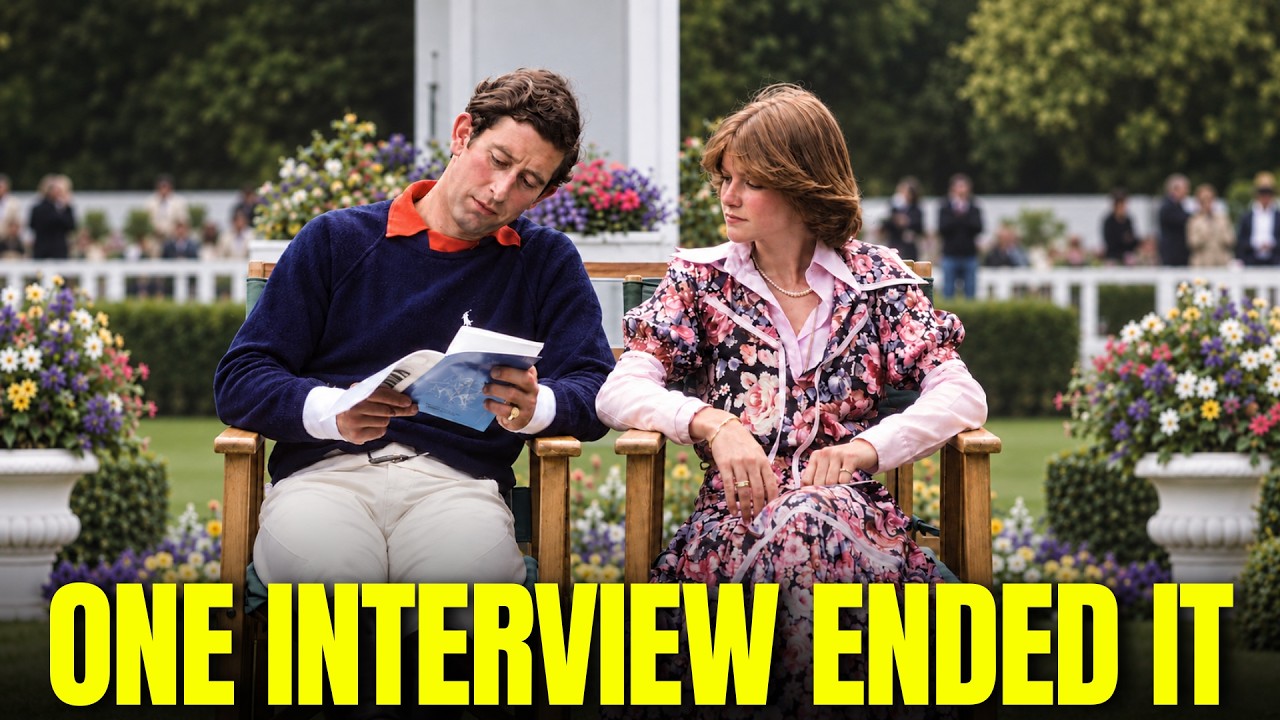
Over the previous decade, his name had been linked to about 20 women, and the pattern had become mechanical. A name appears. She is photographed.
Then she is judged against a list of requirements no one wrote down. Suitable family. No past for a rival newspaper to dig up.
Young enough to produce heirs. Protestant. Some of those names still echo.
Lady Jane Wellesley asked journalists camped outside her flat whether they really thought she wanted to be queen. Lucia Santa Cruz, a Chilean diplomat’s daughter, had known him since Cambridge. Georgiana Russell reportedly tired of the hunting and walking that filled his weekends.
Davina Sheffield reached Balmoral in 1976 until a former lover sold their story to a Sunday paper.
Lady Sarah Spencer passed the list on every point. Bradford writes that the Prince enjoyed her vitality and rebellious intelligence and that they laughed together. Perhaps what he liked most was that she did not seem to be auditioning.
By July, they were photographed together at a polo match. Then came the theatre, country weekends, and an invitation to Balmoral. What followed was more like a nomination than a courtship.
Fleet Street decided she was the front-runner, and the coverage itself became the event.
She was photographed arriving at places and leaving them. Women who had never met her began describing her clothes. Journalists pursued her father for comment.
Her grandmother was one of the Queen Mother’s closest friends. More than one royal writer wondered whether the two old ladies quietly liked the idea.
Let us be precise about what the newspapers were discussing. Not a wedding, but a job. The woman who married the Prince of Wales would one day become queen consort.
No one imagined that position could be resigned. Sarah was 22. This is what strangers decided about her every week.
A competition she never entered. For a position no one had offered her.
By her own account, she was fond of him. She would say, “Charles makes me laugh a lot. I really enjoy being with him.”
On their own, these are warm words. But read the way the country read them a few months later, placed directly before the sentence that followed, they become something else.
At some point that year, she began keeping newspaper clippings. James Whitaker, one of the reporters tracking her, later wrote that she paid an agency to send her every paragraph and picture, and he took this as evidence of her love of attention. There is another way to read it.
A young woman collecting every article about herself might simply be trying to track a version of herself written by strangers, with no way to correct it.
In November 1977, Sarah invited the Prince to Althorp for a shooting weekend. In retrospect, it may be one of the most important weekends in the modern history of the monarchy, and almost no one noticed at the time. Cold mornings, beaters moving through wet woods, dogs working the hedgerows, lunch afterwards.
Weekends like this happened all winter in that county. The guest list alone distinguished this one.
Sarah’s younger sister was home from school. Diana was sixteen, and to the Prince, she was just Sarah’s little sister. In the family’s words, they met in the middle of a ploughed field, not in a ballroom.
A ploughed field in Northamptonshire in November, mud over the ankles, sky the colour of dishwater. Years later, Charles remembered thinking she was a jolly, amusing, and attractive sixteen-year-old girl. Diana remembered it differently.
Her first thought, she told Andrew Morton, was, “God, what a sad man.” She was also hard on herself, describing the girl she had been as fat, chubby, makeup-free, and unsmart.
Now slow down the chronology, because many accounts reverse it. Sarah did not introduce them after stepping out of the picture. She introduced them while she was still in it.
That November, she was the leading candidate, and the Prince was in her home as her guest. She brought him into the same house as her sixteen-year-old sister and thought nothing of it, because at that time there was nothing to think about. The Prince came to see Sarah, and his attention stayed on her.
In February 1978, Sarah went skiing with the Prince in Klosters, a quieter Swiss resort favoured by the British upper class over St. Moritz. Those photographs were the peak of her public life.
A young woman on a mountain with the heir to the throne, looking as though she were at the centre of everything. Tina Brown later wrote that Sarah enjoyed having the Prince escort her everywhere. At 22, who would not?
Look closely, and it is also the beginning of the end. By then, she was reportedly telling people it was not what it seemed. Two narratives ran side by side.
In the newspapers, a love story nearing its end and a country preparing for a royal wedding. In Sarah’s own account, a man she enjoyed being with and had no intention of marrying. No one else wanted to correct the record.
A correction is not news. The Prince had no reason to correct it, since the speculation kept questions away from anyone else. The Palace did not comment.
The papers sold copies every week. Everyone profited from that story except the woman at its centre.
Her only tool was the very thing that caused the problem. She could talk to the press. In the early months of 1978, she did.
The two journalists were James Whitaker and Nigel Nelson. Whitaker spent 30 years pursuing the Windsor family and belonged to the group later nicknamed the Royal Rat Pack. There was an unwritten rule.

You could be photographed with the Prince, but you could not talk about him.
Nearly everything known about that lunch comes from the two men sitting across the table. By their account, Sarah spoke the way people talk over a long meal. She is said to have spoken about her anorexia and a previous problem with alcohol.
She joked about having thousands of friends and told them about the scrapbook she kept. She said it was for grandchildren she did not yet have. Then came the decisive statements.
“There is no chance of my marrying him.” She said, “I am not in love with him.” And that she would not marry anyone she did not love, whether he was a dustman or the King of England.
Look at how that phrase was framed. A polite denial could have been forgotten within a fortnight. But this statement carries an irony within it.
Equating a garbage collector with a king in one sentence strips the throne of its mystique. It is a plain declaration that the institution the country had spent a year preparing her for was not, in itself, a reason to marry anyone.
Whether she knew the price she would pay is the essential question of this story. She was 22, newly recovered from illness, and had spent a year under the microscope of strangers. In the one situation where she held the reins, she chose truth over safety.
The scrapbook she had been keeping now had a final entry, and she had written it herself.
Exactly where those words first appeared remains somewhat murky. Several accounts say the interview was published in Woman’s Own, a weekly women’s magazine. Whitaker himself later described it as a women’s magazine interview, which Sarah later denied giving to him.
Whatever path the phrase took, Time magazine carried it to American readers that year. Nearly 50 years later, it remains the one thing most people know about her.
The journalists’ verdict was that she had lost her head over fame. Whitaker wrote 20 years later that he would never believe she did not want to become the Prince’s wife. Perhaps he was right, or perhaps she was simply a young woman telling the truth in a world with no place for it.
Sarah never published her side of the story.
According to the common account, the Prince was furious and told her, “You have just committed an unforgivable blunder.” Whatever his exact words, the romance did not last long after that. No announcement was made because there was no engagement to begin with.
Some accounts say she was entirely dropped from the royal circle. That describes a more complex situation than mere embarrassment. The hunting trips, house parties, and country weekends were how that world ran itself and married off its children.
At 23, being left off those lists was a door closing on the only world she had grown up in.
It is worth noting what she actually said. Not that the Prince did not love her, but that she did not love him. Was it a joke, a shield, or simply the truth?
She never offered an explanation.
That same spring, her sister Jane married Robert Fellowes, assistant private secretary to the Queen. One Spencer daughter married into the Palace’s inner circle while the other left the Prince’s life. Diana returned from Switzerland and began looking for something to do.
Sarah gave her some work. Diana cleaned for her. The future Princess of Wales received money from her older sister to clean the floors of her London flat.
The Prince’s search continued. In November 1978, he turned 30, and Diana was among the guests at his birthday party. Then in August 1979, Lord Mountbatten was killed by an IRA bomb off the coast of County Sligo.
Charles lost the man he called his honorary grandfather, and that loss would mean more than anyone realised then. By that time, Diana was sharing a flat in London with friends and working at a kindergarten in Pimlico.
Sarah had already found the life she would actually live. On May 17, 1980, she married Neil McCorquodale, a distant relative of her stepmother. For the wedding, she wore the Spencer tiara, a diamond heirloom that had come to her grandmother as a wedding gift in 1919.
Remember that tiara. A much larger audience was about to see it.
Two months later, Diana was a guest at a house in Sussex where the Prince was playing polo nearby. By her account, she told him he had looked sad at Mountbatten’s funeral and needed someone to look after him. From that week, he began to look at Sarah’s younger sister differently.
In September, Diana was invited to Balmoral. She did not stay in the castle but with Jane, whose husband’s job came with a cottage on the estate. Again, one of the Spencer sisters had paved the way.
Within weeks, photographers camped outside Diana’s flat. Sarah knew this kind of attention better than anyone. Now it had moved to her sister.
The Prince proposed at Windsor in February 1981, and Diana said yes immediately. The engagement was announced on February 24.
That spring, Sarah gave the papers the quote they wanted. She said, “I introduced them. I’m Cupid.”
Light, generous words that turned an awkward piece of family history into a story she could tell on her own terms. Compared to the chronology, that lightness is hard to believe. She had brought him to Althorp while she was the woman in question.
She had ended it herself through the press. And that sixteen-year-old from that weekend was about to become Princess of Wales.
On July 29, 1981, Diana married the Prince of Wales at St. Paul’s Cathedral in a dress with a 25-foot train before a television audience estimated at three-quarters of a billion. Sarah, then 26, watched from among the congregation.
On the bride’s head was the Spencer tiara, the same heirloom her older sister had worn 14 months earlier in a church in Northamptonshire.

Being the sister of the most famous woman on earth became a job in itself. Sarah had her children in parallel with Diana: Emily in 1983, George in 1984, the same year Prince Harry was born, and Celia in 1989. Sarah and Neil settled in Lincolnshire, near Grantham, in horse country, where she rode and hunted.
In September 1989, photographs showed the two sisters together at the Burghley horse trials, standing side by side in the crowds.
Behind the scenes, Diana’s marriage was falling apart. In 1992, Andrew Morton’s book, written with Diana’s secret help, revealed the truth and showed she had been suffering from bulimia. In 1995, she spoke about it herself on BBC’s Panorama.
Two sisters, the same house, the same broken parental marriage, the same man at the centre of events, and both had lived with eating disorders in their youth. The records show the pattern. They do not explain it.
Eating disorders are not attributed to a single cause, least of all a prince. Both women deserve more than speculation.
What is documented is what happened next. In 1992, Sarah became an extra lady-in-waiting to her sister, a role she kept until 1997. It is the kind of job no one notices when it is done well.
Flowers placed in hands by strangers, letters, gifts, appointments. It means standing one step back, which is exactly where the photographs show them. The woman sidelined in 1978 returned to the royal world 14 years later through the front door with an official title.
The person who brought her back was the younger sister who used to clean her floors.
The Prince and Princess separated in December 1992, the year the Queen called her annus horribilis, and the year the sisters’ father died. Divorce followed in 1996. On August 31, 1997, Diana died after a car crash in Paris.
She was 36. The Prince was at Balmoral with his sons when the news arrived. He told the boys himself, then flew to France on a royal flight.
He did not fly alone. Sarah and Jane went with him.
Think about who was on that plane. The man Sarah had skied with in Klosters. Jane, whose husband was then the Queen’s private secretary, and Sarah herself, 19 years after the lunch that had excluded her, flying into the heart of that world on the worst day of her family’s life.
At the Pitié-Salpêtrière hospital, the two sisters and the Prince went in to see her. Twenty years earlier, Sarah had brought him home for a shooting weekend. Now they were gathered there together to receive her younger sister’s body.
That evening, the coffin, draped in the royal standard, was carried from the plane at RAF Northolt, and the two sisters and the Prince followed it across the airfield. What followed was one of the strangest weeks in modern British history, with mountains of flowers outside the palaces and public anger directed at the royal family. Diana’s sisters served as family to both sides.
At the funeral in Westminster Abbey, Sarah read a poem and Jane delivered a religious reading. Diana was buried on an island in the lake at Althorp, the estate where she had first met the Prince.
Then came the part no one sees. Sarah was appointed joint guardian of Diana’s will and became chair of the Diana, Princess of Wales Memorial Fund. The fund raised more than £112 million before closing in 2012, supporting causes from the anti-landmine campaign to care for the dying.
This is not a ceremonial role. It is committee meetings, legal advice, grant decisions that were constantly challenged, and arguments over the use of a dead woman’s name. In 1998, the fund sued Franklin Mint, an American company making Diana memorabilia, and lost.
For 15 years, the person signing those decisions was the woman who had chosen not to join that family.
The work also required access to her sister’s private papers, and confidential documents from Kensington Palace were destroyed. That raised difficult questions. When the full inquest into Diana’s death sat in London, Sarah gave evidence and was asked about the destruction.
A police investigation led by Lord Stevens had already concluded there was nothing to support conspiracy theories.
In June 2004, Frances, the sisters’ mother, died. Sarah had now lost both parents and her younger sister. In April 2008, the jury concluded that Diana and Dodi Fayed were unlawfully killed through the grossly negligent driving of their chauffeur and the vehicles following them.
The accounts look strange. Lady Sarah Spencer refused that marriage in 1978 and then spent decades managing its aftermath. After that, she said very little in public.
No memoirs, no explanation of the famous remark. Perhaps that lunch taught her something. Perhaps she simply prefers horses to headlines.
Either way, the silence has lasted nearly 50 years.
She got the other thing too, quietly. Her marriage lasted more than 45 years, and her children grew up away from the spotlight. In 2009, she served as High Sheriff of Lincolnshire, an office dating back over a thousand years.
In 2010, she became joint master of the Belvoir Hunt, one of England’s oldest hunts. That is as far as English public life gets from St. Paul’s Cathedral.
She attended her brother’s sons’ weddings and sat where aunts sit, in the back rows. In June 2018, her daughter Celia married near the family home wearing the Spencer tiara. The same diamonds her mother wore in 1980 and her aunt Diana in 1981 had passed to a third generation.
In 2021, on what would have been Diana’s 60th birthday, Sarah stood with Jane, their brother, and Diana’s sons as a statue of her was unveiled at Kensington Palace. In September 2022, the Queen died. The man Sarah said she would never marry became King Charles III.
In May 2025, at the parade marking the 80th anniversary of VE Day, Lady Sarah McCorquodale sat in the front row of the royal box, close to the King. Not as a former girlfriend, not as a candidate to join the family.
That autumn, she was hospitalised after a bad fall from her horse. Her brother said she was still riding at 70 and had been a difficult patient.
So how should we remember the Spencer sister who came first? Is she the one who got away, or the one who left of her own accord? She met the Prince before anyone else in her family.
She introduced him to her sister. And when that sister died, she was on the plane beside him to bring her home. Somewhere in Lincolnshire, there may still be a file of newspaper clippings from 1977.
She stopped collecting them in 1978. The clippings about the Spencer sisters never stopped. But they simply stopped being about her, and by September 1997, there was enough about the younger one to fill every front page around the world.
The tiara moved from Sarah’s head to Diana’s, then to Sarah’s daughters. One remark at a lunch table ended her place in the Prince’s life, but it never ended her place in his family. The Prince told her she had committed an unforgivable blunder.
One sister said the sentence out loud and left. The other said yes and stayed. Nearly 50 years later, which one do you think was wrong?