In the late 1970s, the women linked to the Prince of Wales came from a familiar mold. They were daughters of dukes, ambassadors, and goddaughters of the Queen. They had family names that opened doors, country estates to retreat to, and lawyers on retainer.
For decades, they remained silent, and history has largely praised them for it.
Jane Ward was different. She was the only woman in that circle who worked for a living. She was the assistant manager of the Guards Polo Club in Windsor, and she was paid to be there.
That single fact changed everything about her story, and it is the reason she became the only one of them to ever break her silence publicly.
Ward’s name first appeared in the press alongside the Prince’s in 1979. She was photographed with him at polo matches, described in captions as his friend and as a club employee. She was not a wealthy heiress or an aristocrat.
She had a job, a salary, and a shift schedule. While other women attended events as guests, she was part of the staff, holding keys to the grounds and managing the logistics of match days.
The setting was Smith’s Lawn in Windsor Great Park, home of the Guards Polo Club. Founded in 1955 with Prince Philip as its first president, it became the center of English polo. The Prince played there for nearly 40 years, and in the 1970s, he spent most summer weekends there.
At 30 years old, he had left the Navy and had not yet bought Highgrove. The polo field was the closest thing he had to a permanent place of his own.
Polo in England was a small world. A few hundred people knew each other, and the season ran from May through July. The Prince played seriously, holding a four-goal handicap, and the club was the center of his summers for four decades.
It was also the most productive place in Britain for press photographers, who captured him there week after week with a rotating cast of women.
Jane Ward was the one who managed the place. She handled the bookings, the grooms, the members, and the logistics. She saw the entire afternoon from behind the scenes, not from a seat in the stands.
She worked weekends while the rest of that world relaxed. And she was invisible, until she was photographed standing next to the heir to the throne.
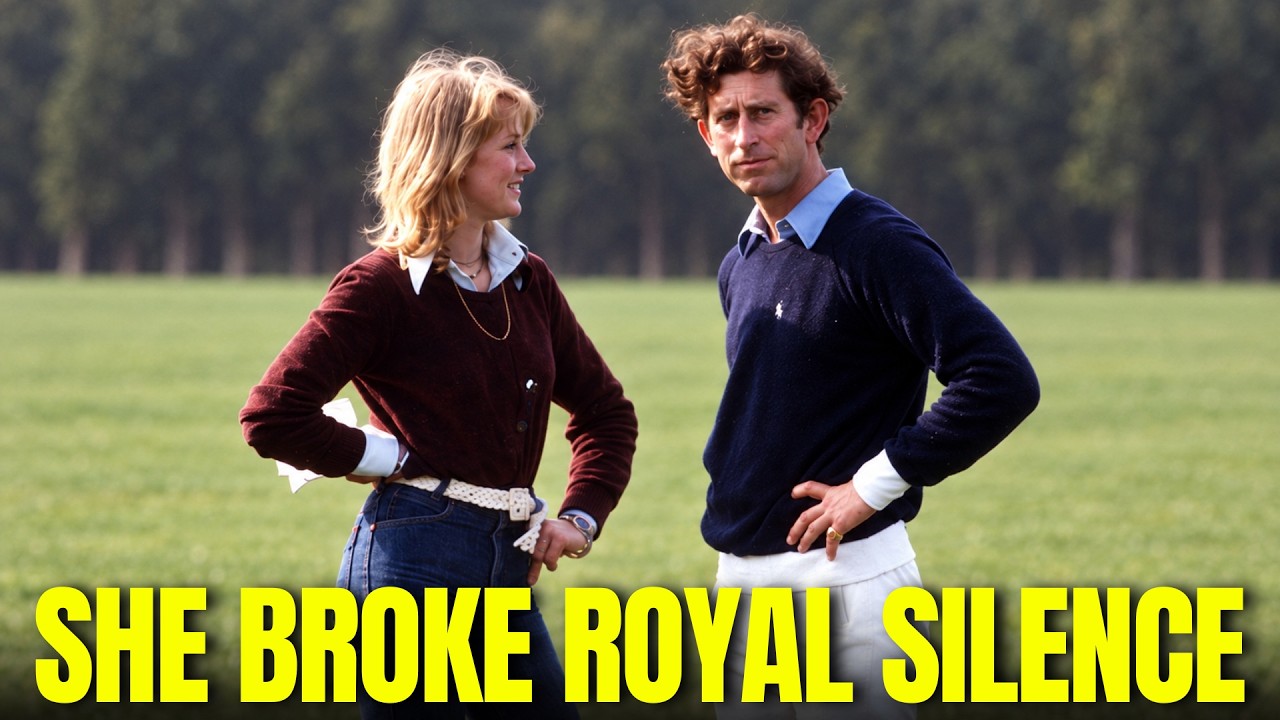
Their relationship began in an unusual setting. She met him at work, not at a dinner party or a country house weekend. Every other woman in this story met him on his own territory, at a polo club his family founded, a castle owned by his mother, or an estate belonging to a friend.
Ward met him at her place of employment, where he was the most famous member of the club and she was staff. There was no equality in that dynamic. He could walk away without losing anything.
She could lose her income, her professional reputation, and her standing in a small sport where everyone knew everyone.
By 1978, photographs showed them together at Windsor and at Smith’s Lawn. Another image captured them at a fly-fishing competition, a daytime outing that required arrangement and travel. Three photographs spread across a summer, and in that era, that was enough to make a story official.
There were no interviews and no confirmations, only captions that identified her by her job title.
There was another complication. Ward was married to an army officer, and the marriage was ending. In 1979, the word “divorced” carried enormous weight in royal circles.
A woman with a past was considered unsuitable, while a young woman with no history at all was the ideal candidate. Two years later, the Prince married a 19-year-old with no romantic history. The system saw no contradiction in that preference.
The royal family had a long memory on this issue. In 1936, a king abdicated to marry a twice-divorced woman. In 1955, Princess Margaret gave up the man she loved because he was divorced.
By 1978, Margaret herself was going through a divorce, but the old rules still applied to those outside the family. When the press printed the word “divorced” next to Jane Ward’s name, everyone in that world understood what it meant. It was an ending, not an insult.
The summer of 1979 was also a time of crisis for the Prince. In August, Lord Mountbatten was killed by a bomb in Ireland. Mountbatten had been managing the Prince’s romantic future like a campaign, and within months, Amanda Knatchbull refused his marriage proposal.
The Prince turned 31 that November, having lost his closest advisor and his preferred bride, while the country still asked him the same question at every public appearance.
Ward’s story took a different turn. At some point in 1979, her account of the Prince reached a newspaper. The relationship ended, and she lost her place in that world.

She had broken the unwritten rule that mattered most: she had spoken. The women with land and money could afford to stay silent for 50 years and be praised for their discretion. Ward could not afford that luxury.
She had no family name to protect her, no estate to hide in, and no one in the palace owed her family any favors.
Fifteen years later, the world had changed. By 1992, a book written with the cooperation of the Princess of Wales described a marriage in collapse. In 1993, a recorded phone call between the Prince and Camilla Parker Bowles was published.
In 1994, the Prince admitted on television that he had been unfaithful. In 1995, the Princess told 23 million viewers that there had been three people in her marriage. The divorce followed in 1996, and Diana died in Paris in August 1997.
During those years, royal stories became the most profitable market in British publishing. Money was offered to every chef, servant, bodyguard, friend, and former girlfriend in that world, and many accepted. The palace had lost control of the narrative.
The rules that had ended Ward’s place in 1979 were being broken weekly by people far closer to the family than she had ever been.
In the mid-1990s, Jane Ward broke her silence. She was around 43 years old, reportedly facing mounting debts. She agreed to tell her story to a newspaper and said she was writing a book, describing it as a frank and honest account.
The details of what she sold are not the point. The point is the calculation behind it. Fifteen years of silence, then a bill she could not pay.
No one offers you a fortune when you are 25 and afraid. They offer it when you are in your 40s and trapped.
The women who stayed silent were admired for their discretion. But silence requires money. It requires a home you already own, a family that can survive a bad year, and a life that does not depend on the world that made you famous.
Silence is not a virtue when you can buy it. It is a luxury. The one person who pays for it is the woman who carries a story she is not supposed to tell and a bill she has to pay.
In the middle of her account, Ward said something unexpected. She said that Charles was still her friend. After 15 years of being outside that world, she still described him that way.
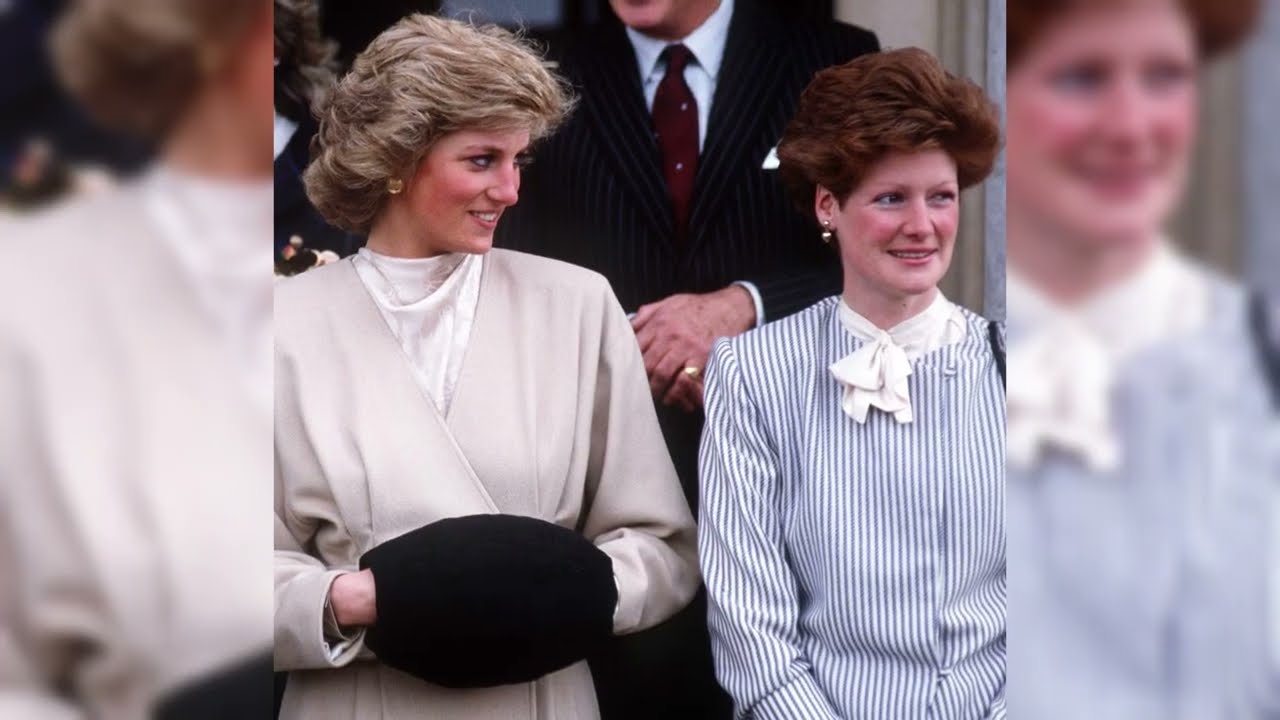
It could be read as loyalty, or as a woman making sure she was not labeled an enemy. She never explained further.
She also left behind one account that connected to another chapter in this story. She described a polo club dinner in Cirencester where the Prince spent the entire evening with Camilla Parker Bowles, at a table where Camilla’s husband was also sitting. In the summer of 1980, Anna Wallace had left two parties that followed the same pattern.
Ward watched the same thing happen from behind the ropes, as staff, and said nothing for years. Some of the silence in these stories was not about class or money. Some of it was simple loyalty from people who no longer had any reason to be loyal.
When she finally spoke, she was not treated as a witness. She was treated as someone trading in scandal. A duchess writes her memoirs and is praised.
A club employee tells her story and is condemned. The facts may be identical. The difference was never character.
It was the salary.
Afterward, Ward’s life took an ordinary turn. She married a farmer named Andrew Cooley and had three children. The public record of the last 30 years is thin and sufficient.
She stopped being a name in the newspapers and became a woman on a farm, which is where most of these stories end anyway. Nine women, and almost all of them ended up in the same place: far from the press, in the countryside, with children and lives unrelated to any of this. The difference is that eight left the story with reputations arranged by others.
She left after saying her piece.
Whether the book she mentioned was ever written is not clear in public records. She is now a private person, and her life since then is her own. What can be said is that she spent about four years inside this story and the next 45 years outside it.
Four summers in Windsor, then a lifetime as a footnote in other people’s articles.
In May 2024, the Guards Polo Club announced its new president. It is King Charles III, nearly 70 years after his father took the same role and 45 years after the summer in this story. The club where Ward once worked is now run under his name.
He returned to that field every summer for 40 years. She left and never came back.
The others were admired for staying silent. She was condemned for speaking. The difference between them was never about character.
It was about who could afford the cost of silence.