In the spring of 1876, George Armstrong Custer sat for a portrait, as he had done more than 150 times before. Restless about his own image, he made the camera an ally, allowing himself to be recorded in poses and campaigns that projected the military confidence he wanted the world to see. This particular portrait, taken two months before a decisive episode in American history, would be pointed to as the last photograph of him. In June of that year, at the Battle of Little Bighorn, United States forces under his command clashed with several tribes of the Great Plains, among them the Lakota Sioux.
For the indigenous nations, it was a key moment of resistance. Black Elk, who appears as both witness and protagonist in the broader record of the era, took part in that battle. His trajectory stitches the image of the frontier to the larger course of American history. The frontier itself was a world of constant motion, captured in the photographs of the nineteenth century.
In Death Valley in the 1870s, the transport of borax gained new momentum. To overcome the dryness of the Great Basin, twenty-mule wagons appeared, long lines moving at a steady pace, carrying the mineral from the mines to the depots. The harshness of the road shaped an efficient system that combined animal power, simple engineering, and precise coordination to cross the desert. Each piece of that operation served a function, much like the clothing worn by the men who worked the open range.
A cowboy from Caldwell, Kansas, photographed in his daily attire, showed how dress is born of work. Hat, boots, and belt serve before they adorn. They face sun, dust, and saddle. Depending on the weather and terrain, he chose chaps that went over his pants, shielding his legs from branches, stones, and rain.
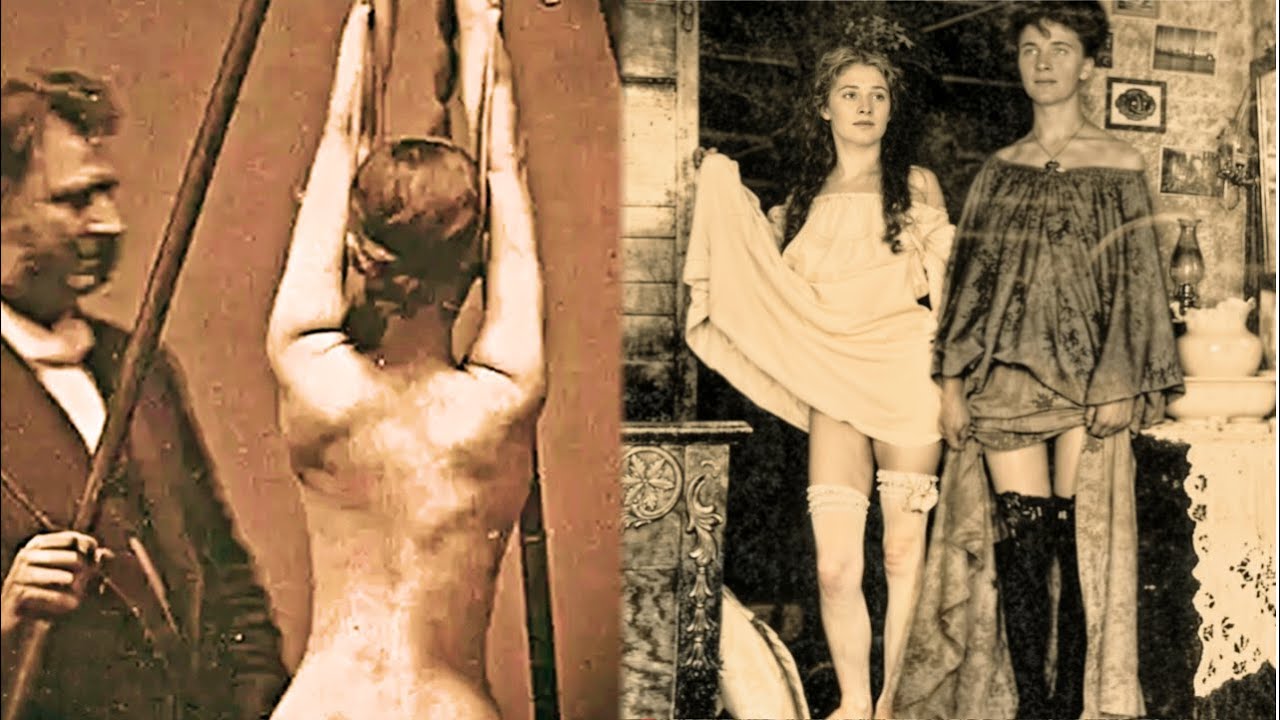
Every piece of clothing fulfilled a purpose and told the routine of a trade that stretched across the plains. The photographers of the era captured not only labor but also the margins of frontier society. In one old portrait, two sex workers pose in an ornate room of a brothel in Miles, Montana. At the time, a district judge described the town as having around a thousand inhabitants, yet gripped by disorder and loose moral codes.
The image records the contrast: the shine of the setting before a community with a wavering rule of law. Luxury and precariousness coexist in the same frame. In Greenwood, Kansas, the journey pauses at noon. Immigrants gather beside a wagon and share a meal that sustains the next step.
Between simple utensils and brief conversation, the road breathes. The vehicle, partner to so many departures, moves on when hunger subsides, carrying those who seek new opportunities in land to write their own tomorrow. Some of the faces in these photographs belonged to figures whose names would outlive them. Son of Cynthia Anne Parker, who had been captured as a girl and taken in by the Comanches, Quanah Parker grew up between worlds and chose to lead his own.
When buffalo hunters began to invade the plains, he rose as a voice of resistance, forging alliances and strategies to protect his people’s territory and culture. His passage marked the end of one era and the beginning of another. Kit Carson lived among trails and decisions that shaped the West. He began as a fur trader, became an explorer, and in the mountains forged a reputation for endurance.
Later, he guided John C. Frémont on decisive expeditions, establishing himself as a key figure of an era when maps were still being born step by step. In 1884, a cabinet card, a photographic format in vogue at the time, presented a scene recorded at the San Carlos Reservation in Arizona. The portrait is considered the first known image of Geronimo, a leading figure among the Apache.
Beyond his historical role, he became a widely recognized cultural reference. Jesse James became known as the most recognizable face of the James-Younger gang. Leading robberies, he crossed the Old West and became a symbol of banditry. His fame grew with each strike, fed by accounts that cast him as rebel or villain in newspapers and in conversation.
The route ended abruptly. Betrayed at home, he died in 1882, and the legend took the man’s place. The criminal underside of the frontier also left its mark on the photographic record. In a photograph dated around 1865, the face of Tiburcio Vásquez is fixed.
For about two decades, he traveled roads and towns involved in crimes. His trajectory helped shape the imagery surrounding Hispanic outlaws. In another image, dated around 1880, the subjects remain without certain identification, though historians point out that the standing man may be John Kinney. Once an obscure name, he came to prominence in 1875 when he assumed leadership of a gang of thieves operating in southern New Mexico, a step that projected him onto the region’s criminal scene.
In 1899, Pearl Hart entered the history of the Old West by carrying out one of the last stagecoach robberies. The strike echoed beyond local borders. Her name circulated across the country, and shortly afterward, her story found space in the pages of Cosmopolitan magazine, consolidating her fame and sealing her place in the memory of that period. At fifteen, Rose Dunn, known as the Rose of Cimarron, entered history in 1895 in the town of Ingalls in Oklahoma Territory.
She is said to have helped her fugitive boyfriend during a shootout between lawmen and criminals. The gesture, surrounded by conflicting versions, took her from anonymity to a legend that still provokes debate. Order and disorder ran side by side. The Texas Rangers were born at the beginning of the nineteenth century.
They emerged informally in 1823 when Stephen Austin gathered men to protect the settlers. Only in 1835 did they gain official organization. Throughout the history of Texas, they became a reference point. They patrolled borders, pursued fugitives, and undertook missions that maintained order in a territory in expansion.
In 1876, at the height of the cattle drives across the plains, Bat Masterson and Wyatt Earp posed together in Dodge City, Kansas. The photograph goes beyond the record. It seals the partnership of two lawmen who sought to impose order in a frontier town. By freezing this meeting, the portrait links the rhythm of the cattle trails to the emergence of an authority that would mark American history.
Some stories took darker turns. During the funeral procession of Tom McLaury, Frank McLaury, and Billy Clanton, a sign rose: “Murdered on the streets of Tombstone. ” It was not mere protest. It was living memory of the clash that marked the town.
In 1881, behind the O. K. Corral, a brief gunfight ended three lives and lit the flame of a story that crossed generations, turning that instant into a myth of the Old West. Bill Doolin, an outlaw in Oklahoma Territory, became a target when the reward for his capture grew.
The fame of his robberies mobilized posses and trackers. In August 1896, the hunt ended. He fell in a shootout, hit by about twenty bullets. Leading the charge was Heck Thomas, a U.
S. deputy marshal who closed in and ended Doolin’s trajectory. Women also carved their place in this world. Joella Irwin paved the way for cowgirls at the start of the twentieth century.
In a rodeo universe dominated by men, she turned the female presence into an attraction and a reference. She passed through various arenas, competed in different events, and showed technique, courage, and rhythm. Her trajectory connected tradition and change, drawing the public and inspiring new competitors to occupy the center of the arena. Kate Rockwell, a stage performer, left her mark on the lives of Alaska’s prospectors at the end of the nineteenth and start of the twentieth centuries.
In crowded saloons, she alternated popular songs and steps, leading the audience from laughter to silent attention. Her most anticipated number came when she entered in red chiffon, an image that became her signature. She turned rough nights into spectacle and left a lasting memory. Some of these photographs carry stories that remain unresolved.
Olive Oatman’s trajectory was marked by survival and the ability to adapt. Captured by members of the Mojave tribe, she lived among them and in that period received on her chin a tattoo made with blue cactus dye. The design, part of a local custom, carried spiritual meaning. For the Mojave, it would help ensure a peaceful passage after death.
From the battlefield to the pastures, Texas John Slaughter followed a path that helps tell the West. In the Civil War, he served as a Texas Ranger. Once the conflict ended, he turned to cattle and built his last ranch on the outskirts of Douglas, Arizona. A photograph dated around 1885 records this turning point and keeps his story alive for new generations.
An until-then unknown photograph came to light in an antique shop in Missouri. In it, a woman, possibly the head of a ranch, drives cattle through an as-yet-unidentified landscape of the American West. The image surfaced by chance when writer Mark Lee Gardner found it, revealing an unexpected fragment of rural life. Who she was, and what story lies behind the scene, remains a question.
In the old photographs, the daily life of cowboys did not stay only on the cattle trails. Between one drive and another, many entered studios to fix their own image in portraits. They chose to pose as they were seen on the open range: marked hat, worn boots, gun belt at hand. The photograph became a keepsake, proof of trade and identity, carrying to paper the life they rode.
In one 1865 photo, Wild Bill Hickok appears without sets or costumes. Instead of the theatrical outfits he adopted in other poses, he wears what he used day to day. The detail reveals how he really preferred to present himself. No studio tricks.
When the daguerreotype lost ground, the ambrotype gained it, an image fixed on a glass plate and more accessible, popular in the 1850s. One portrait shows a man with no known name. Even so, his gaze and restrained posture turned the scene into a unique record of the American West, a vestige of the frontier amid the changes of a formative era.