In March of 1983, Cali Darnell died in her bed at the age of 69, alone in the house at the head of Delo Fork in the hill country of West Virginia. She had been alone in that house since September of 1957, when her husband Roy was killed in a collapse at the Deacon Number Four mine. She was 44 years old when he died. The mining company sent her a check for $420, which was the full amount of its liability under state law.
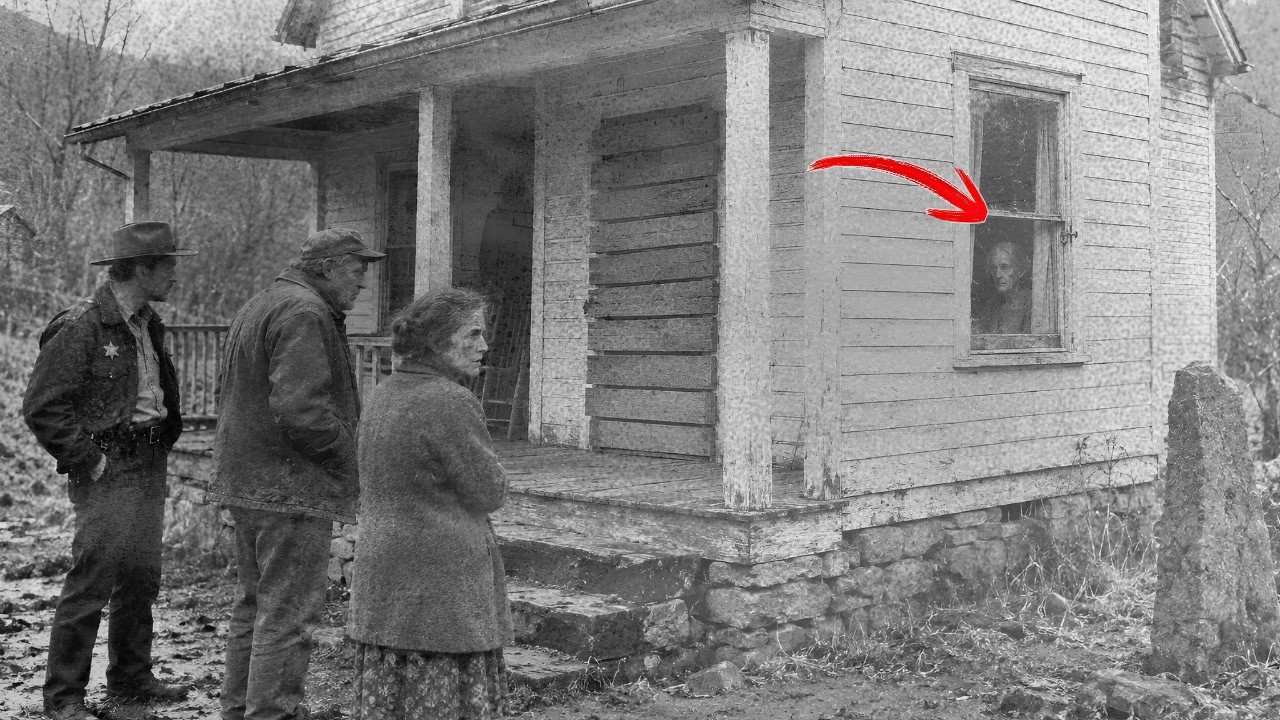
She had the house, two acres, a garden, a root cellar, a spring, and Roy’s pension of $42 a month. Her neighbors assumed she would leave. She did not. She told a neighbor she had no reason to go and was not the kind of person who needed reasons to stay.
What her neighbors knew and did not say was that the head of Delo Fork had a history. Six weeks after the funeral, Chester Swick, who ran the gas station at Fra’s Landing, stopped her on the county road and told her three things. He said he would only say them once. First, do not answer anything that calls your name from the down-creek direction after dark.
Second, in March, when the creek drops below the flat stone at the second bend, do not say Roy’s name anywhere outside the house. Third, Roy knocked two times on the door frame, not the door. If something came to her door and knocked on the frame and everything sounded right, she should take 30 seconds and ask herself if it was possible for Roy to be at her door. He said he would not speak of it again.
He did not. Four months later she understood what the warnings were for. On the 14th of March, 1958, the creek dropped below the old stone at the second bend. That night, from the down-creek direction, she heard whistling.
A low, toneless sound, moving air through teeth, shifting pitch every few minutes. It was Roy’s sound, and it was not Roy. She sat still and did not answer. At 2 in the morning, unable to sleep, she began keeping a notebook.
It was the first of 41. Each March, when the creek dropped, the thing at the second bend returned. It improved. In the spring of 1959, it raised the whistling to the correct pitch.
That same year, it spoke her name from the direction of the creek: Cowgirl, Roy’s voice, the flat first syllable and the dropped second. She did not respond. She wrote in the notebook, underlined once, the only underlining in 25 years: It is not him. In 1960, she found footprints in the mud of the creek bank, size 11, Roy’s size, going up toward the house.
They stopped mid-step. The return tracks, she measured, were nine inches longer per stride than the approach. In 1961, the knock came for the first time. Two taps on the frame, the left side, where Roy’s right hand had worn a mark into the paint over years.
Frame, not panel. Correct. She never answered. In 1963, she went into the root cellar for canning jars and found a mason jar behind the chimney base, lid off, with a letter inside.
It was written in 1938 by a woman named Lahrumb Crumb, who had lived at the head of the fork with her husband Ruel in the early 1900s. Lahrum wrote that the thing at the creek was old, older than any single death, and that it learned from sound. It collected the sounds of the living and the dead the way the creek collected sediment, and at the second bend the geology of the place concentrated what the water carried. She warned that grief was not a protection.
The thing came in the shape of what you loved, and your love was a door. She warned that the east wall of the house held. The standing stone in the side yard, nine feet from the east window, did not allow the learning to cross the line between the stone and the wall. Keep the east window latched, she wrote.
Not sealed, not open. Latched. There is a difference. The letter ended mid-sentence.
She was writing the words do not let it learn your name by your own, and the pen lifted and did not come back down. In 1964, Cali walked three miles to see Mabel Puit, the elderly daughter of Garvis Hensley, the old man who had warned the Crumbs in 1907. Mabel explained what Lahrum’s unfinished sentence meant. The word was voice.
The creek could not learn a living voice in the presence of the stone. If Callie spoke her own name near the water in March, she would give the thing everything it needed at once. As long as she gave it nothing, it could only work with what it had gathered from Roy while he was alive. Mabel also said the east window served a purpose.
Latched meant the path was available. When Callie asked what might come through from the stone, Mabel said her father had not known and would not guess. Keep it latched, she said, and trust that the latching was right. Callie kept the notebooks.
She recorded weather, creek levels, temperatures, durations, measurements. She developed a shorthand. She capitalized the Creek Learning as if it had earned a proper noun. In 1968, she realized that the east window could transmit as well as receive.
For 11 years she had sat near it thinking carefully about Roy, and the thing had responded to a conversation she had not spoken aloud. She wrote: This is an error. I am correcting it. From then on, when she sat near the east window, she kept her mind occupied with counted psalm verses and numbered ceiling boards, so that nothing of meaning passed through.
The approaches continued to improve. In 1964, the voice used her name in response to inanimate sounds, an error in behavior. It took three years to correct. In 1970, it began approaching from two directions at once, whistling from the north while the voice came from the south.
In 1974, it tried a new, flat, unrecognizable voice that said her first name. She wrote that she was not required to respond to anything that was not Roy, and she was not required to respond to Roy either. In 1976, it said Callie in Roy’s voice. She noted that Roy had used her formal name only twice in their marriage, during an argument in 1953.
The formal name sounded to her like the argument. She wrote: This is good information. I am keeping the error in the formal name as an advantage. It corrected back to Cowgirl the following March.
By the spring of 1980, she believed it was getting faster. On the night of March 7, it knocked on the front door frame, then stood breathing on the porch for 40 minutes. Then the voice said through the door: Cowgirl, come out. She wrote that Roy would never have called her out of warmth into cold.
Come out instead of come in. One preposition. She wrote: This is the smallest error I have recorded in 22 years. It is getting better faster than I expected.
In May of 1981, she boarded the front door from the inside. Eight oak boards, two and a half inches thick, driven through the door panel and into the frame with framing nails. She primed the boards to match the trim. She did not board the east window.
She considered sealing it and wrote that the east window might be a door, not for the thing from the creek, but for something else. She wrote: I am not prepared to seal a door I may need. In 1982, she noted the south voice had made no errors she could reliably detect. She wrote that the creek was older than the hollow, that her advantage was in what she knew about Roy that it did not, and that the advantage was narrowing.
She wrote: I think the spring of 1983 is going to be difficult. She was right. The creek dropped on February 17, 1983, three weeks earlier than the previous year. The approaches were different.
She wrote that they had lost the quality of searching. They knew where to go and went there. On March 1, the knock came, two taps on the frame, correct. Then the voice.
Cowgirl, a pause, and then: come in. Come in, not come out. On March 2, she set down for the first time in writing the last full sentence she remembered Roy speaking, on the evening before he died. He had come in from the yard, knocked twice on the kitchen door frame, and said: Cowgirl, I have been out in the cold.
Come in by the fire. She put the two sentences side by side. What the creek said: Cowgirl, come in. What Roy said: Cowgirl, I have been out in the cold.
Come in by the fire. The creek had the first four words and the beginning of the invitation. It did not have the rest. Come in was a command.
Come in by the fire was an offer. She wrote that it was the smallest error in 24 years, and that as long as it was an error, she knew. That night she opened the east window one inch at the latch. She wrote about the quality of the air that came through.
She had noticed it for years and had not trusted it. She called it attended. Not warm or cold, not threatening, the opposite of the alone air. It felt old, the way the stone outside felt old.
She wrote that whatever it was, it was not from the creek. She wrote that she thought she now understood better what she might need the door for. It is the last complete entry in the 41 notebooks. On March 4, 1983, she wrote the final entry.
Seven words: It did not come back last night. The thing from the creek, for the first time in 25 years, had not come. She died in her sleep that night of cardiac failure. The coronary found nothing to question.
The east window was still latched. Her niece Diane Blevens found the notebooks in a wooden box under the east window. She read all 41 in six weeks, sitting in the chair by that window. She eventually took them to the county historical society, where they remain.
The original letter is preserved with them, still ending in the middle of the word own. Ten years later, when the house was a ruin and the county was about to take possession, the boarded front door was still in place, the oak boards weathered but holding. The east window was still latched, the only intact glass on the building. The standing stone was still there in the side yard.
No one knows what happened to the Creek Learning after Cali Darnell died. The record ends with those seven words. In the first notebook, after the first March of the approach, she wrote out her intentions. She was going to keep records, stay at the place, observe what the creek did, and do it with the care and precision a thing like that required.
She wrote that leaving solved nothing. It left the problem for whoever came next. She wrote: I am also going to stay because this is my house. I have planted a great deal here.
I am not inclined to abandon the planting. She planted the garden every spring for 25 more years. The hickories grew taller, the road narrowed, the creek shifted six inches at the first bend. By the summer of 1980 she wrote that she preferred the hollow to how it had been before.
Perhaps, she wrote, because it was more mine now. She stayed, and she met the thing’s patience with her own, and she passed 25 Marches alone, and nobody knew what she was doing in that house. On the last night she opened the east window one inch, and what was on the other side of the glass was not the thing from the creek. The creek did not come.
She wrote it down, the plainest form of the truth, and left the window latched.