She heard the truth about her parentage at a party, surrounded by people who had known it for years. Someone finally said it aloud: the man she called father was not her father at all. She gave a short reply, just two words, and decades later, when she was ninety, she repeated those same two words without changing them. Diana Manners was born into a world where a Victorian duke stood just below royalty, and the machinery of an English dukedom worked to protect a specific line of succession.
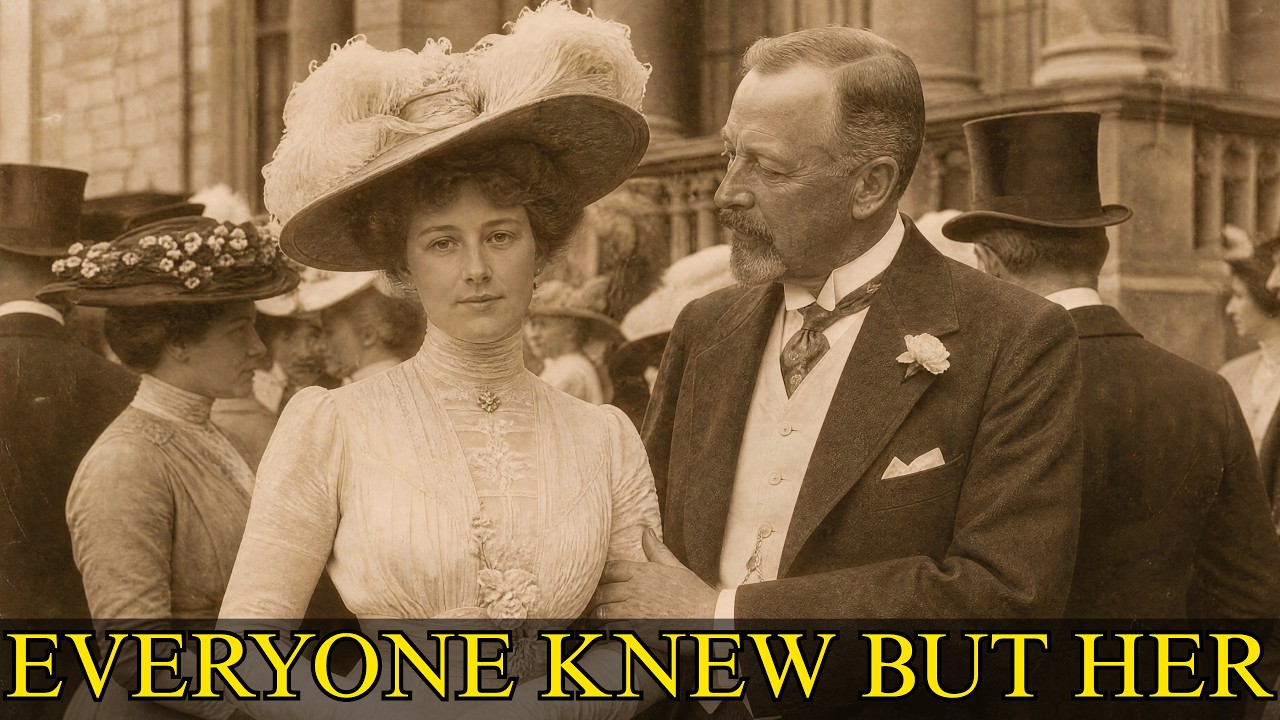
The lands, mines, castle, London house, and title itself all passed down the male line, and the system had never been built to protect someone like her. A son would have been a different matter entirely. Two of the duchess’s five children were marked as open questions in the driest possible scholarly prose, their biological paternity left unresolved even in official records. The National Portrait Gallery simply prints two names under the heading of father for Diana and makes no attempt to choose between them.
Her father was not the Marquess at all, but a man named Harry Cust, a member of her mother’s circle, a member of Parliament, an editor, and a seducer of considerable industry. The rumor had been in circulation before Diana left the schoolroom, and the oldest hard evidence of it was written while she was still a child who was being told nothing, even as the talk had already reached everyone except her. She had a memory that could hold enormous quantities of verse, and she could still produce it word perfect into her nineties. She learned everything by heart because there was nothing else to do with a mind, and she wrote constantly.
That produced a daughter who could recite Meredith’s Modern Love but could not add up. She suffered all her life from what she called her melancholias, a phrase that carried the language of its time rather than a medical diagnosis. One biographer wrote that if she had suspected the truth about her birth, she would have been uncomprehending and unsympathetic, because only housemaids moped. When she was still, she was listless and blank, tortured by dread thought.
Yet she also possessed the opposite quality in extraordinary quantity, a composure that saw her through a life that was about to become very public. Something new happened in British life and she was the first person it happened to at that scale. The machinery of celebrity simply found her, and once it had her, it did not let go for the next forty years, through two wars, a stage career, and an embassy. She was a celebrity roughly a decade before the word meant what it means now, and she knew it.
She told the story herself, on the record, in 1983, in a long interview given when she was about ninety years old. When the First World War came, she and everyone she loved became the most disliked group of young people in London. These were the children of the Souls, a circle of writers and artists who set out to be everything their parents were not. The drugs they used were real and they were legal then.
Diana agreed about the reputation, though not the diagnosis. The press blamed two deaths on sheer folly born of natural high spirits stimulated by champagne, but the historian who has written most carefully about the birth of the English drug scene makes the point without heat. Every source that treats her seriously describes occasional use, not addiction. There is no evidence she was ever treated for dependence, and none of any drug use after the war.
With their world collapsing, two bereaved women overused morphine and chloroform for a while, and then stopped. During the war, her close friend Julian Grenfell wrote to her that their generation becomes history instead of growing up. He died in the fighting, and his poem Into Battle appeared in The Times the day after his death. She wrote one of the most heartbreaking sentences in her surviving letters at that time, thinking of a group she believed could stop anything, and then nearly every name in that group was lost.
She told herself to hold someone up as they all must. Her marriage was arranged inside a strange arrangement. She married Duff Cooper, and the single most consequential sentence anyone has written about the marriage appeared in the archive. Both facts were entirely public and neither of them was ever quite said aloud.
Diana was known for her generosity with other people who were in trouble. The list of women in Duff’s life is not a rumor and it is not short. According to one biography, two of them, both named Cooper, were in love with him, and only one of them was getting any satisfaction from the arrangement. Her son asked her about the marriage once, and she gave him a sentence that has outlived almost everything else she said.
It was a formidable piece of self-possession, and her biographer left two stories that show what the composure cost. The marriage was a single word to her, and decades after both his parents were dead, the other half of the story arrived. On the political stage, when Duff Cooper resigned from the government over the Munich agreement, Chamberlain answered with a sentence of careful, chilly courtesy, saying that a man who gives up these things for conscience’s sake must be listened to with respect. Duff went into Churchill’s government as Minister of Information in May of 1940.
The couple moved out of Paris to Chantilly and carried on entertaining, which effectively turned their house into a rival embassy. The archive dryly notes that this cannot have made life easy for their successors. At one point, Diana arranged a meeting between de Gaulle and Churchill and tiptoed out of the room at exactly the right moment. She once told someone that the best thing to do with the poor was to kill them, adding, “After all we are the best people.
” When Duff read the passage later and began to apologize for her, she told him she had no idea why he was apologizing, since in real life she would have done exactly the same. The story of her true parentage reached the newspapers in January of 2006, under a headline about Duff Cooper’s secret second son, a man named Bill Patten who had reached the age of forty-seven before any of them let it go. The official account of Diana’s life was written by Martin Charteris, Lord Charteris of Amisfield, who had been the Queen’s private secretary, a man who had spent his career keeping royal secrets. Diana lived the rest of her life inside that arrangement and never once tried to break it.
There is a further claim about her ancestry that has no solid proof, has never had any, and rests almost entirely on the color of two pairs of eyes. Her biographer noted that if she had been told at eighteen that her father was not her father, she would have wanted the proof, or she would have said what she said. Set the two stories side by side and do not embellish them, because they do not need it.