Raymond Patriarca ran New England’s underworld for three decades, but before he became the region’s most powerful mob boss, he was a street criminal from Providence who dropped out of school at age eight to shine shoes. Born in Worcester, Massachusetts, on March 17, 1908, Patriarca moved to Providence as a child. By his teenage years he faced charges including hijacking, armed robbery, and safe-cracking. Before he turned 25, Providence’s Board of Public Safety had branded him Public Enemy Number One.
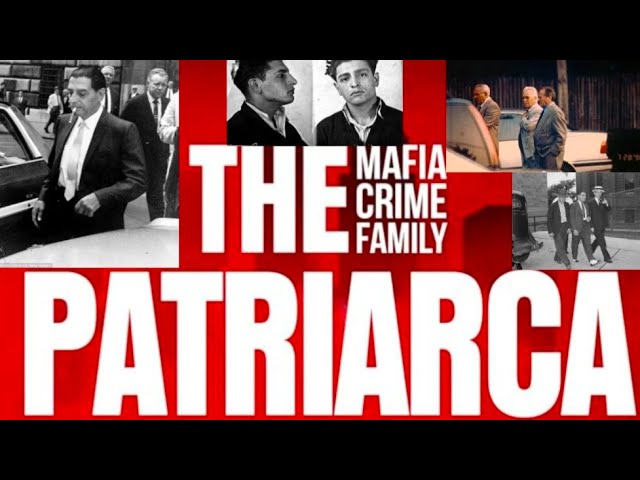
A politically connected parole in 1938 boosted his reputation. Investigators later found that Executive Counselor Daniel H. Coakley, a close ally of Governor Charles F. Hurley, had created a fictitious priest named Father Fagin to secure Patriarca’s release.
Coakley was impeached and removed from office, while Patriarca’s status in the criminal world rose. Patriarca took control of the New England crime family in 1954, following the retirement of Philip Buccola, who fled to Sicily after dodging tax charges. Within two years, Patriarca moved the family’s headquarters to Providence, operating out of the National Cigarette Service Company and Coin-O-Matic Distributors, a vending and pinball business on Atwells Avenue in Federal Hill. Insiders called the operation “the office.
”
Under Patriarca, the family ran illegal gambling, loan sharking, pornography, and stolen goods trafficking. He also held a financial stake in Las Vegas’s Dunes hotel and casino, profiting from revenue skimming. At its peak, the family boasted more than 100 made members. Patriarca demanded tribute from every illicit enterprise in his territory and barred other Mafia groups from operating in New England.
He maintained alliances with the Genovese and Colombo families in New York, using the Connecticut River as a territorial boundary. His methods were notoriously ruthless. He reportedly ordered an elderly mobster to kill his own son after a failed deal cost Patriarca a substantial sum, relenting only at the urging of his underboss Henry Tameleo. When federal agents seized a shipment of hijacked cigarettes he had financed, he made several family members pay him $222,000 to cover the loss.
Rumors also claimed he sanctioned his own brother’s murder after a surveillance bug was found in his office. He was also linked to the assassination of multiple members of the McLaughlin gang during Boston’s Irish mob wars, a feud that erupted when Bernie McLaughlin interfered with Patriarca’s loan sharking operations. In March 1970, Patriarca and several associates stood trial for murder and conspiracy. The star witness was John “Red” Kelly, a robber and hitman who entered witness protection.
Kelly testified that Patriarca had hired him to kill Rudolph “Rudy” Marfeo and Anthony Melei. Patriarca was convicted of conspiracy to commit murder and sentenced to 10 years in prison, but he reportedly continued running the family from behind bars. The conviction later unraveled. It emerged that Kelly had lied on the stand with fabricated evidence from FBI Agent H.
Paul Rico. Lerner and the other defendants were eventually cleared. Law enforcement pressure intensified in the 1960s. Attorney General Robert F.
Kennedy launched a campaign against organized crime, and in 1966 federal agents arrested Joseph “The Animal” Barboza, a Patriarca hitman, on concealed weapons charges. Barboza, who claimed to have killed 26 people, grew anxious when Patriarca failed to post his bail. After two of Barboza’s friends were murdered for trying to help him, he became an informant. Barboza’s testimony led to indictments against Patriarca and Tameleo for the murder of Providence bookmaker Willie Marfeo.
Patriarca was convicted in 1969, with Jerry Angiulo serving as acting boss during his incarceration. He was paroled in 1975 and reclaimed control of the family. Barboza served a one-year sentence for his testimony and was ordered to leave Massachusetts. He pleaded guilty to second-degree murder in California in 1971 and was sentenced to five years.
Months after his release, he was murdered in San Francisco by Joseph “JR” Russo on February 11, 1976. Patriarca faced further charges late in life, including a 1983 murder charge and a 1984 arrest in connection with the murder of Robert Candos, whom he suspected of being an informant. He died of a heart attack on July 11, 1984, at age 76, and was buried in Gate of Heaven Cemetery in East Providence, Rhode Island. His son, Raymond Patriarca Jr.
, took over leadership, but his tenure was marked by internal opposition. A Boston faction led by consigliere Joseph Russo challenged his authority, and in 1992, Patriarca Jr. and several others were convicted on RICO charges, weakening their hold on power. Frank Salemme then stepped in as leader, but turmoil continued.
A rogue faction led by Robert F. Carrozza sought control in the 1990s, igniting violent conflict. Luigi “Baby Shacks” Manocchio assumed leadership in 1996, returning the power base to Providence. The family’s power continued to erode through a series of arrests, convictions, and defections.
In 2012, it was believed to have roughly 30 active members. Carmen “The Cheeseman” DiNunzio currently heads the family from the Boston faction. Throughout its history, the Patriarca family profited from racketeering, extortion, illegal gambling, drug trafficking, and labor union infiltration. Its violent enforcement created fear among business owners, and its influence extended into local politics through bribery and intimidation.
The family’s demise came largely through federal prosecutions under the RICO Act, which allowed authorities to target entire organizations. Despite its diminished power, the Patriarca family remains one of the most documented crime organizations in American history, its story woven into films, books, and television depictions of the Mafia.