ROME — The United States military commission in Rome delivered a verdict that would echo through every officer’s barracks in occupied Europe: Gen. Anton Dostler, commander of the German 75th Army Corps, was guilty of murdering 15 American soldiers in uniform, and he would die before a firing squad.
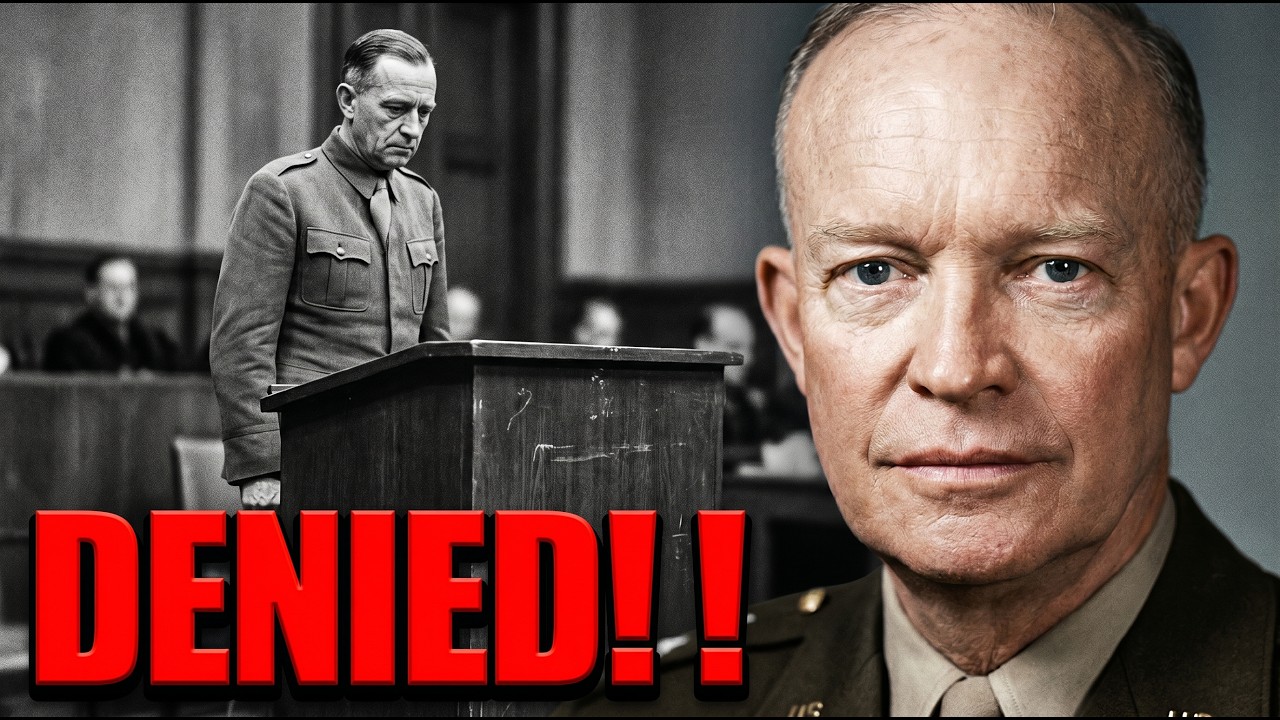
The decision, handed down in October 1945 at the Palace of Justice, marked the first major Allied war crimes trial in Europe after the cessation of hostilities. It preceded the Nuremberg proceedings and established a legal precedent that would define postwar justice: rank offers no immunity from the laws of war.
At the center of the case lay a forgotten mass grave on a rocky peninsula south of La Spezia, 15 dog tags stamped with American names, and a paper trail of telegrams that led directly to Dostler’s desk.
The story began in March 1944, when 15 men of the Office of Strategic Services launched Operation Ginny Two. Their mission: destroy a railway tunnel near Framura that supplied German forces on the Gustav Line. The men were first-generation Italian Americans, fluent in the language and culture, recruited from the streets of New York, New Jersey and Philadelphia.
They were not spies. Every man wore a regulation United States Army field uniform, combat boots, an American flag patch and metal identification tags. Their commanders made the point explicit: if captured, their uniforms guaranteed them the protections of the Geneva Convention.
Rough seas and total blackout conditions doomed the mission from the start. The rubber raiding craft landed miles from the target. With dawn approaching and hundreds of pounds of explosives in tow, the commandos buried their boats and took shelter in an abandoned barn on a rocky ridge above the sea.
For two days they hid, eating cold rations and cleaning their weapons in silence. But local Italian fascist militia noticed movement near the structure and reported it to German headquarters. A massive search party of Wehrmacht soldiers and fascist militia surrounded the ridge, closing a net of machine gun fire around the barn.
First Lt. Vincent Russo assessed the situation. His men were pinned in a wooden structure with no tactical advantage.
They had not fired a shot or committed any sabotage. They were in proper uniform. Under the rules of war, surrender was the only honorable choice.
Russo ordered his men to destroy their code books and disable their explosives. The 15 Americans walked out with their hands raised.
The German soldiers who captured them behaved correctly at first. The Americans were searched, disarmed and marched to the headquarters of the 135th Fortress Brigade in La Spezia. During interrogation, they provided only their names, ranks and serial numbers — exactly what the Geneva Convention required.
German intelligence officers documented the uniform details. They officially recorded that the prisoners wore standard issue United States Army trousers, jackets, combat boots and dog tags. They were legal combatants.
The administrative process was about to begin: a train to a prisoner of war camp in Germany, and the war would end behind barbed wire.
Then the paperwork landed on Dostler’s desk.
Dostler was a career soldier, a veteran of the Bavarian military before the First World War. He was not an SS executioner. He was a professional general in the regular Wehrmacht who had spent his adult life studying military doctrine and the laws of armed conflict.
He also knew about Hitler’s Commando Order of October 1942. The secret directive demanded that Allied special forces captured behind German lines be executed immediately, regardless of uniform, regardless of whether they offered to surrender. It was a direct violation of the laws of armed conflict, and it forced honorable officers to become murderers.
Dostler dictated a telegram to Col. Almers, commander of the 135th Fortress Brigade. The order was simple: take the 15 American prisoners out of their cells and shoot them immediately.
Shock tore through the lower levels of the German command. Naval intelligence officer Alexander von Zangen argued passionately with his superiors. The men wore American uniforms.
They had surrendered without a fight. They had committed no sabotage. Executing them would be a blatant violation of international law, he warned — and if Germany lost the war, every officer involved would be hunted down and hanged.
Almers, an old-school officer, sent an urgent message back up the chain of command. He cited the Geneva Convention. He practically begged Dostler to send the Americans to a regular prisoner of war camp.

Dostler had a choice. He could delay the execution. He could request clarification from Field Marshal Albert Kesselring.
He could convene a military tribunal. He could simply ignore Hitler’s illegal directive and let the administrative process continue.
Instead, he was annoyed that his subordinates questioned him. He sent a second, final telegram. The language was uncompromising: stop arguing and carry out the execution immediately.
He demanded confirmation by the following morning that the men were dead.
In La Spezia, the moral resistance collapsed. Disobeying a direct order from a commanding general was equivalent to signing your own death warrant. Almers ordered his men to prepare the execution detail.
On the morning of March 26, 1944, the 15 Americans were led from their cells, pushed into transport trucks and driven to Punta Bianca, a desolate rocky peninsula south of La Spezia. There was no tribunal, no reading of charges, no opportunity for defense.
The execution detail was tense. Many were regular infantrymen, not hardened SS executioners. They knew that shooting unarmed men in military uniform violated the rules of war.
But fear of disobeying a general overpowered any moral hesitation.
The 15 Americans were lined up along the rocky terrain. They did not beg. The firing squad raised their weapons.
The order was shouted in the freezing morning air, and the commandos were gunned down on the edge of the Mediterranean Sea.
What happened next proved the Germans knew they had committed a crime. There was no official record sent to the Red Cross. There were no marked graves.
The bodies were dragged to a hastily dug mass grave and buried without markers, without honors, without documentation. The Germans attempted to erase the 15 men from existence.
They were wrong.
Fourteen months later, the Third Reich collapsed. In May 1945, German forces in Italy surrendered unconditionally. Dostler was captured by the United States Army on May 8 and placed in an Allied prisoner of war camp in Caserta.
His mindset was identical to almost every senior German officer at the time. He was not terrified. He was not repentant.
He was fundamentally arrogant. He considered himself an elite professional soldier, a battlefield commander who had not operated gas chambers. He firmly believed the victorious Allies would treat him with the professional respect due to an officer of his rank.
For weeks, his reality matched his expectations. He lived in relative comfort among his peers, drank coffee and discussed the tactical history of the Italian campaign. He believed the telegram about 15 commandos was a minor administrative footnote buried in the chaos of a lost war.
The United States Army had not forgotten.
American war crimes investigators swept across Italy, interviewing local civilians. Rumors of a secret German execution at Punta Bianca reached their ears. Italian partisans and villagers guided them to the rocky ground.
In the summer of 1945, military personnel began digging.
They exhumed the mass grave and discovered the remains of 15 men. Forensic examination was conclusive. The victims still wore fragments of United States Army uniforms.
Around their skeletal necks hung stamped metal dog tags confirming their identities. Bullet trajectories confirmed execution-style killings, not combat deaths.
A massive criminal investigation followed. Investigators seized thousands of pages of German military communications. They found von Zangen, who told them exactly what had happened.
They found Almers, who provided the ultimate evidence: the direct chain of telegrams, ending with Dostler’s signature demanding immediate execution.
On October 8, 1945, Dostler was brought before a United States military commission at the Palace of Justice in Rome. The courtroom was packed with journalists, military officers and legal observers. The world press was watching.

Dostler sat in his tailored uniform, stripped of his medals but still carrying himself with rigid Prussian posture. He listened as prosecutors presented the exhumed dog tags, the telegrams and the testimony of his own subordinate officers.
The prosecution’s argument was devastatingly simple: Dostler knowingly ordered the execution of legal prisoners of war, fully aware they were in uniform and fully aware his own staff considered it illegal.
When Dostler took the stand, he did not deny sending the telegram. He did not deny the men were executed. Instead, he relied on the defense that would become infamous as the defining excuse of the entire Third Reich: superior orders.
He argued he was simply a conduit for the will of Adolf Hitler. The Führer had placed absolute mandatory requirements on all commanders to execute Allied special forces. If he had disobeyed, he would have been court-martialed and executed himself.
A soldier’s highest duty, he insisted, is obedience.
The arrogance of his defense was staggering. Dostler essentially argued that because his own government ordered a war crime, the crime was legalized and he should be immunized from the consequences. He refused to acknowledge that international law superseded the decrees of a dictator.
He sat back down, adjusting his uniform collar, confident the military men judging him would understand the harsh necessities of the chain of command. He believed he would walk out of that palace a free man.
He failed to comprehend the paradigm shift that had just occurred in global justice.
The tribunal did not need long. For the judges, the facts were unambiguous. A commander holds ultimate responsibility for the lives his signature extinguishes.
Accepting Dostler’s argument would mean no one in the German military could be held accountable for any atrocity except the dead dictator in Berlin.
When the judges returned, the lead American officer stared directly down from the bench. General Anton Dostler was found guilty of war crimes. He was sentenced to be executed by firing squad.
The rationale was a devastating blow to the hierarchy of the defeated Third Reich. The commission ruled that international law supersedes any domestic military order, even one from a dictator. A general possesses the education and authority to recognize a blatant war crime.
Dostler knew the 15 Americans were legal prisoners of war. He knew executing them was murder.
When the word “guilty” echoed through the courtroom, Dostler’s psychological armor finally cracked. For months he had maintained the delusion that his rank would protect him. Now the horrifying reality crystallized: he was going to be taken outside and shot.
He launched a frantic series of appeals. He argued the trial was unfair, that the commission lacked jurisdiction, that the Geneva Convention did not apply to special operations forces arriving by sea. Every appeal was systematically rejected.
There was only one man left with the power to save him: General of the Army Dwight D. Eisenhower.
As Supreme Allied Commander, Eisenhower possessed absolute executive authority to review tribunal sentences. He could commute the death sentence to life in prison. He could pardon Dostler entirely.
Dostler’s legal team prepared a final, desperate petition directed straight to Eisenhower. It played heavily on military brotherhood, asking a fellow commanding general who understood the pressures of total war to show mercy to a man caught in the bureaucratic machinery of a collapsing state.
Dostler severely miscalculated the psychology of Dwight D. Eisenhower.
By late autumn 1945, Eisenhower had seen the absolute worst of human depravity. He had personally walked through the newly liberated concentration camps at Buchenwald and Ohrdruf. He had seen the piles of rotting corpses, the mass graves, the starving survivors.
He had forced local German civilians to walk through the camps and witness the horrors their government had committed.
 Eisenhower possessed zero sympathy for the professional German officer corps. He viewed men like Dostler not as honorable adversaries but as compliant administrative enablers of the most monstrous regime in modern history.
When the clemency petition reached Supreme Headquarters, Eisenhower reviewed the facts. Fifteen young American boys had landed in Italy wearing the uniform of the United States. They had surrendered properly.
They had been interrogated legally. And Anton Dostler had ordered them executed in a ditch.
Eisenhower did not see a fellow general. He saw a murderer hiding behind his rank. He rejected the appeal with absolute finality and personally confirmed the death sentence.
The Supreme Commander went one crucial step further. To ensure Dostler’s execution would not be viewed as an honorable military death, and to maximize the psychological impact on remaining Nazi prisoners, the execution protocol was specifically designed to strip the general of his dignity. He would be treated like a convicted criminal, not a fallen warrior.
The execution was scheduled for the morning of December 1, 1945, at an abandoned stone quarry outside the Italian town of Aversa. The American military deliberately turned it into a public spectacle. Journalists, photographers and Allied military observers were invited to watch the German general die.
When Dostler stepped out of the military police vehicle, the visual degradation of his rank had already begun. He still wore his tailored Wehrmacht uniform, but all medals, insignia and symbols of command had been physically ripped from the fabric. He looked completely unraveled, a hollow shell of the man who had commanded an army corps a year prior.
Military police escorted him to a thick wooden post driven deep into the quarry floor. In a traditional honorable military execution, an officer is often allowed to stand freely, unbound, facing the firing squad with eyes open. The Americans denied Dostler this final vanity.
They strapped him tightly to the post, binding his arms and torso to the rough timber.
A Catholic priest approached and spoke quietly to the condemned man for several minutes. Dostler nodded, his face pale and drawn. Then an American military policeman stepped forward carrying a heavy black canvas hood and pulled it roughly over Dostler’s head, plunging the former commander into total darkness.
Directly in front of the post stood a 12-man American firing squad. They were regular infantrymen, combat veterans who had likely lost friends on the Gustav Line — perhaps in the very sector Dostler had commanded. They held their M1 Garand rifles at the ready.
The commanding officer raised his hand. The silence in the quarry was absolute, broken only by the mechanical clicking of press cameras. The world was watching.
The officer shouted the command to take aim. Twelve steel barrels leveled at the white target pinned over the black fabric covering Dostler’s heart. Just as the final command to fire left the officer’s lips, Dostler instinctively flinched, turning his hooded head sharply to the side in a desperate, futile biological reaction to the coming bullets.
The volley exploded with deafening violence in the enclosed space. The heavy caliber bullets ripped into the wooden post and the body of the general simultaneously. Dostler’s body slumped hard against the ropes, hanging lifelessly in the cold Italian air.
The commander of the 75th Army Corps was dead.
Military police cut him down, placed his remains in a plain wooden box and hauled him away from the dirt floor of the quarry. It was a cold, administrative disposal of a man who had murdered 15 Americans in almost precisely the same manner.
The execution sent a terrifying shock wave through the countless German officers sitting in Allied prisoner of war camps across Europe. It was the ultimate demonstration of American power and retribution. The myth of the untouchable general was completely shattered.
More importantly, it established the framework for the Nuremberg trials that would soon follow. The hanging corpse of General Dostler became the permanent answer to the ultimate excuse of the Third Reich. He had tried to tell the world he was just a soldier following orders.
The American military tribunals looked at the mass grave at Punta Bianca and declared that hiding behind the orders of a dictator was no longer a valid defense for murder.
The 15 Italian-American boys from the Office of Strategic Services, suffocated in the mud in 1944, had finally received their dark, absolute justice.