MINNESOTA TERRITORY, August 1862 — A survivor of the Dakota uprising has provided a harrowing first-person account of the violence that swept across southwestern Minnesota this summer, describing the murder of her family, her abduction by warriors, and the brutal sexual assaults she endured while held captive, in testimony that has now emerged from a book published just two years after the events it documents.
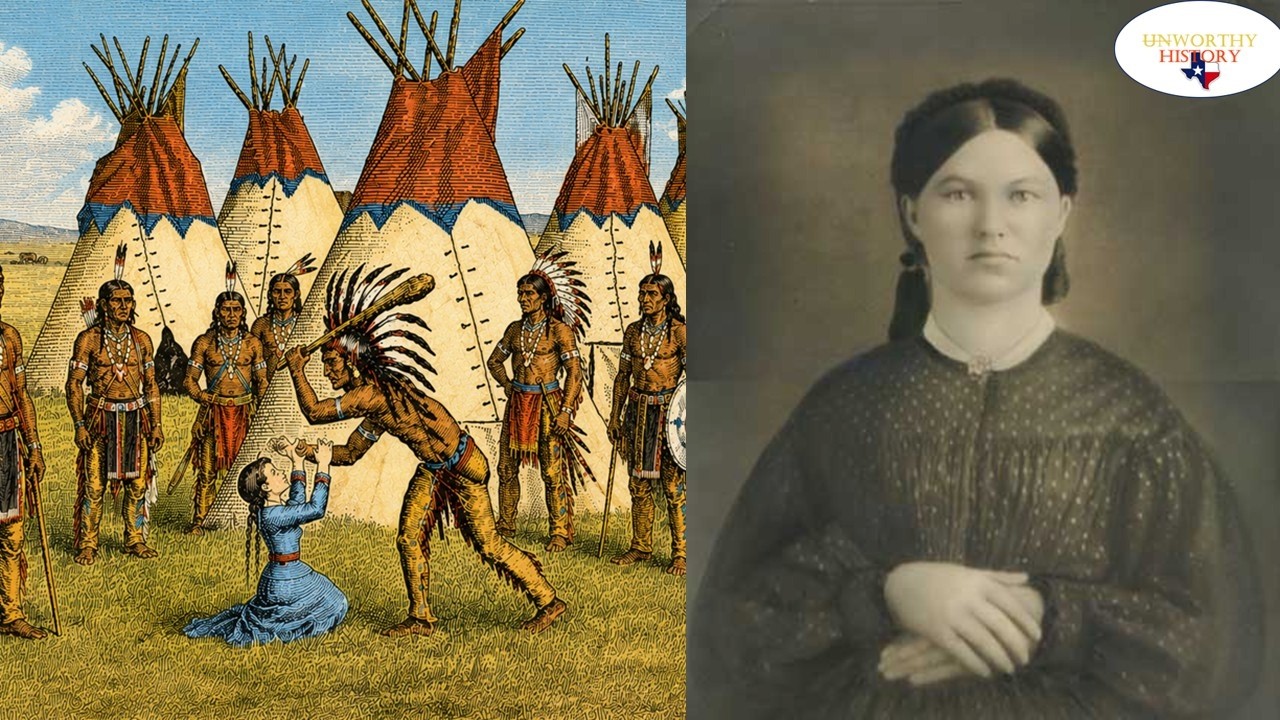
The account belongs to Mary Schwandt, a German-born girl of fourteen who had arrived in America only four years earlier and settled with her family in Minnesota mere months before the attacks began. Her narrative, preserved in “A History of the Great Massacre by the Sioux Indians in Minnesota,” published in 1864 by Charles Bryant and Abel Murch, offers one of the most detailed and disturbing windows into what historians now recognize as the deadliest single episode of organized violence against American settlers in the nation’s history.
On the forenoon of August 18, 1862, Schwandt testified, the Indians came to her father’s house. They shot her father while he was shingling the roof. They killed her mother and her sister Caroline in the yard.
Frederick, Christian, John Waltz, and John Frost were all killed in the house or nearby. Her brother August was beaten and left for dead in the grass, where he lay conscious and watched the murders unfold.
Schwandt herself was ten miles away, living with Joseph B. Reynolds at Redwood, above the Lower Sioux Agency. She had no knowledge of the slaughter that had already consumed her family.
Within hours, she would be fleeing for her own life, unaware that she was already an orphan.
The uprising, coordinated and widespread, struck every white settlement in the region. By the time it ended, more than five hundred settlers had been killed, and many women and children had been carried off as captives — a fate contemporaries described as worse than death. The violence prompted President Abraham Lincoln in December 1862 to order the largest mass execution in American history: the hanging of thirty-eight Dakota men for their roles in the attacks.
Schwandt’s ordeal began on the morning of August 18, when she and several others — Mattie Williams, Mary Anderson, Mr. Patwell, Mr. L.
Davis, and a Frenchman — loaded their clothing into a two-horse wagon and started for New Ulm. At the home of John Moore, a half-breed, they were warned that the Indians were killing all the whites on Beaver Creek and Sacred Heart. They were advised to leave the road and follow Reynolds, who had gone ahead.
Patwell ignored the warning. He kept to the road until they crossed the Redwood, then turned up the stream and struck out across open prairie, eight miles from the water. An Indian on horseback caught up with them and ordered them to turn around and go to Big Stone Lake until Tuesday.
Patwell refused and continued toward the lower agency, keeping to the prairie on the right.
They could see smoke rising from burning buildings. They were not yet certain the Indians were killing whites — they had been within two miles of the agency and had seen the buildings still standing. Then they met an Indian armed with a bow and tomahawk.
Patwell asked whether it was true that the Indians were killing whites at the agency and on Beaver Creek. The man said he did not know. Patwell told him they had heard it was so and that they were escaping to New Ulm.
The Indian seized the bridle of the horse the Frenchman was riding and demanded the animal. The Frenchman dismounted. Patwell got out of the wagon and told the Indian the horse was his.
The Indian grew angry and shot an arrow at the Frenchman, missing him. The Frenchman sprang into the wagon, and they drove off as fast as they could, leaving the horse behind. The Indian ran after them on foot, shooting arrows until he ran out, then turned back for the horse.
They later concluded he had crossed the river and sent others after them, for their captors came from that direction.
When they reached opposite the fort, Patwell decided they could not cross — there was no ferry — and continued down the New Ulm road. The horses were exhausted. They frequently got out and walked.
 When they were within eight miles of New Ulm, some fifty Indians with horses, wagons, and barrels full of flour and goods and pictures taken from houses came from the direction of the town. They were drunk, noisy, naked, and painted all over their bodies.
Two on horseback rode ahead of the rest and ordered them to stop. The team was turned out of the road. All but Patwell jumped from the wagon.
The Indians came up and shot him — four balls entered his body — and he fell dead. The rest ran toward the woods and hid in a slough in the tall grass. The men were both killed in the slough.
Davis cried out, “We are lost.” The Frenchman ran in a different direction. Schwandt had a faint recollection of seeing him fall when he was shot.
Mary Anderson was behind them and was shot through the lower part of the body, the ball entering at the hip and exiting through the abdomen. She was not killed. The Indians must have carried her to the wagon, for when Schwandt saw her again, she was in a wagon drawn by one of the warriors.
As the Indians came toward them, the women screamed. One seized Mattie and tore off her shaker. Another took hold of Schwandt, one holding each arm, and forced them back to the wagon.
They put Mattie in the wagon with Mary. They put Schwandt in another, driven by a black man named Godfrey. The wagon with Mattie and Mary went toward the agency.
The one carrying Schwandt went off into the prairie.
She asked Godfrey what they were going to do with her. He said he did not know. He told her they had chased Mr.
and Mrs. Reynolds, and he thought they had killed them.
Two or three miles out on the prairie, they came to the squaws, for whom Godfrey said they had been looking. They all sat down. The squaws took bread from the wagons, and all ate.
The Indians fixed their hair and tied it with ribbons. It was about five o’clock. They remained about an hour, then went to the house of Wakuta, a chief of the Wahpekute tribe, about half a mile from the agency.
There Schwandt found Mrs. W. De Camp, who with her two children had been captured at the lower agency.
It was about eight o’clock when they arrived at Wakuta’s house. The buildings at the agency were still burning. She could see them plainly.
She had been there about half an hour when an Indian came — one Mrs. De Camp supposed to be friendly, a farmer Indian. Fearing others would come and 𝓪𝓫𝓾𝓼𝓮 them, Mrs.
De Camp asked him to stay. After a while, more came. They annoyed Schwandt with loathsome attentions for a long time.
Then one laid hands forcibly upon her. She screamed. One of them struck her on the mouth with his hand, causing the blood to flow freely.
They took her out by force to an unoccupied teepee near the house and perpetrated, in her words, “the most horrible and nameless outrages upon my person.” The outrages were repeated at different times during her captivity. The editors of the 1864 volume appended a note: “The details of this poor girl’s awful treatment in our possession are too revolting for publication.”

At ten or eleven o’clock, Mattie and Mary Anderson came. The ball was still in Mary’s body. Wakuta tried to cut it out but failed.
Mary took the knife from Wakuta’s hand and removed it herself.
They remained there some four days. Cold water was poured upon cornmeal for Mary to drink. They had nothing to eat except some potatoes they dug in the garden.
On the fourth day, they went to the camp of Little Crow. Mary Anderson was taken along but died at about four o’clock on the morning of August 22.
They had some chicken there but no bread. Mary ate some of the chicken and drank some of the broth. It was the last she ever ate.
Schwandt was with her when she died. It rained hard part of the night. Water ran through and under the teepee.
Mary was wet and had no bed clothing to keep her dry or warm. She was very thirsty, calling for water all the time, but otherwise did not complain and said very little.
Schwandt watched while Mattie slept, and Mattie watched while she slept. Schwandt was awake when Mary died. She dropped away so gently that Schwandt thought she was asleep until Mattie told her she was dead.
She was a good girl. Before she died, she prayed in the Swedish tongue, but Schwandt did not understand what she said. She had a ring on her finger she wished Mattie to give to her mother if she died, but after her death her finger was so swollen they could not get it off, and it was buried with her.
Joseph Campbell, a half-breed, assisted in having her buried. Mattie and Schwandt saw her carried to the grave by the Indians, wrapped in an old piece of teepee cloth and laid in the ground near Little Crow’s house. She was subsequently disinterred, as Schwandt was informed, and buried at the Lower Sioux Agency.
A likeness of a young man to whom Mary was to have been married they kept and returned to him. Her own they gave to Mrs. Reynolds, who yet retains it.
At Wakuta’s, Mary had wanted clothing badly, as what she had on was all bloody. Wakuta gave her a black silk dress and shawl, both no doubt stolen from some white woman.
The Indian who took Schwandt prisoner gave her to his niece Winona, whom the whites called Maggie. Her husband’s name was Wakin Yan Waste, or Good Thunder. Schwandt was forced to call them mother and father.
They remained at the village of Little Crow about a week, perhaps a little more, then moved toward Yellow Medicine and camped about fifteen miles above Crow’s village. The next morning they heard the soldiers were coming. They awoke Schwandt and took off the dress they had compelled her to wear and put her own on her again.
But the soldiers did not come. They started again for Yellow Medicine, which they reached about noon.
After they got started, they again heard the soldiers were coming. A scene of dreadful confusion followed. Some ran out onto the prairie and scattered in all directions.
Others hastened the teams along as fast as they could go. But again they were doomed to disappointment. No soldiers came.

When within about four miles of Yellow Medicine, they ordered Schwandt out of the wagon and compelled her to walk. They remained at Yellow Medicine some time — she thought some three weeks. There they had potatoes and beef to eat, and sometimes a little bread.
They made her carry water and make bread. They usually got water from the nearest slough.
At first they were very good to her in some respects, waking her at breakfast and bringing her soap, water, and a towel to wash herself. But this lasted only about two weeks, when they took off her clothes and dressed her in their garments. They told her the Sissetons were coming down from Big Stone Lake and would 𝓀𝒾𝓁𝓁 her unless she dressed like them.
They wanted to paint her face and put rings in her ears, but she refused, and they did not insist.
They finally left Yellow Medicine and moved on day by day until they reached the place where they were subsequently rescued by the forces under Colonel Sibley, since known as Camp Release.
The uprising had been more motivated than usual, according to historical accounts, because the United States government had fallen behind on providing annuities to the Dakota due to the outbreak of the Civil War. The war had also drawn many fighting-age men away and reduced the number of soldiers defending the settlements.
Schwandt eventually married William Schmidt, and they had at least five children between 1871 and 1886. She lived to the age of ninety-one and died in New Prague, Minnesota, on July 26, 1939.
Her story does not end with her captivity. When her first owner grew angry at her and threatened to 𝓀𝒾𝓁𝓁 her, a Dakota woman named Snana traded Mary for a pony and protected her until General Sibley recovered her at Camp Release. Over thirty years later, in 1894, Snana wrote to Mary after seeing a story about her captivity in a newspaper.
They began a regular correspondence and visited each other about once a year until Snana died in Nebraska in 1908.
The executions that followed the uprising remain a subject of fierce historical debate. Many modern historians have criticized the United States government for carrying out the hangings, with some using the word genocide to describe the acts. One website, societypages.
org, argues that the events should not be described as a Sioux Massacre but as the Dakota Genocide, with the Dakota as the victims. Another, zinnedproject. org, named after radical historian Howard Zinn, claims the Dakota were executed for their role in a war of self-defense.
The Nation magazine has lamented that Lincoln ordered the execution of thirty-eight Dakota Indians for rebellion but never ordered the execution of Confederate officials or generals.
Yet the narrative Schwandt provided — of her father shot on his roof, her mother and sister killed in the yard, her neighbors murdered in their homes, her companions shot down in a slough, and her own body violated in an unoccupied teepee — offers a counterpoint to those characterizations. In the story she told, it was not the Indians who were trying to defend themselves.
The 1864 volume from which her account is drawn was compiled just two years after the massacre, from the personal narratives of many who escaped. It stands as one of the earliest and most direct records of what happened in Minnesota in August 1862, before memory could be reshaped by later generations.
Schwandt’s testimony, in its unflinching detail, preserves the voice of a fourteen-year-old girl who lost her family in a single morning, watched a friend die slowly of a gunshot wound in a rain-soaked teepee, and endured repeated assaults at the hands of her captors. It is a voice that historians on all sides of the debate would do well to hear.
The question she leaves behind — whether the hanging of thirty-eight men was a just punishment for the outrages committed upon her, her family, and the other settlers of Minnesota — is one she explicitly invited her readers to decide for themselves. More than a century and a half later, it remains unanswered.