The world mourned the summer of 1997 as a fairy-tale romance between a princess and a playboy, captured in a single photograph of a kiss on a yacht. But the boat had been purchased by his father only weeks earlier. The villa where the holiday began belonged to the father as well. And the man at the center of it all had spent his entire life orchestrating the people and possessions around him, while never once being granted the one thing he truly wanted: belonging.
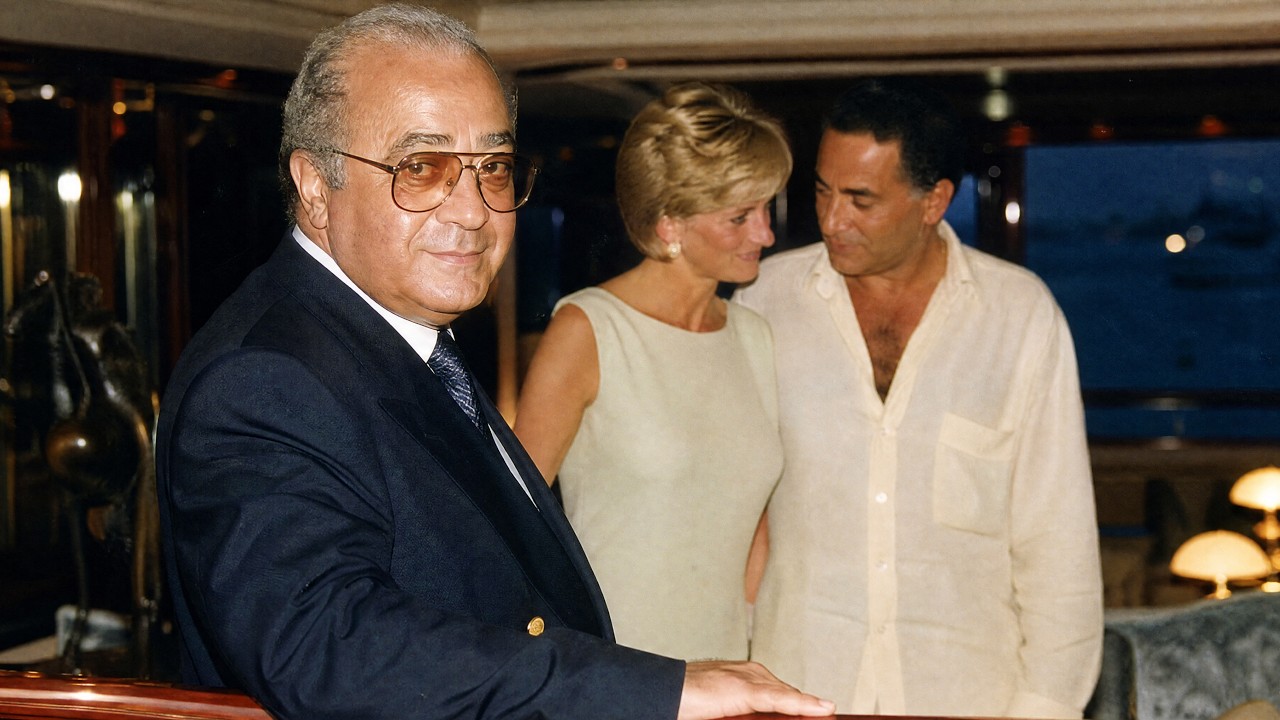
Mohamed Al-Fayed was born in Alexandria in 1929, the son of a schoolteacher. He built a genuine fortune, buying the Ritz in Paris and Harrods in London, yet he was repeatedly denied British citizenship and branded dishonest by government inspectors who concluded he had misrepresented his origins and wealth to acquire the famous department store. He could buy every symbol of establishment acceptance, but he could never buy acceptance itself. In the summer of 1997, he offered his hospitality to Diana, Princess of Wales, who was newly separated from her private relationship with heart surgeon Hasnat Khan and seeking a safe haven from the press for herself and her sons.
Al-Fayed provided his villa in Saint-Tropez, complete with a private jetty for privacy, and he summoned his son, Dodi, to join them. Dodi, then 42, had spent his life financially dependent on his father, moved between projects and kept permanently off balance. Dodi’s entanglement with Diana was complicated by the presence of another woman. Kelly Fisher, an American model, said she had been engaged to Dodi and was kept waiting on a smaller boat nearby while he spent his days with the princess.
On August 10, a photograph of Dodi kissing Diana on the Jonikal was published, becoming the most valuable image in the world and turning their private holiday into a global sensation. Fisher filed a lawsuit for breach of contract days later, but withdrew it after the deaths that followed. Three weeks after the photograph, Diana and Dodi died in a car crash in a Paris tunnel. Their driver, Henri Paul, was drunk and drove at excessive speed while being chased by paparazzi.
No one in the car was wearing a seatbelt. The tragic facts were confirmed by a lengthy French and British investigation, and an inquest jury later returned a verdict of unlawful killing caused by grossly negligent driving. For the rest of his life, Mohamed Al-Fayed rejected that conclusion. He insisted the couple had been engaged and that they were murdered by British secret services on the orders of the royal family, who could not accept a Muslim marrying the Princess of Wales.
He built memorials inside Harrods, including a bronze statue of the couple dancing. The claims were all tested and rejected by the official investigations. A senior employee at his own hotel testified under oath that the engagement story had been built after the crash. At the inquest, the jury found no evidence of any conspiracy and no evidence of an engagement.
The romance, as constructed by the father, was not supported by the record. The memorials were eventually removed from Harrods after the store was sold by his family. Mohamed Al-Fayed died on August 30, 2023, one day before the 26th anniversary of the crash, and was buried near his son.
He carried his beliefs to the grave, unable to let a terrible accident remain an ordinary tragedy.