When the smoke cleared after the gunfight at the O.K. Corral, the real battle had just begun. Not with bullets, but with words.
On November 16, 1881, during the hearing into the events in Tombstone, testimony was taken from Wyatt Earp and John H. Holliday. The prosecution had already presented its main evidence.
The two defendants were informed of their right to make a formal statement under section 133, page 22, of the Arizona laws approved on February 12, 1881. Wyatt Earp chose to speak under oath and answered questions directly.
When asked to identify himself, he responded, "My name is Wyatt Earp. I turned 32 on March 19th of this year." He stated that he was born in Monmouth, Warren County, Illinois, and had been living in Tombstone, Cochise County, Arizona since December 1, 1879.
Regarding his profession, Earp said he was currently working as a saloon keeper. He also had experience serving as a deputy sheriff and working in a detective capacity.
When invited to clarify any points raised in earlier testimony and to share any facts that might explain his actions, Earp began by addressing an incident that had its roots in the spring of the previous year.
He recalled that he and others, including his brothers Virgil and Morgan, along with Marshal Williams, Captain Joseph H. Hurst, and four soldiers, had followed the trail of six government-owned mules that had gone missing from Camp Rucker.
Their investigation led them to the McClure ranch, which was owned by Tom and Frank McClure and located near Charleston. While in Charleston, Earp encountered a man named Dave Estes.
Estes informed him that the mules had recently been at the McClure ranch and that someone had rebranded them using the initials D.S. Estes explained that the branding was altered in a way to disguise the animals' original markings.
Upon arrival at the ranch, the group confirmed that the mules were indeed there, and they even found the branding iron used. At the ranch, another man named Frank Patterson reportedly negotiated a compromise with Captain Hurst.
According to Earp, Hurst returned to their group and said that the compromise would lead to the return of the mules. Though the Earps were eager to continue pursuing the matter, Hurst persuaded them to return to Tombstone, believing the issue was resolved.
However, several weeks later, Captain Hurst informed them that the agreement had not been honored. He said the mules were not returned and that the promise had only been made to get Earp and his party to leave the area. Hurst warned Wyatt and his brothers to remain cautious as there were rumors that certain individuals involved in the matter had made troubling statements about them.
About a month after the investigation into the missing government mules, Earp ran into Frank and Tom McClure in Charleston. The encounter was tense. They confronted him and warned that if he ever pursued them that closely again, there would be serious consequences.
Not long afterward, around the time of the Benson stagecoach robbery that tragically resulted in the death of Bud Philpot, Earp was assisting Wells Fargo and Company in a detective role. Based on the investigation, he became convinced that three men, Billy Leonard, Harry Head, and James Crane, had been involved in the robbery.
From what he knew, those three individuals had strong personal and social ties with the Clantons and McClures. They frequently stayed at the Clanton and McClure ranches, which were widely rumored to be safe havens for individuals involved in outlaw activities.
At the time, Earp had aspirations to run for sheriff of Cochise County in the upcoming election. Capturing those responsible for the stage robbery, particularly those linked to Philpot's death, would earn the respect of both the public and local business leaders.
There was a reward of about $1,200 for each of the three men, totaling roughly $3,600. That was a significant sum, and Earp believed it might persuade others to help him locate them.
He arranged a private conversation with Ike Clanton, Frank McClure, and Joe Hill behind the Oriental Saloon in Tombstone. He explained his goal to apprehend Leonard, Head, and Crane, and that doing so would support his candidacy for sheriff.
He also promised that if they gave him reliable information, they would receive the full reward, and he would keep their involvement completely confidential.
Ike Clanton expressed interest. He said he had a personal dispute with Leonard over a property claim and would benefit if Leonard was no longer in the picture. However, Clanton warned that the men would likely resist arrest and asked if the reward would still be paid if the suspects could not be taken alive.
To clarify the terms, Earp reached out to Marshal Williams, the Wells Fargo agent in town. At his request, Williams sent a telegram to company leadership in San Francisco. In June 1881, he received a reply confirming that the reward would indeed be paid, regardless of whether the suspects were brought in alive.
The following day, Earp met Clanton and Hill on Allen Street near a cigar shop beside the Alhambra. He asked Marshal Williams for the telegram, and when Williams couldn't locate the original, he obtained a fresh copy from the telegraph office. Earp then showed this message to Clanton and Hill and later shared its contents with Frank McClure.
They came to an agreement. They would receive the entire reward minus basic expenses like horse rentals. Joe Hill was to travel to New Mexico near Eureka, where Leonard, Head, and Crane were believed to be hiding. His job was to lure them back toward the McClure ranch close to Soldiers Hole, about 30 miles from Tombstone. Earp would then arrive with a posse to make the arrest.
When Earp asked them how they planned to convince the men to come back, they told him they intended to spread a story about a paymaster traveling between Tombstone and Bisbee to distribute miners' wages. They thought this would tempt Leonard and his group to return.
Before departing, Joe Hill left his personal items, a watch, a chain, and a few hundred dollars with Virgil Earp for safekeeping. He was gone for about 10 days.
When he returned, he explained he had arrived too late. Leonard and Head had already been killed, reportedly by horse thieves. Later, Earp found out those horse thieves may have actually been associated with the Clanton and McClure crowd, suggesting possible internal conflicts or secret reprisals.
After this, the relationship between Earp and the Clantons and McClures deteriorated. Ike Clanton and Frank McClure began accusing him of sharing the plan with Marshal Williams and Doc Holliday, which wasn't true. They started avoiding the Earps around town and tensions began rising.
From that point on, Earp, his brothers Virgil and Morgan, and Doc Holliday began hearing troubling remarks, suggesting that Clanton and his allies were harboring resentment and making threats behind the scenes.
Earp was a friend of Doc Holliday because back when he served as city marshal of Dodge City, Kansas, Holliday once came to his aid during a particularly dangerous moment. Earp was surrounded and outnumbered, and Holliday stepped in and may well have saved his life.
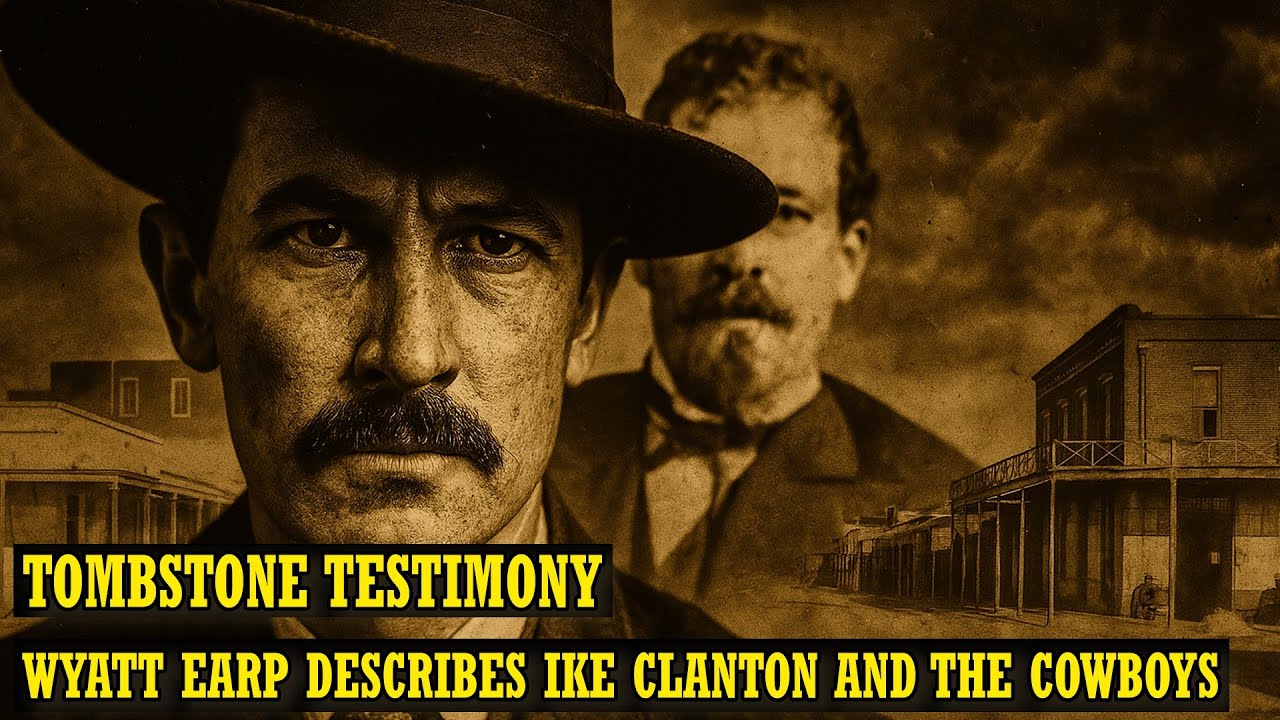
About a month before the events that followed, around October 1881, Morgan and Earp assisted in arresting Pete Spence and Frank Stilwell in connection with the Bisbee stagecoach robbery. Although they were acting as part of a legal posse organized by the sheriff, the Clantons and McClures blamed them personally for the arrests.
Not long after bringing Spence and Stilwell into town, Ike Clanton and Frank McClure arrived. Frank pulled Morgan aside in front of the Alhambra Saloon, where John Ringo, Ike Clanton, and the Hicks brothers were also gathered.
Frank harshly criticized Morgan for taking part in the arrest and declared he would no longer associate with Spence due to the incident. Frank then warned Morgan not to attempt to arrest him, implying that things wouldn't go smoothly if that ever happened.
Morgan replied that if there was ever legal cause, he would do his duty. Frank responded that although he had previously retracted past threats due to this latest event, those retractions no longer stood. Morgan said nothing further and walked away.
Both before and after that incident, several townspeople, including Marshal Williams, Farmer Daly, Ed Barnes, Charlie Smith, and others, told the Earps that they had heard troubling remarks about possible harm being directed toward them.
The people reportedly making these statements included Ike Clanton, Frank and Tom McClure, Joe Hill, and John Ringo. Earp was aware that many of these men had reputations for being associated with individuals involved in cattle rustling, stagecoach theft, and other illegal acts.
Earp personally knew about the case where six government mules were located at the McClure ranch. He also heard of cattle being discovered there under suspicious circumstances. When the rightful owner came looking for his livestock, he was driven off and warned not to speak about it. Out of fear, he remained silent until just a few days before the hearing.
In addition, Earp heard about an incident involving John Ringo near Camp Thomas in which someone was reportedly shot without provocation. He also suspected, based on what he had learned, that the McClure brothers had taken part in attacks on Mexican traders in Skeleton Canyon earlier that summer.
Given all of this, Earp remained cautious and alert. He had no intention of confronting anyone if he could avoid it, but he also wasn't going to let himself be caught off guard.
Roughly five or six weeks before the hearing, Earp met Ike Clanton near the Alhambra Saloon. Clanton confronted him, claiming Earp had told Doc Holliday about their earlier discussions regarding the plan to capture Leonard, Head, and Crane.
Earp told him directly that he had never spoken to Holliday about it and that when Holliday returned from Tucson, he could prove it. When Holliday came back, Earp asked him whether he had repeated any of that information to Ike.
That night, October 25, Holliday encountered Ike Clanton at the Alhambra Saloon and questioned him. They began arguing, each accusing the other of not telling the truth. Earp was eating at the lunch counter inside when he overheard the disagreement. Morgan Earp was nearby at the bar.
Knowing Morgan was an officer, Earp called him over and let him know that Holliday and Clanton were quarreling. Morgan went through the lunch counter area, took Holliday by the arm, and led him outside. Ike Clanton followed shortly after.
As Earp finished his meal and stepped outside, the two men were still exchanging words. Virgil Earp arrived around that time, likely from the Oriental Saloon, and told them firmly that if they didn't stop, he would have to arrest them. The crowd dispersed.
Morgan walked toward the Oriental Saloon. Ike crossed the street to the Grand Hotel. Earp then returned to the Eagle Brewery, where he had been running a faro game.
After a short time, he stepped outside again and encountered Ike Clanton. Clanton asked if he would walk with him, saying he wanted to speak privately. Earp agreed but told him he couldn't go far as he had responsibilities with the money from the game.
They walked down Fifth Street, stopping halfway alongside the brewery. There, Clanton told him that when Holliday had approached him earlier that night, he felt unprepared to respond. He said that by morning things would be different and implied that long-standing tensions had reached a point where they needed to be settled.
Earp told him plainly that he had no interest in conflict and would avoid it if he could, because as he said then, there's no money in it. Clanton left him after that, saying, "I'll be ready for you in the morning."
Earp walked over to the Oriental Saloon. Ike Clanton followed him inside and had a drink. He made a point of displaying his revolver openly. He told Earp in no uncertain terms that he shouldn't assume things were over, that he intended to confront them the next morning. He also said he'd be glad to settle matters with Doc Holliday right then and there.
Earp told him that Holliday wasn't looking for trouble. He just wanted to clear the air and show that he hadn't been spreading rumors. Around that time, the man dealing Earp's faro game closed it for the night and brought him the money. Earp secured it in the safe and headed home.
On his way, he crossed paths with Holliday between the Oriental and the Alhambra. They walked together down Allen Street. Holliday turned in for the night and Earp continued to his house and went to bed.
He didn't get up until around noon on October 26. Before he even got out of bed, Ned Boyle came by and told him he had just spoken with Ike Clanton near the telegraph office. Ned said Ike was armed and making threats. He claimed that as soon as any of the Earps showed themselves in the street, something serious was going to start. According to Ned, Ike was saying he and his group were there for a fight and actively looking for them.
Earp stayed in bed for a little while after that, but eventually got up and made his way to the Oriental. Not long after, Harry Jones came to him, clearly concerned. He asked what was going on. Earp asked what he meant. He said Ike Clanton was walking around armed with both a rifle and a revolver, apparently searching for the Earps.
Earp told him he would go find Clanton and see what he wanted. At the corner of Fifth and Allen, he ran into Virgil Earp, who was acting marshal at the time. Virgil had also heard that Ike was actively looking for them. They went in separate directions. Virgil went down Fifth toward Fremont, and Earp went along Allen.
Virgil found Ike Clanton on Fourth Street just off Fremont near an alley. As Earp was coming down Fourth Street himself, he saw Virgil confronting Ike. Ike shifted his rifle as if to raise it, and Virgil quickly reacted, grabbed it, and used his revolver to subdue him, not to injure, but to bring him under control. Clanton had the rifle in his hands and a revolver tucked into his waistband.
By the time Earp reached them, Virgil and Morgan had already taken Ike's weapons. They escorted him to the Grand Hotel, where they examined his gear, and then Earp took Ike Clanton before Justice Wallace. Since Virgil was out looking for Judge Wallace at that time, Morgan temporarily had Ike in custody.
Earp went into the courtroom and took a seat. From his bench, Ike looked over at him and said something like, "I'll get back at all of you for this." He added that if he had a weapon at that moment, he would settle it right then.
Morgan replied calmly, saying that if Ike was so eager to act, he'd hand him his own revolver. As Morgan offered it, Ike began to rise, but Deputy Sheriff Campbell intervened, telling him to stay seated and stating he wouldn't allow any further disturbance.
Earp wanted to clarify that he never handled Ike Clanton's weapons at any point. To describe their positions in the courtroom, Ike was sitting on a bench facing north. Earp sat along the north wall directly in front of him. Morgan was standing just to Earp's right with his back to the same wall, holding Clanton's Winchester rifle by the barrel with one end resting on the floor. He had the revolver in his other hand. The weapons remained with them the entire time.

Virgil was not in the room during this. He arrived later after Earp had already left. Virgil told him afterward that he'd been out trying to locate Judge Wallace.
At that point, Earp was growing increasingly concerned. He had heard numerous threats from Ike and his associates, and their behavior that day made it feel like something serious was being planned. He had no desire for violence, but he also couldn't ignore what seemed like an ongoing and deliberate threat to his life and the safety of his brothers.
Earp came to believe that if a confrontation was inevitable, he wanted it to happen openly and directly, not by surprise or ambush. So he turned to Ike, who was sitting roughly eight feet away, and said, "You've been making these threats for some time now. I know what's been said. If you really want to settle this, I'll face you anytime, any place, even if it means riding over to San Simon into your own territory."
Ike replied calmly, "I'll see you after I'm done here. All I need is four feet of ground."
After leaving the courtroom near the justice's office, Earp encountered Tom McClure just outside. He approached and said that if Earp wanted a confrontation, he was willing to meet him anywhere. Earp assumed he had overheard the earlier exchange with Ike Clanton.
Given Tom's past threats against him, Earp felt the same way about him as he did about Ike. If a confrontation was truly unavoidable, he figured it was better to face it under circumstances where he could defend himself fairly.
So Earp told him, "If that's how you feel, then let's settle it here." At that moment, he reached out and struck him lightly with his left hand to provoke a reaction and drew his pistol with his right, more as a warning than a challenge. Tom had a revolver visibly tucked into his waistband, but he didn't make any move to use it.
Earp told him plainly, "If you intend to act, now's the time." Still, Tom did nothing, and Earp tapped him on the head with the barrel of his revolver, again more to deter than to injure, and walked away, heading toward Hafford's corner.
He stepped inside, picked up a cigar, and stood by the door for a moment. Shortly after, he saw Tom McClure, Frank McClure, and Billy Clanton walking down Fourth Street toward a gunsmith shop. Curious about their intentions, Earp followed them.
When he got there, he noticed Frank McClure's horse was standing on the sidewalk, its head sticking into the doorway of the shop. As a deputy city marshal, it was his responsibility to maintain order. So he took the horse by the bridle and began backing it off the walkway.
At that point, Tom, Frank, and Billy Clanton came to the door. Billy rested his hand near his revolver, and Frank tried to take hold of the horse's reins. Earp told him clearly, "You need to move this horse off the sidewalk." He complied and backed it into the street.
Just then, Ike Clanton arrived and all four of them went inside the shop. From where he stood, Earp could see them rearranging the ammunition in their belts. They exited the shop and walked down Fourth Street to the corner of Allen, then continued on toward Dunbar's Corral.
Earp followed them to the intersection of Fourth and Allen, but stopped there. At that time, Virgil Earp was serving as Tombstone City Marshal, and Morgan Earp had been working as a special officer for the past six weeks or so. He wore a badge and received regular pay.
Earp had been deputized to serve in Virgil's place while he was in Tucson for the Spence and Stilwell trial. Although Virgil had returned several days earlier, Earp was still assisting him with duties around town. He believed Virgil would soon have to disarm the group based on their behavior and ongoing threats toward the Earps. He followed to be nearby in case help was needed.
Roughly 10 minutes later, while Virgil, Morgan, Doc Holliday, and Earp were standing on the corner of Fourth and Allen Streets, people began warning them that something was likely to happen. One man, Coleman, told Virgil directly, "They mean trouble. They've just left Dunbar's corral and gone into the O.K. Corral, all carrying weapons. You'd better go disarm them."
Virgil turned to Holliday, Morgan, and Earp and asked them to go with him to disarm the group. Morgan then suggested that since the Clantons and McClures had horses, they might need horses themselves in case the situation escalated into a pursuit. Earp told him that wouldn't be necessary. If they tried to escape, he said, they could stop their horses and then detain them.
So the four of them began walking through Fourth Street toward Fremont. As they rounded the corner, they spotted several men near the vacant lot between Fly's photography studio and the adjacent building. Earp first noticed Frank and Tom McClure, Billy Clanton, and Sheriff Johnny Behan among them.
They continued down the left-hand side of Fremont Street. When they were about 150 feet away, Earp could see Ike and Billy Clanton standing with a few others. As they moved closer, Sheriff Behan separated from the group and began walking toward them. Every few steps he looked over his shoulder, clearly uneasy.
Earp heard him say to Virgil, "For God's sake, don't go down there. You'll be killed." Virgil, who was leading them, responded calmly, "I'm going to disarm them."
When Morgan and Earp reached Behan, he told them, "I have already disarmed them." Upon hearing this, Earp lowered his pistol, which he had been holding under his coat, and placed it in his overcoat pocket. Behan continued walking up the street and they proceeded toward the group.
When they got close, they saw Frank McClure, Tom McClure, and Billy Clanton lined up against the eastern side of the building just west of Fly's Gallery. Ike Clanton, Billy Claiborne, and another man Earp didn't recognize were standing in the middle of the vacant lot between the buildings.
As they approached, Earp noticed that Billy Clanton and both Frank and Tom McClure had their hands down at their sides. The revolvers belonging to Frank McClure and Billy Clanton were clearly visible.
Virgil Earp stepped forward and firmly instructed them, "Raise your hands. I've come to disarm you." Instead of complying, Billy and Frank placed their hands on their revolvers. Virgil quickly clarified, "Wait, I don't mean to start anything. We're only here to disarm you."
Despite the warning, Billy and Frank began drawing their weapons. At the same time, Tom McClure moved his hand toward his hip and opened his coat, revealing what appeared to be a firearm. He quickly stepped behind a nearby horse, which Earp later realized belonged to Billy Clanton.
Earp's own revolver was still in his overcoat pocket, where he had placed it earlier after Sheriff Behan claimed to have disarmed the group. But when he saw Billy Clanton and Frank McClure reach for their weapons, he immediately retrieved it.
Billy aimed in Earp's direction, though Earp did not return fire at him. Earp had heard that Frank McClure was particularly skilled with firearms and had a reputation for being dangerous. His attention was focused on him, and he aimed accordingly.
Billy Clanton and Earp fired at nearly the same moment. It's unclear who shot first, but the exchange happened almost simultaneously. From there, the confrontation escalated quickly.
Within moments, Ike Clanton rushed toward Earp and grabbed his left arm. He didn't appear to be armed, and Earp assumed he wasn't. Earp told him plainly, "The fight's already begun. Either get involved or step aside." And he pushed him away with his left hand. Ike took off running and disappeared between the nearby lodging house and the photo studio.
Earp's first shot struck Frank McClure in the abdomen. Though he staggered, he managed to fire back at Earp.
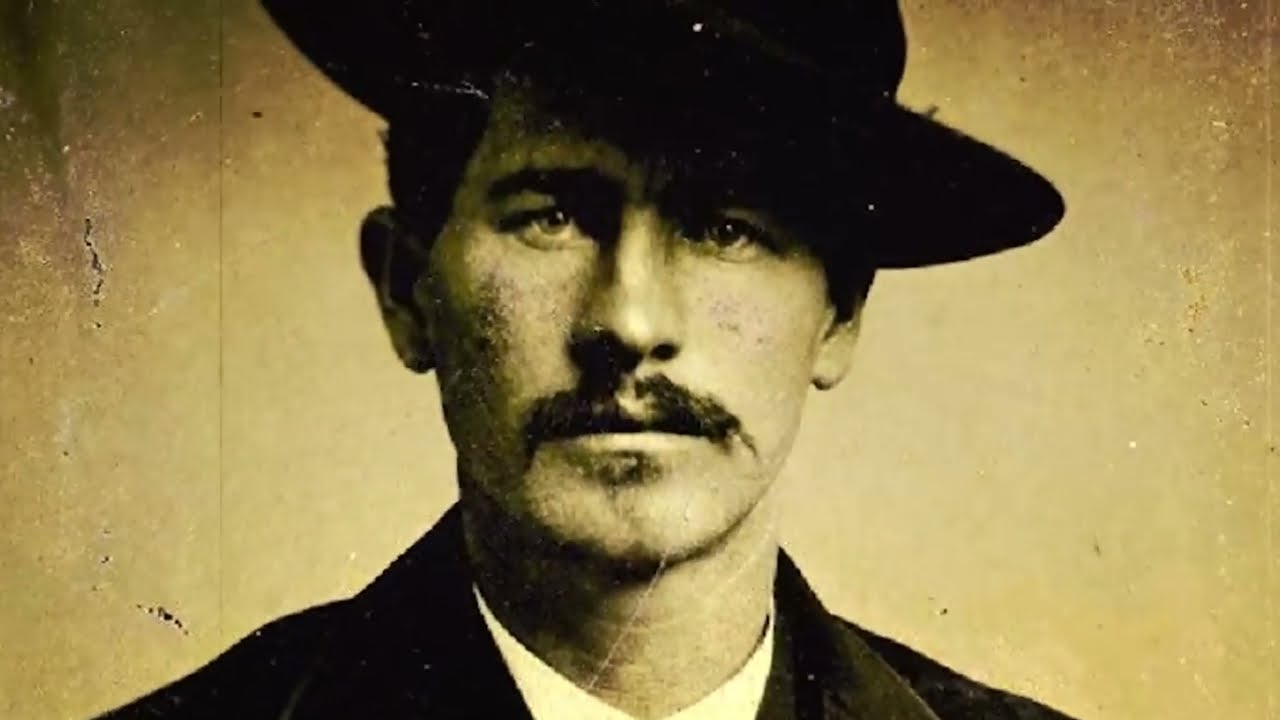
When they first called out for the group to surrender their weapons, Billy Claiborne raised one hand and immediately fled. Earp didn't see him again until much later that afternoon, well after everything had ended.
For the record, Earp didn't draw his firearm or even move to do so until after Billy Clanton and Frank McClure had already drawn theirs. As for Tom McClure, if he was not armed, Earp wasn't aware of it. Based on what he saw and what had been communicated to him beforehand, he had every reason to believe he was carrying a weapon. He was also told Tom had made threats against the Earps in the past. Earp believed Tom fired at them before Doc Holliday, who was holding a shotgun, responded and struck him.
Earp never aimed or fired at Ike Clanton during the entire event because he believed he was unarmed. That decision was intentional.
Looking back and even at the time, Earp believed strongly that Ike, Tom, and Frank had planned a coordinated attack against his brothers, Doc Holliday, and himself. The threats, the behavior, and the gathering of armed individuals all suggested something serious was underway.
Even so, he did not take preemptive action. Despite believing he would have been justified both legally and morally in defending himself before any shots were fired, he chose to act only when it became clear there was no other option.
They were there to fulfill their duties as lawmen, and Earp was acting under Virgil's command, who was the city marshal. He had no intention of starting a fight unless it became absolutely necessary in defense of their lives and the safety of others. Once Billy Clanton and Frank McClure pulled their weapons, he knew there was no turning back. It became a matter of survival for him, his brothers, and Doc Holliday.
Earp had lived in Tombstone since December 1, 1879, having come directly from Dodge City, Kansas. Before that, he resigned as city marshal in Dodge City despite opposition from local leaders and business owners. He had served as a police officer in Wichita starting in 1874 before moving west.
As for Ike Clanton's claim that Earp was somehow involved in any stagecoach robbery or that he ever passed along information to help any criminal activity, Earp said it was completely false. Clanton's account, he said, was a fabrication from beginning to end, and none of it reflected the truth of his actions or intentions.
Sheriff John Behan once approached Earp with a private proposal in his office, which was located in the back room of a cigar store on Allen Street. He offered that if Earp would step aside and not seek the appointment for sheriff of Cochise County, he would hire a clerk and split the earnings of the office with him.
Earp agreed to his terms and made no further attempt to gain the position. But after that meeting, Behan never brought the subject up again. Later in his official statement, Behan provided reasons for backing out of the agreement, but Earp said every part of his explanation was untrue.
On one occasion, Doc Holliday and Earp traveled to Charleston on the same evening that Behan went down there to serve a subpoena on Ike Clanton. Their reason for being in Charleston had nothing to do with the subpoena. They had come to recover a horse that had been stolen from Earp not long after he arrived in Tombstone.
Earp had received information suggesting the Clanton group had the horse. When he reached Charleston that evening, a reliable source told him that the man who had just delivered a message from Charleston to Ike Clanton's ranch had ridden the horse in question. At that time, Earp didn't know where Clanton's ranch was located.
A short while later, while Earp was in the Huachuca Mountains working on some water claims, he began his return trip to Tombstone. When he got within about a dozen miles of Charleston, he ran into a man named McMasters. He told Earp that if he hurried, he might still catch sight of his missing horse in town.
When Earp arrived in Charleston, he spotted the horse being led down the street toward a corral. He decided to stay the night at a different corral nearby. He then went to Bennett's office to request official documents that would allow him to reclaim the horse, but Bennett was out of town. He had gone to Sonora to look into a coal discovery.
So Earp sent a telegram to his brother James Earp in Tombstone asking him to arrange for the paperwork. He contacted Judge Wallace and Mr. Street, and they prepared the necessary documents. That same evening, Earp's youngest brother, Warren Earp, brought the papers to him in Charleston.
While Earp was still waiting, Billy Clanton learned that he was in town. He tried to take the horse from the corral, but Earp stopped him and told him the horse belonged to him. Once the official paperwork arrived, Billy surrendered the animal willingly without requiring the documents to be served.
Before leaving, Billy Clanton sarcastically asked if Earp had any more horses to lose. Earp replied that he planned to keep them in the stable from now on so Billy wouldn't get another opportunity to take one.
As part of his official statement, Earp also included a document that was sent to him from Dodge City after his arrest in this case. He requested that it be attached to the record and labeled as Exhibit A.
At this point, the prosecution objected to the inclusion of the paper, arguing that it was not a personal statement of Earp's, but rather a letter from others written long after the events in question.
In response, the defense objected to any such interruption of a statutory statement made by a person accused of a crime. The law intends that such a statement be free from interference, whether by the court or opposing counsel, and should stand as valid evidence of the person's character, even without formalities. The court overruled the prosecution's objection and allowed the document to be filed as part of Earp's official statement.
Earp had multiple conversations, four or five in total, with Ike Clanton, Frank McClure, and Joe Hill. All of these discussions took place in the backyard area behind the Oriental Saloon in Tombstone.
During one of those talks, Earp told Ike Clanton that there were some individuals around town speaking poorly of Doc Holliday. People were beginning to suspect that he might have had some involvement in the attempted stagecoach robbery and the tragic death of Bud Philpot.
Earp explained to Ike that if he could capture the suspects, Leonard, Head, and Crane, he would be able to clear Holliday's name by proving he had no connection to the crime.
As for their pursuit of Leonard, Head, and Crane, they picked up their trail directly from the site of the attempted robbery. From that point on, they followed nearly every step without losing the trail, starting from Drew's Ranch on the San Pedro River and tracking them all the way to Helm's Ranch in the Dragoon Mountains.
At one point during the manhunt, after traveling around 80 miles along the San Pedro, they managed to capture one of the men, King, who was believed to be traveling with the main group. From there, they followed their tracks across the Catalina Mountains, passing within 15 miles of Tucson. Then the trail led them back to Tres Alamos on the San Pedro River and finally eastward again to Helm's Ranch in the Dragoons.
Earp wanted to clarify that their trail never led south from Helm's Ranch as Ike Clanton later claimed. Instead, after reaching Helm's, the suspects tried to cover their movement by stealing 15 to 20 head of livestock, hoping to make their trail harder to follow.
Despite that, they continued the pursuit. Virgil Earp, Morgan Earp, Robert H. Paul, who was then sheriff of Pima County, Johnny Behan, the sheriff of Cochise County, Deputy Sheriff Breakenridge, and a few others followed the trail all the way into New Mexico.
They committed every resource and effort they had in trying to apprehend them. Earp personally was out on the trail for 10 days. Virgil and Morgan were in the field for over two weeks. Earp said with confidence that if it hadn't been for Morgan and him, they wouldn't have caught King. When they found his hiding place, he attempted to flee toward a dense patch of brush along the river. It was only their quick response that stopped him from getting away.
Wyatt Earp's testimony wasn't just a defense. It was a window into the deep mistrust, tangled alliances, and explosive tensions that defined Tombstone in the early 1880s. The names Clanton, McClure, and Ringo didn't just represent individuals. They symbolize the blurred line between outlaw and rancher, lawman and vigilante. And that is the Old West. Gritty, complicated, and anything but simple.