On September 12, 1953, the most photographed bride in America walked up the aisle of St. Mary's Church in Newport on her stepfather's arm. There were 1,200 guests and an archbishop at the altar.
Her real father was two miles away at the Viking Hotel, dressed and waiting for a car that never came.
Thirteen years earlier, her mother had gone to Reno and returned with a divorce decree citing extreme mental cruelty. Before that, she had handed a tabloid the names of her husband's mistresses.
That mother trained both daughters to marry money. She then left Jackie out of the family fortune entirely. Jackie ended up paying for her nursing bills.
There are two accounts of what happened in that hotel room, and the gap between them is the whole story.
The version the Auchincloss side let stand is simple and convenient. John Vernou Bouvier III, the tanned, twice-ruined Wall Street broker known as Blackjack, had been drinking. He was in no condition to walk his daughter down the aisle and had to be quietly replaced by Hugh D. Auchincloss Jr., a solid Standard Oil heir who could be trusted not to embarrass anybody in front of the Kennedys.
That version has real evidence behind it. Bouvier drank. He had been drinking for years. Nobody in either family disputes it.
The Bouvier side told it differently. Jackie's cousin, John H. Davis, who grew up inside that family and later wrote its history, described a man who had been systematically frozen out for weeks.
He was not invited to the pre-wedding parties. He was not given a role. He was not given a room in any house connected to the bride. He was left alone at a hotel in a town where his ex-wife controlled every door.
Davis is a firsthand witness with an obvious stake in the family's dignity, so his emotional framing should be taken carefully. But the logistics are not in dispute.
Janet Auchincloss ran that weekend. She decided who slept where, who was received, and who was left to sit two miles down the road hoping to be summoned.
Both things can be true. A man can be drinking because he has already been humiliated. And a woman can arrange the humiliation knowing exactly how he will respond to it.
What isn't disputed is the photograph. Jackie wore ivory silk taffeta, 50 yards of it. The dress was made by Ann Lowe, a Black designer whose Manhattan workroom flooded ten days before the wedding, destroying most of the gowns. Lowe remade them at her own expense and lost about $2,200 doing it.
Jackie hadn't wanted that dress. She'd wanted something plain and modern. She got a wedding cake with a veil because the dress wasn't for her. It was for the 800 people in St. Mary's and the 1,200 at Hammersmith Farm.
The photographers were there because Joseph P. Kennedy personally made sure of it, over the objections of a mother-in-law who thought press coverage was for people who needed it. Janet lost that fight.
She lost most of the fights that weekend that involved money, because Joe Kennedy had more of it. And because Janet Lee Auchincloss had spent her entire adult life learning that money settles arguments about taste.
She knew that better than almost anyone in Newport, because she had bought her way in.
Here is the thing nobody said out loud at that reception. Janet's father, James Thomas Lee, was the son of Irish Catholic immigrants. He put himself through City College and Columbia Law, went into New York real estate, ran a savings bank, and built apartment houses, including 740 Park Avenue, still one of the most expensive buildings in the country.
He was rich. He was also, socially speaking, exactly the kind of man the Newport crowd tolerated at a distance.
Janet let people assume she came from the Virginia Lees, the Robert E. Lee Lees. She never quite said it. She never corrected it either. She also took a couple of years off her age and kept them off for the rest of her life.
Her husband's family was running the same operation. In 1925, Jackie's grandfather, John Vernou Bouvier Jr., privately printed a genealogy called "Our Forebears" and handed it around like a passport. It traced the Bouviers to French aristocracy, complete with a coat of arms.
The actual founding ancestor was Michel Bouvier, a cabinetmaker from Pont-Saint-Esprit who came to Philadelphia after Waterloo and made his money in furniture, real estate, and coal. Fine, honorable, entirely middle-class origins, rewritten in a leather binding.
So the girl at the center of all this grew up between two families who had each invented their own history. And she learned the lesson early. A good story, confidently maintained, beats a birth certificate.
Keep that in mind for later, because it becomes the most important skill she ever developed.
Janet Lee married Jack Bouvier on July 7, 1928, at St. Philomena's in East Hampton. She was 20. He was 36, sunburned nearly year-round, famously good-looking, a stockbroker whose income arrived in bursts and left the same way.
Everyone who knew him described the same charm. Almost everyone who knew him also knew about the women. The affairs did not begin after the marriage. They continued through it.
James T. Lee did not like his son-in-law and did not hide it. He also subsidized him. The young Bouviers lived in an 11-room duplex at 740 Park, Lee's building, essentially rent-free.
Jackie was born July 28, 1929, in Southampton, three months before the crash. Lee Bouvier arrived in 1933. As Blackjack's finances deteriorated through the 1930s, his father-in-law's patience ran out.
Lee cut off the support. He kept the apartment leverage. He made it clear that his daughter's standard of living came from him, not from her husband.
That's the first thing Janet ever learned about marriage. The person paying the bills decides the terms.
The marriage came apart in public. There was a trial separation in the fall of 1936. Much of what followed happened in the New York tabloids, which covered the collapse of a good-looking society broker's marriage with real enthusiasm.
The Daily Mirror got the details, the other women, the specifics, the kind of material that only comes from someone with access to a lawyer's file. Biographers who have worked through the family's papers, Sarah Bradford among them, have generally concluded the leak came from Janet's side.
She had grounds. She also had a 9-year-old daughter who could read.
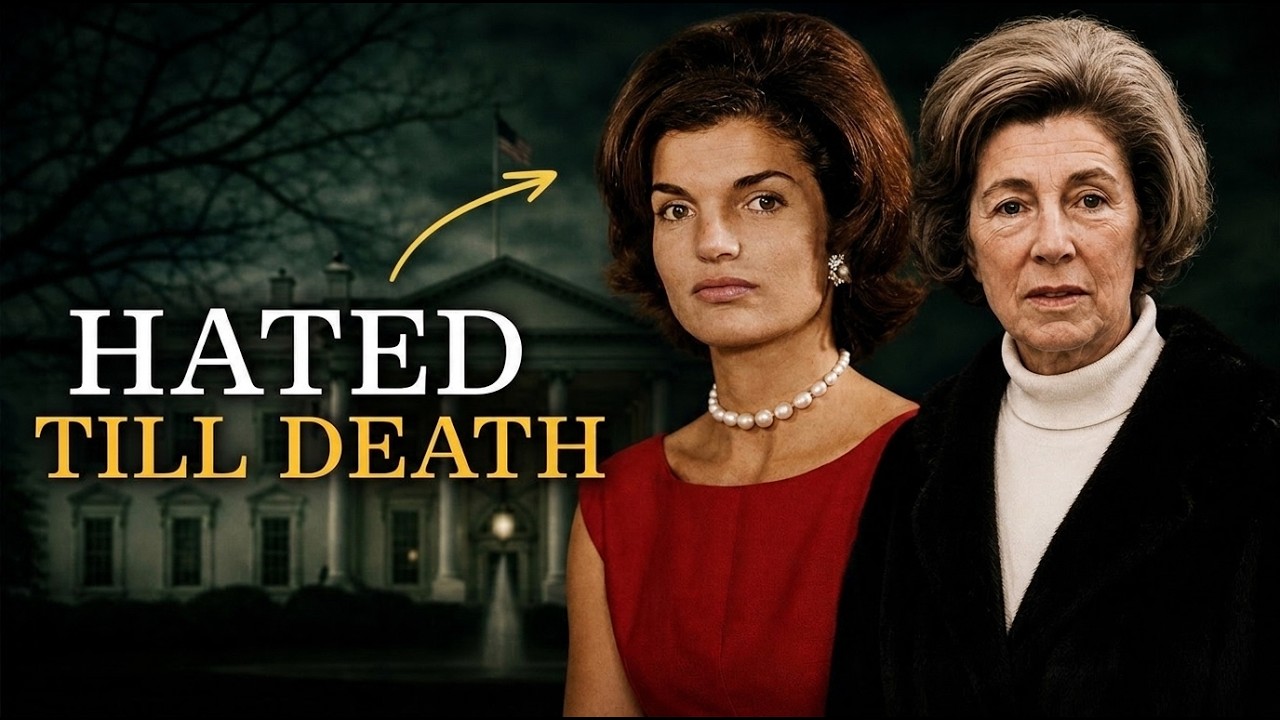
The divorce came through in Reno in July 1940 on grounds of extreme mental cruelty rather than adultery. Nevada was faster and quieter, and adultery findings created custody complications nobody wanted. Janet took the six-week residency, got the decree, and came home a divorced Catholic woman with two girls and a reduced income.
She should have won that. In the moral arithmetic of 1940, she had won it. Her husband had betrayed her repeatedly, been named in print, and lost the money.
Jackie sided with him anyway. Not loudly, she wasn't a loud child, but she wrote to him, waited for him, defended him, spent her allotted weekends with him, and came home talking about him.
He was fun. He took her to the races at Belmont. He taught her to ride. He told her she was the most interesting girl in any room. And he never once asked her to behave.
Janet had the custody, the responsibility, the discipline, and the bills. Blackjack had Sundays.
Jackie also looked like him. Same wide-set eyes, same square jaw, same coloring. Janet was small, sharp-featured, precise. Lee, the younger one, took after her mother. Jackie was her father in miniature, walking around the apartment with his face on, laughing at his jokes.
This is the part people get wrong when they call the relationship simple maternal cruelty. Janet wasn't punishing a stranger. She was raising the evidence.
On June 21, 1942, Janet married Hugh Dudley Auchincloss Jr., and the financial problem was solved permanently. Hugh was a stockbroker of the unhurried kind, a partner in his own Washington firm.
And this is the part that matters. He was the grandson of Oliver Burr Jennings, one of the original partners in Standard Oil. His mother was Emma Brewster Jennings. The money was old, enormous, and entirely his.
He came with two prior marriages and their residue. His first wife had given him a son, Hugh III, called Yusha. His second wife was Nina Gore, which made Gore Vidal, for a few years of his childhood, a stepson in the same houses Jackie was about to move into. That second marriage produced two more children.
Then Janet had two of her own with Hugh, in 1945 and 1947. Count the households in that sentence. Jackie was now one of seven children in a family where she was related by blood to exactly one other person in it.
The houses were spectacular. Merrywood, 46 acres above the Potomac in McLean, Virginia. Hammersmith Farm in Newport, 28 rooms on 75 acres running down to the bay with a working farm attached.
Jackie went from a divorced mother's reduced circumstances to genuine American aristocracy in a single afternoon at a Washington ceremony. She was also, from that afternoon forward, a stepchild in another man's house. Welcome, well treated, fed, schooled, presented, and structurally excluded from everything that paid for it.
Hugh Auchincloss was kind to her. Nearly everyone agrees on that. But an estate is not a feeling, and the Auchincloss fortune was going to Auchincloss blood.
Jackie's own money consisted of a small trust her father had set up in better days, worth a few thousand a year. Janet knew exactly what her daughters had and didn't have. And she began immediately to prepare them for the only solution she believed in.
The curriculum started early and it never varied. Appearance first. Janet had opinions about posture, weight, hair, handwriting, thank-you notes, and the precise angle at which a girl should sit on a horse.
Riding wasn't a hobby in that house. It was a credential. Janet had competed at Madison Square Garden, and both daughters were in the ring before they were in school. Jackie won her first ribbons at 11. The point of the ribbons was not the ribbons.
Discipline was strict and, by several later accounts, occasionally physical. Gore Vidal, who had a decade's proximity and a lifelong appetite for a good line, described Janet as a woman who slapped. Others in the family circle said something similar.
Vidal is an entertaining witness and not a neutral one. These recollections surfaced decades later, so they should be held loosely. What's better documented is the atmosphere: a mother who corrected relentlessly in public, and a daughter who developed the specific stillness of a person who has learned that any reaction will be scored.
That stillness is worth marking. It got called shyness, then mystery, then elegance. It started as a defensive habit in a house where she had no standing.
Because that's what Merrywood and Hammersmith Farm actually were underneath the acreage. Jackie and Lee were the Bouvier girls in the Auchincloss houses. They had rooms, not property. They had allowances which were not generous and which their mother controlled. Their half-siblings and step-siblings had a father in residence and a name on the deed.
Janet had a wedding ring and a prenuptial reality she never once discussed in front of her children. Hugh's fortune went to Hugh's blood.
Janet solved this the way she solved everything. She made herself indispensable. She ran both houses, ran the staff, ran the calendar, ran the seating, and made sure her husband's world functioned so smoothly that his money kept flowing toward it.
It worked. It also meant her daughters watched their mother perform a full-time job whose salary was another person's goodwill. The lesson was not subtle. Jackie absorbed it completely and then spent 30 years refusing to say so.
In the summer of 1947, Jackie came out. The dance was at Hammersmith Farm, and Igor Cassini, writing the Cholly Knickerbocker society column for Hearst, named her debutante of the year.
It was a real coup and it was also a placement. Society columnists in that era ran on tips from mothers, and the mothers who understood the mechanism got results. Janet understood the mechanism. Whether she made the call herself isn't documented, but the family's cultivation of Cassini is not in question. Remember him. His brother Oleg later dressed the first lady of the United States.
By then, Jackie was the one making the calls. School was Miss Porter's, then Vassar, then a junior year in France in 1949 and 1950 that did more for her than anything else in her education. She came back changed, fluent, confident, in love with a country where nobody knew who her stepfather was. She finished at George Washington University in 1951.
Then she won something. Vogue ran a competition called the Prix de Paris. Jackie entered against roughly 1,280 other college women, wrote an essay proposing a dinner party with Diaghilev, Baudelaire, and Oscar Wilde, and won it outright.
The prize was a job: six months at Vogue in Paris, six in New York. She turned it down.
The accounts of why differ in emphasis but not much in substance. Her mother and stepfather pushed back hard. The concern, as it filtered into later recollections, was that a girl who had already lost her head in France once would go back and never come home, and that a 22-year-old with a Paris job was a 22-year-old not getting married. Vogue's own editors reportedly agreed she should stay in America.
Jackie declined the prize. Several biographers treat this as the single clearest moment when a real independent career was available to her, and the family closed it.
What she got instead was a job her family approved of. Through the network around Merrywood, Arthur Krock of the New York Times made the introduction to editor Frank Waldrop, and she became the Inquiring Camera Girl at the Washington Times-Herald for $42.50 a week.
She carried a Speed Graphic around Washington, stopped strangers, asked them one question, and printed their answers under their photographs. It sounds like a nothing job. It was training.

She learned how a newspaper decides what to run, how a quote gets shaped by the person writing it down, and how easily a photograph does the arguing for you. That was the whole education she needed later.
In January 1952, the New York Times announced her engagement to John G. W. Husted Jr., a young banker from a good New York family. Jackie was 22. The engagement lasted about three months.
Husted told the story himself years later without much bitterness. The problem was arithmetic. He was making around $17,000 a year, which was respectable and nowhere near enough for what Janet had in mind.
Janet looked into his finances, that's Husted's own account, and concluded he could not support her daughter in the manner the daughter had been trained for. The pressure went one way.
On a visit to Merrywood, Jackie drove him to the airport and slipped the ring into his jacket pocket. She didn't make a speech about it. She just put it back.
She had a mother who had audited her fiancé and a father who called Husted a nobody. Between them, they had made the decision.
Now consider what Janet did next, because it is the single most revealing thing about her.
Jackie had already met John F. Kennedy at a Georgetown dinner in May 1951, given by the journalist Charles Bartlett and his wife Martha, who had been trying to introduce them for a while. He was a congressman then, running for the Senate, 34 years old, and attached to a family Janet Auchincloss considered vulgar.
Irish Catholic Boston. A grandfather who'd been a machine mayor. A father who'd made money in ways polite Newport didn't discuss, and whose reputation with women was not a secret in any city he'd worked in.
Janet had spent 20 years distancing herself from exactly that background, her own father's background. She had opinions about the Kennedys, and she shared them.
She pushed the marriage anyway. Some biographers argue she was cooler on it than the family later admitted, and that the enthusiasm was mostly Jackie's and Blackjack's. Blackjack liked Jack Kennedy enormously and told his daughter to hold him loosely.
But the record of Janet's behavior in 1952 and 1953 is the record of a woman helping. Invitations, weekends, access, a Newport summer, and a wedding she then produced like a state occasion.
Because the arithmetic was different this time. Kennedy was a United States senator as of January 1953, his father's fortune was enormous, and the whole family was pointed at something bigger. Janet's snobbery was real. It was also for sale, and the price was a Senate seat and a Boston fortune. Her daughter watched her make that trade.
Kennedy proposed in June 1953 by cable while Jackie was in London covering the coronation of Elizabeth II for the Times-Herald. The wire read, "Articles excellent, but you are missed."
Then the announcement was held back because Joseph Kennedy wanted the Saturday Evening Post to run its profile of his son first, the one titled "Jack Kennedy, the Senate's Gay Young Bachelor," before the bachelor was retired.
A father-in-law scheduling a proposal announcement around a magazine's publication date. Jackie was marrying into a family that ran its private life on a press calendar. She had just been trained by one.
So returned to the church at Newport and to the man in the hotel. Whatever combination of drinking and freezing out kept Blackjack Bouvier away that morning, the effect was clean.
The bride came up the aisle at St. Mary's on the arm of the man who paid for everything, in front of an archbishop with a papal blessing read aloud, while 3,000 people pressed against police lines outside. The dress Jackie hadn't wanted photographed beautifully.
Hugh Auchincloss gave her away in a ceremony held at his house, on his lawn, in his town. Janet had produced the version of her family she'd been building since 1942, and she'd erased the only piece of it that contradicted her.
Jackie wrote to her father from the honeymoon in Acapulco. It was a warm letter. She did not accept the eraser, and she never argued about it either. She just kept the relationship going in her own correspondence, out of her mother's reach.
That was the pattern she used for the rest of her life. Not confrontation, separate channels.
Four years later, on August 3, 1957, Blackjack Bouvier died of liver cancer at Lenox Hill Hospital. Jackie was pregnant with her first child. She went to New York and took the funeral away from everyone.
She was 28, three months from giving birth, and she handled every detail of it herself. The service was at St. Ignatius Loyola on Park Avenue. Jackie wrote the death notice. She went through his apartment.
She refused the standard funeral flowers, the wreaths, the stiff arrangements, the white lilies that undertakers order by the dozen. She had the church filled with baskets of summer flowers instead, the kind of thing you'd cut at a country house in August.
Cousin John Davis, who was there, remembered the effect precisely because it was so unlike a Manhattan funeral. She buried him in East Hampton near his parents.
Janet did not arrange any of it. Janet had no standing to. The man had been legally none of her business since 1940 and socially none of her business since 1942. And for the first time in his daughter's life, there was a family ritual she couldn't produce.
That's the moment the balance starts to move. Not dramatically. Nobody announced anything. But Jackie had just demonstrated that when it came to her father, she would take control of the room, choose the images, and let her mother read about it afterward.
Caroline was born on November 27 of that year. Jackie was now a senator's wife with a child, a national profile forming around her, and a husband whose behavior would have been instantly recognizable to any woman in her family.
Let's be precise about this, because the subject invites exaggeration. John F. Kennedy's affairs are among the most heavily documented private matters in American political history, attested by Secret Service agents, aides, friends, and the women themselves. The volume is not in serious dispute among historians.
What's less discussed is the shape of it. A great deal of it happened inside the couple's own social and professional environment, among people Jackie saw at dinner.
Pamela Turnure is the case that matters, and it matters because of what Jackie did with it. Turnure was a young receptionist in Kennedy's Senate office in 1958. She rented rooms in a Georgetown house owned by a woman named Florence Kater, who became convinced her tenant was involved with the senator, staked out her own front steps, and photographed a man leaving in the middle of the night.
Kater then spent years mailing that photograph to newspapers, editors, and eventually picketing Kennedy campaign events with a sign. Almost no one printed it. The Washington press corps of that era did not run those stories, and the few who looked at Kater concluded she was too obsessive to use.
So here is what Jacqueline Kennedy did in 1961. She hired Pamela Turnure as her personal press secretary in the White House. Turnure had no press experience. She was 23.
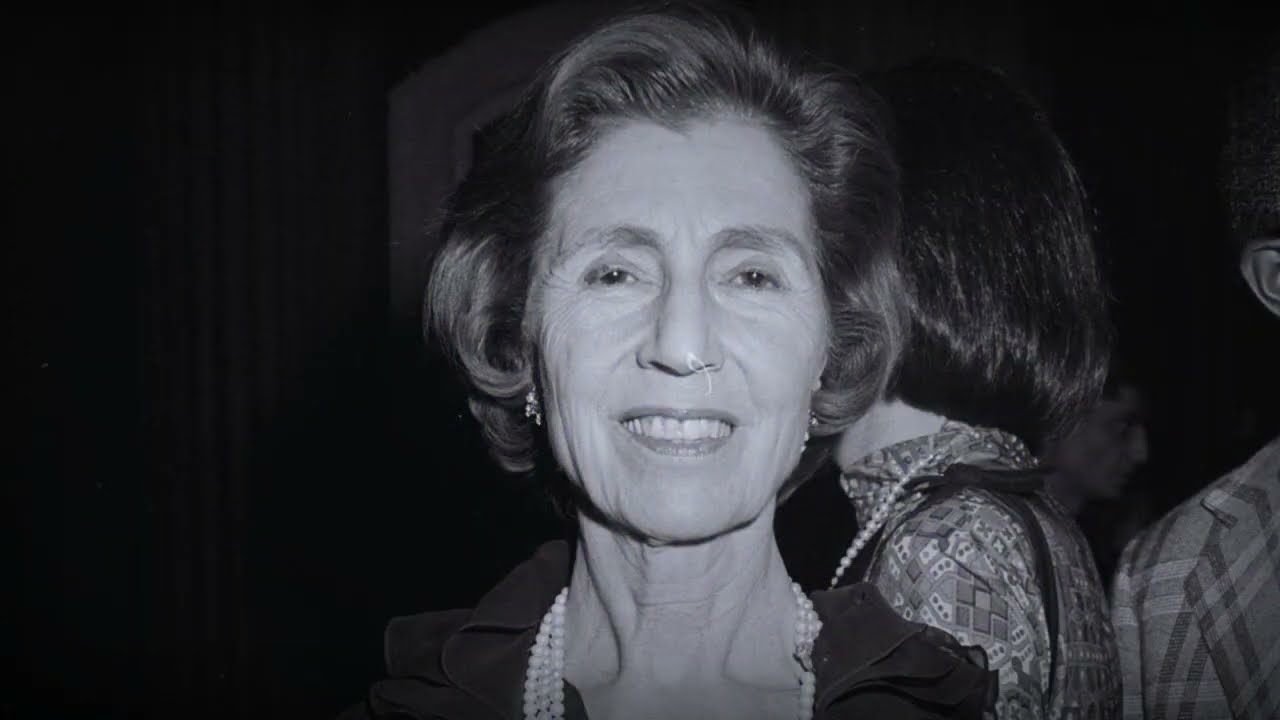
She worked out of the East Wing reporting to the first lady, managing what reporters were told about the first lady's schedule, children, and household. Which meant she spent four years professionally accountable to the wife of the man she was rumored to have slept with.
You can read that two ways, and both have been argued. Some biographers see capitulation, a wife absorbing a humiliation to keep the peace. Others see something colder and more useful. Turnure inside the East Wing was a Turnure who could be watched, employed, and given a great deal to lose.
Jackie never explained it. She almost never explained anything. What she did instead was build.
The White House restoration was the public version, and it was an enormous piece of work. The Fine Arts Committee, the congressional bill making the furnishings permanent property of the house, the guidebook that funded the whole thing.
Then on Valentine's Day 1962, she walked a CBS crew through the rooms on live tape television and about 56 million Americans watched. She won an Emmy for it. A woman who three years earlier had been described in print as shy had just given the most effective piece of image management the modern presidency had produced.
And she was doing it while systematically removing herself from the parts of the job she refused. She skipped events constantly. She declined most political functions, sent regrets, and let the record show she'd been elsewhere.
She rented Glen Ora, a house in Middleburg, Virginia, and disappeared into it on weekends with the children, the horses, the hunt country, and no Kennedys. When the owners wanted it back, she and Jack built their own place nearby, Wexford, finished in 1963.
She left the country for Greece, India, Pakistan, and Italy. In the summer of 1962, she spent weeks in Ravello with Caroline while the president was in Washington. None of that was accidental. It was a marriage being renegotiated by geography.
She also controlled the children in a way the White House staff found immovable. Photographers wanted the kids constantly, and she said no repeatedly.
In October 1963, while she was away, Kennedy invited the Look photographer Stanley Tretick into the Oval Office and let him shoot John Jr. under the desk. Those pictures, probably the most beloved images of that presidency, exist because the president waited until his wife left the country. That detail tells you exactly how much authority she had and exactly how much she didn't.
In August 1963, she gave birth prematurely to a son at Otis Air Force Base on Cape Cod. She named him Patrick Bouvier Kennedy, her father's name on a Kennedy child. He lived 39 hours.
Everyone close to the couple described a change after that. Aides and friends noticed them touching in public, which they had not done. Whether it constituted a repair or a temporary closeness under grief, the record can't settle.
What is documented is that in November she agreed to a political trip she normally would have avoided, a swing through Texas, the kind of donor and motorcade work she had spent three years refusing. That is why she was in the car.
Six days after Dallas, at Hyannis Port, she summoned Theodore H. White of Life magazine on a rainy night and talked to him for hours. She gave him the story of a president who played the Broadway cast recording of Camelot before bed, and the line about one brief shining moment.
White wrote it up. Life's editors in New York, on the phone, pushed back on the Camelot framing. Jackie stood in the room while he dictated and made sure it stayed in. She was 34 years old and she had just written the brand.
White's handwritten interview notes went to the Kennedy Library with a condition attached: sealed until after her death. They were released in 1995, and they show what the published article doesn't, how much darker and angrier her account was, and how much of it she cut herself.
That is the whole method in one document. Say more than you'll allow printed. Keep the original. Control the date it becomes available.
She did it again and again. In early 1964, she sat for seven long interviews with Arthur Schlesinger Jr. and then sealed them. They stayed sealed for 47 years, until her daughter released them in 2011, after every person capable of being embarrassed by them was dead.
She commissioned William Manchester to write the authorized account of the assassination, then sued in December 1966 to strip passages out of it and won most of what she wanted in the settlement. Her own papers went into the library under restrictions. Letters she'd written to an Irish priest as a young woman surfaced at a Dublin auction in 2014 and were pulled from sale.
Her mother had leaked a divorce to the Daily Mirror in 1936 and gotten one bad marriage annihilated in print. Jackie built an archive with a lock on it and a release schedule.
The money took longer. In October 1968, she married Aristotle Onassis, and the American public, which had assigned her the role of permanent widow without asking, reacted with genuine fury. The contract behind it was reportedly detailed and heavily negotiated.
When Onassis died in 1975, his daughter Christina eventually settled with Jackie for roughly $26 million. At 46, for the first time in her life, Jacqueline Bouvier had her own money. Not a stepfather's houses, not a trust worth a few thousand a year. Hers.
She then went and got a job, which nobody in Newport had ever suggested was an option. Viking in 1975, Doubleday from 1978, and she stayed at it for 16 years, editing books, taking the train, keeping the office. The career finally arrived, 24 years late and under her own terms.
Meanwhile, the other fortune was going the other direction. Merrywood had been sold in 1964. Hugh Auchincloss's brokerage firm ran into serious trouble in the early 1970s, and the family's position deteriorated with it.
He died in November 1976. Janet was left with a great house she could no longer afford to run. In 1977, Hammersmith Farm was sold. She kept a small house on part of the grounds and watched tourists pay admission to walk through the rooms where she had produced her daughter's wedding.
She remarried in 1979, an old beau from her girlhood. That arrangement drifted apart, too.
Then came Alzheimer's disease. Jackie paid. The care, the nursing, and the household were covered out of the settlement from a Greek ship owner her mother had considered impossible, by the daughter who had been left out of the Auchincloss estate.
Janet Lee Bouvier Auchincloss Morris died on July 22, 1989, in the Newport house she'd been reduced to. She left behind an oral history at the Kennedy Library, recorded in the 1960s, in which she gives her account of the wedding weekend and the assassination.
It's on the record. Anyone can read it. It is also completely subordinate to the version her daughter engineered, and always will be.
So look at the photograph again. Ivory taffeta, a stepfather's arm, an archbishop's church, and a bride who wanted a different dress.
It has been reproduced 10,000 times as the beginning of American glamour. It is actually a piece of editing. One father removed, one substituted, one lineage invented in a private press run.
All of it staged by a woman who had bought her way onto that lawn and knew precisely what a photograph could be made to say.
Janet did not hate her daughter. She hated seeing Jack Bouvier's face on a girl she couldn't control. And she taught that girl every technique she knew, assuming it would be used to catch a husband.
Jackie used it on history instead.