The concentration camp system of the Second World War was run by SS commandants who imposed reigns of terror, brutality, and mass killing. Some camps were so large that different commandants ran specific parts of the site. Yet many of these men were married, and their wives sometimes lived with them just a short distance from the machinery of mass murder.
Rudolf Höss was commandant of Auschwitz and oversaw its huge expansion. He was responsible for the deaths of over 1 million people and later testified about what happened inside the camp. He was executed on specially built gallows at Auschwitz.
Höss married Hedwig Hensel after both had been part of a movement that protested urbanization and favored a farm-based lifestyle. They married on August 17, 1929, and had five children, two sons and three daughters. Their youngest daughter was born at Auschwitz in November 1943.
It is believed Höss shielded his family from the horrors of the camp and consciously lied to his wife about what was going on. The family lived in a villa close by, where Hedwig often referred to Auschwitz as paradise. Food and clothing confiscated from Jewish luggage is believed to have reached the Höss household.
His daughter later said her father was two people: one who oversaw Auschwitz, and another doting father who hugged and kissed his children before work. Höss continued to lie about the gassings until one day Hedwig overheard comments by Fritz Bracht, the Gauleiter of Silesia, explaining what went on at Auschwitz. Outraged and disgusted, she argued with her husband and refused to share his bed.
As the war ended, Hedwig moved north to Flensburg with her eldest son and was arrested there by the Allies. She was sent to the British Army's 92nd Field Security Section and interrogated for weeks about her husband's whereabouts. She claimed he was dead, but he was actually working on a farm under the name Fritz Lang, pretending to be a member of the German navy. He evaded capture for around a year before being arrested in Germany in March 1946.
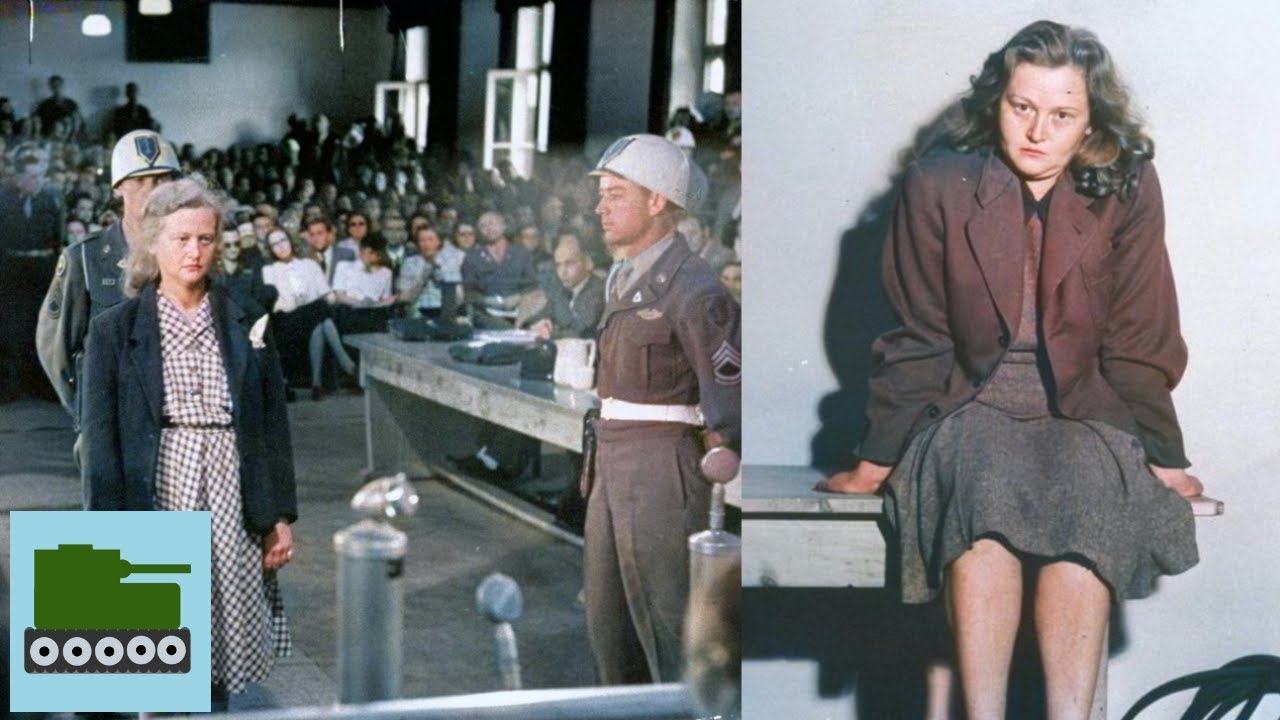
After Hedwig finally told authorities where her husband could be found, she later remarried following his execution and moved to America, living until the age of 90.
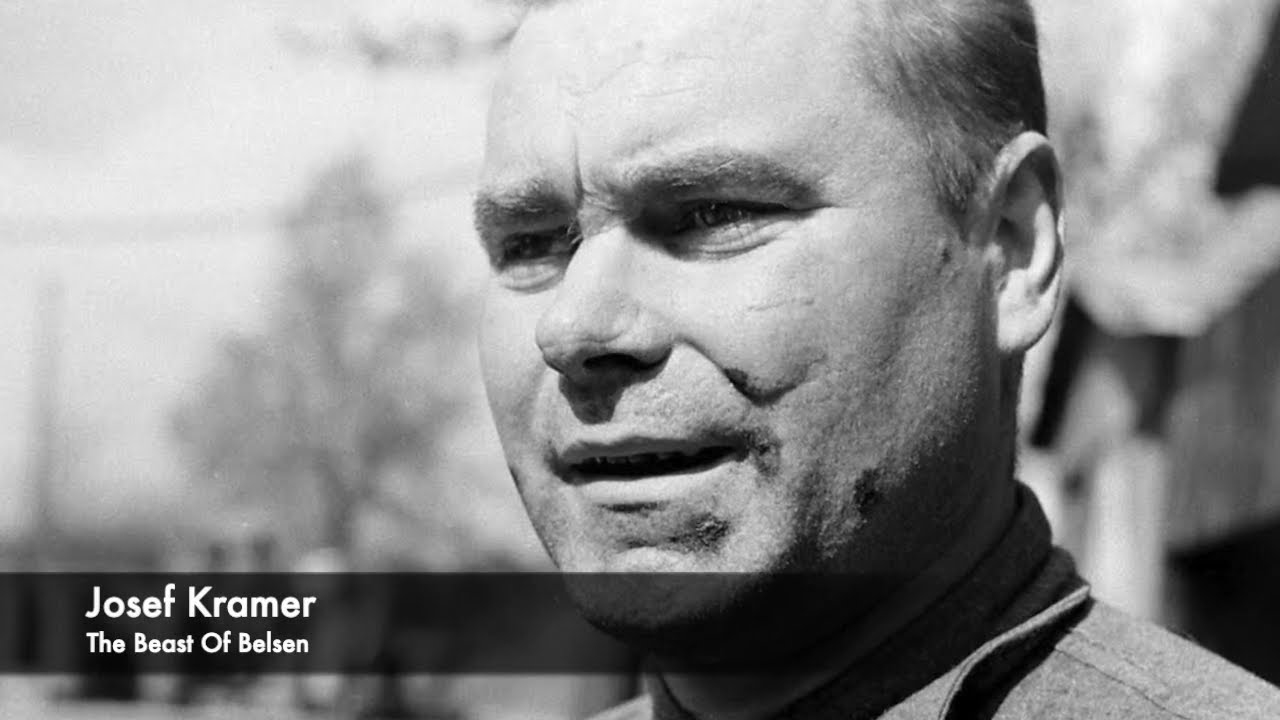
Josef Kramer, known as the Beast of Belsen, was commandant of Birkenau and later Bergen-Belsen. He had been senior at various other camps, but at Belsen conditions collapsed into ruin, with disease rampant, riots across the site, and hundreds dying each day. The camp became very overcrowded, and it was there that Anne Frank died. Kramer is believed responsible for more than 400,000 deaths.
He married Rosina on October 16, 1937. Rosina testified for her husband at his war crimes trial, saying that except for short intervals she had always been with him, though when he was on duty he was in the camp. She visited the concentration camp on Sundays and off-duty days.
She said she went to Auschwitz in 1944, two weeks after her husband, the commandant of Birkenau, before he took over. Three days before he did, she asked Hössgen why her husband had been chosen for Auschwitz; his answer was that it was because of the rank her husband held and a general change of commands.
She knew what went on inside the camps. Asked whether she ever went to Belsen, she replied that one Sunday afternoon she went into the place where they were weaving, and her husband told her with great pride about the beautiful orchestra playing. He wanted to show her there was a band, but they had no instruments, so he asked for instruments to be sent from Auschwitz so the girls could play at least something.
She claimed her husband never treated anyone poorly and that his duty was to take care of the inmates day and night. She also admitted knowledge of the gas chambers and that her husband had admitted it was wrong what he was doing. Kramer was responsible for scores of deaths and the conditions at Belsen that caused horrific mass killing. After his execution, Rosina changed her name, became a teacher, retired, and moved in with her son, believed to have lived in the area of Bergen-Belsen close to the camp.

One woman was arguably more infamous than her husband. Ilse Koch, wife of Karl Otto Koch, is remembered alongside the horrific Buchenwald concentration camp. Karl Otto Koch was prosecuted for embezzling money from the Nazis and was executed at his own camp.
He and Ilse built huge projects at Buchenwald for personal gain, including a large horse riding arena. Ilse would parade on her horses, and if any prisoner looked at her, she would order them sent to their deaths. She was involved in terrifying experiments and was completely barbaric, becoming known as the Witch of Buchenwald, and she beat many prisoners.
After the war, Ilse Koch was tried for her crimes but was sentenced to prison, later reduced to four years, as there was an issue proving she selected inmates for extermination so she could take their tattooed skin to make artifacts. In 1945 she was rearrested and tried the following year. Some 250 witnesses testified against her, and she was sentenced to life imprisonment.
A forgotten commandant of Auschwitz is Arthur Liebehenschel, less documented than Rudolf Höss. Liebehenschel succeeded Höss when Höss was briefly forced away from the camp. He continued the mass exterminations and executions but removed torture devices such as the standing cells and stopped the selections of regular prisoners. He was recorded as much more lenient in running the camp, yet thousands still died each week under his command.
He was married to his first wife, Gertrude, and they had one son and three daughters. Their youngest daughter was born in 1943, shortly before her father became commandant of Auschwitz. Gertrude was awarded the Bronze Mother's Cross by Hitler, given to women with four or more children.
Gertrude's story is tragic. She lost her husband to another woman, was interned at the end of the war as the wife of an SS officer, then suffered with her mental health and was diagnosed as paranoid schizophrenic and placed in a mental health facility. Liebehenschel's second wife, Anna Lisa, gave birth to a son, and little is known about her. It is unclear how much these women knew about their husbands' involvement in Auschwitz.
Max Kögel served as commandant of a number of concentration camps, including Lichtenburg, Ravensbrück, Majdanek, and Flossenbürg. He was seen as a reliable and efficient killer, involved in installing gas chambers at Majdanek, and oversaw the women's labor camp at Lichtenburg and then the all-female camp at Ravensbrück.
He married Anna while he was an adjutant at Dachau. Anna had aspired to become a professional singer but blamed her father's Jewish employer for the family's financial hardship, which forced her to become a receptionist and nursery school teacher. She worked as a waitress where she first met Max Kögel.
Anna went with him to a number of different concentration camps. They were the first residents of the commandant's house at Ravensbrück, a newly built large villa with a big garden on a ridge overlooking the site. Prisoners there described her as an unpleasant character. During one event, when she went to the hair salon at Ravensbrück, she said the workers were disgusting. After the war, Kögel died by his own hand, and Anna remarried.
Fritz Suhren was also a commandant of Ravensbrück, and his policies were to exterminate women by working them to death without feeding them much food. He gave prisoners over for experimentation. His wife, Alfreda, was a different woman. She was a seamstress and married Suhren when he was a lowly SS personnel officer, but when he became commandant of Ravensbrück the couple moved into the villa on the ridge.
His wife was softly spoken and very faithful to her husband. It is not entirely known what crime she committed, if any, at the camp. After the war Suhren was captured, tried, and executed for his crimes, but Alfreda stayed loyal. She approached many former prisoners to testify on his behalf. After his execution, she even approached his former mistress and said she should apply for an orphan's pension for the daughter she had with Suhren. She was a rather loyal but very strange lady.
The wives of the commandants lived rather bizarre lives. Rudolf Höss's wife seemingly lived a normal life while her husband went to work and committed murder and slaughter on an industrial scale. The wives had varied involvement in the camps their husbands ruled with an iron fist, and many were seen as witches or as evil cogs in the system.
Ilse Koch, for example, spent the majority of her life after the war behind bars, while others found sanctuary in different countries and lived under different names.