When Henry VIII came to the throne in 1509, he was a symbol of strength and power. He was tall, handsome and athletic, and he excelled in physical feats.
By the time he approached death in January 1547, he was a shadow of his former self. His waist measured 52 inches and his chest around 53 inches.
Henry's physical decline is often linked to his short temper and to the fate of his wives. He left behind a kingdom very different from the one he inherited.
Henry is most remembered for his six wives, but throughout his life he also suffered from a number of serious illnesses. At the age of 23 he caught smallpox, a deadly disease, but he recovered.
Seven years later, aged 30, he caught malaria. At 33 he had a famous jousting accident that troubled him for a long time.
While jousting with the Duke of Suffolk, Henry was hit on the head above the right eye with a lance. Afterwards he suffered from terrible migraines.
He had another severe accident at the age of 45, when he fell from his horse and was crushed by the weight of his armor and the horse falling on him. He was left unconscious for two hours.
This is believed to have caused his mood swings. One study even attributed his change in body and mental state to a traumatic brain injury suffered in the tilt yard.
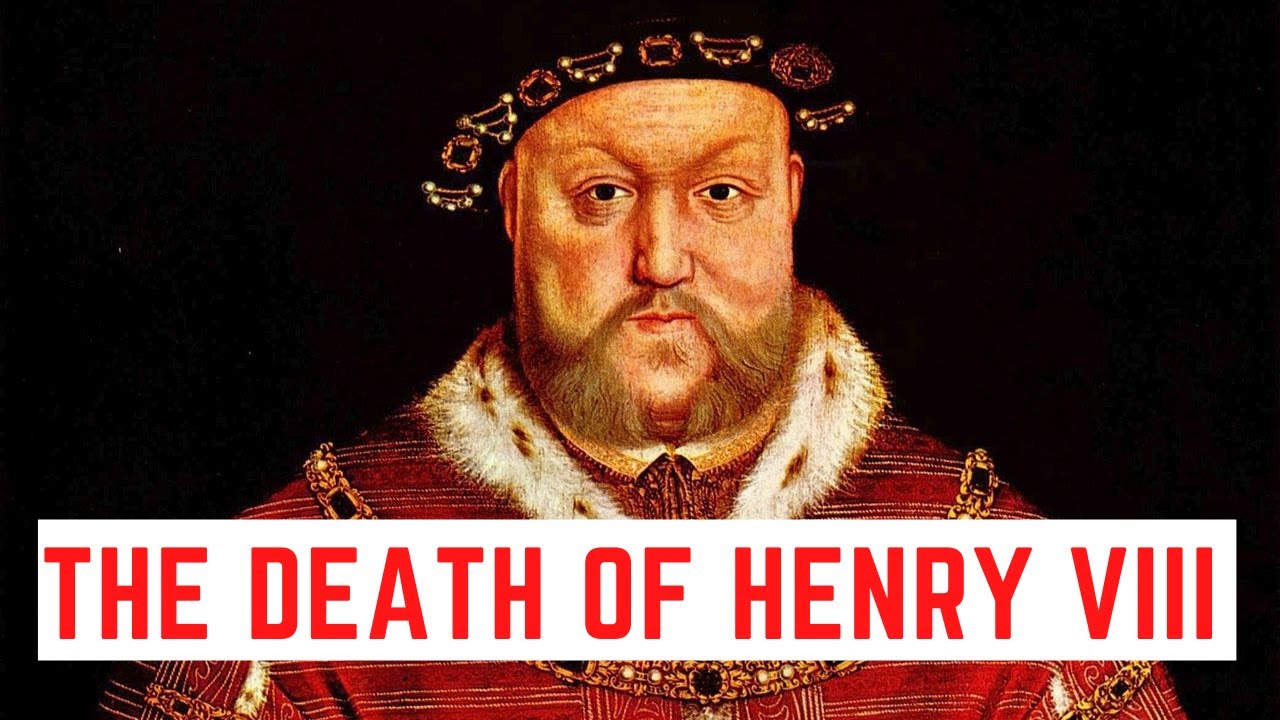
In his later years Henry gained a huge amount of weight and severely overate, becoming very obese. He may also have had diabetes and high blood pressure.
One of the main reasons his condition worsened was that he suffered from varicose ulcers. The ulcers in his legs forced him to give up sports and exercise, and toward the end of his life he had to be carried around in a chair because of the pain.
As his lifestyle worsened, his health declined severely. Obesity hastened his death, and he passed away at the age of 55 on January 28, 1547, at the Palace of Whitehall.
The day before his death, Henry saw his confessor and received Holy Communion. It was clear to anyone who attended or visited the king that death was imminent, but his doctors did not have the courage to tell him.
Predicting the king's death could be treason and could cost a person their head. That task was left to Sir Anthony Denny, a gentleman of the Privy Chamber.
On January 27, Denny bravely told Henry that "in man's judgment you are not like to live," and that he should remember his sins as every good Christian man should. Henry responded that the mercy of Christ was able to pardon him of all his sins, even though they were greater than they were.
On his deathbed, Henry was realizing that he had committed a huge amount of sin throughout his life, not least by ordering the executions that made his reign famous. It is not exactly known how many people were executed by his order, but some estimates suggest around 72,000 people were killed at the behest of the notorious Henry VIII.
The second half of Henry's reign was mostly characterized by the executions of wives, relatives, close friends, confidants and powerful nobles. About a week before his death, he had ordered the death of his last victim, Henry Howard, the Earl of Surrey.

Because of this, Henry's last known words and orders were to summon Archbishop Thomas Cranmer to his side. Denny asked the king whether he wanted any learned man to speak with him, and the king responded that he should get Cranmer to be by his side.
Henry then went to sleep and said that after this he would consult with the archbishop. Cranmer was sent for, but it took him hours to make his way to the palace on the frozen roads.
Cranmer arrived after midnight on January 28 and made his way to the king's bedside. Henry, however, was in his last few hours and was beyond talking, barely conscious.
His last moments have been described as a time when there was no master and servant, no prince and churchman, just a priest preparing a departing soul for eternity. Cranmer begged Henry to give a sign that he trusted Christ for salvation, and in response he felt a grip on his hand tighten slightly.
It was an evangelical departure: no anointing, no reading of Latin prayers, just a simple acknowledgement of the all-sufficient atoning work of Christ. Shortly after, around 2 a.m., King Henry VIII died.
His exact cause of death remains uncertain, though it is believed to have been a pulmonary embolism or renal or liver failure. It has mostly been recorded that Henry died from natural causes.
For the next two days after his death, Henry's body remained resting in his chamber, undisturbed, and his passing was kept a secret. His meals were even still brought to his lodgings.
On the morning of January 31, the Lord Chancellor announced the king's death to Parliament in tears, declaring the king dead. The same day, Henry's son Edward VI was proclaimed king and taken to the Tower of London to await his coronation.

For a few days Henry's body was embalmed and encased in lead, surrounded by burning tapers, and laid in state in the presence chamber at Whitehall before being moved to the chapel. Across the nation, bells tolled in memory of their late king.
On February 14, 1547, Henry's body made its final journey from Whitehall to Windsor. The huge coffin was covered in blue velvet and cloth of gold and was laid on a chariot drawn by black horses along roads that had been prepared and widened for the procession.
On top of the coffin was a wax effigy of the king, with a crown on its head atop a nightcap of black satin full of precious stones. The procession paused overnight at Syon Abbey before reaching Windsor the next day.
It took 16 strong Yeomen of the Guard to carry Henry's coffin into the church and lower it into the vault in the choir of St. George's Chapel. The king was laid to rest next to Jane Seymour, his queen and the mother of Edward VI.
At the conclusion of the funeral ceremony, the chief officers of the household broke their white staves of office and threw them into the vault after the coffin, signifying the end of their roles as servants of their master.
Henry VIII had planned to be buried in a huge Renaissance tomb taken from Cardinal Wolsey after his son's death in Leicester, but the work was never completed. Henry's sarcophagus survives today at the base of Lord Nelson's tomb in his crypt at St. Paul's Cathedral.
He simply lies today under a simple 19th-century black marble floor slab that reads that in a vault beneath the marble slab are deposited the remains of Jane Seymour, queen of King Henry VIII, 1537, and King Henry VIII, 1547. In the same vault as the notorious king is also the final resting place of Charles I and one of Queen Anne's children who died in infancy.
To many, Henry VIII is England's most notorious monarch, yet he met his death in relative quiet, in the peace of the Archbishop of Canterbury and members of his household. His quiet death, in which Thomas Cranmer spoke to him, does not echo the chaos he caused so many throughout his life, whether through executions, political change or religious reform.
He was a king whose life captivates so many today, and in his death he became almost a legendary figure, thanks to the incredible and sometimes barbaric stories of his reign.