On January 27, 1982, a hunter moving through a stand of oak and broom in the hills above Lake Fiastra, in the Italian region of Marche, stopped. In front of him on the cold ground lay two sets of human remains, side by side. They had been there a long time. Scattered among them were the small, expensive things that had outlasted the women: a Cartier bracelet, a hand-wound wristwatch whose hands had stopped on the 12th of December, and a roll of film wound tight in its canister, holding dozens of photographs no one would ever develop.
There was no weapon, no note, no sign of what had happened up there. Only the objects, the silence, and the long question of how these two women came to be on that hillside at all.
But that wood was only where the story ended. It opens outward into something far larger. One of the women had once carried one of the most powerful names in European banking: Rothschild, a dynasty whose money had moved governments and whose glamour filled the society pages. That was the public face of it. The private reality, the one that ended on that cold ground, was something the watching world never imagined.
What follows is the story of how they got there, and of the 45 years since: a car found high on the slopes, locked and running perfectly; an empty house with a dead fire inside; theories of kidnapping and stolen art that led nowhere; a case reopened decades later, only to circle back to the same silence. And underneath all of it, the second woman found beside her, the friend, the mother whose name the world spent those years forgetting.
To understand how two women came to be walking into a range of Italian mountains on a cold Saturday in late November, you have to go back. Not to that mountain, and not to Italy. You have to go back to a small village in the English countryside, and to a childhood that had nothing to do with banking dynasties or country estates.
Because before she was a Rothschild, before she was a baroness in the shorthand of the newspapers that would outlive her, she was a girl named Ellen Dorothy Janet Bishop. Almost nothing about where she started predicted where she would end.
Start with the name, because the name is the reason this story is remembered at all. Rothschild. Say it and something happens in the mind. For more than two centuries it has meant money of a particular scale, the kind that stops being money and becomes a kind of gravity. Mayer Amschel Rothschild built the foundations of it in Frankfurt, and his sons carried the family's banking houses outward into the great financial capitals of Europe.
One of those sons, Nathan Mayer Rothschild, arrived in England near the end of the 1790s and founded the London bank that would come to carry the initials N M Rothschild. By the 20th century, the British branch of the family was not simply rich. It was woven into the fabric of British public life, into its governments, its charities, its great houses, its sense of itself. When you married a Rothschild, in the world's imagination, you did not marry a man. You married an institution.
You have to understand what that meant for a woman who came from where Janet came from. The reliable accounts agree that she was born in 1940, though even her birthplace is a small argument the record never settled. One careful telling places her early childhood in a village in Kent, while some Italian reporting gives Brighton instead. It is a minor discrepancy, and it is worth noticing anyway, because it is the first sign of how much of this woman's life would be reported secondhand, reconstructed from fragments, contested at the edges. Even the simplest fact about her, where she drew her first breath, comes to us with a footnote.
What is not in dispute is the shape of the childhood. Her father was a sergeant in the Royal Air Force, and he was killed while defusing a bomb when Janet was still an infant. He was gone before she could form a memory of him. A father who existed for her only as absence, as a story other people told.
Her mother, widowed and young, went to work as a hairdresser to keep the two of them afloat. And Janet, at roughly four years old, was sent away to a convent boarding school. There is something about that detail worth sitting with for a moment. A girl of four, in a country still climbing out of the wreckage of a war, handed over to nuns because her widowed mother had to earn.
That is not the origin story of a baroness. That is the origin story of a child learning very early that the people who were supposed to hold her could disappear, and that she would have to make her own way in rooms that were not built for her. Everything she became afterward, the poise, the ambition, the talent for walking into worlds she had no birthright to enter, grew out of that first lesson.
And she did learn to walk into rooms. She studied ballet as a girl. She began modeling at 16. She moved from modeling into television, including work associated with the popular ITV program Spot the Tune. By 1961, she was living in Bayswater, in the center of London.
Read that trajectory again and hold it against the convent school. A fatherless child of a hairdresser had, by her early 20s, built a public life out of nothing but her own face, her own discipline, and her own nerve. This is the part the later headlines would erase. The woman the world remembered as the girl who married money had, before any of that, made herself into something entirely on her own.
You have to understand what that took for a woman in that era. From that start, there was no family money to fall back on, no web of relations to open the first door. Everything she had, she had earned in a business that used young women and discarded them. And she had done it alone. The composure that would later read in photographs as the ease of someone born to privilege was nothing of the kind. It was armor she had forged for herself, one room at a time.
That is the woman Evelyn de Rothschild met. Evelyn Robert de Rothschild was born on the 29th of August 1931, the only son of Anthony Gustav de Rothschild and Yvonne Cahen d'Anvers. He was heir to the London bank in the most literal sense, a man raised inside the institution and expected to lead it. In time he did, becoming one of the central figures of N M Rothschild.
When he and Janet married, he was 35 years old. She was 26. The wedding took place on the 30th of September 1966 in Arlington, Virginia. Picture the distance that ceremony spanned. On one side of it, a man carrying a name that had bought and sold the debts of empires. On the other, a former model whose father had died disarming a bomb and whose mother cut hair.
A friend would later describe the marriage as a genuine love match, and there is no reason in the record to doubt it. But love was not the only thing that changed hands that day. Through Evelyn, Janet stepped into the Rothschild family's country properties, their staff, their guests, an international social circuit that existed at an altitude most people only read about.
Let the plain fact of it carry the weight. A girl from a convent school in postwar England married into one of the most storied banking families in the world. And for a while, that was simply the story.
For five years she lived inside that world: the country properties, the household staff, the guests who arrived carrying famous names and left carrying famous stories, the particular hush of real money. And you have to understand what that world quietly demanded of a person. It demanded ease that could not be taught. It demanded the appearance of belonging in rooms where you did not belong by birth.
Janet had spent her entire life learning precisely that skill. If anyone was equipped to stand in a Rothschild drawing room and look as though she had always been there, it was the girl who had been finding her footing in rooms not made for her since the age of four.
The marriage lasted about five years. It produced no children. The divorce came in 1971, and later reporting described it as amicable. No war, no scandal, no public rupture. By the account in Town & Country, the settlement gave Janet £25,000 invested on her behalf, along with a residence in Chelsea. That figure reaches us through retrospective reporting rather than a divorce decree anyone has produced, so treat it as reported rather than proven.
What matters is not the sum. What matters is that the marriage, the thing that would define her in the public mind forever, was already behind her. She was 31 years old, divorced from a Rothschild, and she had most of her life still in front of her.
Consider who she was at that moment. She was a divorcée in an era when the word still carried a faint charge. She was a woman who had been, however briefly, at the very center of British society, and who now had to decide what to do with the whole of an ordinary life. She was still recognizable, still carrying a name that turned heads across a room. And underneath all of it, she was the same self-made girl from the convent school who had never once been able to count on anyone to catch her.
So she did what she had always done. She began again.
And here the story picks up a second woman, because it was never only about Janet, though the world would spend the next 45 years pretending it was.
Her name was Gabriella Guerin, and she did not enter Janet's life at a party or through the papers. She entered it through work. Gabriella and her husband Dante were part of the Rothschild household in Britain during the 1960s. Dante worked as a driver and butler. Gabriella worked as a cook. Their son, Ottavio, was born in England during those years.
What their daughter Gioia would later remember from the family stories passed down is that the relationship between the two households was never as simple as employer and servant. She remembered being told that Evelyn once allowed Dante to take a Rolls-Royce for a summer journey. She remembered stories of the famous guests who passed through those rooms, including Sophia Loren.
These were not the memories of resentful staff. They were the memories of a family that had lived for a time inside another family's world, that had cooked its meals and driven its cars and watched its celebrated visitors come and go, and had carried away stories they would tell for the rest of their lives. And she remembered that Janet and Gabriella stayed close. That when the Rothschild marriage ended, the friendship between the two women did not.
That is the thread the title of this story is most likely to lose. So plant it now and do not let it go. Gabriella Guerin was not an accessory to a famous woman's fate. She was a cook, a wife, a mother, a friend, a person with a whole life of her own. And the friendship that would eventually carry her onto that mountain began not in glamour, but in the ordinary intimacy of two families whose lives had overlapped in the same house.
There is one more figure to bring into the frame before the world these people built begins to come apart, and that is the man Janet married second. She met Steven May in the mid-1970s. Town & Country places their meeting in 1975 and their marriage the year after, while other modern reporting gives 1977. There is no reason to pretend that one-year gap has been resolved.
May was not a financier or an aristocrat. He worked in personnel at a department store, John Lewis. He was by every indication an ordinary man. And Janet married him after having been married to one of the least ordinary men in Europe. She had done the fairy tale. What she chose the second time was something quieter.
What she and Steven chose together was Italy. They bought an old property near the town of Sarnano, in the region of Marche, and set about renovating it. Steven would later tell British officials that the house had cost 29 million lire and stood roughly two and a half kilometers from the town. It was not a palace. It was a project. The kind of thing a couple pours years and weekends and arguments and hope into.
There would have been the slow archaeology of an old house: the wiring pulled out and replaced, the roof patched where it leaked, the floors and the fixtures chosen and paid for and argued over. Two and a half kilometers from town, on a hillside in the Marche, Janet and Steven were building the quiet second act of her life out of stone and plaster and a great deal of patience.
And that is the life Janet Bishop had built by the end of the 1970s. From Kent to television, from television into the Rothschild world, out through an amicable divorce, and into a second marriage and an old stone house in the Italian hills that she intended to make her own. Nothing in that trajectory on its own foretold a mystery that would still be open 45 years later.
For this particular story, the rise was never really about Rothschild wealth. The more revealing thing to watch in the years after the divorce is the way Janet kept building a life while the friendship with Gabriella quietly survived every change in circumstance.
During the Rothschild years, Gabriella and Dante had been part of the working household. Gioia would recall the stories of entertaining, of the famous names who came through. After the divorce in 1971, that connection did not dissolve into a Christmas card once a year. It held.
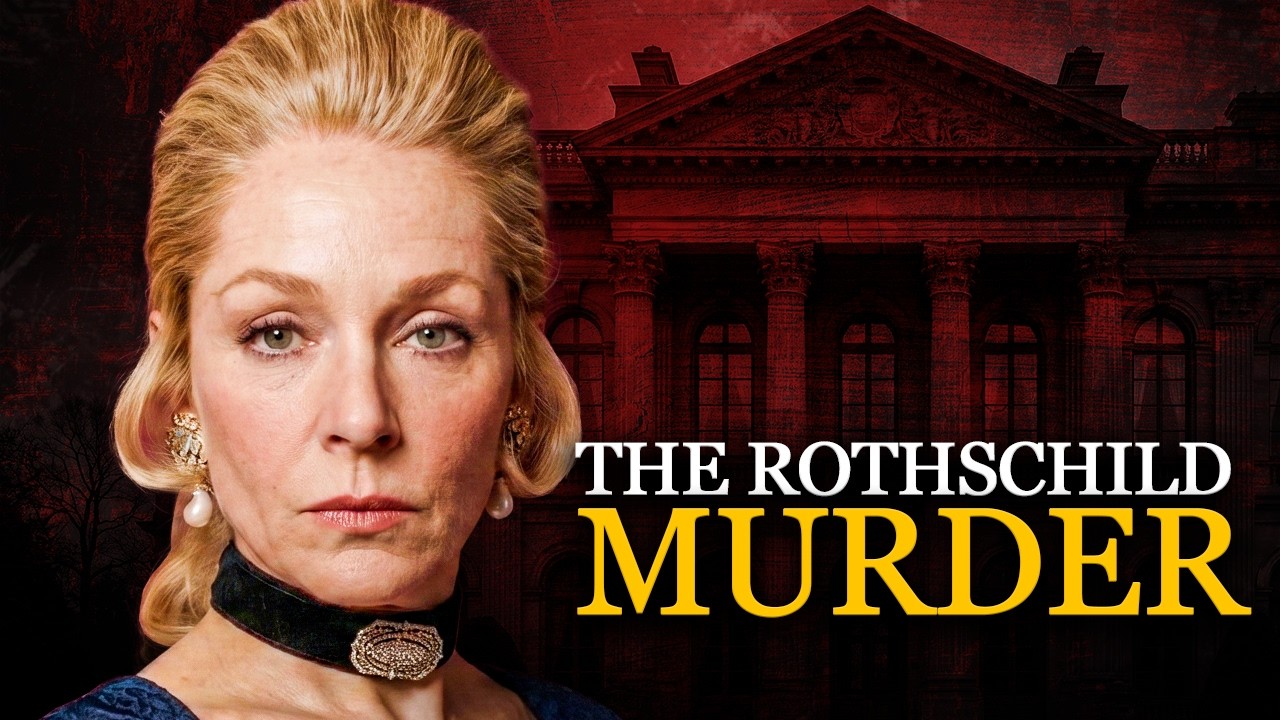
By the end of the decade, Gabriella was not merely a former employee traveling with a former aristocratic mistress. She was a widowed mother whose bond with Janet reached back into an earlier chapter of both their lives. Because Gabriella's own life had by then taken a hard turn.
She and Dante had returned to Friuli, in the northeast of Italy. In April of 1978, Dante was involved in a road accident, and he died. Gabriella was pregnant at the time. Their daughter Gioia was born that September, a child who would never meet her father, born to a mother suddenly alone with two children.
And here is one of the most important scenes in the whole of this story, and it involves no violence at all. In September of 1978, Janet and Steven traveled to Friuli. Gabriella was a new widow. The baby was only months old. And Janet became Gioia's godmother.
There is a photograph of it: Janet standing beside Gabriella and the infant. Hold on that image, because it does something no theory about art thefts or kidnapping rings can do. It tells you what these two women actually were to each other. Not employer and servant, not baroness and interpreter, but a woman who had just lost her husband and a friend who crossed a continent to stand beside her and take responsibility in the eyes of the church for her fatherless child. Whatever else you are told about this case, begin with that. Begin with the godmother and the baby.
By all accounts, Janet carried on in the world she had made for herself after the divorce: interiors, antiques, design, the trade of a woman with taste and connections. And it is here that a small thread must be handled with care, because it will matter later. Janet continued in some contexts to use the de Rothschild name.
That is not sinister on its face. Plenty of people keep a married name that opened doors. But it meant that strangers who encountered her could carry away an exaggerated idea of who she was and what she was worth, long after the marriage and its modest settlement were behind her. The documented fact is simple, and it should be stated plainly and left there. Her former marriage made her recognizable, and it may have given people who barely knew her inflated ideas about her wealth. Whether that ever mattered to anyone with bad intentions is a question for later, and it is a question, not an answer.
By the end of the 1970s, Janet and Steven were pouring their energy into the house near Sarnano. And Gabriella, the friend who had crossed a continent for a baptism, began crossing it again, this time to help. She accompanied Janet to the Marche in 1979 and again in November 1980, lending her Italian and her practical sense to the endless small negotiations of renovating a foreign house in a foreign language.
Which brings us to a Friday morning near the end of that November, and to a telephone call. On the 28th of November 1980, Steven May spoke to his wife on the phone at around 10 in the morning. He was in London. She was in Italy. Janet and Gabriella were finishing breakfast.
By Steven's later account to the British embassy, Janet sounded well. She sounded relaxed. She was pleased with how the house was coming along. They spoke about the ordinary things a married couple separated by a few countries speaks about, and Steven expected another call from her on Sunday. There was some worry about the phone lines. Italy was still reeling from the catastrophic Irpinia earthquake five days earlier, which had killed thousands in the south and disrupted communications across the country. But the tone of the call itself was untroubled.
A woman at breakfast in a hotel in an Italian town, talking to her husband about a house she loved, expecting to talk to him again in two days. That is the last completely ordinary moment in this story. Sit in it for a second, because it is precisely the mundane detail, the breakfast, the progress on the house, the plan to call on Sunday, that makes everything after it so difficult to hold. There was no crisis on that call. No fear, no warning. Just a Friday.
The instinct in a story like this is to look now for the crack: the addiction, the affair, the family feud, the visible fault line that explains what came next. And the honest answer is that there is no responsible basis for inventing one. There was no documented marital collapse, no secret ruin, no Rothschild vendetta lurking in the background.
The real crack in this story was not emotional. It was practical, and it was geographical. Janet moved through a wide and loosely connected world: antiques, property, international acquaintances, a name that opened doors and inflated impressions. And the more anyone would later try to map that world, to reconstruct exactly who she knew and who might have known her, the larger and hazier the picture became.
The crack was this. She was a recognizable woman with an outsized reputation for wealth, moving through a network too tangled ever to fully trace. That is not a flaw in her character. It is the reason her disappearance would generate a hundred theories and almost no answers.
Because the next day, she disappeared. Saturday, the 29th of November 1980. Janet and Gabriella had been staying in Sarnano for several days. That morning and into the early afternoon, a local surveyor named Nazareno Vannini spent time with them. According to the reconstruction that would emerge from the legal proceedings years later, Vannini was with the two women until around a quarter to one in the afternoon, and he understood that they meant to drive up toward the mountains. Some accounts say Janet invited him to come along, and that he declined. It is a small thing, that declined invitation. It is also the kind of small thing that a person spends the rest of his life turning over.
After that, the afternoon stops being clean, and the loss of clarity is itself part of the story. Some witnesses place the two women in or around the mountain area in the early afternoon. But there are also accounts of them being back down in Sarnano between roughly a quarter to four and five, including a detail about a paid invoice that would seem to anchor them in the town at that hour. And then a lawyer named Daniela Troli would later place their car on the road much later still, at around seven in the evening.
These timelines cannot all be equally true. They are the honest residue of a day reconstructed decades after the fact from memories that had already begun to blur when they were first collected. Do not smooth them into a single tidy chronology. The contradictions are the evidence.
There is one more account, and it belongs here with a warning attached. A hotelier reinterviewed more than 40 years after that Saturday said he remembered serving the two women hot drinks at around four in the afternoon, and that he remembered a man waiting outside in a car. It is a detail that seems to point somewhere. It is also a memory recovered four decades after the event, and it belongs in this story as exactly that: newly examined testimony, not a settled fact, not the confirmed sighting of a mysterious man. The distance between those two things, between a striking recollection and a proven fact, is the distance this entire case lives inside.
What Steven could describe later was what his wife had been wearing. Green flannel trousers, a green sweater, rubber boots underneath the trousers, a light blue windbreaker, a large tan shoulder bag. He described her blonde hair, often dyed back, and her walk as upright and brisk. A woman who moved through the world with purpose.
Picture her that way, in the green sweater and the rubber boots, climbing into a black Peugeot 104 with her friend beside her and turning the car up toward the high country of the Sibillini Mountains.
And here the familiar version of this story, the one where two women were simply trapped and frozen by a sudden blizzard, meets its first serious problem. The reconstructed weather and tire evidence drawn from the case file suggests that the car appears to have been parked before the major snowfall arrived. The heavy storm came afterward. That does not rule out death from exposure, but it dismantles the comfortable mental image of a car helplessly buried by a storm that caught two women unaware. By the time the worst of the snow fell, the car was already where it would be found, and the women were already gone from it.
By the next day, the 29th had become the 30th, and the two women had not come back. The black Peugeot had vanished with them into the mountains. And when searchers finally located that car 19 days later, high on the slopes, it would not answer a single question. It would only sharpen them.
Because the car was locked. It was, by the accounts that would follow, mechanically sound. And there were no signs inside it of any struggle at all. Two women had driven a working car up a mountain, locked it, and walked away from it into the snow. And no one in the 45 years that followed has been able to say why.
Steven May was in London when the silence began. The call he had been promised for Sunday did not come. In a normal week that might have meant nothing: a bad line, a busy day, a woman absorbed in her house. But the days after Sunday produced nothing either, and the not knowing curdled into something Steven could not sit with from a flat several countries away. So he traveled to Italy, and from the moment he arrived, he did not behave like a man waiting for news. He behaved like a man who intended to find his wife himself. He would spend, in the end, decades doing exactly that.
The search that grew up around the disappearance was enormous, and for weeks it was also useless. The Sibillini in December are not a forgiving place to look for anyone. Snow, cloud, ravines, hundreds of square kilometers of high country folding away in every direction. Searchers went up and came back with nothing, day after day, while the weather that had already swallowed two women went on swallowing the evidence of them.
And then, on the 18th of December, from the air, a helicopter crew finally saw something dark against the white. It was the black Peugeot, 19 days after Janet and Gabriella had driven it up into the mountains. It was sitting in the area of the Piano di Ragnolo, up near the Fonte Trocca, at an elevation of roughly 900 meters.
According to the reconstruction later broadcast by Italian television, the handbrake was engaged. And when investigators reached it and examined it, they found a detail that would haunt the entire case for the next 45 years. There was no mechanical reason for the car to have been abandoned. Later accounts say it started without trouble. Whatever had made two women climb out of that car and walk away from it into the high country, it was not that the car had failed them.
You have to let the car sit in your mind for a moment, the way it sat on that mountain, because it is the strangest object in the whole story. Snow gathering around a locked black Peugeot 900 meters up. The handbrake set as neatly as if the driver had stepped out for a moment and fully intended to come back. No occupants, no blood, no struggle, no note. Just a functioning vehicle, sealed and empty, high on a slope in the falling snow.
And the question the car asked was never the obvious one. It was not why didn't they stay with the car and wait for help. It was quieter and far stranger than that. What could have made leaving the car, abandoning the one warm, dry, findable thing on that entire mountain, seem like the better choice?
Hundreds of people spent that December trying to answer it. One detailed reconstruction of the search puts the number of people involved at around 500. Five hundred searchers on a mountain, looking for two women, and they found nothing. No Janet, no Gabriella. Two women had walked off the surface of a mountain that was by then crawling with people searching for them, and left no trace anyone could follow.
Steven was on that mountain for much of it. Picture the incongruity of the figure he cut. He was a personnel manager from a London department store, a man whose working life had been offices and staff rosters and the orderly machinery of John Lewis. And now he was walking snowfields in the Apennines in the dead of an Italian winter, searching ravines for his wife. He was not a mountaineer. He had no business on that terrain. But he went up anyway, again and again, because the alternative was to sit in a hotel room and wait for other people to decide how hard to look.
Something set in him during those December weeks, and it would not loosen for the rest of his life. Whatever else Steven May became in this story, he became first the man who refused to stop looking.
There was one place on that mountain that seemed, for a while, as though it might hold the answer. Roughly 500 meters from where the car sat, there was a disused house, the Casa Galloppa. Inside it, investigators found signs that someone had recently been there: traces of a fire, food and dirty dishes, mattresses that appeared to have been dragged together, hair that would later be considered consistent with the two women. One account holds that a fork associated with the house was afterward found among the belongings of one of them.
It is a small domestic object to carry so much weight, a fork. And yet, if the account is accurate, it is a physical thread tying the two women to that abandoned house, a suggestion that they had sat there in the cold and eaten.
Read those details, and the mind leaps immediately to a conclusion. They sheltered there. And they may well have. The evidence supports it as a genuine possibility. But possibility is not proof, and the house refused to become a solution. Because if Janet and Gabriella did reach that shelter, if they lit a fire and ate and dragged the mattresses together against the cold, then the mystery only deepens. Why did they leave? Why walk back out of the one place on the mountain that might have kept them alive?
And there is a darker version of the same question. Some of the journalists who examined the case later recalled that there had been dishes for four or five people at the house. A recollection that belongs to those witnesses and not to any forensic record, and that has to be labeled as exactly that. But if it were true, it would mean the two women had not been alone up there. And if they never reached the house at all, then whose fire was that? Whose dishes?
The Casa Galloppa did not close the case. It opened the door and left it swinging in the wind.
Then there was the telegram. During the early weeks of the search, a cryptic telegram arrived at the hotel where the women had been staying. It reportedly instructed someone to wait at an address in Rome. And that same Rome address became associated, in the reporting that followed, with a telegram connected to a robbery at the auction house Christie's.

You can feel the pull of it, the way a single detail like that seems to drag the whole story toward one shape: stolen art, an auction house, an antiques dealer's wife, a coded message, a Rome address. This one thread became the foundation for an entire architecture of theory about art theft and criminal networks.
And here is what this case does over and over to anyone who tries to solve it. Investigators eventually came to regard the telegram episode as a hoax. That is the whole pattern of the case in miniature, and it deserves to be seen clearly. An intriguing detail surfaces. The detail becomes a clue. The clue hardens into a theory. The theory takes on the weight of something known. And then, decades later, people encounter the theory, the art heist, the coded telegram, the address in Rome, without ever once hearing that the very foundation of it was set aside by the people who actually investigated it. In a case like this, the story always grows faster than the facts.
To understand why the kidnapping theory took hold so easily, you have to understand the Italy of that moment. This was a country in which abduction for ransom had become almost an industry. Organized bands, some with roots in Sardinia, holding wealthy targets for months in remote country while their families were bled through long negotiations. A foreign woman with a famous former husband, a reputation for money, and a habit of driving alone into the mountains was, on paper, precisely the kind of target that world produced.
The theory was not absurd. It fit the era so neatly that it barely needed evidence to feel true. And that, in the end, was the trouble with it.
The theories grew because serious people fed them, and serious people fed them because Steven May asked them to. Convinced the Italian authorities were content to file his wife's death away as a tragic accident, Steven recruited two journalists from the Sunday Times, Gitta Sereny and Delbert Halenstein. Their investigation culminated in a long feature in the Sunday Times magazine in November of 1982, and it offered a theory with a shape and a villain.
The two women, it argued, had been deliberately lured up into the mountains, possibly under the pretext of selling an antique snuff box, and then abducted by criminals of the sort who ran the kidnapping trade flourishing in Italy at the time. It was a compelling account. It gathered up the strangest details, the women's watches reportedly stopped at odd times, the sheer inadequacy of any accidental-death explanation, and gave them a spine to hang on.
But the kidnapping theory carried a wound it could never close. If two women had been taken for money, and one of them was famous precisely for having once been married to a Rothschild, then somewhere in this story there should have been a ransom demand. And there was none. No authenticated ransom demand is known to have reached Evelyn de Rothschild. Evelyn himself denied ever receiving one. A kidnapping without a ransom is not a kidnapping. It is a theory with a hole where its heart should be.
The stopped watch became one of those details the case could never quite metabolize. A watch that stops tells you at most when it stopped. Not why, not where the wearer was, not whether a hand wound it for the last time or the cold simply killed the mechanism. But in a story starved of hard facts, a stopped watch feels like a clock frozen at the exact moment of the crime. And it was treated that way for years. Whether it deserved to be, no one has ever been able to say.
Another thread ran back to London, to an antiques dealer named Sergio Vaccari, who was murdered in 1982. Police examined whether Janet had known him, whether the antiques world that surrounded her connected somehow to a killing in another country. Scotland Yard found no evidence establishing any such relationship, and later reporting indicates this suspected link was ruled out. It was the same story again in a different key: a connection that looked, from a distance, like the thread that would finally unravel everything, and that dissolved the moment anyone pulled on it hard enough.
Over the years that followed, the case would attract nearly every theory an unsolved Italian mystery can attract. The Mafia, art trafficking, intelligence services, even the Vatican. They are part of the story now, not because any of them was ever demonstrated, but because a mystery this durable becomes a screen onto which each passing decade projects its own particular fears. You can name them, and then you have to set them down, because not one of them has ever produced a chain that runs cleanly from a motive to a person to a death. Not one.
And then came the long middle of the story, the part with no drama in it at all, which is exactly why it is so hard to bear. The searches thinned. The snow that had hidden the women deepened, and then, come spring, began to melt, and still they were not found. Months passed. The world moved on, as the world does.
Steven did not. He kept the case alive by force of will, pushing journalists, pushing officials, refusing to let two women dwindle into a closed folder in a provincial prosecutor's office. For 14 months, Janet and Gabriella existed in the worst category a missing person can occupy. Not returned, not recovered. Simply gone, suspended somewhere between the living and the dead.
By the beginning of 1982, the official view had hardened in the direction opposite to Steven's. A Carabinieri report dated the 18th of January leaned toward the plainest explanation available: that the two women had died of exposure after trying to make their way on foot toward some sign of habitation. Steven May disagreed, and he said so, and he kept pressing for more of the mountain to be searched. Nine days later, the mountain answered him.
Before going any further, there is a difficulty this story has to face honestly, because to do otherwise would be to lie to you. No reliable source can tell us the exact date, the exact hour, or the exact mechanism of how Janet Bishop and Gabriella Guerin died. Anyone who narrates their final hours minute by minute, the cold, the fear, the last thing one said to the other, is writing fiction and selling it as fact. The truth is harder and quieter than that. What can honestly be done is to lay out the last things actually known, and then to look, without flinching and without exaggerating, at what the mountain finally gave back.
On the 27th of January 1982, 14 months after the two women disappeared, human remains were found in the countryside near Podalla di Fiastra, close to Lake Fiastra. A search that had already changed in character once, from the frantic rescue effort of December 1980 into a grim, dwindling recovery operation across the following year, changed form one final time. Janet and Gabriella were no longer missing. But finding them did not solve the mystery. It deepened it.
What is known is this. The two women were alive on the 29th of November. Their car was left on the mountain, apparently before the heaviest snow fell. There was evidence consistent with recent use of the empty house nearby. And their remains were found together 14 months later in the Fiastra area. Everything between those fixed points is inference, and the inferences do not agree with one another.
The physical evidence was, in the most painful possible way, inconclusive. The examination found no obvious skeletal wounds that would establish a shooting or a stabbing. No bullet path, no blade mark that had survived. But that absence proves far less than it seems to, because the remains had been badly damaged by animals across 14 months in the open, and whatever soft tissue might once have carried the truth was long gone.
Janet was identified in part through the comparison of dental records, and her jewelry was still with her. That last detail cuts directly against the simplest criminal motive, because people who kill for money do not usually leave the jewelry behind. Whatever happened on that mountain, on the evidence of the bodies themselves, it does not look like a robbery.
One Italian reconstruction reports that a medical examiner came to believe the women had died substantially later than the day they vanished, perhaps around a month afterward. That estimate has to be held as precisely what it is: one expert's reading, attributed to him, not a fixed date carved into the record. But sit for a moment with what it would mean if it were true. It would mean that after the car had been found empty, after the search parties had gone up and come back, after much of the world had assumed the worst was already long over, the two women may still have been alive on that mountain. No one can prove that they were. No one can prove that they were not. It is one more thing in this case that points somewhere and then stops short of arriving.
The real center of this section is not an imagined attack that no one witnessed. It is something slower, more clinical, and in its own way more devastating: the work of turning remains back into people. Dental records, jewelry, clothing, the small, stubborn personal objects that outlast a body. Piece by piece, two sets of bones on a mountainside were made once again into two names.
There is a particular cruelty in that process, and it is worth naming. For 14 months, Steven May and Gabriella's family had lived inside a single word: missing. As long as the women were only missing, some corner of the mind could keep the door propped open. The identification closed it. A dental chart, a piece of jewelry, a scrap of the clothing they had last been seen in, and the files could at last write down the word everyone had feared and no one had been able to prove. Dead. Both of them confirmed.
Janet Bishop was 41 years old. Gabriella Guerin was about 40. And Gabriella was the mother of two children, a boy and a little girl, who had been born in the same year her father died.
Two explanations have fought over this case for more than four decades, and the honest position is that neither has ever won.
The first is exposure, and it has an intelligible sequence to it. The women stop the car. For some reason, they get out of it. They reach or use the empty house nearby. The weather turns savage. They try to move across terrain they do not know well. They become lost, and they die of the cold. It is supported by the worsening weather, by the possibility of the shelter, and by the absence of any obvious lethal wound on the remains. It is the explanation the Carabinieri leaned toward, and it may be the truth.
But it strains hard against its own evidence. The car appears to have been parked before the heaviest snow fell, so the comforting image of two women caught out and trapped by a sudden storm does not hold. The car worked, so there was no mechanical reason to leave it. Why they walked away from a functioning vehicle, high on a mountain with weather coming in, has never been explained by anyone. And the investigators themselves struggled to square the exposure theory with the fact that the remains were finally found in terrain connected to areas that had already been searched. When the investigating judge eventually reviewed all of it, he did not conclude that accidental death had been proven. He concluded that it had not been, not even to the standard of the merely probable.
The second explanation is that someone else was involved. It answers a different set of questions. An arranged meeting might explain why two women drove up a mountain so late in the day. A third person might explain why a working car was left behind. Detention might explain a death that arrived weeks after the disappearance. Removal or later placement might explain the strange fact that the bodies eluded a 500-person search only to surface months later in country that had already been crossed.
But every one of those sentences begins with the word might. Each step forward requires a fresh assumption laid on top of the last one. And after more than 40 years, the criminal theory has produced no offender, no authenticated ransom demand. The telegram that seemed to prove an art-crime connection was judged a hoax. The Vaccari link was ruled out. The bodies yielded no weapon and no clear mechanism of homicide. The explanation that has always felt more satisfying is precisely the one that has always had the least beneath it to stand on.
While the theories multiplied, two families were simply trying to survive the fact of it. Janet's mother, the hairdresser, widowed young, who had sent her small daughter away to a convent school and then watched that daughter climb into a world of banking dynasties and society pages, had spent more than a year not knowing whether Janet was alive or dead. When the remains were finally identified, she said that she had gone on hoping right up to the very last that her daughter would be found alive. There is nothing to add to that sentence. A mother hopes until hope is taken from her by force.
Gabriella's loss did something arithmetically simple and morally unbearable. Two years earlier, a road accident had taken the children's father. Now the mountain had taken their mother. In the span of a few years, a family of four had been reduced to two orphan children: a boy old enough to understand what he had lost, and a girl too young to remember she had ever had it.
Whatever Janet's fame brought to this case in headlines and theories, it brought nothing at all to those two children except the strange indignity of watching their mother reduced, in the retelling, into a woman who happened to be standing beside someone more famous.
And then there was Gabriella's daughter. Gioia was two years old when her mother went up that mountain and did not come back down. She had already never known her father, who died before she was born. Now her mother was gone as well, and Gioia would grow up with almost nothing of her. One fragment of memory, she would say much later: a single blurred image of her mother, and a small girl being gathered up and comforted. That was all a child of two could keep of the woman who bore her.
Her aunt Caterina took the children in and gave years of her own life to the search for the sister who had vanished.
This is where to leave it. Not on a conspiracy board, not on a theory, but on the only two things these families were actually handed. Not answers. Not a person to hold responsible, not even a cause of death that anyone could agree on. Just two names returned to them off a mountain, and a silence where the explanation was supposed to be.
And that silence was about to be made official. Because seven years later, an investigating judge would sit down with the whole of it, the car, the house, the telegram, the theories, the bones, and he would close the case without ever solving it. There would be no affirmative proof that Janet and Gabriella had been murdered. And there would be no secure proof that they had died by accident either. The file could be closed. The question could not.
The judge's name was Alessandro Iacoboni. On the 3rd of October 1989, he brought the first chapter of this case to an end. His decision ran to 87 pages. It closed the criminal proceeding without a prosecution. And it did something unusual for a document meant to bring closure. It refused to choose.
Iacoboni did not write that Janet and Gabriella had been murdered, because the proof of murder was not there. But he did not write that they had died by accident either, because that proof was not there to his satisfaction. What he described instead was a series of inexplicable anomalies, an obscure and complex affair. It was, in its way, the most honest thing anyone in an official capacity would ever say about the case. He had looked at all of it, the car, the house, the telegram, the bones, and he had concluded that the truth could not be reached. Then he signed his name and let the file go.
There is a detail from that period that surfaced only decades later, and it belongs here precisely because it shows how the case never stopped generating shadows. One of the men who worked on identifying the remains, a professor from the University of Camerino named Franco Maria Vella, would say many years afterward that Iacoboni had confided something to him during the investigation in England: that the judge had told him privately that he felt himself to be in real danger. It is a recollection offered long after the fact, unverifiable now, and it should be held lightly. But it is characteristic. This is a case in which even the man who closed it became, in the retelling, another locked door.

And then the story did what unsolved stories do in a country that loves them. It became a legend in Italy. It acquired a name, the giallo dei Sibillini, the Sibillini mystery, and it took its place among the enduring cold cases that the nation returns to again and again.
It reached television early. In October of 1987, the case was featured on Telefono Giallo, the pioneering true crime program hosted by Corrado Augias on Rai 3. It returned later on Chi l'ha visto?, the long-running program devoted to the missing and the unexplained, which reconstructed the disappearance for a new generation of viewers. Books followed across the decades, including a novel and, in 2024, a non-fiction investigation by a Sarnano teacher named Francesco Teresi titled The de Rothschild Mystery.
Each retelling added a layer. Each layer made the thing underneath a little harder to see. The name at the center of it, Rothschild, guaranteed that the story would never be allowed to simply fade, and also guaranteed that it would keep being told as a story about that name rather than about the two women who had actually died.
Underneath the legend, a real argument was taking shape, and it never resolved. On one side stood those who believed in the morte bianca, the white death, the idea that the mountain and the cold had simply done what mountains and cold do to people caught out in them. On the other stood those who were certain the women had been killed, and that the snow was a convenient story laid over something deliberate. This was not a quarrel between cranks and experts. It ran straight through the serious people: the Carabinieri who had worked the case, the journalists who had chased it, the writers who kept returning to it decade after decade.
In 2020, a writer named Luciano Gamberini published a novel about the case built around the notion of delitto non voluto, a crime that no one had actually intended. An attempt to imagine some middle path between pure accident and cold-blooded murder. That such a middle path had to be invented in fiction tells you how unsatisfying both of the official options had become. Forty years on, people were still writing books trying to make the facts add up, and the facts still would not.
There was, too, a gravitational quality to the case, the way a mystery this large begins to pull other mysteries into its orbit. Over the years, the disappearance was linked by one theorist or another to some of the darkest names in modern Italian crime, to the Banda della Magliana, the Roman criminal organization that seemed to shadow every unsolved case of the era, and even, by the most speculative accounts, to the vanishing of Emanuela Orlandi, the 15-year-old who disappeared in Rome in 1983 and whose fate remains an open wound in Italian public life. There was never any established basis for these connections. But that was almost beside the point. A case with a Rothschild at its edge and no solution at its center becomes a kind of empty vessel, and people pour into it whatever they most fear about power, money, and the things that go unpunished. Each new link made the story larger. Not one of them made it any closer to solved.
Consider the man who gave the case its name, and how differently his life ran from theirs. Evelyn de Rothschild had been divorced from Janet for nearly a decade when she vanished, and his connection to the mystery was, in the end, a single documented fact. When the kidnapping theory demanded a ransom demand, he stated that none had ever reached him. That is the whole of what the record fairly supports about Evelyn.
The temptation in a story like this is to read significance into the reticence of a powerful family, to treat the Rothschilds' distance from the noise as though distance were the same thing as knowledge. It is not. And there is nothing in the evidence to make it so.
What is true is simply this. Evelyn went on living. He led the London bank through decades of the family's history. He married again, first Victoria Schott, with whom he had three children, and later, in the year 2000, the American businesswoman Lynn Forester. He lived another 42 years after the disappearance of the woman he had once married in Arlington. And he died on the 7th of November 2022, at the age of 91. The name outlived nearly everyone it touched in this story. That was always its nature.
And the name had been doing its work from the very beginning, in a way that is easy to miss now. Janet had long since stopped being a Rothschild in-law, and by all accounts she rarely spoke of that chapter of her life. But her passport still carried the trace of it, the standing of an ex-baroness of one of the wealthiest families on Earth. It was that single detail, discovered by officials trying to work out exactly who this missing English woman was, that lifted the case out of the ordinary. It brought in the British embassy. It brought in Scotland Yard. It turned a local disappearance in a provincial corner of the Marche into an international investigation followed by newspapers around the world. Two women had gone missing on a mountain. But it was a word on a passport that decided how the whole world would look for them, and in the end, how it would remember them.
Steven May's life ran the opposite way. Where Evelyn moved on, Steven stayed. He had gone up that mountain as a personnel manager who had never expected to be anything more. And he came down as something he would remain for the rest of his life: the keeper of an unsolved death.
He spent years pressing for answers, cultivating journalists, refusing to accept the exposure verdict, feeding the very machinery of theory that would eventually bury his wife under a mountain of speculation nearly as deep as the one that had hidden her. Whether that made things better or worse is not a question with an answer. A man who loses his wife to a mystery has only two choices: to let go of the mystery, or to hold it. And Steven chose to hold it. He held it for the better part of four decades.
There is a cost to that kind of holding that never appears in any case file. A man builds the rest of his life around a single question, and the question does not love him back. It does not resolve. It does not thank him. It does not release him. Steven May got no verdict, no arrest, no grave he could stand over knowing what had put his wife in it. He got 40 years of the same fog that came down over that mountain road the night she vanished. And he gave those years willingly, because the alternative, to let Janet dwindle into a closed file and a legend and nothing more, was the one thing he could not bring himself to do.
But of all the lives this case rearranged, the one it marked most permanently belonged to a child who could not even remember it. Gabriella Guerin's daughter, Gioia, grew up in the care of her aunt Caterina, the woman who had taken the two orphan children in and given years of her own life to searching for her vanished sister.
Gioia had no memory of her father, who died before she was born, and only a single fractured image of her mother. She grew up anyway. She became an adult, had children of her own, stayed close to her brother, Ottavio. And as she grew, she watched something happen to her mother that no search party could reverse. She watched Gabriella disappear a second time. Not into the mountains, but into the margins of someone else's story.
In every retelling, every book, every television reconstruction, her mother was the assistant, the secretary, the companion, the friend who happened to be there. The woman with the famous name got the headline. Gabriella got a subordinate clause.
Gioia, as an adult, would say that she did not believe the two women had simply died by accident, while also admitting, with a clarity that most of the theorists never managed, that she could not actually know what had happened. She was not chasing a conspiracy. She was chasing her mother's name.
And when the case came roaring back into the news, Gioia did not stay on the margins where her mother's memory had been pushed. She spoke. As the investigation reopened, she rejected the accident theory outright, and she said plainly that she now lived in order to obtain justice. Not for the baroness, whose name had swallowed the story, but for Gabriella, the cook from Friuli, who had crossed the country to help a friend and had never come home. It was a daughter's demand, made more than 40 years after the fact, on behalf of a mother she could not remember.
There was something about that worth sitting with. The person fighting hardest to solve this case, after everyone else had turned it into a legend, was not a detective or a journalist or a Rothschild. It was a woman who had been two years old when it happened.
For 35 years after Iacoboni closed the file, the case sat where he had left it. Legendary, unsolved, periodically resurrected on television and left each time exactly as unresolved as before. And then, at the end of 2024, it moved again. The prosecutor's office in Macerata reopened the matter as a suspected double homicide, cold case number 2736 of 1980. The news broke, fittingly for a case that had lived so much of its life on television, on a true crime program. The reveal came on Quarto Grado at the beginning of November 2024, just before the 44th anniversary.
And almost immediately, the reopening produced a complication of the exact kind this case specializes in. At a book presentation in Matelica that same month, a journalist brought to light a previously unknown document written by Professor Mario Grasso, the University of Macerata medical examiner who had actually performed the examination of the two women's remains all those years before. In it, by that account, Grasso had set down his own doubts about the original findings and had excluded death at the hand of another person. So at the very moment the prosecutor was building a theory of double homicide, a document surfaced from the one man who had handled the bodies, pointing back toward the mountain and the cold. The renewed investigation had barely begun, and it was already arguing with itself.
This time, the investigators did not chase the grand international conspiracies. They went local. They summoned witnesses, decades older now, their memories thinned and reshaped by 44 years, and put them through long sessions in the Carabinieri barracks. In one instance, a testimony marathon that stretched nearly 10 hours. Among those called back was Nazareno Vannini, the surveyor who had spent that last ordinary Saturday morning with the two women, now an old man carrying a memory more than four decades deep.
And running against the whole exposure theory was a technical objection that had never fully gone away. Mountaineers, including voices associated with the Italian Alpine Club, had long doubted that two women dressed and shod the way Janet and Gabriella had been could ever have walked the snowbound route the accident theory demanded of them. It was one more place where the plainest explanation strained hard against the physical world.
They tried to rebuild the local chronology of that Saturday, the ordinary human sequence of who saw the women, and when, and where. In March of 2025, they interviewed Delbert Halenstein, one of the two Sunday Times journalists who had built the kidnapping theory more than 40 years earlier. They looked again at the old hypothesis of abduction, including the historical presence in central Italy of the Sardinian kidnapping bands.
The chief prosecutor, Giovanni Fabrizio Narbonne, said he remained convinced that someone in that area still knew something, that somewhere in the fading population of that valley, a secret was being kept.
By the 45th anniversary of the disappearance, on the 29th of November 2025, the renewed investigation had run headlong into the wall that every very old case eventually hits. The witnesses were dying, or forgetting, or, in the prosecutor's own assessment, declining to say what they knew. Narbonne did not soften it into anything reassuring. He said, in substance, that he still believed someone out there was guarding a great secret. But belief is not evidence, and a prosecutor cannot charge an entire valley on a conviction that it is hiding something.
Memories contradicted one another. The local chronology that investigators had hoped to rebuild kept dissolving in their hands. And the reporting out of Macerata that anniversary carried a quiet, familiar note underneath it: that the new inquiry, for all its energy, was drifting toward the same place the old one had ended. Toward the archive. Toward the closed file. Toward the question left open.
And here is the hardest truth about reopening a case after 44 years, the one that no amount of prosecutorial determination can overturn. The evidence does not wait. The two women were examined when animals had already had 14 months with them, and whatever their remains might once have been able to say, they can say far less now. The witnesses who saw them that Saturday were in the middle of their lives then, and are gone, or nearly gone, now. And memory at that distance is not a recording to be replayed, but a story that has been retold and reshaped ten thousand times in the privacy of a single mind.
The house on the mountain, the car, the snow, the exact hours and places. All of it has receded past the point where certainty is still available to anyone alive. The prosecutor could reopen the file. He could summon every living soul who had ever touched the case. What he could not do was reopen 1980.
Some doors, once enough time has passed, do not close because the truth has finally been found. They close because the truth has become physically unreachable, worn away, buried, carried off one funeral at a time. Which is more or less where the case stands now. As of the most recent reporting, the second investigation appears to be headed for archiving, with no named suspect and no established cause of death, and the same twin verdict Iacoboni reached in 1989 arrived at again by a new generation of investigators, with new tools and the same insufficient facts.
To archive a case is not to solve it, and not quite to abandon it. It is to set it down formally, in the knowledge that it can be lifted again if something new ever emerges. A confession, a document in a drawer, a witness who at last decides to speak before the end.
In the meantime, the deaths of Janet Bishop and Gabriella Guerin remain, in the eyes of the law, precisely what Iacoboni left them more than three decades ago. Not proven murder, not proven accident. A blank space where a cause of death is supposed to be.
The mystery has outlasted almost everyone who tried to solve it. In the summer of 2026, it outlasted one more. Giacomo Battaglia, the Carabinieri captain who had commanded the company at Camerino when the women vanished, and whom Iacoboni had personally charged with the original investigation, died at the age of 77. He had followed the case in its early years as far as England, questioning the baron Evelyn de Rothschild himself. And to the very end of his life, Battaglia held to the plainest explanation of all. He believed the two women had sheltered in that empty house against the storm, set out again into the snow in clothing that was never meant for it, and died of the cold. No strange trail, he insisted. No conspiracy. Just two women lost on a mountain.
His closest colleague from those years, Carlo Felice Corsetti, now a general in reserve, has never believed a word of it. Corsetti stood beside Battaglia in London all those years ago, and he stands on the opposite side of the mystery today. He says he never for a moment accepted that the women froze to death, that the route through the snow they were supposed to have walked, in the shoes they were wearing, never made sense to him. Two men who investigated the same disappearance together, who remained friends until the end, and who died and aged holding directly opposite convictions about what happened. That is the whole case in two men. The divide runs so deep that it outlives the people who dug it.
There is a changing of the guard underway in this story, and it is nearly complete. The judge who closed the case is long dead. The baron Evelyn is dead. Now Battaglia is dead. The men who lived this case in real time, who walked the snow in the winter of 1980, who questioned an aristocrat in a London drawing room, who signed the reports and argued over the bodies, are almost all off the stage. What is left is a second generation. A prosecutor who was a young man when it happened. A daughter who was a toddler. Journalists and writers born after the fact. All of them trying to solve a mystery that not one of them witnessed, working from the thinning testimony of the few who did. The case can only survive so many handoffs. Sooner or later, the last person who actually knew anything takes what they knew into the ground with them, and after that, there is only the story.
Steven May, by the last reliable account, was still alive in early 2025, nearing 90 years old and unwilling to reopen the wound in public. Evelyn de Rothschild has been gone since 2022. Gioia is a grown woman with a family of her own, still tied to her brother, Ottavio, still carrying the particular burden of a daughter whose mother became a footnote in someone else's tragedy. She once described what the famous name had done to her mother's memory in the simplest possible terms. It was, she said, as if Gabriella had died twice. Once on the mountain, and once in the telling.
And the mountain is still there. The road up from Sarnano into the Sibillini still narrows into fog in late November, and the fog still turns to snow as the dark comes down early over that high country. Forty-five years of investigators have driven up that road trying to read the landscape, and the landscape has told them nothing. It did not tell the first search party in December of 1980.
The Rothschild name gave this story its scale. The money, the rank, the newspapers, the decades of theories about ransom and stolen art and conspiracy. But the name may also be the reason no one ever saw the story clearly. Strip it away, and what remains is smaller and harder and far more human. Two women driving into the mountains on an ordinary Saturday. One of them rebuilding a quiet life after a famous marriage. The other a widowed mother who had come along to help a friend. And two families handed remains instead of an explanation, and told to live with the difference.
Forty-five years have not turned that uncertainty into proof of anything. Perhaps the truest image to end on is not a banking dynasty or a conspiracy chart, but the one the mountain actually left behind. A small black car on a high road, locked and empty, and two names beside it, still waiting for an answer that may never come.