Life on the American frontier was brutally demanding for children, a reality far removed from the romanticized tales of the Wild West. From the moment they could walk, young ones were expected to contribute to the family’s survival, with their days beginning before sunrise. Chores included tending to livestock, milking cows, gathering firewood, and maintaining family gardens, with responsibilities assigned based on a child’s age and ability rather than strict gender lines. While the work was essential, parents understood that certain tasks, like managing large animals, were too dangerous for younger members, so children contributed in ways that matched their physical capabilities.
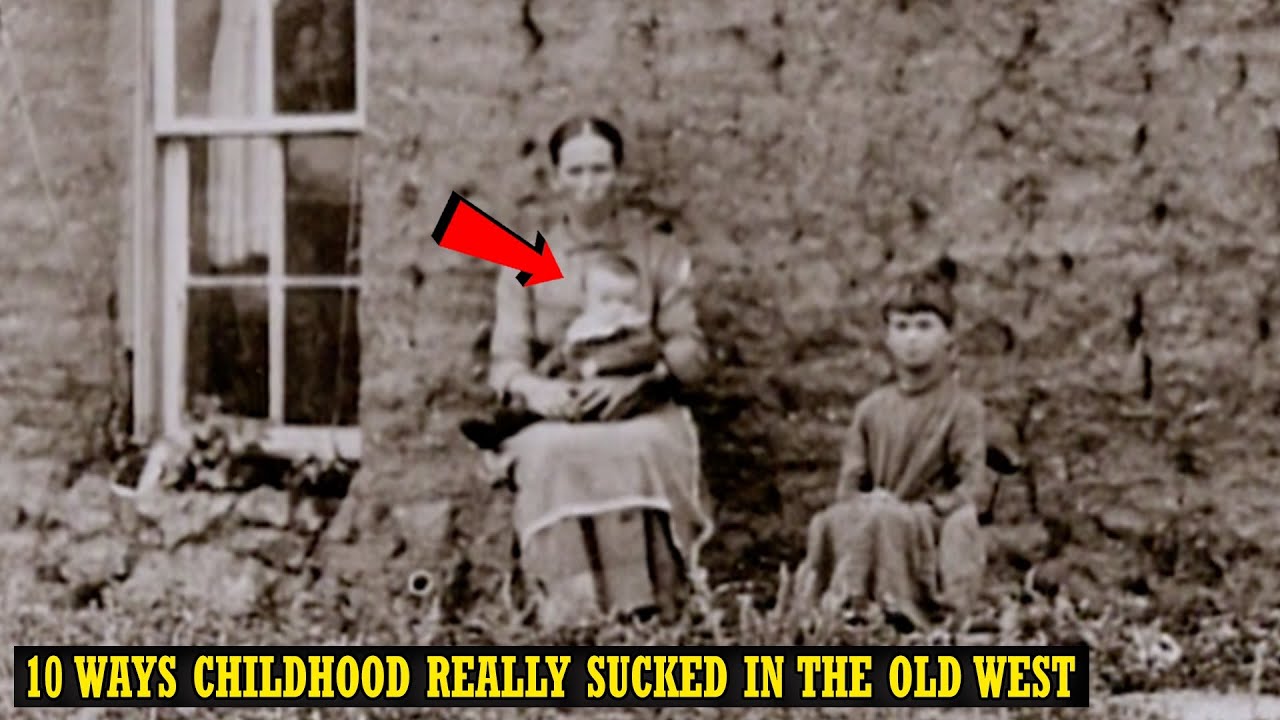
The threat of death was a constant companion on the frontier, though not always in the ways settlers feared most. While many worried about conflicts with Native American tribes or attacks from wild animals, these were relatively rare; most interactions were peaceful, and creatures typically avoided human contact. Instead, microscopic threats like viruses and bacteria proved to be the most deadly, particularly for infants and young children who often did not survive their first year. The vast rural expanses and limited recordkeeping meant the actual number of infant deaths was likely higher than documented, and childhood remained precarious even for those who survived past infancy.
Education was highly valued in frontier communities, seen as a sign of civility and growth. Despite the harshness of the environment, settlers worked hard to establish schools, no matter how small. A single teacher was typically responsible for the entire schoolhouse, and the local community played a vital role in supporting these institutions. They built desks, kept the wood-burning stoves running, and often provided the teacher with housing and meals.
However, access to education was not equal for all children. Discriminatory laws often excluded non-white children, reinforcing the idea that certain groups were inferior. In response, some ethnic communities, particularly Chinese immigrants in California, took matters into their own hands to address these educational inequalities. The experiences of Native American children were especially devastating during this era.
While the frontier brought hardship to many, the civilization policies of the US government broke Indigenous families and cultures. A particularly tragic chapter was the establishment of Native American boarding schools, which were not designed to provide opportunity but to systematically erase native cultures. Indigenous children were taken from their families, given new names, dressed in unfamiliar clothing, and pressured to adopt Christianity. Speaking their native languages was strictly forbidden, and they were taught that their traditions were inferior.
Initially located on or near reservations, these schools were soon moved off-reservation by the government, which deliberately sought to separate children from their families to make assimilation more effective. The boarding school experience left long-lasting scars on generations of Native families. Former students reported harsh discipline, verbal mistreatment, and strict regulations. Many children suffered from neglect and malnutrition, while overcrowding led to squalid conditions.
Some children ran away, and schools sometimes offered rewards for their capture, despite a federal law in 1891 mandating Native American children attend these institutions. Many families resisted, but the boarding school era persisted for decades, with most of these institutions not closing their doors until the 1970s. The legacy of these schools continues to impact Indigenous communities today. For children who were not Indigenous, the frontier was often a life of intense labor and limited resources.
There were no large toy stores stocked with the latest gadgets, so children crafted their own toys from whatever materials they could find. Social events like cheese-making parties offered rare opportunities for fun and camaraderie, a brief respite from the laborious routine. It wasn’t much, but it brought joy to their hard lives. Indigenous children on the frontier were particularly skilled at crafting detailed toys, using their ingenuity to create playthings from the sparse resources around them, especially since purchasing toys was not a practical option with few general stores around.
The emotional toll of frontier life was significant, particularly for children caught between two worlds. Asian-American children, for instance, found themselves alienated from both their native cultures and the society around them. At home, they were urged to preserve their cultural heritage, but in their communities, they faced pressure to assimilate into mainstream American society. This cultural tension was compounded by overt discrimination; many were excluded from certain businesses because of their ethnicity, and this prejudice was deeply internalized by children growing up in such an environment.
The social dynamics of the Old West often magnified these difficulties, especially for those of mixed heritage. Many men seeking a fresh start moved further west, leaving behind previous families and responsibilities. While there were rare instances of mixed-heritage individuals gaining social status through prominent parentage, for the vast majority of Native American and mixed-race children, life was challenging and filled with rejection from both their white and Indigenous communities. Anti-miscegenation laws that arose after the Civil War marked a rejection that affected these children profoundly, as they struggled to find a place where they belonged.
The Civil War and its aftermath only complicated the future for many frontier families. After the 1860s, many Southern families were displaced and sought to establish new lives in the West, carrying with them the lingering prejudices of the South. This migration put added pressure on Native American families already living in these regions. Before the war, interracial relationships were often viewed with more acceptance, but the rise of discriminatory laws after the conflict marked a stark shift.
For children, this meant growing up in a society that was increasingly hostile to their existence, with the added pressure of displacement and the constant struggle to survive. The term “teenager” did not come into common use until the 20th century, but frontier communities did recognize the transition from childhood to adulthood through various milestones and responsibilities. Children were expected to take on adult roles at a young age, and their childhoods were often cut short by the demands of survival. The lack of proper education and the constant upheaval of frontier life meant that young ones faced a tough and unforgiving existence.
Despite all the hardships, they showed incredible resilience and strength in the face of adversity, a testament to the human spirit’s ability to endure. Despite the harsh conditions, the lives of children in the Old West were not entirely devoid of joy. While the frontier was a place of immense struggle, children found moments of play, creativity, and connection with their communities. However, the overall picture is one of a challenging and often tragic existence, marked by loss, discrimination, and the relentless pressures of survival.
The story of childhood in the Old West is a complex one, filled with both hardship and resilience, and it continues to shape the narrative of American history.