On June 27, 1876, a column of soldiers on horseback crested a ridge in the Montana Territory. They were looking for George Armstrong Custer and the 7th Cavalry.
What they found instead was a field. The smell reached them first — sweet, thick, wrong. It was the smell of some 200 bodies swelling under a June sun for two days.
The riders pulled bandannas over their faces. Some gagged. Some stopped their horses and refused to move.
Then they saw the shapes. From a distance, they looked like white boulders scattered across the hillside. They were not boulders. They were men, stripped completely naked, skin turned white from the sun, limbs arranged at angles that do not belong to the living.
Some had no heads. Some had no hands. Arrows protruded from empty eye sockets. Faces had been struck with such force by stone clubs that no feature remained — just a concave ruin where a human face used to be.
One body was found with the chest split open and hollowed out. Another had the skull opened and emptied. Fingers lay scattered on the grass like dropped coins.
Of the more than 200 men who rode with Custer into that valley, only 56 could be identified. The rest were too destroyed to name.
All of this happened in less than an hour. Some accounts say less than 30 minutes. In the time it takes to eat lunch, an entire command — 210 men, five full companies of the United States Army — was wiped from the earth and then systematically taken apart.
But what was done to those bodies was not random savagery. It was deliberate. It followed a specific logic, a spiritual logic, and understanding why changes everything about this battle.
And then there is the question no one has definitively answered: who actually killed Custer? For a century, the answer was that we do not know. But in 2005, a Cheyenne oral tradition surfaced claiming that the person who struck Custer down was not a famous warrior. It was a woman.
The battle that destroyed George Armstrong Custer is one of the most mythologized events in American history. The myth is a comfortable story laid over something far more disturbing, far more human, and far more complicated than a last stand on a hill.
George Armstrong Custer was 36 years old in the summer of 1876. A decade earlier, he had been the most famous cavalry officer in America — the youngest general in the Union Army, brevetted at 25, leading charges with golden hair streaming behind him like a battle flag.
Newspapers loved him. Artists painted him. He wore fringed buckskin jackets on campaign and traveled with his own pack of hunting dogs. He was, by every measure, a man who understood spectacle.
But by 1876, the spectacle was fading. Custer had been court-martialed in 1867 for abandoning his command and ordering deserters shot without trial. He had been suspended from rank and pay for a full year.
He had clawed his way back, but the shine was gone. He needed a victory large enough to put his name back in the headlines. Some historians believe he had his eye on the 1876 Democratic presidential nomination.
Whether that is true or not, this much is certain: Custer was riding toward the Little Bighorn with something to prove.
And here is the irony that should haunt you. It was Custer himself who had created the crisis he was riding into.
In 1874, he had led an expedition into the Black Hills of South Dakota — land sacred to the Lakota Sioux, land guaranteed to them by the Fort Laramie Treaty of 1868. Custer's expedition confirmed gold.
The announcement triggered a rush of miners onto Lakota land. The United States government, rather than enforce the treaty, demanded all Lakota report to reservations by January 31, 1876. Those who refused were declared hostile. The army was sent to force compliance.
Custer was the instrument of a betrayal he himself had set in motion.
But the Lakota and Cheyenne did not see themselves as hostiles. They saw themselves as people defending their home. Many of the families gathered along the Little Bighorn that summer were not renegades. They were people who had simply refused to go where they were told.
Among them were old men and women, children, entire extended family groups. They had come together not for war, but for community, for the annual Sun Dance, for hunting, for the gathering of a people who understood that their way of life was being strangled.
The soldiers riding toward them were the fist of a government that had already broken every promise it had ever made.
The gathering along the Little Bighorn River in late June 1876 was one of the largest concentrations of Plains Indian peoples ever assembled. The most reliable modern scholarship places the village at between 6,000 and 8,000 people, including somewhere between 1,500 and 2,000 warriors.
The camp stretched nearly three miles along the river bottom, set among cottonwood groves and tall grass — a city of hide lodges and travois arranged by tribal circle. The circles included Hunkpapa Lakota, Oglala Lakota, Miniconjou, Sans Arc, Blackfoot Sioux, Two Kettle, Brule, Northern Cheyenne, and a small number of Arapaho.
Each circle had its own leaders, its own warriors, its own council fires. This was not an army. It was a nation.
The most influential man in the encampment was not a war chief. Sitting Bull was a holy man of the Hunkpapa Lakota, approximately 45 years old, a man whose authority came not from military command but from spiritual power and moral standing.
Days before the battle, Sitting Bull performed the Sun Dance, slicing 50 pieces of flesh from each arm as an offering, dancing for hours in the heat until a vision came. In that vision, he saw soldiers falling into the camp upside down like grasshoppers dropping from the sky. Their hats fell off. They had no ears.
The people around him understood immediately. The soldiers would come, and the soldiers would die.
From the Lakota perspective, this was not a surprise attack that caught a peaceful camp off guard. For the Lakota, this was a prophecy being fulfilled. The soldiers were not invaders to fear. They were offerings walking into a vision.
If Sitting Bull was the spiritual center, Crazy Horse was the blade. He was an Oglala Lakota war leader, roughly 35 years old, already legendary among his people for battles stretching back more than a decade.
Crazy Horse rode into combat with a lightning bolt painted on his face and hailstone marks painted on his body. He wore a small stone behind his ear. He did not wear a war bonnet. He had undergone spiritual preparation that, in Lakota understanding, rendered him untouchable in battle.
The evidence of dozens of engagements seemed to confirm it. He had never been seriously wounded. He would lead the force that closed the trap on Custer.
Major Marcus Reno was 41, a Civil War veteran who had served competently but without distinction. He would command the initial attack into the valley. Reno was not a coward, despite what history would later suggest, but he was not Custer. He did not understand the terrain, and when the weight of 1,500 warriors crashed into his three companies, he would make a decision that saved some of his men and destroyed his reputation forever.
Captain Frederick Benteen was the senior captain of the 7th Cavalry. He was 57, a Virginian who had fought for the Union, a deliberate and careful officer who openly despised George Armstrong Custer. He had once written a letter describing Custer as an insane commander who sacrificed men for personal glory.
Benteen would receive the last message Custer ever sent. What he did with that message would become one of the most debated decisions in American military history.
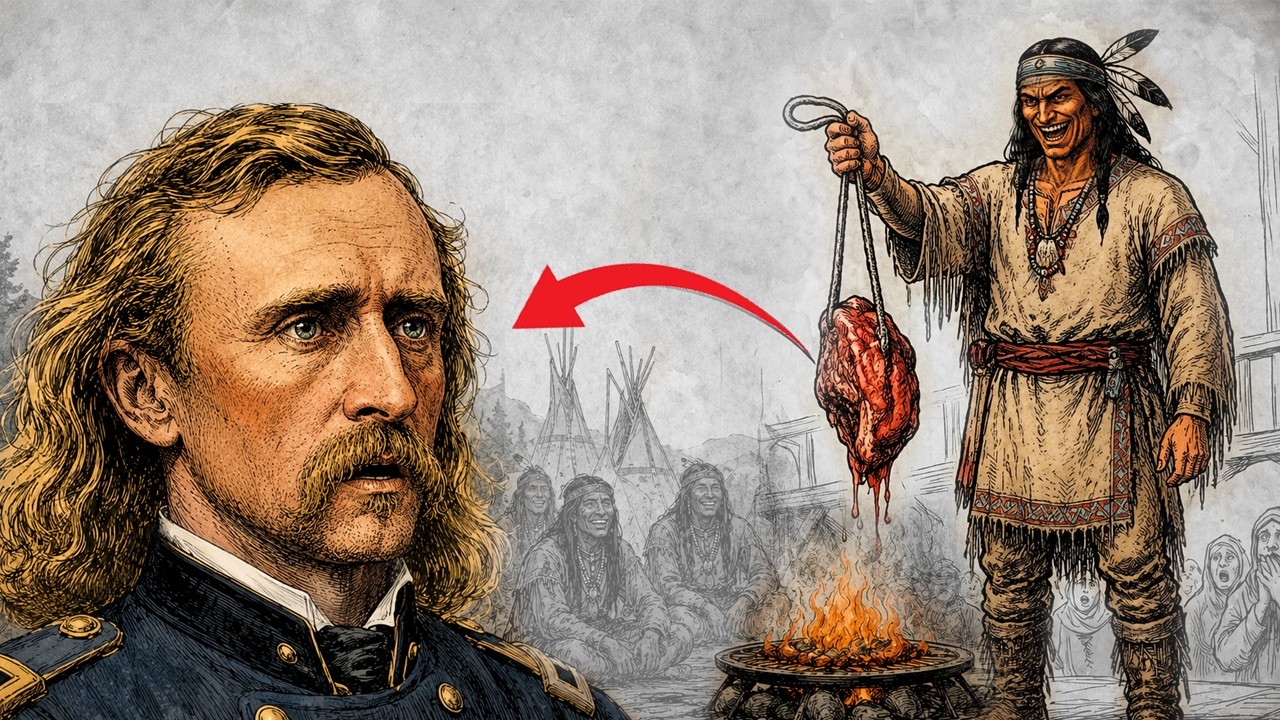
Custer did not ride alone. His younger brother Tom Custer, a two-time Medal of Honor recipient from the Civil War — one of only 19 men to have earned that distinction at the time — was commanding Company C. His youngest brother Boston, a civilian with no military obligation whatsoever, had tagged along as a forage master. His nephew, 18-year-old Autie Reed, was there too.
This was not just an army command. It was a family outing riding into the largest hostile village on the Great Plains.
The battlefield landscape was a series of rolling ridges and steep bluffs on the east side of the Little Bighorn River, cut by deep ravines running perpendicular to the water. The river bottom was flat and wooded. The ridges above were open grassland with gentle swells that concealed movement.
A man could disappear behind a fold in the ground and reappear 50 yards closer without ever being seen. For cavalry, the ground was treacherous. Horses could not maintain a charge across the ravines, and the draws provided perfect cover for warriors moving on foot.
The morning of June 25, 1876, Custer's Crow and Arikara scouts climbed to a high point called the Crow's Nest. What they saw in the valley below stopped them cold.
The Little Bighorn bottom was hazed with smoke from thousands of cooking fires. The pony herds were so vast they looked like moving carpets of brown and black on the floodplain.
Scout Bloody Knife turned to Custer and gestured, later interpreted as a warning that there were enough Sioux to keep them fighting for two or three days. Custer looked. He did not see what the scouts saw, or perhaps he did and chose to disbelieve it.
His orders from General Terry were to continue south and wait for a coordinating force before attacking. But Custer had learned that his column had been spotted by Lakota hunting parties. He believed, or told himself, that the village would scatter if he waited. The element of surprise was slipping away.
And so George Armstrong Custer made the decision that would kill him and every man who followed him that afternoon. He would attack immediately. He would split the regiment into three battalions and strike the village from multiple directions.
He would not wait for Terry. He would not consolidate his force. He would ride forward with five companies, roughly 210 men, directly at a village containing somewhere around 2,000 warriors.
Whether this was arrogance, ambition, or a genuine tactical calculation based on incomplete intelligence, historians have debated for 150 years. What is beyond debate is the outcome.
Custer had been offered Gatling guns before the campaign. He declined. They would slow him down. He had been offered additional cavalry companies from the 2nd Cavalry. He declined those too. He had scouts standing in front of him telling him the village was enormous. He attacked anyway.
The sun was climbing toward noon. The temperature would reach the high 90s. The men of the 7th Cavalry had been in the saddle since before dawn. They were tired, thirsty, and riding on hardtack and creek water. They could not see the village yet. They could smell it — the faint wood smoke tang of thousands of cooking fires drifting up the draws.
Custer split the regiment at the divide above the Little Bighorn around noon. Major Reno took companies A, G, and M, approximately 140 men, with orders to cross the river and charge the village from the south.
Captain Benteen took companies D, H, and K, approximately 125 men, and was sent on a wide sweep to the left, to the south and west, to prevent any escape and to scout the bluffs. Captain McDougall took Company B to guard the pack train, which carried the reserve ammunition.
The remaining five companies — C, E, F, I, and L, roughly 210 men — stayed with Custer. He would advance along the bluffs above the river and strike the village from the north.
The regiment would never be whole again.
Before the campaign began, Custer had been offered a battery of Gatling guns, hand-cranked multi-barrel weapons capable of firing hundreds of rounds per minute. He had turned them down. The guns were heavy. They required mule teams. They would slow the march.
Speed, Custer believed, was everything. He was probably right about the speed. He was catastrophically wrong about what waited at the end of the ride.
Benteen's orders were vague: scout the bluffs to the left, prevent escape, and then rejoin the main column. Benteen, the captain who had once called Custer insane in writing, rode south and west with his three companies. He found nothing. No escaping warriors, no fleeing families — just empty ravines and dry hills.
As Custer's column moved north along the bluffs, the scouts continued to signal alarm. The Arikara and Crow scouts had lived their entire lives reading this landscape. They knew what the signs meant — the trail widths, the pony herd sizes, the density of the lodgepole drag marks.
Scout Mitch Boyer, a mixed-blood interpreter riding with Custer, reportedly told another officer, "If we go in there, we will never come out." Another scout pointed at the valley below and said simply, "Too many."
Bloody Knife reportedly gestured that there were enough Sioux to keep them fighting for two or three days. Custer pressed on.
Every experienced scout on the column was saying the same thing: too many, too big, do not go. And the commander — the man who had been a general at 25, who had survived dozens of engagements in the Civil War, who understood cavalry warfare better than almost anyone alive — ignored every one of them.
At approximately 3:00 in the afternoon, Major Reno led his three companies across the Little Bighorn River at a shallow ford and formed a skirmish line on the valley floor. Ahead of him, the southern edge of the village stretched into the cottonwoods.
Reno's men began their charge. For a few minutes, it looked like a standard cavalry assault, mounted troopers advancing in line, carbines ready. Then the village erupted.
Hundreds of warriors poured out from the lodges — not in panic, not in flight. They came out armed and organized with a speed that stunned the soldiers. Northern Cheyenne warrior Wooden Leg later described the village's reaction. The women and children screamed and ran for the far bank, but the warriors were mounted and riding within minutes.
The Hunkpapa camp at the south end, Sitting Bull's people, was the first hit, and the fury of its response was driven by something personal. Gall, a Hunkpapa Lakota war leader, had lost two of his wives and three of his children in the first volleys of Reno's attack.
Bullets tore through lodges. Women fell. Children fell. Gall did not grieve in that moment. Grief would come later. In that moment, there was only rage. He rallied the Hunkpapa warriors and drove straight at Reno's skirmish line with a force that eyewitnesses on both sides described as overwhelming.
Meanwhile, Custer's five companies continued north along the bluffs. At some point — the exact timing is debated — Custer sent his trumpeter, an Italian immigrant named Giovanni Martini, Anglicized as John Martin, riding back with a hastily scrawled message for Benteen.
The message, written by Custer's adjutant, Lieutenant William Cook, read: "Come on. Big village. Be quick. Bring packs. P.S. Bring packs." The urgency was unmistakable. The repeated word "packs" — ammunition packs — suggests near panic.
Martini was the last person to see Custer's command alive.
That message is the last written communication from a column of 210 men. Every word after this point comes from the other side — from the warriors who killed them, from the scouts who warned them, from the men who buried them. Custer's command had passed beyond the reach of history's written record and into the silence of the dead.
And here is where the story most people know — the heroic last stand, the ring of brave soldiers fighting to the end — begins to fall apart, because the archaeology tells a different story. Not a last stand. A last collapse.
Reno's skirmish line held for perhaps 20 minutes, perhaps less. The troopers were dismounted, every fourth man holding horses, which meant only three quarters of the command was actually shooting. The Springfield Model 1873 carbines cracked across the valley floor, but the warriors kept coming — from the front, from the flanks, from the tall grass along the river, where men materialized like they had risen from the earth itself.
Reno gave the order to fall back into the timber, a stand of cottonwoods along the river bend. The retreat was orderly at first, then it was not. In the timber, visibility dropped to yards. Horses screamed.

The Arikara scout Bloody Knife, riding next to Reno, took a round through the skull. His blood sprayed across Reno's face and uniform. Something broke in Reno at that moment. He ordered a retreat to the bluffs across the river.
But the retreat was not a retreat. It was a rout. The soldiers burst from the timber in a disorganized mass, racing for the water. The Little Bighorn at the crossing point was chest deep on a horse. Men fell into the current. Horses went down. Warriors lined the banks and fired into the churning mass of men and animals.
The men dying in this river did not know it yet, but they were the lucky ones. They were the ones whose deaths were witnessed, whose stories survive.
Four miles to the north, Custer's 210 men were riding toward something no one on this side of the river would see until it was over.
Reno lost approximately 40 men in the valley fight and the river crossing. The survivors clawed up the bluffs on the east side and dug in. They were shattered, disorganized, and leaderless in all but name.
Benteen arrived with his three companies. He had received the message — the last words anyone received from Custer's column. He looked at the chaos on the bluffs, the wounded men, the panicked horses, and made a decision. He stayed with Reno. He did not ride north to find Custer.
Whether Benteen's decision was prudent or damning, whether he saved his men or abandoned his commander, remains one of the great unanswerable questions of the battle. The 1879 court of inquiry cleared him. History has been less generous.
While Reno's command died in the valley, Custer's five companies rode north along the bluffs above the Little Bighorn. From the high ground, Custer could see portions of the village below — the sheer, sprawling enormity of it, lodge after lodge, stretching along the river for miles.
What he could not see clearly from this angle and distance was the number of warriors already moving to intercept him. The vision Sitting Bull had seen — soldiers falling like grasshoppers — was about to be fulfilled.
Custer's route took him along the ridgeline above the river. At some point, he attempted to find a ford, a crossing point where he could charge down into the village from the north, catching the warriors between his force and Reno's.
This was the tactical logic of the fatal division of the regiment — a hammer and anvil attack striking from two directions simultaneously. But Reno's hammer had already shattered, and the anvil, the village that stretched for miles, was not static. It was moving.
Hundreds, then a thousand or more warriors, were crossing the river and flowing up the ravines toward Custer's position. They did not move in a single mass. They moved through the landscape using the draws and coulees and folds in the ground as cover, emerging on Custer's flanks and rear.
The 7th Cavalry's Springfield Model 1873 carbine was a single-shot breech-loading weapon. After each round, the trooper had to manually extract the spent casing and insert a new cartridge. The copper casings, when heated by rapid fire, expanded inside the breech and jammed.
Archaeological excavation of the battlefield has recovered dozens of casings with knife marks gouged into the rim — evidence that soldiers were desperately using pocket knives to pry stuck casings from their weapons.
Meanwhile, many of the warriors they faced carried Henry and Winchester repeating rifles, lever-action weapons capable of firing 15 rounds without reloading. Some of the Lakota and Cheyenne warriors had more firepower than the United States Army soldiers sent to subdue them.
The soldiers had single-shot carbines that jammed in the heat. The warriors they were fighting had repeating rifles. The technological advantage that the Army assumed it held — the assumption underlying the entire campaign — was, on this field, completely reversed.
Crazy Horse, the man with lightning on his face, led a force from the north, swinging wide and coming up behind Custer's line. The trap was closing.
The first position to fall was the right flank. Companies L and C, under Lieutenant James Calhoun, Custer's brother-in-law, and Tom Custer, were holding a skirmish line along a ridge now called Calhoun Hill.
The archaeological evidence tells a story far removed from the heroic myth. The cartridge casings are clustered tightly at first. The men were in a defensive line. Then the casings scatter abruptly. The line did not bend. It broke.
When a cavalry skirmish line breaks, the result is not a fighting retreat. It is a stampede. Men run. Horses bolt. Unit cohesion — the only thing keeping 210 men alive against a surrounding force — dissolves. And once it dissolves, it cannot be rebuilt.
There was no ring of brave soldiers standing shoulder to shoulder firing in volleys. There was a line of men that held for a few minutes and then shattered like glass. And when it shattered, what followed was not a battle. It was a hunt.
The survivors of the right flank fell back, not in order, but in a cascading rout toward a rise now called Last Stand Hill. But the archaeology suggests that the last stand was nothing of the kind.
The bodies found on the hill were not arranged in a defensive perimeter. They were scattered. Some were found in small clusters of two or three. Some were alone. The jammed carbines, now useless, lay beside men who had been killed at close range by arrows, clubs, hatchets, and lances.
The fight that may have lasted less than 30 minutes was, in its final minutes, hand-to-hand.
Captain Myles Keogh, the Irish-born officer who had fought for the Papal States in Italy before joining the Union Army, who wore a Catholic Agnus Dei medal around his neck, died somewhere on the slope between Calhoun Hill and Last Stand Hill. His body was found with multiple wounds.
But his horse, a claybank gelding named Comanche, was found standing among the dead. Seven bullets and arrows. Still standing. Comanche was the only living thing found on the Custer battlefield.
The horse was nursed back to health, officially retired from service, and never ridden again. For the rest of his life, he was led at the head of 7th Cavalry formations with an empty saddle.
The 210 men who had ridden into the valley that morning were gone, every one of them. There were no American survivors from Custer's immediate command. Not one.
But the killing did not end on the hill. Below Last Stand Hill, cutting toward the river, lies a steep ravine — a gash in the earth now known simply as Deep Ravine.
When the burial details arrived two days later, they found 28 bodies in this ravine, clustered together. These men had been running. The ravine pointed toward the river, toward water, toward escape, toward the far bank where, if they could cross, they might find Reno and Benteen's position.
They never made it. Warriors lined the rim of the ravine and fired downward. The men at the bottom had nowhere to go. The walls were too steep to climb. The warriors above them were silhouettes against the sky.
Twenty-eight men died in that ravine. Some historians believe they were the last of Custer's command to die — that the last stand was not on the hill at all, but in this anonymous cut in the earth, as a handful of panicked soldiers tried to reach a river they could hear but never see.
By late afternoon on June 25, the firing stopped. The ridgeline went quiet. Dust and gunsmoke drifted over the grass where Custer's command had been. There was now only stillness and the sound of women and children coming up from the village.
The Lakota and Cheyenne women, children, and elderly moved onto the battlefield. What they did there to the bodies of the soldiers is the part of Little Bighorn that has been sanitized, minimized, or ignored for nearly 150 years.
Four miles south on the bluffs above the river, Reno and Benteen's men could hear the distant sounds — the shots, then the silence. They did not know what had happened. They would not know for two days.
They dug rifle pits with cups, knives, and bare hands. Warriors surrounded them. Sniping continued through the night and into the next day. They were low on water. Men volunteered to crawl to the river under fire, filling canteens at the cost of their lives.
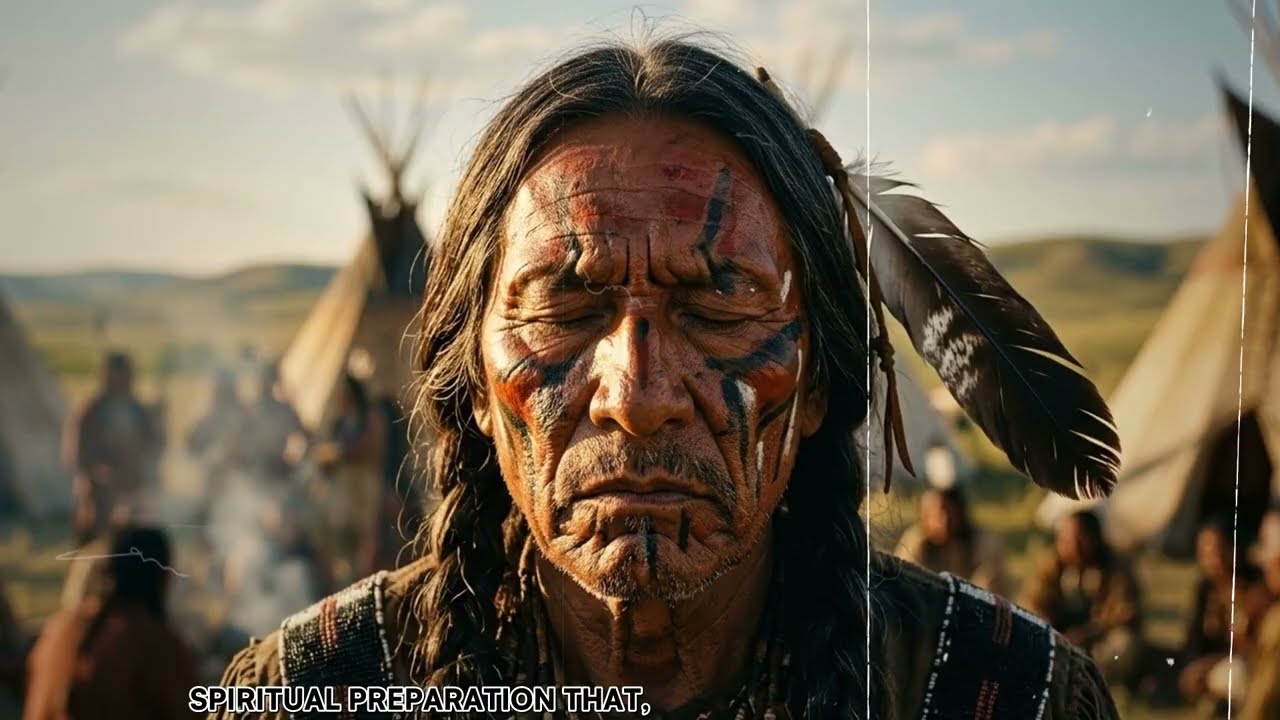
The siege of Reno Hill lasted until June 26, when the massive village — all 6,000 to 8,000 people with their pony herds and lodges and everything they owned — simply packed up and moved south, disappearing into the landscape like a tide pulling out.
On June 27, the relief column under General Alfred Terry and Colonel John Gibbon arrived. Lieutenant James Bradley, leading the advanced scouts, was the first to reach the field. He counted 197 bodies on and around Last Stand Hill in his initial sweep.
Official accounts describe dead, naked, and mutilated bodies scattered across the ridges east of the river. What he and the men who followed him found was not a battlefield. It was an abattoir.
The final count: 268 United States soldiers, scouts, and attached personnel dead. Fifty-five severely wounded. Among the dead were 16 officers, 242 enlisted men and scouts, and at least six civilian employees and family members who had accompanied the column.
On the native side, approximately 50 dead — a figure almost certainly undercounted, since the Lakota and Cheyenne carried many of their dead from the field. The victors lost 50. The vanquished lost everything.
The dead had been stripped. Everybody on the Custer field had been stripped naked, clothing and equipment taken. This was, by Plains warfare custom, standard. The dead soldier's possessions — his boots, his uniform, his weapons, his cartridge belt — were taken as spoils.
But what was done beyond the stripping was something else entirely. The bodies had been mutilated, scalps taken, the skin and hair removed from the skull. But scalping was only the beginning.
Limbs had been severed. Fingers cut away. Skulls struck with stone war clubs until no feature remained. Eyes punctured. Faces destroyed beyond any recognition. Some bodies had been opened, organs removed and cast aside. Some had been desecrated in ways that the burial details could barely bring themselves to record. Arrows had been driven into the dead.
Of the more than 200 men, only 56 could be identified. If you had served with these men for years, eaten with them, slept beside them on the march, you still would not recognize them.
This was not cruelty for its own sake. In Lakota and Cheyenne spiritual belief, the body a person carried in this life was the body they carried into the next world. A man killed in battle who was left whole could fight again in the afterlife.
Mutilation was spiritual warfare. It was disarmament of the enemy's soul. Cut off a man's hands and he cannot hold a weapon in the next world. Crush his face and he cannot see. Sever his legs and he cannot walk.
This was not mindless violence. It was theology. And the fury behind it was not abstract. It was personal. These soldiers had attacked a village full of women and children. Reno's charge had killed Gall's wives and children.
The mutilation was revenge, yes, but it was also protection — ensuring that these men could never threaten Lakota families again, in this world or the next.
Tom Custer, the two-time Medal of Honor recipient, was found on the battlefield destroyed so extensively that he was identified only by a tattoo of the goddess of liberty and the initials TWC on his arm. The man with two Medals of Honor, identified by the ink on his arm because his face no longer existed.
Of the more than 200 dead, the rest were buried as unknowns, interred in shallow graves exactly where they fell.
Custer himself was found near the top of Last Stand Hill, lying across two other soldiers. He had been stripped naked. But he had not been mutilated. He had not been scalped. His body bore two bullet wounds — one in the left temple, one in the left side of the chest. Either wound would have been fatal.
Some historians interpret the lack of mutilation as a sign of respect from warriors who recognized him. Others argue the Lakota did not know who he was, as Custer had cut his famous long hair short before the campaign. Still others suggest that his body was untouched because someone, perhaps a Cheyenne woman, intervened, claiming his spirit.
And then there is the story that did not surface publicly until 2005. A Northern Cheyenne oral tradition, passed down through generations, holds that the person who struck Custer down was a woman named Buffalo Calf Road Woman.
According to this account, she rode onto the field and struck Custer with a club. Eight days earlier, at the Battle of the Rosebud, she had ridden into gunfire to rescue her unhorsed brother — an act so remarkable that the Cheyenne named that battle after her. The Cheyenne name for the Little Bighorn battle itself translates roughly to "the battle where the girl saved her brother."
Whether this account is historically verifiable in the Western evidentiary sense, historians continue to debate. But for the Northern Cheyenne, it has never been in doubt.
The full truth of what happened after the battle depends entirely on where you stand. To the men who found the bodies, it was an atrocity beyond comprehension. To the Lakota and Cheyenne who performed it, it was a sacred duty — the disarmament of an enemy who had attacked their families. Both of these things are true.
The burial parties worked through June 27 and 28. They had no coffins. They had few shovels. The dead were buried in shallow graves, sometimes just inches deep, exactly where they had fallen, with small wooden stakes driven into the ground as markers.
Within months, wind and rain had exposed many of the bodies. The battlefield remained a grim and neglected place for years, bones and fragments of uniform visible on the surface.
All three Custer brothers — George, Tom, and Boston — were dead on the same ridge. Their nephew, 18-year-old Autie Reed, was dead among them.
The news of Little Bighorn reached the East during the nation's centennial celebration. On July 4, 1876, the 100th birthday of the United States, Americans were celebrating in Philadelphia when the telegraph brought the report. The shock was electric.
A golden-haired cavalry hero and his entire command wiped out by the people the government had declared conquered. It was unthinkable. And so the country did what it always does with unthinkable things. It turned Custer into a martyr and the Lakota into monsters.
For a century, the dominant narrative was simple: brave soldiers, savage Indians, a noble last stand against overwhelming odds. Paintings showed Custer standing on the hill, saber in hand, golden hair flowing, surrounded by his men in a tight defensive ring.
None of it was true. Custer did not carry a saber that day. His hair was cut short. The ring was a scattered field of dead. The paintings were propaganda. And they worked.
Marcus Reno, the man who had retreated from the valley, was investigated by a court of inquiry in 1879. He was officially exonerated, but his reputation never recovered. He descended into alcoholism, was court-martialed again for unrelated offenses, and died in obscurity. He was buried in an unmarked grave.
Only in 1967 was his body exhumed and reburied with military honors at Custer National Cemetery — the cemetery that overlooks the very battlefield where his career was destroyed.
The battlefield was originally designated the Custer Battlefield National Monument, not the Little Bighorn Battlefield. For more than 100 years, the only markers on the field were white marble stones showing where soldiers fell. There were no markers for the Lakota, none for the Cheyenne, none for the Arapaho.
The people who won the battle were erased from the site of their greatest victory. It was not until 1991 that Congress renamed it the Little Bighorn Battlefield National Monument. And it was not until 2003 — 127 years later — that an Indian memorial was finally added to the site.
The battle changed nothing for the Lakota and Cheyenne in the long term. The victory at the Little Bighorn provoked exactly the response Sitting Bull had feared. The United States Army flooded the Northern Plains with troops. The great village scattered.
Band by band, family by family, the Lakota and Cheyenne were hunted, starved, and forced onto reservations. Sitting Bull fled to Canada. When he returned, he was confined to the Standing Rock Reservation, where he was killed by reservation police in 1890.
Crazy Horse surrendered in 1877 and was killed at Fort Robinson, bayoneted by a guard while reportedly resisting imprisonment. The Black Hills gold that Custer himself had found — the gold that started it all — was never returned to the Lakota.
Go back to that ridge on June 27. The white shapes on the hillside. The smell. The silence. The more than 260 dead, stripped, broken, and scattered across the Montana grass. The hill that may never have been a last stand at all. The woman who may have struck the killing blow. The horse standing alone among the dead with an empty saddle.
That is the truth about Little Bighorn. Not a myth. Not a painting. The truth.