Growing up in Iowa, he was surrounded by duck dogs. Labs and retrievers mostly, doing blind work in the field. Duck hunting was a big part of life there, and several close friends and their fathers kept four or five dogs each.
He was around it, but never fully part of it. What stayed with him was something deeper than most kids would notice. He was awestruck by what the dogs could actually do.
One memory stands out. He had a black lab growing up. Walking that dog in the middle of winter, he watched it air-scent something, trail it for 15 or 20 feet, then snap its head down and dive six inches under the snow. It came up with a half-eaten ketchup packet.
He marveled at something that stupid, and at the capability behind it. That fascination stuck.
He was also drawn to the physical grit of working dogs. They broke ice and entered cold water without hyping out. They ran through thorn bushes and gnarly scrub brush that would stop a person from walking through. And they had personality.
Then came Iraq. A bomb dog saved a group of Marines in one of the areas where he was operating. He calls it the light switch moment. A childhood passion and a career suddenly met.
For the first several years, dogs were strictly a hobby. He was not working with them in the military. Then he became an instructor, and the assignment was co-located with the kennel facility for the West Coast multi-purpose canine program, also known as the SEAL canine program.
He introduced himself. He started doing some training with the team, hanging around, watching, asking questions. He was not involved in an official capacity at first. Eventually he went on a training trip with them through a decoy course, and did other training trips as well.
That led to an offer to become a handler. But by then, other things were in motion. He had already bought his property in Texas. He had planned to get out.
He had also been diagnosed with coccidioidomycosis, or valley fever, a lung disease. He lost 40 percent of his lung capacity. The military tried to medically retire him, or offered to. He found a way to delay it until he could earn a college degree and have both of his children born.
At that point he faced a crossroads. Stay in and become a handler, or stick with the plan to get out and start his own training company.
Two things weighed on him. The first was self-doubt. He was not confident he could physically keep doing the job after being medically flagged for his lung condition, which still exists today. He did not want to be a liability to the guys around him.

The second was a broader calculation. He has generally taken the approach of asking what will give him the most bang for his buck in big life decisions. As rewarding as it would have been to deploy overseas with a dog as a handler, he believed he could make a bigger impact owning a company that trained dozens, hundreds, or thousands of dogs and handlers.
He does not call it a regret. He wishes he had done it at least once. But he notes that if he had become a handler, he probably would have stayed in for the full 20 years instead of 12, and he would not be where he is now.
He got out at the end of 2008. He started his company in the fall of 2009 and has been doing it ever since.
In the early years, the business was hyper-focused on government contracts. Military working dogs, police dogs, and explosive detection dogs. For the first half-dozen years or so, it was almost exclusively geared toward that work.
The Warrior Dog Foundation started out of necessity. A couple of dogs needed to be retired, and they were going to be euthanized if he or others in his position would not take them. He took them.
It was not a planned venture. It grew anyway. The foundation has now taken in hundreds of dogs and has been running for 15 years.

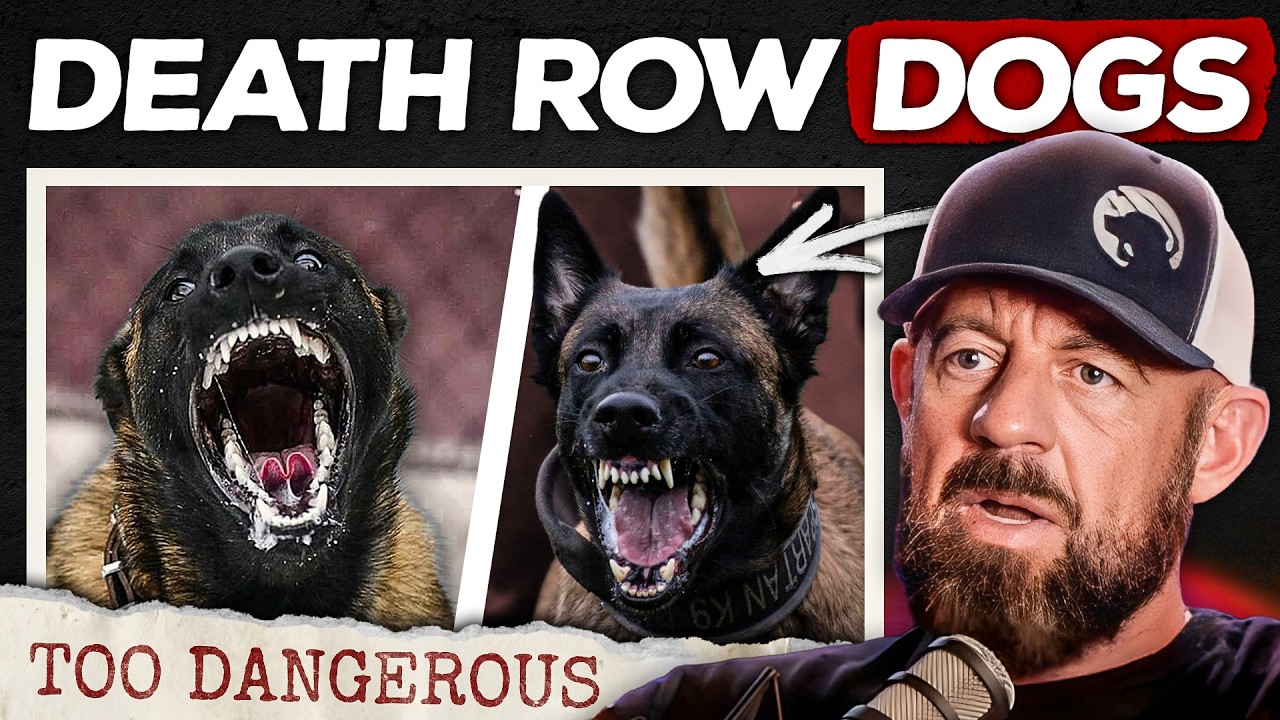
The dogs it takes in are a specific kind. They are dogs that bit people they were not supposed to bite. Their units reached a point where they opted to euthanize rather than keep working through the problems. That is where the foundation steps in.
He describes them as the Hannibal Lecters of the dog world, right out of the gate. Nearly every staff member over the last 15 years, with only a few exceptions, has been bitten. Most have been bitten several times.
These are not minor nips that break the skin. He describes bites that put people in the hospital with 90 stitches. He has been bitten many times himself.
The work is dangerous, and it requires staff from specific backgrounds. This is not a mom-and-pop doggy daycare with flimsy kennel panels. The facility is built like a supermax prison. Everything is epoxy-coated concrete with rebar reinforcement.
The kennel facility has 30 spaces, and they are always full. There is a waiting list of about a dozen dogs at any given time.
The care model is straightforward. In an official capacity, the retired dogs do not have a job. The key, he says, is the same as with people: good nutrition, lots of time outside, sunlight, exercise, physical stimulation, and some form of mental stimulation.
People often say a dog needs a job or gets bored. His view is that mental stimulation is mental stimulation. Humans can rationalize and put a title on having a job. Dogs just need to be mentally satiated. As long as that is accomplished, the dogs are in a good place.
It is still a lot of work. It is tough. But he describes walking a loop around the kennel and seeing 30 sets of eyeballs looking back at him, knowing that if the foundation had not taken them, they would be dead right now.
That, he says, is super rewarding.