On the evening of November 30, 1986, in a house near the ocean in Del Mar, California, a 35-year-old woman picked up a telephone and dialed her mother's number. She said, "This is the time." Then she carried the receiver to the bed where her father lay dying of lung cancer.
He was 69 years old. He had not eaten in days. He could barely speak. She held the phone to his ear because he was too weak to hold it himself.
Through the line came the voice of the woman he had married 46 years earlier to the day. It was their wedding anniversary. Neither of them had planned it that way.
His ex-wife said, "I love you." Again and again, her voice breaking. And Desi Arnaz, who had once filled soundstages and boardrooms and living rooms across America with the sheer volume of his personality, managed to murmur in reply, "I love you, too, honey."
Two days later, he was dead.
The public knew him as Ricky Ricardo, the charming, excitable Cuban husband on the most beloved sitcom in television history. They did not know the man in that bed. They did not know what it had cost him to build the empire that made their Monday nights possible, or what the empire had taken from him in return.
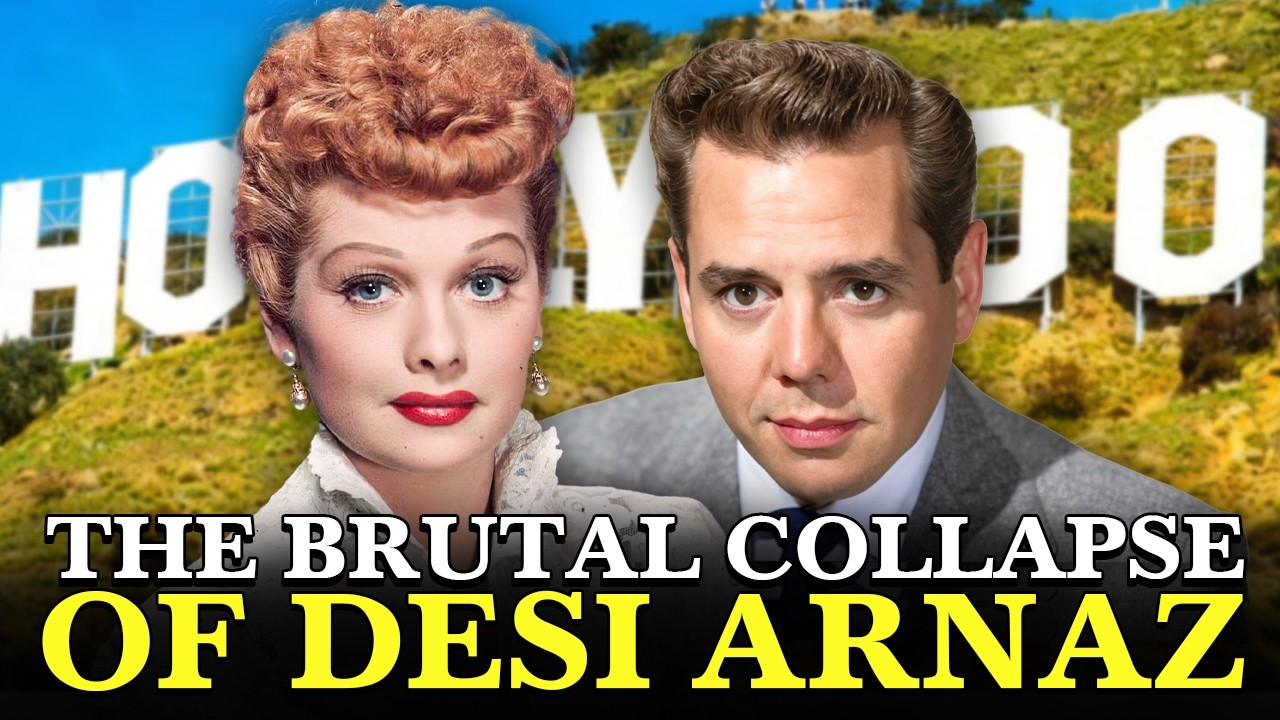
This is the story of Desi Arnaz, the exiled son who reinvented American television, married its biggest star, built a studio that changed the industry, and then lost all of it: the marriage, the company, the health, and the place inside the story he had helped create. It spans 46 years, two marriages, two children, and a country that loved the performance and forgot the man behind it.
To understand how it ended, with a dying man, a daughter's hand on the receiver, and an ex-wife's voice cracking across the line, you have to go back to where the wound began. Not in Hollywood, not on a soundstage, but in Cuba, in a world that no longer exists.
Desiderio Alberto Arnaz y de Acha III was born on March 2, 1917, in Santiago de Cuba, into a family that did not know what it meant to be small. His father had served as mayor of Santiago and sat in Cuba's House of Representatives.
The Arnaz family owned property, held influence, and moved through the social and political life of the city with the kind of ease that teaches a child, before he can articulate it, that he belongs at the center of things. There were ranches. There was standing. There was the particular confidence of a boy raised inside a name that opened doors without his having to knock.
That confidence mattered not because it lasted, but because it did not.
In 1933, political upheaval reshaped Cuba's government and took the Arnaz family with it. The revolution stripped them of property, position, and the entire social architecture that had defined their lives. The family fled to Miami with almost nothing.
The boy who had been raised expecting a seat at the table was suddenly in South Florida, 16 years old, broke, and cleaning canary cages for a living. That image matters not because it makes a charming origin story, but because it explains the man who came after.
Desi Arnaz carried two things out of that exile, and he carried them for the rest of his life: the memory of what it felt like to have standing, and the terror of having it ripped away overnight. That combination produced a particular kind of ambition. He was not building toward something. He was rebuilding against something.
The distance between those two drives would define every choice he made, every empire he constructed, and every relationship he eventually broke.
In Miami, he hustled. He learned English. He cleaned bird cages, drove taxis, and worked whatever was available to a teenager with no connections and a last name that meant nothing in Florida. Then he found the thing that would carry him out of poverty and into the center of American life: music.
He discovered that his face, his energy, and his ability to walk into a room and make people believe the night had just gotten better could become currency in a country that was beginning to consume Latin rhythm as popular entertainment. The conga drum was his passport. The grin was his visa.
By his late teens, he was performing professionally. By his early 20s, he had made his way to New York and then to Hollywood, where the entertainment industry recognized that a handsome Cuban bandleader with impeccable timing and an accent he knew how to weaponize for comedy could sell, and sell big.
But the public persona concealed something. He was not merely charming. He was strategic. He was charming in a way that made people underestimate him, funny enough to seem harmless and sharp enough to be formidable in a negotiation.
Co-workers and collaborators would later describe him as instinctive and fearless, the kind of man who asked how something could be done rather than why it could not. His daughter would use nearly identical language decades later. It was the trait that would build a television empire. It was also the trait that would refuse help until help arrived far too late.
Lucille Ball came from an entirely different version of the American story. Born on August 6, 1911, in Jamestown, New York, she was five years older than Desi and had been shaped by a fundamentally different kind of loss.
Not exile from privilege, but the grinding uncertainty of a working-class childhood marked by her father's early death, family instability, and the dawning realization that if she was going to matter, she would have to make it happen alone.
She modeled. She did chorus work. She took bit parts. She survived the long, unglamorous apprenticeship of a studio contract player who had talent and discipline, but not yet the vehicle to prove it.
By 1940, she had spent years inside the Hollywood machine, and it had taught her exactly two things: the industry would use her for as long as she was useful, and the only protection against being discarded was control. She wanted artistic authority with a ferocity that everyone around her recognized. She wanted domestic certainty with equal urgency. And she wanted a home life she could trust.
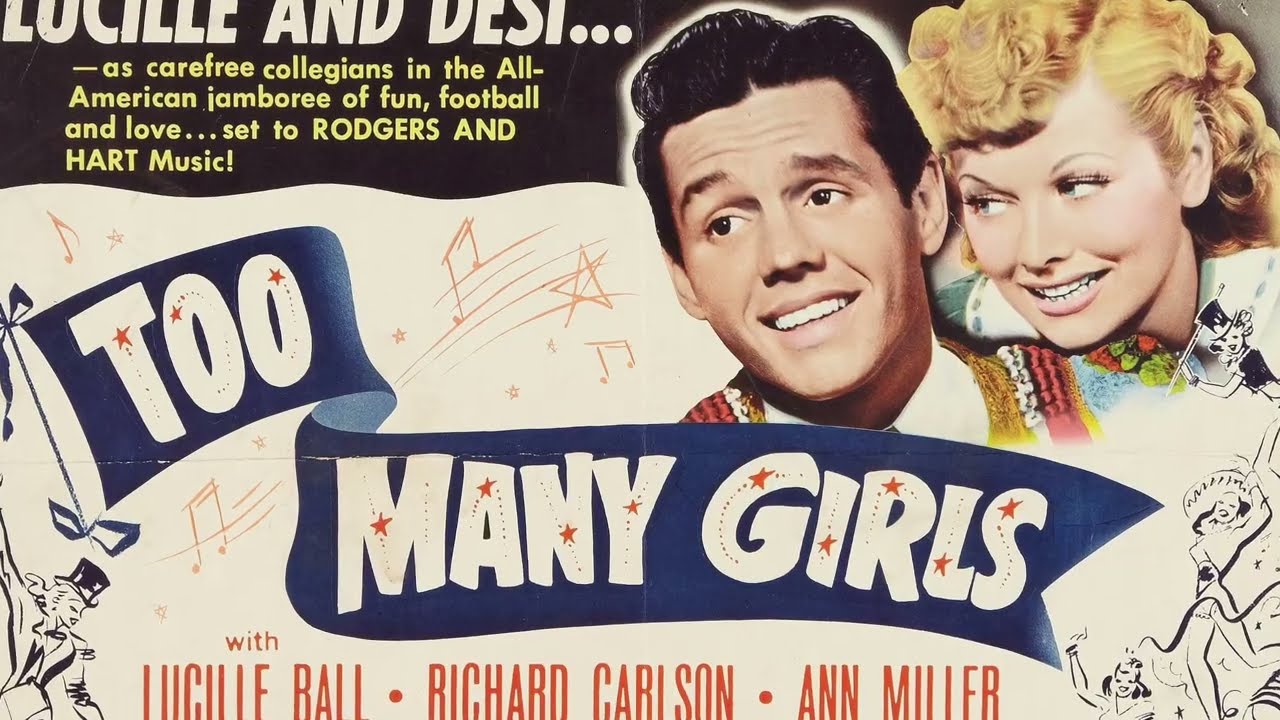
She met Desi on the set of a film called "Too Many Girls" in 1940. The attraction was immediate, physical, and by several accounts so intense that it overrode everything the people closest to them tried to say about compatibility.
They married on November 30, 1940, in a ceremony that was fast and theatrical and entirely characteristic of the relationship that followed: impulsive, passionate, and built on a foundation that almost everyone involved suspected would not hold.
What they had in common was ambition and chemistry. What they did not have in common was temperament, rhythm, or any shared understanding of what fidelity required.
Their daughter, Lucie Arnaz, would later offer the sentence that governs the entire story that follows: her parents loved each other their whole lives, even though they could never find a way to live together. That paradox, permanent love and permanent inability to coexist, became the emotional architecture of everything that came next.
For most of the 1940s, the marriage ran on a cycle that would become its defining pattern: separation, longing, suspicion, rupture, reconciliation, and then the whole sequence again. Desi toured with his band, Lucy worked in Hollywood, and he was on the road for months at a time playing clubs and theaters across the country.
The distance bred exactly the kind of insecurity that Lucy could not tolerate and the kind of freedom that Desi could not resist. By the mid-1940s, Lucy had sought divorce at least once and then pulled back. The exact chronology of that near split remains partly muddled, but the larger truth is clean: long before America met Ricky and Lucy Ricardo, the real marriage had already cracked, been repaired, and cracked again.
The pattern was not an aberration. It was the foundation on which the most famous marriage in television would be built.
What changed everything was a medium that barely existed yet. By the late 1940s, CBS wanted Lucille Ball for a television sitcom. She agreed on one condition the network did not want to hear: she insisted that Desi play her husband on the show.
CBS resisted. The objection was partly commercial and partly cultural, and given the era, entirely predictable. A Cuban bandleader opposite an American redhead was not what the network had envisioned for its Monday night domestic comedy lineup. Interracial marriages on screen were virtually nonexistent in mainstream entertainment. The executives wanted a more conventional leading man.
Lucy refused. In that refusal you can hear the first evidence of what would later become one of the most consequential creative partnerships in American media. She was not willing to build a career on a fiction that excluded the man she had married, however imperfect their real arrangement might have been.
The compromise was a proving ground. Lucy and Desi took their act on the road, touring a live vaudeville-style show across the country to demonstrate to audiences, sponsors, and the skeptical network that America would accept a Cuban husband in their living rooms.
The tour worked. Audiences laughed. The chemistry that had always existed between them in private translated with surprising force to the stage. Sponsors committed. And out of that pressure, out of a network's doubt and a married couple's insistence, came Desilu Productions, founded in 1950.
"I Love Lucy" premiered on October 15, 1951, and proceeded to become one of the foundational texts of American culture. The success was not gradual. It was immediate, enormous, and in ways that would take decades to become fully visible, irreversible.
Within a year, the show was the most watched program in the country, its audience growing week after week. Public memory tends to flatten that success into Lucy's story, her timing, her physical comedy, her genius for the pratfall, while compressing Desi into the charming husband who played the straight man. The truth was almost the reverse.
Lucy herself later acknowledged it plainly. People assumed she was calling the shots, but once Desilu expanded, they realized Desi was the brains.
He was the one who pushed the now-standard solution of filming a sitcom in Hollywood on 35 mm film, in front of a live studio audience, using a three-camera technique that had never been applied to situation comedy before. The technical language sounds dry. In practice, it remade the economics of television.
It meant the shows could be preserved. It meant syndication. It meant that a single season of television could generate revenue not just for one broadcast, but for decades. It meant that Desi Arnaz, the exiled Cuban teenager who had cleaned canary cages in Miami, was not merely a performer married to a star. He was an executive quietly standardizing the way the entire American entertainment industry would operate for the next half century.
The man who once sold himself to America as the lovable, excitable Cuban in people's living rooms was the next morning negotiating with network presidents as a studio head.
The empire grew with a speed that even its founders could not have anticipated. Within two years of the show's premiere, Ball and Arnaz were being marketed as TV's first family. By April 1953, that phrase had appeared in major publications as if it were a statement of civic fact rather than publicity copy.
Their fictional apartment on the Upper East Side of Manhattan became one of the most recognized addresses in America. The show's central chemistry, Desi's bluster, Lucy's physicality, the way every marital conflict resolved into affection, became the emotional template for what a television marriage was supposed to look like.
In a country settling into postwar domesticity, the Ricardos offered glamorous, reassuring proof that married life could be funny and survivable and endlessly entertaining. That Ricky Ricardo was a Cuban immigrant was itself a quiet revolution. He was intelligent, professional, dignified in his frustration, and permitted to be a fully dimensional leading man on a major American network in an era when Latino characters were nearly always reduced to caricature.
Inside the family, the doubling of private life and public product became almost eerie. When Lucy became pregnant with their first child, the pregnancy was written into the show, a decision that was itself controversial since the word "pregnant" was considered too explicit for network broadcasts.
Lucie Arnaz was born in 1951, the year the show premiered, and her infancy unfolded inside the most watched household in America. Desi Arnaz Jr. arrived on January 19, 1953, and his birth was synchronized with the delivery of Lucy Ricardo's baby in an episode that drew more American viewers than Dwight Eisenhower's presidential inauguration the following day.
The family's milestones were never private. Even parenthood was a product. Even the nursery was a set piece inside someone else's business model. And because the show was filmed on 35 mm rather than broadcast live and lost, those milestones would be preserved permanently, replayed, syndicated, sold.
For a period in the early to mid-1950s, it worked, or at least the working parts were visible enough to sustain the illusion. It was a kind of managed spectacle: magazine covers, studio publicity shots, children posed between their parents with the casual perfection of a lifestyle advertisement.
Behind the photographs, the household ran on late-night rehearsals, production schedules that consumed entire weeks, and the constant negotiation between what the family needed and what the network demanded. Lucy was the performance engine. Desi was the managerial engine. She made the show brilliant. He made the show possible.
By the mid-1950s, Desilu had expanded far beyond one show. The company occupied the old RKO studios in Hollywood. It employed hundreds. It produced a growing slate of programming, and Desi, restless, improvisational, incapable of sitting still, was at the center of all of it.
By the end of the decade, Desilu had become the largest independent television production operation in the world. The Cuban teenager who had arrived in Miami with nothing now ran the biggest shop in the biggest new medium on the planet.
And the empire kept demanding more. Lucy had wanted television partly so that Desi would stop touring and stay closer to home. Instead, success made him indispensable in a way that multiplied his obligations rather than reducing them.
He was home more often technically, but he was also working longer hours, drinking more, carrying more institutional weight, and disappearing into the machinery of an empire that consumed his energy from morning until long past dark. The thing that was supposed to stabilize the marriage, the show, the company, the shared creative life, had become the machine accelerating the damage.
Behind the machine, the marriage was corroding in ways the public record only partly captured. The womanizing had been present from the beginning, but success amplified it into something more reckless and more visible.
Multiple accounts describe Desi's infidelities not as isolated lapses but as a chronic pattern, persistent, unapologetic, and eventually impossible for the people around them to ignore. At the height of the show's dominance, gossip columns linked him to prostitutes, and the scandal threatened briefly to tear through the public image the entire enterprise depended upon.
It did not, partly because the celebrity apparatus of the 1950s was built to absorb and suppress exactly this kind of damage, and partly because "I Love Lucy" was simply too valuable to the network, the sponsors, and the whole structure of postwar television for the private truth to interfere with the product.
The gossip press played its own corrosive role. It turned private betrayal into entertainment, printed just enough to wound without printing enough to force a reckoning, and in doing so kept the Arnaz marriage trapped in a cycle where the humiliation was public but the resolution was expected to remain private.
Lucy knew. She had known for years. The marriage that America watched every Monday night, the squabbling that always ended in a kiss, the exasperation that always gave way to tenderness, was being performed by two people whose real relationship had long since stopped resembling the fiction.
She wanted loyalty. She received charm, then betrayal, then charm again, then another betrayal. The cycle that had defined the 1940s did not disappear when fame arrived. It intensified, because now the stakes were not merely personal. They were institutional.
The original run of "I Love Lucy" ended in 1957, but the Lucy-Desi Comedy Hour specials continued through the end of the decade, and with them came the professional obligation to keep performing the marriage in front of an audience that still believed in it.
Behind that obligation, the drinking worsened. The arguments grew more frequent and harder to recover from. There were nights when the distance between what had been filmed that day and what was happening inside the house afterward must have felt like two entirely separate realities occupying the same building, the same bed, the same famous names.
Desi, who had always used exuberance and momentum to outrun his damage, was running out of distance. Lucy, who had spent her entire adult life trying to build something she could control, was reaching the limit of what discipline alone could hold together.
On March 3, 1960, some sources place it a day later on March 4, Lucille Ball filed for divorce. She was 48 years old. Desi had just turned 43. The filing came immediately after his birthday, a timing that carried its own cruel poetry.
Their daughter Lucie was eight. Their son Desi Jr. was seven. The filing shattered the central public illusion of their era. America's model television marriage was formally and irrevocably coming apart.
Lucy would later describe the real marriage as a nightmare, nothing like what viewers saw on television. That word names the distance the empire had been built to conceal: the gap between what was performed every week for millions and what was endured every day inside the walls of a home that doubled as a brand.
For Lucy, the divorce was necessity. It was the final acknowledgment that rescue was no longer possible, that loyalty had been repaid with humiliation too many times, that she had spent years managing a crisis that would never resolve as long as she remained inside it.
For Desi, it was closer to demolition. He was not merely losing a wife. He was losing the premise on which his stardom, his relevance, and his entire American identity had been constructed. Without Lucy, there was no Ricky. Without the marriage, there was no Desilu, not as the public understood it, not as the story made sense.
The exiled Cuban who had rebuilt himself from nothing was watching the architecture collapse again. And this time, the loss was not imposed by a foreign revolution. It was the consequence of choices he had made inside the life he had fought to build.
For Lucie, eight, and Desi Jr., seven, there was only the bewilderment of children who had grown up inside a household where the camera and the kitchen table had never been fully separated. They were losing the daily structure of their world, inside a family where love and performance had been so thoroughly braided together that even the children could not always tell where one ended and the other began.
The divorce was finalized. The headlines landed. The public absorbed the shock and moved on. But the marriage was over, and Desi had not yet left the studio.
For two more years, he continued to walk the corridors of Desilu, to sit in the offices, to occupy the empire that he and Lucy had built together, an empire whose emotional foundation had just been demolished beneath him. The brand persisted. The name on the building persisted. The infrastructure persisted. What had vanished was the marriage that had been the reason any of it existed in the first place.
Desi Arnaz was still inside the house he built. He just no longer belonged there.
In 1962, Desi Arnaz sold his half-interest in Desilu to Lucille Ball and walked away from the company he had co-founded 12 years earlier. The transaction was financial in form and surgical in effect. Lucy became the sole owner and, in doing so, the first woman to run a major Hollywood television studio.
Desi became something harder to define: the displaced founder, the man whose name was still embedded in the company's very title, but whose presence inside it was no longer required. He retreated to a horse ranch near Del Mar, California, and to a home in Las Cruces, Mexico. The retreat was not temporary. It was the beginning of a long withdrawal from the center of American entertainment.
The studio would go on without him. The shows would go on without him. The name, his name fused to hers, would continue to appear on the building, on the credits, on the corporate filings, long after the man who had given half of it had ceased to be part of the operation.
There is a particular cruelty in building something that survives your departure. It means the thing you created has proven it never really needed you.
Under Ball's leadership, Desilu continued to expand through the mid-1960s. In 1967, she sold the company to Gulf+Western for $17 million in stock. Earlier, Ball and Arnaz had sold their interest in the "I Love Lucy" film library to CBS for $6 million, a figure that represented an enormous return on the original production costs and an equally enormous loss for anyone who understood what those films would be worth in the decades of syndication that followed.
The empire survived its founding marriage. It thrived without the man who had been its key operational mind. The cruelty of that outcome is not financial. It is existential. Arnaz had helped invent the mechanism by which television preserved and monetized itself, and then he watched that mechanism generate wealth and cultural permanence long after he had been removed from the room.
He did not simply disappear into a bottle, though that would become the easier version of the story to tell. He formed Desi Arnaz Productions and continued to work. He produced "The Mothers-in-Law," a sitcom that ran for two seasons in the late 1960s. He stayed connected intermittently to the industry that had made him.
But the deeper trajectory was one of contraction rather than reinvention. The scale shrank. The visibility diminished. The professional life that followed Desilu was real, but smaller. And the man inside it was struggling with something no amount of new projects could address.
Success had not steadied Desi Arnaz. It had intensified the loneliness and emptiness he had been trying to outrun since he was a 16-year-old boy who lost everything in a country that no longer wanted his family. The conga drum, the grin, and the dealmaking swagger had all been, in part, a mechanism for managing fear. Now the mechanism was winding down.
In 1963, Desi married Edith Mack Hirsch. That marriage deserves more than the footnote public memory has typically assigned it. Edie was not famous. She was not a performer. She was not part of the entertainment industry's ecosystem of publicity and mutual visibility. She was, by the available accounts, a quieter presence.
She offered Desi something the Lucy years increasingly could not: relative privacy, less spectacle, and a domestic life that did not double as a national broadcast. The marriage lasted more than two decades.
During that time, Desi lived a version of the stability that had eluded him in his first life. He raised horses. He fished. He spent time at the Del Mar racetrack. He lived near the ocean in a part of Southern California that felt far from Hollywood even though it was only a few hours south. The rhythms were slower. The stakes were lower. The world was not watching.
Edie's role in the story should not be sentimentalized, but it should be recognized for what it was: proof that Desi was not constitutionally incapable of partnership. He was not a man who could not love or be loved or sustain a marriage. He was a man who had been broken in specific ways by a specific life. In a different context, with less spectacle, less pressure, less of the corrosive doubling that had defined the Lucy years, he could function.
That distinction matters enormously, because it makes his eventual destruction more precise and more painful than a simpler narrative would allow. He was not doomed by temperament. He was not a man born to self-destruct. He was doomed by the particular intersection of exile, ambition, addiction, and fame that his first life had produced.
But the drinking did not stop. It receded at times. It worsened at others. It remained the constant beneath every other change in circumstance, the thing that adapted to every new arrangement and found a way to persist.
His children, Lucie, now growing into a performer and public figure in her own right, and Desi Jr., navigating his own complicated relationship with fame and family, watched the pattern continue from the outside. They were no longer the eight-year-old and seven-year-old whose world had been dismantled by a courthouse filing. They were young adults carrying the weight of a surname the entire country recognized and a private history the entire country had misunderstood.
Lucie grew into the more articulate of the two: a performer, a producer, and increasingly the family's custodian of truth, the one who could hold affection and critique for her parents in the same sentence without letting either cancel the other. Desi Jr. grew more quietly, moving through his own reckoning with what it meant to be born as a national event and raised inside the wreckage that followed.
Desi Jr.'s trajectory carried its own painful irony. The son went through his own period of recklessness and recovery before his father did, confronting substance use in his own life and emerging on the other side with a sobriety his father had not yet found the courage to attempt. By the mid-1980s, Desi Jr. had done the work his father had not.
That reversal, the child arriving at clarity before the parent, the son becoming the one with something to teach, is one of the clearest examples in this family of the generational inversion that defines so many dynasty stories. The adults made the choices. The children absorbed the consequences. Then, in this case, the child turned around and offered the parent a way out.
There were years when Desi could have turned differently. The outline of missed opportunities is not dramatic. There was no single intervention refused, no one conversation that could have changed everything. It was more cumulative than that.
He stayed emotionally tethered to the image of himself inside the first marriage long after the marriage was gone. He left Desilu but never fully rebuilt an identity large enough to replace what the studio had given him. He resisted treatment, resisted AA, resisted the exposure that recovery demanded, because for a man whose public life had been built on charm and control, the admission of helplessness felt like another kind of exile, another stripping away of the standing he had spent his life trying to recover.
Hollywood, for its part, enabled him for as long as he was productive and charming, and the gossip press converted his worst moments into consumable spectacle. The system around him had no built-in mechanism for addressing the psychic toll of becoming half of a national marriage.
But the story must also preserve his agency, because the tragedy is precise only if both things are true at once. He was failed by the world around him, and he failed to stop himself.
Then, in 1985, Edie died, and the loss reopened everything. Edith Mack Hirsch had been the one substantial refuge of Desi's later life: the marriage that worked, the relationship that did not require performance, the person whose presence kept the worst of the drinking and the isolation from consuming him entirely.
When she was gone, the structure she had provided went with her. Desi was 68 years old. He was alone in a way he had not been alone since the first divorce. And this time there was no empire to inhabit, no studio to walk through, no brand to sustain the illusion that things were still functioning. There was just a man in a house near the ocean with a dependency that no longer had a counterweight.

What happened next is the part of the story Lucie Arnaz calls her proudest memory of her father. After Edie's death, Desi finally broke. Not spectacularly, not in the way celebrity breakdowns are typically narrated, but quietly, in the privacy of a grief that had stripped away the last of his defenses.
He told his children, with the kind of bluntness that only arrives after decades of refusal and denial, that he could not do it anymore. The words were simple. The admission behind them was not.
For a man who had spent his entire adult life converting vulnerability into charm, who had built a career on the ability to walk into any room and make people believe he was the most confident person in it, admitting that he was drowning was an act of demolition directed at the version of himself he had been performing for 40 years.
He asked Desi Jr. for help. The son who had already walked the path of recovery now guided his father toward it. Desi entered a treatment facility in La Jolla, California, under the name Bill Sanchez, a false name chosen to protect the privacy of a man who, even at this late and desperate stage, could not bear the thought of public exposure at his most vulnerable.
The assumed name says something about the depth of the fear. He was 68 years old. He was checking into a facility to confront an addiction that had shaped his entire adult life. And he was doing it under a name that was not his own, because even now, even at the bottom, the terror of being seen, truly seen, without the grin, without the charm, without the conga drum, was still governing his choices.
Lucie would later describe the moment with a clarity that cuts through everything else in the story. Her father stood in a meeting, said his name was Desi Arnaz, said he was an alcoholic, and in that single sentence did the bravest thing she had ever seen him do.
The man who had charmed network executives, reinvented television technology, performed in front of millions, and built a studio from nothing, that man's most courageous act, in his daughter's estimation, was standing in a room full of strangers and admitting he was broken. Not building an empire, not defying a network, not proving that a Cuban could be a leading man in 1950s America. Standing still and telling the truth.
The sobriety held. It arrived late, but it held. And for a brief window, months, not years, Desi Arnaz lived as a man who had finally stopped running from the thing that had been chasing him since Cuba, since Miami, since the first drink that made the fear go quiet.
It was not enough time. It was never going to be enough time.
By the autumn of 1986, Desi had been diagnosed with lung cancer. The disease moved with the particular swiftness that seems designed to mock anyone who has only recently begun to take care of themselves. He had finally stopped drinking. He had finally faced the addiction. And now his body, which had absorbed decades of alcohol and cigarettes and the accumulated physical toll of a life lived at full velocity, was failing in a way that no amount of late-arriving sobriety could reverse.
By November, he was confined to his home in Del Mar, weakening steadily, losing weight, losing the ability to do the things that had once defined him: talking, laughing, filling a room with the sheer force of his personality. The house near the ocean, which had once been his refuge from Hollywood, had become a sick room.
The long public career had narrowed to the intimate geometry of family caretaking: a daughter at the bedside, a body diminishing, the small logistics of medication and meals refused and hours counted. He had not eaten properly in days. He was barely speaking.
Lucie was there, and had been there. The ordinariness of that vigil, the adjusting of pillows, the murmured reassurances, the long stretches of silence, is what makes the scene that follows so devastating. This is not a Hollywood ending. This is what dying actually looks like: small, physical, dependent, and stripped of every performance the dying person once used to fill the world.
On Sunday, November 30, 1986, a date that neither Desi nor Lucie seems to have consciously registered as significant, though it carried its own unbearable weight, Lucie Arnaz was at her father's bedside in Del Mar. He was 69 years old. The house was quiet in the way houses become quiet when death is near and everyone inside knows it but no one says so directly.
There was no studio audience, no three-camera setup, no script that would resolve the tension into laughter by the final act. November 30 was their wedding anniversary. Forty-six years earlier, on that same date in 1940, Lucille Ball and Desi Arnaz had married each other in a ceremony so impulsive it seemed designed to outrun doubt.
Now the anniversary arrived inside a sick room, and the woman from that ceremony was not in the room. She was on the phone.
Lucie called her mother and told her this was the time. She warned Lucy that Desi might not be able to respond, that he was fading, that he might barely understand. Then she lifted the receiver and held it to her father's ear because he was too weak to hold it himself.
Lucy's voice came through. She said, "I love you." She said it more than once. Her voice cracked. The woman who had performed composure for 40 years in front of a camera, who had built an entire career on the precision of her timing and the control of her delivery, could not hold the line steady. She repeated it. "I love you. I love you."
Desi managed to answer. His voice, which had once filled bandstands and soundstages and boardrooms, was reduced to a murmur. "I love you, too, honey."
Some later family accounts add that he said something about her upcoming Kennedy Center appearance, a wish of good luck with her show. Whether that line belongs to this specific phone call or to a slightly earlier conversation is the kind of detail that shifts between retellings, and forcing it into false precision would betray the scene rather than serve it.
What is not in dispute is the emotional truth. They ended not in bitterness, not in recrimination, not in the exhausted hostility that decades of betrayal and public performance might have produced. They ended in tenderness. The marriage had broken 26 years earlier. The love had not.
Lucie said almost nothing during the call. She did not need to. She was the one holding the phone. She was the child who had been born into the peak of the illusion and who now, at 35, was mediating her parents' final exchange. The daughter of America's most famous television marriage, facilitating a goodbye no audience would ever see.
Two days later, on December 2, 1986, Desi Arnaz died at his home in Del Mar. He was 69 years old. The lung cancer had taken the last of what the drinking and the exile and the decades of accumulated damage had left behind.
The man who had helped invent the way America watched television, who had given a mass audience its first dignified Latin leading man, who had built a studio empire from a touring act and a network's reluctance, died in a quiet house near the ocean, far from the soundstage, far from the empire, with his daughter beside him and the echo of his ex-wife's voice still recent in the room.
The distance between the man who died in that bed and the man who had once stood in front of a live audience, conga drum in hand, grin ablaze, selling America on a version of himself that was only partly real, that distance is the entire story.
Two days after that, on December 4, the funeral was held at St. James Catholic Church near Solana Beach. The service brought together the two halves of Desi's life, the public legacy and the private wreckage, in a single room.
Lucy arrived in a tan suit and blouse and sat with her second husband, Gary Morton, and the children. Lucie wore black and delivered a tearful eulogy in which she shared something her father had said to her in his final days. He had looked at her and said simply, "I did the best I could."
That sentence should not be overread. It is powerful precisely because it is both a plea and an admission, the words of a man who knew the accounting was complicated, who understood that love and failure had coexisted inside him for his entire life, and who offered the only summary he could manage at the end.
Outside the church, the skies were gray. As Lucie emerged, fans who had gathered along the street called out to her, "We love you, Lucy," as though even at a funeral, even in the rain-cooled light of a December afternoon in Southern California, the audience could not separate the woman from the character, the grieving ex-wife from the television icon.
Lucie left the church carrying a single wilted pink rose. That image, the most famous comedian in American history walking out of her ex-husband's funeral under gray skies with a dying flower in her hand, contains everything this story has been building toward: the public name, the private cost, the love that survived the marriage but could not save the man.
In the days that followed, the public response carried a quality of belated recognition that said more about the culture than about the man it was mourning. Lucy told reporters that Desi had been a funny, wonderful, loving man and that things were finally being said about him that should have been said a long time ago.
That phrase, "should have been said a long time ago," is the quiet indictment at the center of the aftermath. It acknowledges, without quite naming, the years of erasure, the decades during which Desi's contributions to the medium he had helped build were minimized, credited to others, or simply forgotten in favor of the simpler narrative that cast Lucy as the genius and Desi as the colorful husband who could not keep up.
The acknowledgment came after the exile, after the sobriety that arrived too late to save his body, after the lung cancer had finished what the drinking had started. The culture was catching up to the scale of what Desi Arnaz had contributed, and it was catching up over his grave.
Five days after his death, on December 7, 1986, Lucille Ball sat in the audience at the Kennedy Center Honors in Washington, D.C. She was there to receive one of the nation's highest cultural recognitions, a lifetime achievement honor for her contributions to American performing arts.
During the ceremony, the actor Robert Stack stood at the podium and read a tribute to Lucy that had not been written by a speechwriter or a network publicist. It had been written by Desi before he died, knowing he would not live to see the ceremony.
He had composed a message to the woman he had married in 1940, divorced in 1960, and never stopped loving. The words were his. The voice delivering them belonged to someone else. And the woman hearing them was sitting in a formal gown in a hall full of the country's most powerful cultural figures, absorbing a love letter from a dead man who had written it in the full knowledge that he would not be alive to deliver it himself.
The most memorable line from that tribute was short: "P.S. I love Lucy was never just a title." That sentence had been written by a man who knew he was dying about a woman he had married and divorced and never stopped loving, read aloud in a national ceremony honoring her genius, five days after she had held a phone to his ear and told him she loved him while he lay in a bed he would never leave.
The title of their show, which had once been a piece of network branding, a clever play on a common phrase designed to sell a comedy to sponsors, had become in its final usage something that no longer belonged to television at all. It belonged to them, to what they had been to each other, underneath the ratings and the contracts and the decades of public performance.
Lucy did not recover from it, not from the death and not from the decades of accumulated cost that preceded it. The Kennedy Center ceremony on December 7 had been, in a sense, the cruelest kind of public event: an evening designed to honor her genius, during which she was forced to sit in a spotlight and receive a tribute written by a man who had died five days earlier.
The hall applauded. The cameras rolled. She smiled the way a woman who has been performing for 40 years smiles, with precision, with grace, with the invisible architecture of composure holding up what would otherwise collapse. But the tribute Desi had written, the one that ended with "P.S. I love Lucy was never just a title," had been composed by a man who knew as he wrote it that he would be dead before the words were spoken.
Lucy heard them in a room full of people celebrating her career. And she heard them alone, because no one else in that room understood what those words actually cost.
She had three years left. She continued to work, because work had always been the thing Lucy could control when everything else failed her. She appeared on television. She made guest appearances. She maintained the public schedule of a woman who had been performing since before the medium that made her famous existed, who had been in front of cameras since the 1930s and who did not know, at the most fundamental level, how to stop.
But the people closest to her described a shift after Desi's death: a rawness, an openness about what the first marriage had actually meant to her, that she had spent the intervening decades suppressing behind discipline and professional composure.
She told reporters in those final years that Desi had been a wonderful, loving man and that the things being said about him after his death should have been said a long time ago. That admission came from the woman who had filed for divorce, who had called the real marriage a nightmare, who had bought him out of the company and built a career that existed independently of his presence.
She had done all of that and meant all of it, and she still loved him. The two truths had never been in contradiction. They had been the contradiction at the center of her entire adult life.
She had married Gary Morton in 1961, the year after the divorce from Desi was finalized. Morton was a comedian, quieter, less volatile, less brilliant, less destructive. The marriage to Morton lasted until her death, and by all accounts it gave Lucy the stability she had spent the 1940s and 1950s desperately seeking from a man who could not provide it.
But stability is not the same thing as resolution, and it is not the same thing as the bond that forms when two people build an empire together from nothing, when they bet their careers on each other, when they invent a medium and raise children and perform their marriage for an entire country all at the same time.
Morton gave her calm. Desi had given her the thing calm cannot replace: the intensity, the creative fusion, the shared knowledge of what it had actually cost. The second marriage sustained her. The first marriage defined her. And in the end, standing in front of reporters after Desi's funeral with a wilted rose in her hand, she did not speak about the second husband standing beside her. She spoke about the first.
In her final years, Lucy's health declined. She had struggled with circulatory problems for some time, and the decades of work, the physical comedy that had punished her body, the stress of running a studio, and the accumulated toll of a life lived under permanent public scrutiny had taken their own quiet accounting.
In April 1989, she underwent open heart surgery at Cedars-Sinai Medical Center in Los Angeles, an aortic replacement that was serious but, at the time, expected to succeed. She survived the operation. She was released home. Her family and the public were cautiously optimistic.
Eight days later, on the morning of April 26, 1989, her aorta ruptured. She was rushed back to Cedars-Sinai. By that evening, Lucille Ball was dead. She was 77 years old.
She had outlived Desi by two years and four months, a span so brief against the backdrop of their decades-long entanglement that it reads less like a separate chapter and more like a coda to the same story.
The public response was enormous and immediate. Flowers accumulated outside her Roxbury Drive home in Beverly Hills. Tributes arrived from presidents and comedians and network executives, and from the millions of ordinary Americans who had grown up watching her, who had learned from her show what a marriage was supposed to look like, what a wife was allowed to be, what was funny about the distance between ambition and reality.
She was mourned not merely as a celebrity but as something closer to a national institution: a woman whose face had been in American living rooms since the early 1950s, whose show was still being broadcast in reruns more than 30 years after its final episode, and whose comedic genius had been so thoroughly absorbed into the culture that it no longer required explanation or context. She was Lucy. The name was its own definition.
But the mourning revealed once more the same pattern that had defined the public record for decades. Lucy was celebrated, and Desi was diminished. The tributes honored her individual brilliance, her physical comedy, her timing, her courage in fighting for her vision, her groundbreaking role as the first woman to run a major Hollywood television studio. All of it deserved. All of it true. And almost none of it acknowledged, with any real specificity or weight, the man who had built the infrastructure beneath her stardom.
He had pushed for the filming technique that made syndication possible. He had negotiated the ownership deals that gave them control of their own work. He had managed the business side of the partnership with a sophistication the entertainment industry relied on even as it declined to credit him for it. And he had spent the last 20 years of his life being slowly, almost absently erased from the story of the thing he had helped invent.
That erasure was not malicious. It was structural, and in its own way inevitable. Desi's contributions were technical, executive, behind the camera, the kind of work audiences do not see, critics rarely celebrate, and popular memory has no mechanism for preserving. Lucy's contributions were visible, physical, and emotional, the kind of work cameras were designed to capture and audiences were built to remember. Her face was the product. His mind was the machinery. And the face is always what the culture keeps.
The three-camera technique Desi helped pioneer became so standard that its origins vanished into the medium itself. The syndication model he had helped create became so fundamental to television economics that no one thought to credit it to a specific individual. His innovations were everywhere, in every sitcom filmed before a live studio audience, in every rerun that generated revenue decades after its original broadcast, in the basic economic architecture of the industry he had helped build. His name was nowhere.
And the reruns, the very mechanism he had made possible, kept playing decade after decade in dozens of countries and dozens of languages, preserving a version of him as Ricky Ricardo that never aged, never struggled, never drank, never lost a studio, and never lay in a sick room while his daughter held a phone to his ear. The character outlived the man, and in doing so replaced him entirely. America remembered Ricky. America forgot Desi.
The children carried the aftermath in opposite directions, as children in these families almost always do.
Lucie Arnaz became the family's primary interpreter, the one who held the archive, shaped the public record, corrected the distortions, and absorbed a relentless cultural appetite for new versions of her parents' story. She built her own career as a performer and producer, appearing on Broadway and in television, and she married well and built a life that existed beyond the family mythology.
But the work that defined her public identity most persistently was the work of custodianship. She was the daughter who could speak about both parents with a precision that combined love and honesty in equal measure, who could describe her father's addiction without reducing him to it, who could acknowledge her mother's rigidity without dismissing the discipline that had made Lucy's career possible.
She could sit for an interview and say that the proudest moment of her father's life was standing in a room and admitting he was an alcoholic, and deliver that sentence with the kind of steadiness that suggested she had long ago accepted that the truth was more useful than the myth.
That balance is harder to sustain than it sounds. Most children of famous damaged families either sanctify their parents or condemn them. The sanctifiers protect the brand. The condemners monetize the damage. Lucie did neither. She held the full picture: the genius and the failure, the love and the betrayal, the innovation and the self-destruction. And she held it in public year after year, interview after interview, which meant absorbing the constant pressure of a culture that wanted simpler versions of her parents than the truth could ever provide.
She corrected filmmakers. She participated in documentaries. She authorized some projects and criticized others. She spoke at museums and on podcasts and at retrospectives, always with the same insistence: the story is more complicated than you think, and the man you forgot was more important than you remember.
Desi Arnaz Jr. took a different path entirely. Where his sister moved toward the public, he moved deliberately away from it. He had spent his earliest years as one of the most famous babies in America, born into a television event, photographed before he could walk, raised inside the gap between the fictional family and the real one. That early exposure marked him in ways that took decades to fully surface.
His adolescence had been turbulent in ways that echoed his father's patterns with unsettling precision. There was recklessness. There was substance use. There was the particular chaos that attends a young man growing up inside a surname so large it leaves no room for private mistakes.
By his 20s, he was already navigating the specific inheritance this family passed down most reliably. Not money or property, but patterns: the patterns of self-medication, of public identity consuming private selfhood, of reaching for a substance to quiet the noise of being watched.
He got sober before his father did. That fact bears repeating because of what it reveals about the direction of care in this family. The son did the work first. The son walked the path first. And then, years later, the son turned around and helped his father find it, guided him toward the La Jolla facility, stood beside him as the man who had once run a television empire admitted under a borrowed name that he was powerless.
The generational current that was supposed to flow downward, parent to child, protection to dependent, had reversed itself completely. Desi Jr. carried his father toward recovery the way a parent carries a child through the dark. That reversal contains the whole truth of what the Ball-Arnaz legacy actually bequeathed to the generation that followed.
And then, having come through all of that, the famous infancy, the fractured childhood, his own addiction and recovery, the experience of watching his father die, Desi Jr. chose something that might be the most radical response available to a child born into that particular kind of American fame. He chose to disappear.
He settled for a time in Boulder City, Nevada, where he was associated with the Boulder Theater. He stopped giving interviews. He stopped appearing at industry events, at retrospectives, at the public gatherings where the family name was invoked and the old stories retold. He stepped so completely out of the cultural conversation that by the 21st century his absence had generated its own quiet mythology: fans speculating about his health, rumors about estrangement, a low-grade concern among people who remembered a baby born on the most watched night in television history and wondered what had become of the man the baby grew into.
In 2024, Lucie publicly reassured the worried public that her brother was alive and well and simply preferred to stay, in her word, undercover. The word is revealing. It implies not hiding but choosing a deliberate, sustained refusal to perform the family name, to submit to the inherited obligation of visibility that had cost both of their parents everything they had.
If Lucie's response to the Ball-Arnaz inheritance was to become its steward, Desi Jr.'s response was to step outside of it entirely, to leave a life whose terms were not set by a camera, a network, or an audience that believed it was owed an ending.
The cultural afterlife of the Ball-Arnaz family has been persistent, and in recent years it has accelerated in ways that say as much about the country's appetite for the story as they do about the story itself.
For decades after both deaths, the family's legacy lived primarily in the reruns. Ricky and Lucy Ricardo preserved in perpetuity. The argument always resolved by the final scene. The marriage always intact at the fade-out. The reruns were broadcast in dozens of countries, translated into languages Desi and Lucy never spoke, consumed by generations of viewers who had no memory of the original airings and no reason to wonder what the real marriage had looked like behind the scripts.
"I Love Lucy" became one of those rare cultural artifacts that transcends its era entirely: always available, always familiar, always reassuring. And in doing so, it sealed the public version of the family permanently in place. The fictional marriage was perfect. The fictional marriage was funny. The fictional marriage was the only version most people ever knew.
But as the subjects aged and died and the distance from the original broadcast grew, something shifted. The story began to be retold by people outside the family, screenwriters, documentary filmmakers, cultural historians, in forms the family could not fully control and that sometimes contradicted the family's own understanding of what had happened.
The retelling was inevitable. A story this rich, this dramatic, this embedded in the American national mythology was always going to attract adaptation. The question was never whether someone would dramatize the Ball-Arnaz marriage. The question was whether they would get it right.
The first major cinematic attempt arrived in 2021, when Aaron Sorkin wrote and directed "Being the Ricardos," with Nicole Kidman as Lucy and Javier Bardem as Desi. The film compressed the story into a single production week during the show's original run, using that tight time frame to explore the marriage, the creative partnership, and the political pressures of the early Cold War era.
It depicted the communist accusation against Lucy, the tabloid exposure of Desi's personal life, and the way the show's production forced the couple to perform domestic harmony while their real household was quietly falling apart. It was a substantial production, well cast, well financed, nominated for Academy Awards, and taken seriously by the industry as an effort to honor a foundational Hollywood story.
It was also, by Lucie Arnaz's later account, partly wrong. She criticized elements of the film's depiction, particularly the portrayal of Lucy's relationships with the show's writers and certain backstage hostilities that Sorkin had dramatized in ways that did not align with the family's understanding of events.
The criticism mattered not because it invalidated the film, but because it demonstrated something essential about this family's relationship to its own narrative. Even 70 years after the show first aired, the Arnaz family was still actively contesting the public version of what had happened behind the name. The story had not settled. The family had not ceded control.
A more family-aligned account came the following year. In 2022, Amy Poehler directed a documentary, also called "Lucy and Desi," using archival material, home movies, audio recordings, and personal photographs, and framed the couple explicitly as a partnership of equals.
The documentary gave Desi's contributions the kind of sustained, serious attention public memory had long denied them. It showed his business acumen, his creative instincts, and the scale of what he had built. And it did so without minimizing the damage he caused or the addiction that consumed him.
The result was something rare in celebrity documentary: a portrait that held both the achievement and the destruction without pretending either one negated the other. For a family that had spent decades watching the world remember one parent and diminish the other, the Poehler documentary was not a vindication. It was an acknowledgment, a late, partial, necessary beginning.
And then, in 2025, Lucie announced the project that takes the family's archival opening to its most intimate level yet: "Lucy and Desi: The Love Letters," built around previously unseen private correspondence between her parents.
The significance of this project extends beyond the archival. It represents the family unlocking the deepest, most personal layer of a story the public has consumed for seven decades: the actual words Lucy and Desi used when no camera was running, no audience was listening, no network was sponsoring the version they allowed the world to see.
These are the letters they wrote during the separations of the 1940s, during the years when the show was at its peak and the marriage was at its worst, during the long aftermath when they were no longer married but still apparently writing to each other.
If those letters contain what the title and the family's framing suggest, they will reveal the private language of a marriage that the American public only ever experienced in its performed, scripted, commercially optimized form. The love was real. The damage was real. And the letters presumably hold both truths on the same pages, because that is what this family story has always been: not one thing or the other, but both at the same time, permanently braided together, impossible to separate without destroying what makes either one true.
As of today, Lucie Arnaz is 74 years old. She remains publicly active in a way that reflects both professional vitality and the ongoing demands of a legacy that never stops requiring maintenance.
She performs. She appears at retrospectives and cultural events. She manages the family's public-facing legacy through her official website and social channels. She advocates for the projects, the Poehler documentary, the love letters, the museum in Jamestown, New York, that bears both her parents' names, that keep the Ball-Arnaz story in active cultural circulation and, more importantly, keep correcting the version of the story the public thinks it already knows.
Her recent work has included promoting "Lucy and Desi: The Love Letters" and engaging with characteristic directness in the ongoing conversation about what her parents' partnership meant, not just to television but to the broader question of what happens to private lives when they become public property.
She is, by any measure, the most visible living connection to the Ball-Arnaz story, and she carries that visibility with the steadiness of a woman who made peace long ago with an understanding that defines her role. The story will never fully belong to the family alone. It belongs to the country that watched it, consumed it, loved it, and misremembered it. Her job, as she seems to understand it, is not to own the narrative but to keep correcting it, to keep insisting, interview after interview, year after year, that the real version is more complicated, more painful, and more human than the myth the reruns have preserved.
Desi Arnaz Jr. is 73. He is alive. He is, by his sister's account, well. He lives privately, outside the reach of the conversation that still circles his family's name, in what amounts to a self-imposed exile from the very thing his father spent his life trying to build: public visibility, cultural relevance, the sense of mattering to an audience.
The contrast between the two siblings, one public, one invisible, one shaping the story for the world, the other declining to participate in it at all, is itself a final portrait of what the Ball-Arnaz inheritance looks like in its present form. It is not a glittering dynasty. It is not a ruin. It is two people, both in their 70s, who were born into the most famous family in American television and who have spent their entire adult lives deciding, in opposite ways, what to do with that fact. One decided to hold the inheritance up to the light. The other decided to set it down and walk away.
Desi Arnaz's story reveals something harsher than the standard template of a Hollywood rise and fall. He had genius. He had money. He had cultural power and one of the most beloved public identities in American life. He helped invent the technology, the business model, and the creative format that would define television for the next half century.
What he did not have was protection from exile inside his own success. The name endured. The reruns endured. The studio survived long enough to be sold for millions. What did not endure was the private arrangement that made any of it feel livable: the marriage, the family, the daily architecture of a life shared with the one person who understood the full cost.
That is the price of the sanitized version of this story. Not that fame destroyed him all at once, but that it kept rewarding the part of him that could build an empire while quietly starving the part that might have survived.