The one woman who had already lived her granddaughter’s fate in silence died nine years before the granddaughter walked into the same trap in front of the world. Cynthia Spencer, Countess Spencer, served as a lady of the bedchamber to Queen Elizabeth for 35 years while enduring a cold marriage at Althorp for 53. She died in 1972 of a brain tumor, leaving almost no public trace of an inner life. Eleven years later, her granddaughter Diana married the Prince of Wales in the full glare of the modern age.
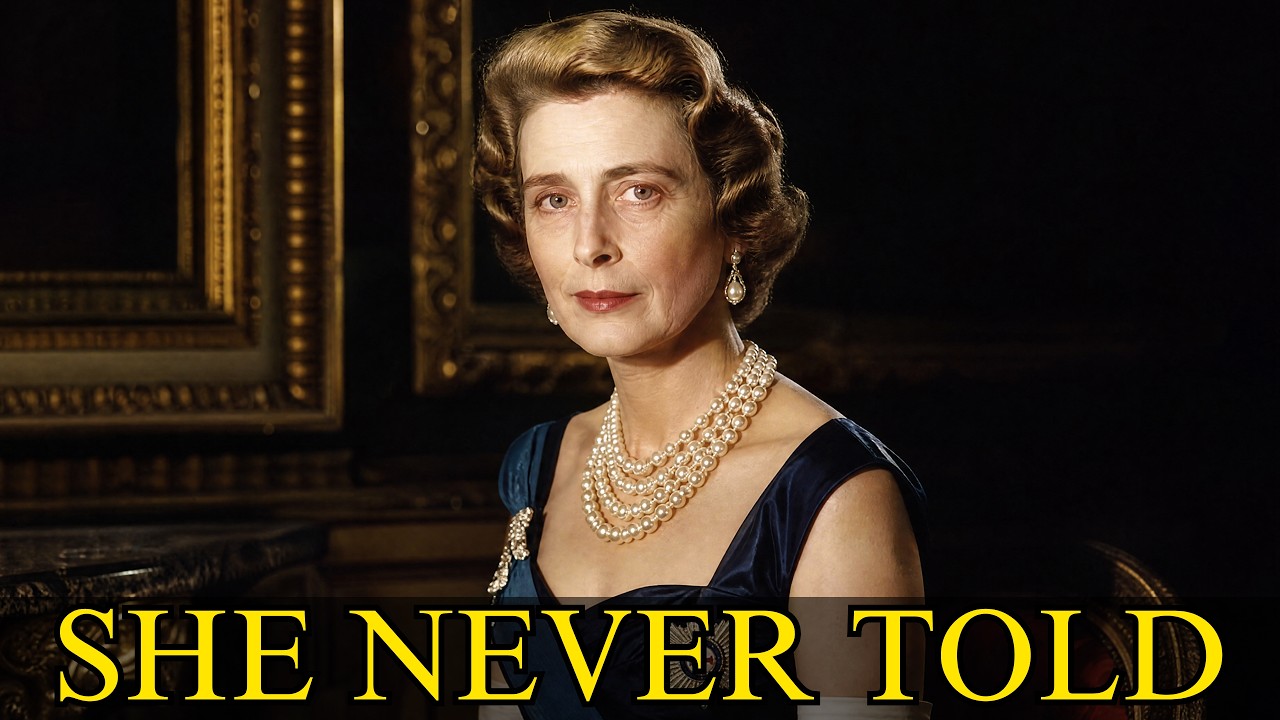
Cynthia was born Eleanor Cynthia Hamilton on August 16, 1897, in London, into the highest ranks of the British aristocracy. Her father was the Marquess of Hamilton, later the third Duke of Abercorn. Her mother was Lady Rosalind Bingham, daughter of the fourth Earl of Lucan. She was raised under a strict code of class: marry well, endure privately, serve publicly, and never complain.
On February 26, 1919, three months after the First World War ended, she married Albert Edward John Spencer, known as Jack, the heir to one of England’s oldest dynasties. The wedding took place at St. James’s Church in Piccadilly. On paper, the match was faultless.
Biographers describe the marriage as emotionally cold, with Jack far more at ease with art than with people. When Jack succeeded his father in 1922, Cynthia became Countess Spencer at age 24, mistress of Althorp, a house of some 90 rooms holding one of the finest private art collections in Britain. The grandeur was real, and so was the pressure beneath it. In 1937 she was appointed a lady of the bedchamber to the new Queen Elizabeth, giving her a valued place at court that contrasted sharply with her private life.
She moved between the two lives without a visible seam. Albert Spencer was a man of real cultivation, serving as a trustee of the Wallace Collection and chairing the advisory council of the Victoria and Albert Museum. Those who wrote about the family described him as cold, reserved, and more comfortable cataloging a collection than comforting a child. In the 1930s, he sold a small Hans Holbein portrait of Henry VIII for £10,000 to help pay for his son’s education.
The painting now hangs in a collection in Madrid, emblematic of a family rich in treasures but pressed in cash. The couple’s son, Edward John Spencer, known as Johnny, was born on January 24, 1924. He absorbed the distance of his parents’ marriage and carried it forward. On June 1, 1954, Johnny married Frances Roche at Westminster Abbey, with the Queen and Queen Mother among the guests.
Frances was 22. The couple made their home at Park House on the Sandringham estate, leased from the crown. Their children arrived through the 1950s and 1960s. A daughter Sarah was born in 1955 and Jane in 1957.
A son named John died as an infant in 1960. Diana was born on July 1, 1961, and a son and heir, Charles, followed in 1964. Frances stood inside the same expectation of grace under endurance that had shaped Cynthia. But she belonged to a different age.
In September 1967 she left the marriage. The couple divorced in 1969, and Johnny was granted custody of the children. Frances’s own mother, Ruth, Lady Fermoy, gave evidence against her daughter during the custody proceedings. The departure was the thing Cynthia’s generation had held the line against at any cost.
Diana, age six, was left to grow up inside the aftermath. Cynthia died at Althorp on December 4, 1972, of a brain tumor, at age 75. Diana was 11. The one woman in the family who had lived a cold upper-class marriage under the eyes of the crown was gone before Diana would need her most.
The record noted she had been little known outside court and local circles. Both of Diana’s grandmothers had served the same queen. Cynthia was a lady of the bedchamber to Queen Elizabeth; Ruth, Lady Fermoy, was a woman of the bedchamber to the same royal lady. The families had been entwined with the court for a generation before Diana was steered toward the Prince of Wales.
Diana married Prince Charles on July 29, 1981, in the full glare of the modern world. Inside the fairy tale sat the same cold: a husband whose heart was elsewhere and a marriage that gave the young wife the grandest position while withholding warmth. Cynthia had carried her wound in the dark and survived. Diana was allowed no dark at all.
Twenty years after her grandmother’s death, at the lowest point of her own marriage, Diana said she believed her grandmother watched over her from the spirit world. The line is documented in the 1992 biography by Andrew Morton, drawn from Diana’s own account. She reached back across the years to the one relative who had walked her exact road first. She had barely known her grandmother, yet it was to Cynthia that she turned for a sense of being watched over.
Cynthia’s name survives today on the Cynthia Spencer Hospice in Northampton, a place of care for the dying named in memory of the countess known in her county for gentleness. And within the grounds of Althorp, on an island in a lake known as the Round Oval, lies Diana’s grave. The same house that witnessed Cynthia’s whole married life became the resting place of the granddaughter who lived the same kind of marriage in the open. The most dangerous thing the family passed down was not its debts or its treasures.
It was the unspoken script about how a woman was to live inside a great family: smile in public, endure in private, and call the carrying of it grace. Cynthia carried that script so faithfully that no one thought to question it. Diana carried it until it broke her. The tragedy was not that a warning was ignored.
It was that there was never anyone left to give it.