The Mercedes-Benz 770 Grosser W150 was a favorite showpiece vehicle for several Nazi leaders, including Adolf Hitler. The heavily armored car weighed 4,100 kilograms, or about 4 tons, and was powered by a 230-horsepower engine that gave it a top speed of roughly 150 kilometers per hour, or about 93 miles per hour.
Its protective features included armored doors, 2.5-centimeter-thick bulletproof glass, and a 0.6-centimeter armored plate that could be raised behind the rear passenger seat. The dashboard contained a storage compartment, along with two compartments in the rear for carrying short machine guns for additional protection.
Hitler's 770 differed slightly from other cars built by Daimler-Benz. It featured a decorative radiator grille, four ventilation slots directly below the windshield, two door hinges on each side, short curved rear side windows, and 20 cooling louvers on both sides of the central hinge above the hood.

By late April 1945, the Mercedes was at Hitler's mountain retreat, the Obersalzberg in Bavaria, while its owner faced his end in his Berlin bunker during the war. At some point, SS troops moved the car and loaded it onto a flatbed railcar, where troops of the U.S. 20th Armored Division found it in early May 1945, parked on a siding in the village of Laufen, just north of Salzburg, Austria.
A unit led by Sergeant Joe Azara seized the car after a brief clash with German forces in its final battle. Once the village was secured, Azara and some of his comrades managed to unload the Mercedes from the flatbed, fuel it, and start its engine. But the engine was damaged, and a Dutch civilian forced laborer working in a nearby garage told Azara that the Mercedes had belonged to Reich Marshal Hermann Göring. From then on, the Mercedes was classified as Göring's personal car.
The car had sustained some damage. Bullets had pierced the rear armor plate, and one had struck the dashboard. There were three bullet holes in the windshield with cracks, and the right passenger window was heavily shattered. Azara confirmed that this was the car's condition when it was found, suggesting the Mercedes had been caught in an exchange of fire during the battle to take the village of Laufen.
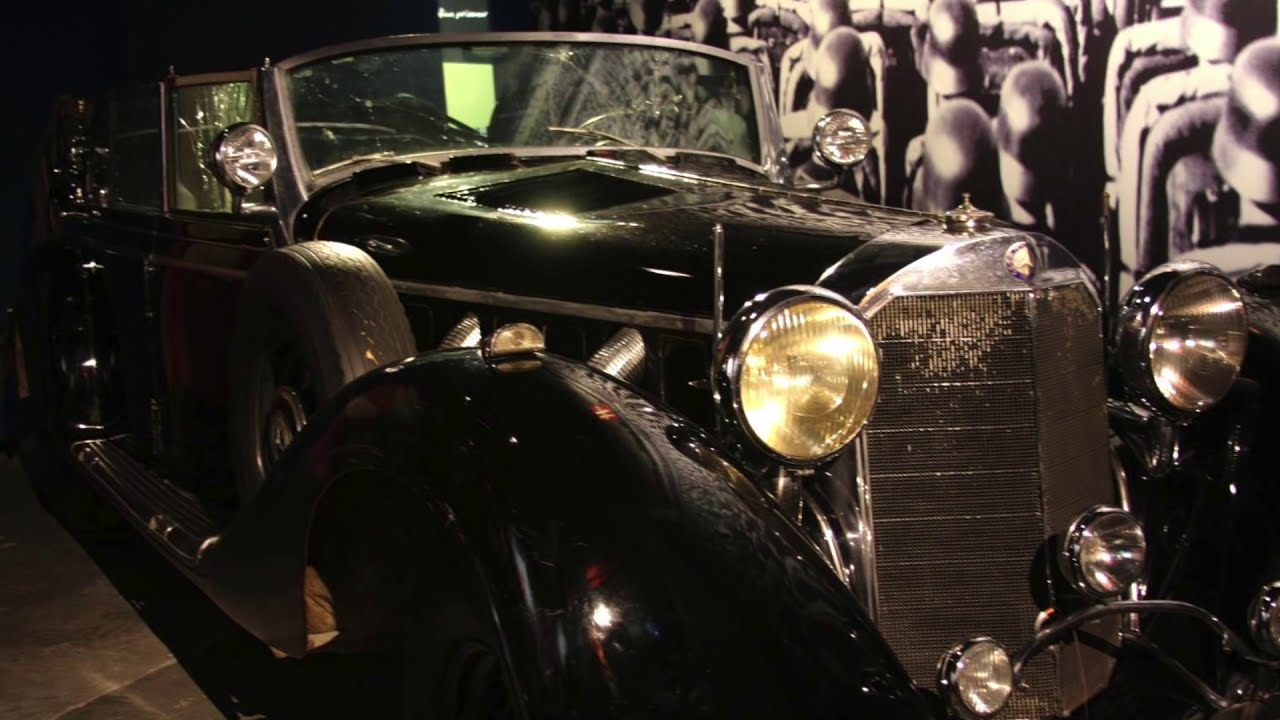
Azara could not, of course, keep the car for himself. It was placed into service as a transport for senior American generals during the early occupation of Germany, repainted green with a white Allied star on each side. In August 1945, the Americans shipped the car to the United States for use in war bond sales campaigns.
It was promoted as Göring's personal car, then stored for nine years before being offered for sale in October 1956, after it had become surplus. It was advertised once again as Göring's car. At an auction held at the U.S. Army's Aberdeen Proving Ground in Maryland, the Mercedes was sold to Montreal collector H. J. O'Connell for $2,725.
Also sold at the same auction was another Nazi Mercedes seized by the U.S. 101st Airborne Division at the Obersalzberg in May 1945, known as the "Blue Goose." That car was certainly the property of Reich Marshal Göring. Mr. O'Connell believed he had also bought a Göring car, and it was shipped to Rambler Motors in Toronto for restoration.
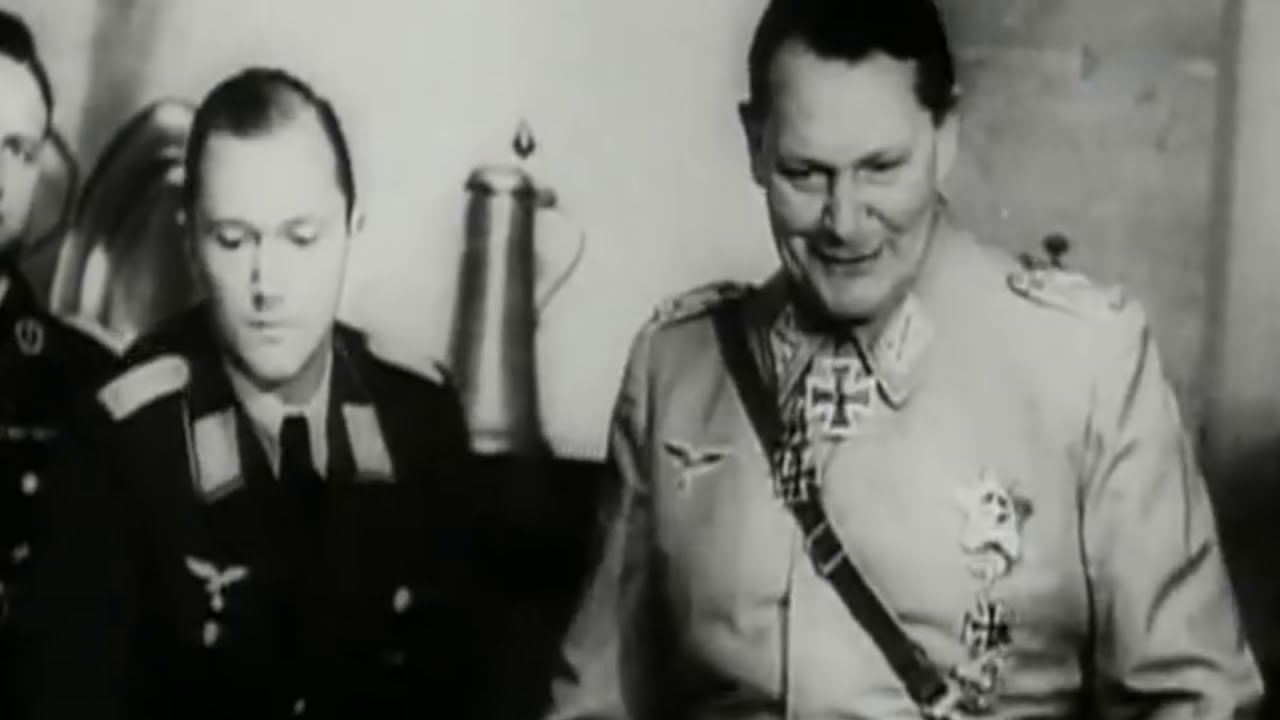
Some 5,000 Canadian dollars were spent restoring most of the bullet damage, except for the shattered windows, which were left in their original state as part of the car's history. During the restoration, Mr. Rambler mistakenly based his work on another Nazi Mercedes, adding a central lamp mounted on a curved bar above the front bumper, something Hitler's car never had.
In 1970, the Mercedes was donated to the Canadian War Museum in Ottawa in exchange for a significant tax exemption, and it was displayed to the public as Göring's personal car. But in the early 1980s, the museum's librarian, Ludwig Koch, a German by birth, began careful research into the car that led to a surprising conclusion.
Koch traced records at Daimler-Benz using the unique factory serial number on the engine firewall. A close examination of the remaining license plate revealed the number "1 AV148697," Hitler's personal plate number for his 770K, with help from the West German embassy. It was confirmed to be Hitler's car, delivered to the Reich Chancellery on July 8, 1940.
Thus, finally, in 1982, the car was correctly attributed to its true owner. Its value and public interest rose immediately, which also sparked some controversy at the museum that continues to this day. As for Göring's real car, the "Blue Goose," that is another story for another episode.