Justice finally came for the perpetrators of one of history’s most notorious killing grounds, as the United States military carried out the executions of dozens of Dachau concentration camp guards and officials in the aftermath of World War II, closing a chapter on atrocities that claimed an estimated 40,000 lives within the camp’s barbed-wire fences.

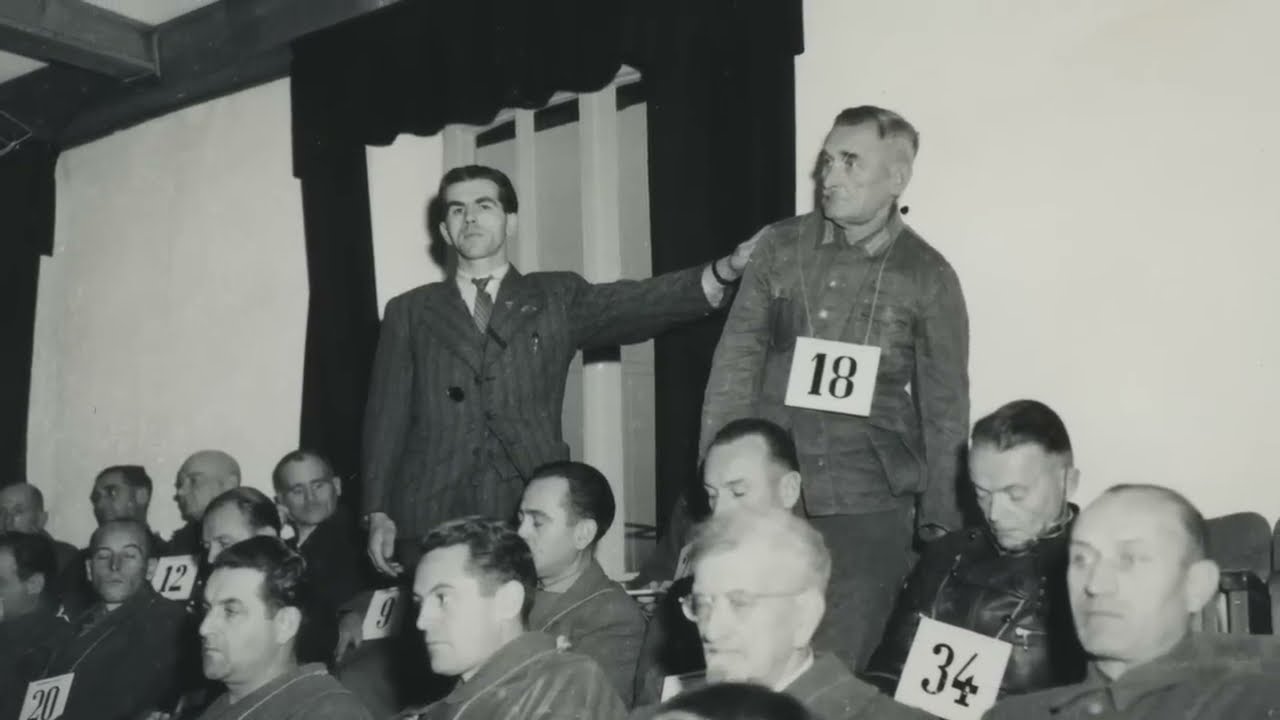
The Dachau camp trials, formally known as United States of America versus Martin Gottfried Weiss et al. , convened on November 15, 1945, just months after the liberation of the camp that had shocked the world with its horrors. Forty individuals faced charges of war crimes committed against Allied civilians and prisoners of war at Dachau and its subcamps, with the proceedings lasting until December 15, 1945.
The court heard testimony that painted a picture of systematic brutality unlike anything seen before. Former prisoners took the stand to describe beatings, torture, public executions, medical experiments, and the constant threat of death that defined daily existence at the camp. Prosecutors presented photographs and artifacts recovered from Dachau, including the camp’s death registry documenting those who perished within its walls.
When asked how they pleaded to the charges, all forty defendants answered with the same word: not guilty. The defense called 93 witnesses, including the accused themselves, in an attempt to challenge the legality of the court and rebut the overwhelming evidence against them. Their motions questioning the court’s jurisdiction were dismissed, and the trials proceeded under the authority of the United States military justice system.
The most senior figure on trial was Martin Weiss, the camp’s commandant who oversaw the horrific conditions that led to thousands of deaths. Alongside him stood his adjutant, numerous SS guards, subcamp leaders, and camp doctors. Among the accused was 74-year-old Dr.
Claus Schilling, who attempted to justify his deadly medical experiments on prisoners as being conducted for scientific interest, a defense that was swiftly rejected by the court.
Also facing judgment were kapos who had worked in the crematorium, guards who participated in death marches, and staff members accused of participating in executions by declaring the deaths of condemned prisoners and taking part in selections that sent thousands to their deaths. The prosecution argued that those who worked with the commandant bore overall responsibility for the conditions and crimes that occurred at the camp.

The verdicts came with a heavy hand. Thirty-six death sentences were handed down, with the condemned transported to Landsberg Prison for execution. So many individuals received capital punishment that two days were required to carry out the sentences, with executions taking place on May 28 and 29, 1946.
A gallows was constructed in the prison courtyard, staffed by members of the US military who would serve as executioners. Officials gathered to oversee the proceedings as each condemned prisoner was brought from their cell by guards, their identity confirmed, and the death sentence read aloud at the bottom of the stairs. A priest attended to each man until their final moments, and they were asked for any last words, which were recorded for posterity.
The condemned were then handed over to the executioner, who placed a black hood over their heads. The priest remained with them as the noose was fastened tightly around their necks, the knots checked, and they stood for several seconds while preparations were completed. After final words from the priest, the executioner released the trapdoor, and the men were hanged.
Doctors positioned beneath the trapdoor confirmed death quickly, and the bodies were cut down and placed in coffins bearing their names alongside wooden crosses.
In a particularly grim detail, the condemned could see their own coffins as they walked to the gallows, with their names etched on the wooden boxes awaiting them. Many executions were performed in front of a small crowd of US Army soldiers and officials, and after each hanging, officials would collect the next prisoner while only the executioner remained on the scaffold.
Among those executed were Martin Weiss, the commandant who had fled the camp before liberation; Otto Moll, who participated in the death marches; Friedrich Ruppert; and Dr. Claus Schilling, the elderly physician who had conducted deadly experiments on prisoners. Twenty-eight former guards and staff members were ultimately executed at the gallows, though the trials resulted in many more court proceedings that brought additional perpetrators to justice.
The Dachau camp trials were followed by 121 side proceedings involving approximately 500 additional individuals placed before judges, with further death sentences and prison terms handed down to those who had worked at the camp. Executions at Landsberg Prison continued for Dachau personnel until 1951, six years after the initial hangings took place.
The road to these trials was paved with unimaginable suffering. Dachau opened on March 22, 1933, established by Heinrich Himmler as a prototype camp and place of forced labor. Initially holding around 5,000 prisoners, mostly German communists and political opponents of Hitler’s Nazi party, the camp grew to encompass approximately 100 subcamps.
Following Kristallnacht, around 11,000 Jewish men were imprisoned there, forced to work in munitions factories as the camp expanded.
Prisoners lived in constant fear of imminent death. Guards actively goaded inmates, stealing their caps and throwing them near the perimeter fence, then shooting them when they attempted to retrieve their belongings under the pretense of escape attempts. Some prisoners, driven to despair, chose to end their lives by walking near the fence to be shot dead.
Beatings were commonplace, with prisoners beaten to death in cold blood, and torture was routinely employed, including stringing prisoners up by their arms held behind their backs in a medieval-style torture device.
Public executions occurred in the roll call courtyard, where prisoners were forced to stand for hours and witness hangings for any perceived indiscretion. A crematorium was established in 1942 to dispose of the bodies and hide evidence of the deaths. Gas chambers were also present, along with a firing range where those deemed unfit for work or who had stolen even small amounts of food were executed.
As World War II turned against Germany, conditions deteriorated catastrophically. Prisoners from camps near the front lines were force-marched on death marches back toward other camps, causing severe overcrowding at Dachau. Food became scarce, disease spread rapidly, and typhus epidemics claimed countless lives.
In the final six months before liberation, an estimated 15,000 prisoners died at Dachau, and 500 Soviet POWs were shot dead. There was often no space to sleep, and in April 1945, approximately 200 prisoners were dying each day.
When Himmler was proposed to hand over the camp to the Allies to save lives, he refused, declaring that no prisoner should be allowed to fall into enemy hands alive. Just before the Allies arrived, the commandant and SS guards sent 7,000 prisoners on a death march, shooting anyone unable to keep up. Mass graves containing hundreds of prisoners were later discovered.
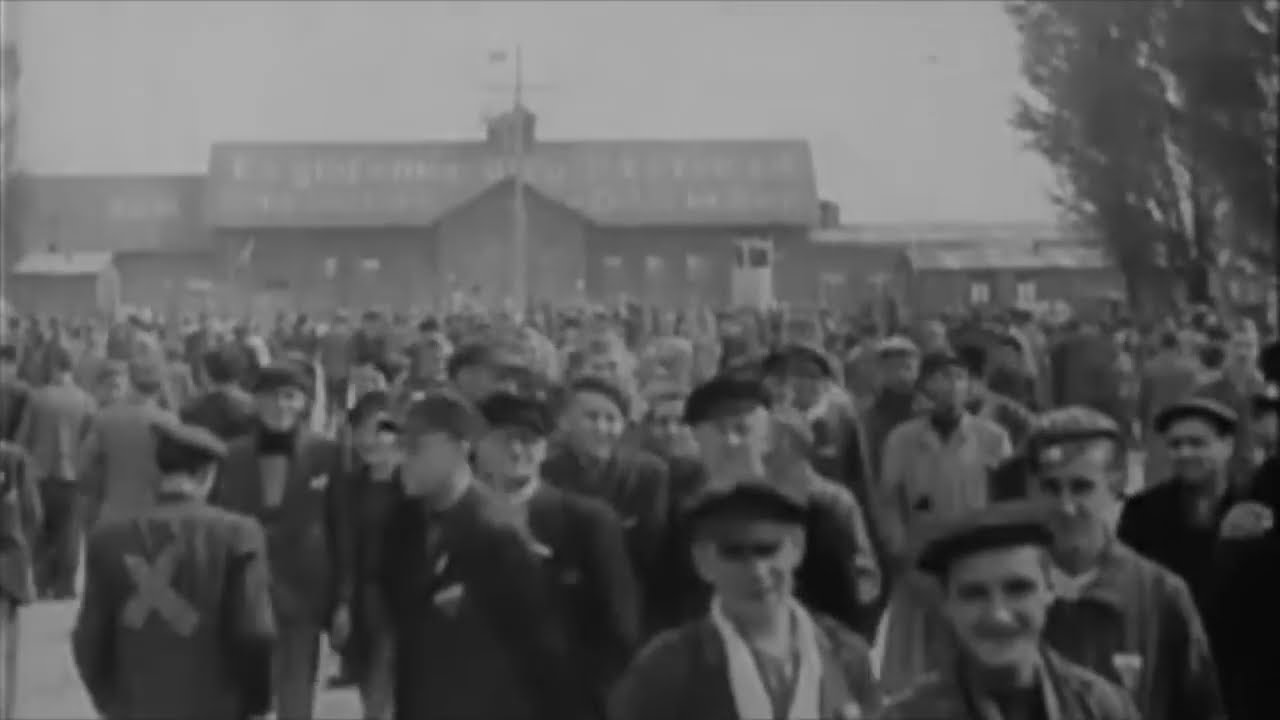
On April 29, 1945, soldiers from the 3rd Battalion, 157th Infantry Regiment, 45th Infantry Division approached Dachau. What they found was hell on earth. Even before entering the camp, they discovered 29 railway boxcars containing approximately 2,000 corpses.
The sights that greeted them defied description: emaciated bodies everywhere, corpses left for days, and huts with bodies piled from floor to ceiling. One liberator commented that the stench of death was overpowering.
At the time of liberation, Commandant Martin Weiss had fled along with many SS guards responsible for the crimes. SS Untersturmführer Heinrich Wicker was placed in charge of over 500 personnel still inside the camp. It was claimed that many SS guards still had their weapons, and despite a large number being seized, further bloodshed occurred.
Some American soldiers, disgusted by what they witnessed, decided to take justice into their own hands, executing many guards on the spot in instant bloody reprisals. This resulted in the shooting of dozens of guards before order was restored and the cleanup operation began.
The postwar trials and executions represented an attempt to bring formal justice for the horrors committed at Dachau. For the victims of the camp and those who suffered at the hands of the staff and guards, these death sentences served as a form of penance for the atrocities carried out within the camp’s walls. The trials established important precedents for international justice and demonstrated that even in the chaos of postwar Europe, the rule of law would be applied to those who had committed crimes against humanity.
The executions at Landsberg Prison, carried out with military precision and solemnity, marked the end of one chapter in the long struggle to hold perpetrators of genocide accountable. Yet the memory of Dachau and the suffering of its prisoners continues to serve as a stark reminder of the depths of human cruelty and the importance of never allowing such atrocities to occur again.