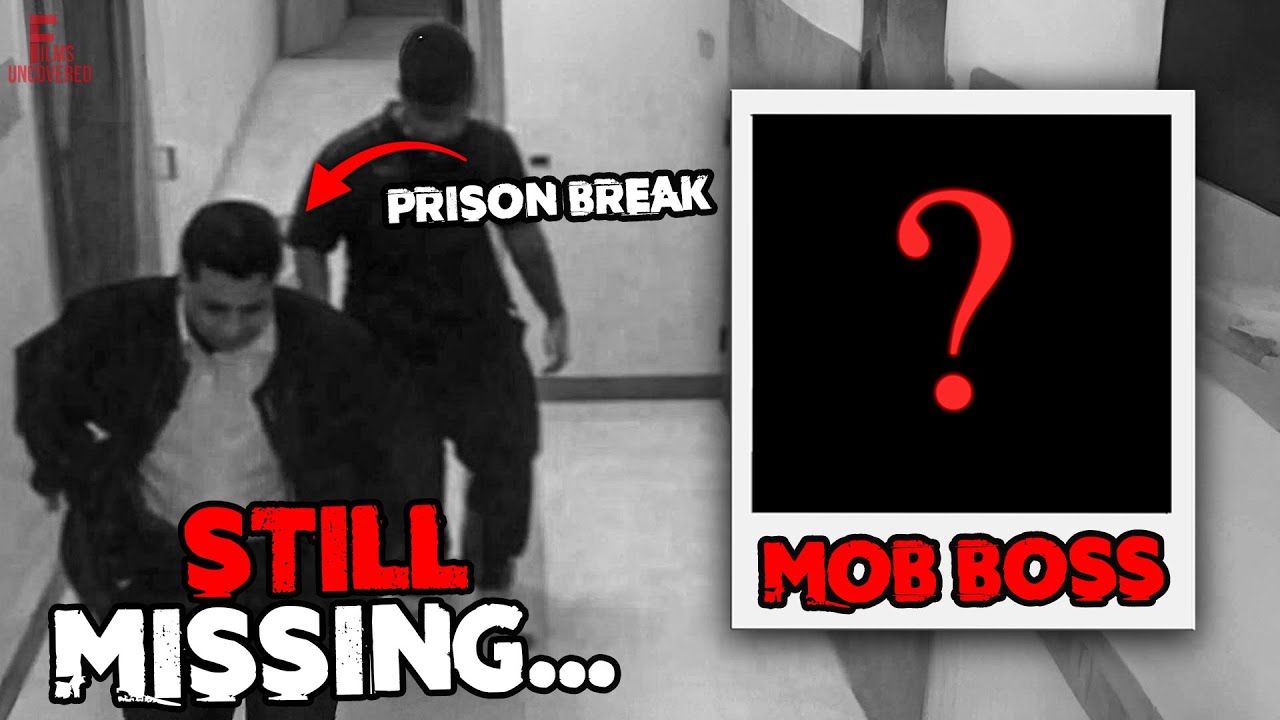
On November 15, 2007, a man in a janitor's uniform pushed a cleaning cart through the hallways of the North Fraser Pre-Trial Center in British Columbia. He kept his head down, trying to look invisible. But he was not a cleaner. He was Omid Tavakoli, a millionaire crime boss known as the Tony Soprano of Vancouver, and he was seconds away from freedom.
Walking beside him was corrections officer Edwin Ticeney, a man sworn to keep inmates like Tavakoli locked up. Instead of raising the alarm, Ticeney unlocked one door after another. This was not a breakout. It was a walk out.
Tavakoli did not need tunnels, helicopters, or weapons. All he needed was a janitor's uniform, a promise of $50,000, and one desperate prison guard willing to betray everything. It became the most humiliating prison escape in Canadian history, an inside job caught entirely on camera.
To understand how this happened, you have to understand who Omid Tavakoli was. He was not a low-level drug dealer. He was a boss.
Born in Tehran, Iran, in 1970, Tavakoli arrived in Canada in 1994. It did not take him long to recognize that crime paid, and he was very good at it. By the early 2000s, the Royal Canadian Mounted Police had identified him as the head of one of the most significant criminal organizations in Western Canada.
Dozens of people worked under him, moving cocaine, ecstasy, and other drugs across the country. He lived a life of luxury cars, high-end condos, and designer suits. He styled himself after Nino Brown, the untouchable drug lord from the movie New Jack City, and he demanded respect.
He built his empire on two things: intelligence and absolute ruthlessness. His intelligence showed in his sophisticated operations. While managing the drug trade, he also ran a massive international telemarketing scam targeting elderly Americans.
Between 1999 and 2002, Tavakoli and his crew called vulnerable victims, telling them they had won a lottery but needed to pay taxes or fees upfront to collect their winnings. The cruel scam netted over $3 million. The operation was so large that the FBI was actively hunting him, issuing federal warrants for mail fraud and wire fraud.
But it was his ruthlessness that kept him in power. In 2005, $300,000 of Tavakoli's drug money vanished. He suspected one of his couriers had stolen the cash and fled to Vietnam. Tavakoli did not write it off as a loss. He needed to send a message.
Instead, he kidnapped the courier's brother-in-law. What followed was hours of brutal interrogation. Tavakoli did not just beat the man. He systematically tortured and sexually assaulted him, determined to find out where the money had gone. The victim was eventually let go, broken and terrified.
But the victim made a choice. He went to the police. This act of extreme violence became Tavakoli's downfall. He was arrested soon after, and the untouchable kingpin was finally caged.
In July 2005, Tavakoli was sent to the North Fraser Pre-Trial Center to await trial. This was not a crumbling old jail. Opened in 2001, the facility was a state-of-the-art maximum security prison. Guards monitored everything from elevated secure control centers. The doors were reinforced steel, and inmate movement was highly restricted.
In its six years of operation, no one had ever escaped. It was supposed to be impenetrable. Tavakoli hated it. He was a man used to control, luxury, and power. Now he was just another inmate in a jumpsuit.
His trial was a disaster for him. The evidence of the kidnapping and assault was overwhelming. In October 2007, he was convicted on all counts: kidnapping, sexual assault, unlawful confinement, uttering threats, and causing bodily harm. He had not been sentenced yet, but the outlook was bleak.
The prosecution was asking for 15 years, and that was not even the worst part. While in custody, the British Columbia Supreme Court had ordered his extradition to the United States in May 2007 to face the fraud charges. He was awaiting his appeal.
If he lost the appeal, the moment he finished his Canadian sentence, he would be shipped straight to a US federal prison for decades more. At 37 years old, Tavakoli was looking at the prospect of dying in prison. For a man who saw himself as a king, this was unacceptable.
He had millions of dollars stashed away. He had international connections from Europe to the Middle East. And he refused to let the system win. He was so confident that he openly boasted to other inmates and staff. He told them, "I will not be here for my sentencing." They laughed it off. Where was he going to go?
But Tavakoli was already analyzing the prison. He knew the walls were too thick, the fences too high, and the technology too advanced for a traditional escape. But every system, no matter how advanced, has one vulnerability: the people running it. Tavakoli needed an inside man.
He watched the guards. He looked for weakness. And he found the perfect target. Edwin Ticeney was a corrections officer at North Fraser. On the surface, he was just a regular guard, a 35-year-old family man with about 10 years of experience.
But beneath the uniform, Ticeney was drowning. He was suffering from what psychiatrists later called a major depressive episode. The stress of working in a maximum security environment, combined with family issues, was crushing him.
His biggest secret, the one that made him truly vulnerable, was his addiction. Ticeney was a pathological gambler. He was deep in debt, the kind of debt that makes you desperate. He was also struggling with alcohol abuse. In short, Edwin Ticeney was weak, broken, and desperate for money.
Omid Tavakoli, a sophisticated manipulator who had spent his life exploiting weakness, recognized this instantly. The corruption did not happen overnight. It likely began small. A conversation here, a shared joke there. Tavakoli was charismatic. He knew how to make people feel important.
He started grooming Ticeney. He listened to his problems and sympathized with his financial stress. Tavakoli was not just an inmate to Ticeney. He became a confidant. This is how organized crime corrupts officials. They do not walk up on the first day and offer a bribe. They build a relationship. They find the pressure point, and then they squeeze.
Once Tavakoli felt the time was right, he made the offer. The deal was simple: $50,000 cash. For Tavakoli, $50,000 was pocket change. For Ticeney, it was a lifeline. It was a way out of debt, a way to stop the suffocating pressure of his gambling losses.
Ticeney agreed. He was willing to risk his career, his reputation, and his own freedom to help one of the most dangerous men in the facility escape.
With Ticeney compromised, they began to plan. The plan had to be simple. It had to rely entirely on Ticeney's access and avoid any scrutiny from other guards or the advanced security systems. The solution was brilliant in its audacity.
Tavakoli would impersonate a contractor, specifically a janitor. Cleaners moved through the facility constantly. They were practically invisible. If Tavakoli could get a uniform, and if Ticeney was the one escorting him, they could potentially walk straight through the security checkpoints.
The plan relied on the assumption that other guards would not look too closely at a janitor being escorted by a trusted officer. They were banking on human complacency, the fatal flaw in any secure system.
But the risks were enormous. North Fraser had multiple secure checkpoints between the living units and the outside world. Each one required authorization. If a single guard recognized Tavakoli, or if Ticeney hesitated even for a second, the plan would collapse.
As November 2007 progressed, the pressure mounted. Tavakoli's sentencing hearing was just weeks away. He knew he was running out of time. They set the date: Thursday, November 15.
When the day arrived, the crucial part was the disguise. Somehow, Tavakoli acquired an authentic janitor's uniform, the shirt, the pants, everything needed to look the part. He also got a cleaning cart complete with a mop and a bucket.
The escape began during the evening. Staff movement can be higher at that time, which may have made their transit less conspicuous. Tavakoli changed into the uniform. He was no longer the feared crime boss, but a humble cleaner.
He met up with Edwin Ticeney. This was the moment of truth. Ticeney had to lead Tavakoli through four highly secure security gates. If he backed out now, he knew Tavakoli's organization might come for him. He was committed.
He started walking. Tavakoli pushed the cart, deliberately keeping his head down, trying to obscure his face from cameras positioned on the ceiling. Ticeney was the escort, the man with the authority. The entire sequence was captured by the prison's closed circuit television cameras, providing a chilling, silent movie of the escape.
They approached the first secure door. This required Ticeney to use his authorization to unlock it. Ticeney was already suffering from depression and anxiety. He had to appear completely normal, like he was just escorting a janitor to a different section of the prison. He initiated the unlock sequence. The lock clicked open. They just walked through. One down.
They continued through the sterile corridors. Tavakoli was deep inside the secure perimeter of a maximum security facility, just walking freely. Now they approached the second gate. Again, Ticeney used his access. He maintained his composure.
He was betraying his colleagues and undermining the entire justice system. But he did not falter. He was thinking about the money. Click. The second door opened. They were getting closer to the administrative area, the least secure part of the facility.
The third gate was the critical juncture, separating the high-security inmate areas from the access zones leading to the exit. Other staff were likely present. They walked past offices and monitoring stations. Did anyone notice the janitor? Did anyone recognize the face of the infamous Omid Tavakoli, whose trial had been all over the news?
No. They just saw a guard they knew, Edwin Ticeney, and a cleaner pushing a cart. It was routine. It was normal. Complacency had won. Ticeney unlocked the third gate. Click. They passed through.
Finally, they reached the last barrier, the front door of the North Fraser Pre-Trial Center. This was it, the threshold between captivity and freedom. Ticeney, focused on the $50,000 and the end of his debts, made the final move. He opened the front door.
Omid Tavakoli, dressed as a janitor, pushed his cleaning cart out into the cool November evening air. He did not run. He did not look back. He simply walked away from the prison. A getaway ride may have been arranged nearby. He disappeared into the night. The escape was flawless. The kingpin was free.
Edwin Ticeney had to walk back into the facility knowing he had just committed a massive betrayal. He had to finish his shift and pretend nothing had happened. This is where the story gets even more incredible.
For hours, internal tracking still suggested Tavakoli was in his cell. But later that evening, during a headcount around 9:30 p.m., staff realized he was gone. The realization set off panic. The entire facility was put on immediate lockdown. Alarms blared, doors slammed shut, and an emergency response team swarmed the facility.
But it was far too late. Tavakoli had a massive head start. The administration and the guards were in shock. How could this happen? North Fraser was supposed to be secure. This was the first escape in the prison's history, and it involved one of their most high-profile and dangerous inmates.
The Royal Canadian Mounted Police were called in immediately. The investigation began by reviewing the CCTV footage, and that is when the full humiliating truth was revealed. The footage clearly showed Tavakoli in the janitor's uniform. It showed him walking calmly through the facility.
And most damningly, it showed corrections officer Edwin Ticeney leading him every step of the way, unlocking the four security gates and letting him out the front door. It was not a security failure. It was betrayal.
The embarrassment for BC Corrections was catastrophic. It was the first time in the history of the organization that a guard had been charged with helping an inmate escape. The public trust was shattered. How many other guards were compromised?
A massive manhunt was launched for Omid Tavakoli. Police warned the public that he was dangerous. They knew Tavakoli had the resources and the connections to disappear instantly. He had access to forged passports, cash reserves, and international safe houses.

They were right. Tavakoli had a sophisticated network ready to move him. While the police were setting up roadblocks around the prison, Tavakoli was likely already crossing borders, perhaps heading south to the US or preparing to board an international flight.
The focus of the investigation quickly turned to Edwin Ticeney. He was arrested on Friday, the day after the escape. Faced with the undeniable evidence of the CCTV footage, Ticeney had no choice. He confessed everything.
In April 2008, Edwin Ticeney pleaded guilty to obstruction of justice and accepting a bribe. During his sentencing hearing, the full story of his vulnerability came out. His lawyer argued that Tavakoli was a sophisticated manipulator who had exploited Ticeney's weakness, his depression, his pathological gambling addiction, and his financial desperation.
Ticeney apologized in court, expressing remorse for his actions, but the damage was done. His colleagues at North Fraser felt angry and betrayed. The integrity of the system he was supposed to uphold had been compromised by one of their own.
But here is the final brutal twist in Ticeney's story. He never got the money. After walking Tavakoli out, Ticeney finished his shift. According to the plan, he was supposed to meet for the $50,000 cash after work. He waited, but no one showed up.
The realization must have been crushing. Tavakoli had completely betrayed the man who risked everything for him. He used Ticeney's desperation to gain his freedom and then discarded him without a second thought. The $50,000 promise was just another lie from a master manipulator.
One final note on Ticeney's mindset. Psychiatric reports at sentencing described a major depressive episode and pathological gambling. It is plausible he did not fully grasp the risk or downstream consequences. Records do not document any concrete plan beyond collecting the promised payment, and the judge noted he likely never received the money. What he intended to do afterwards remains unknown.
On August 8, 2008, Edwin Ticeney was sentenced to 3 years and 3 months in prison. The judge acknowledged that time in prison would be especially hard for a former corrections officer, who would certainly need to be kept in protective custody, isolated from the general population for his own safety.
While Ticeney was heading to prison, Omid Tavakoli was living the high life. A few weeks after the escape, Tavakoli was sentenced in absentia to 11 years for the kidnapping and assault. It was a meaningless gesture. Tavakoli had achieved what few others could. He had beaten the system and vanished without a trace.
His notoriety only grew, turning him into a legend of the underworld. In April 2008, Forbes.com compiled a list of the world's 10 most wanted fugitives, consulting with law enforcement agencies globally. The list included the most infamous names on the planet, including Osama bin Laden and Joaquin "El Chapo" Guzman.
And right there among them was Omid Tavakoli. The international manhunt spanned continents. The FBI still wanted him for the $3 million fraud against the elderly. The RCMP wanted him for his escape and his organized crime activities. Interpol issued a red notice requesting his arrest worldwide.
There were rumors and sightings everywhere. Some said he fled to Europe, Germany, or the Netherlands, where he had strong criminal connections. But the most prevalent theory was that he returned to his native Iran. Iran does not have an extradition treaty with Canada or the United States, making him virtually untouchable.
In a bizarre incident shortly before Ticeney's sentencing, Tavakoli reportedly contacted the police himself. He called the RCMP, claiming he was in Toronto and wanted to negotiate his return to British Columbia. Law enforcement took it seriously, mobilizing resources to track the call, but it led nowhere. It seemed Tavakoli was just taunting them, playing games, and proving he could still move freely even within Canada.
The escape forced the North Fraser Pre-Trial Center to conduct a full-scale security review. Procedures were tightened. Background checks on staff were likely intensified, and the complacency that allowed Tavakoli to walk out the front door was shattered. But the stain on their reputation remained. The escape-proof prison had been defeated by a mop and a bribe.
Edwin Ticeney served his sentence and was eventually released. A broken man who had lost his career, his reputation, and his freedom for a bribe he never received, he faded into obscurity, a casualty of Omid Tavakoli's manipulation.
And Tavakoli is still out there. It has been nearly two decades since he walked out of that prison dressed as a janitor. He would be in his mid-50s today. Despite the international warrants and his most wanted status, he has never been caught. Omid Tavakoli, the Nino Brown of Vancouver, remains an international fugitive, a ghost who achieved the perfect escape.