Leif Garrett was one of the most recognizable faces of 1970s teen culture, carefully packaged by studio executives as a wholesome idol for a global audience. Behind that polished image, however, was a teenager struggling with severe pressure and self-medicating with drugs while the industry that profited from him offered no protection. Born Leif Per Nervik on November 8, 1961, in Hollywood, California, Garrett was raised inside the entertainment industry. His mother, Carolyn Stellar, worked as an actress and costume designer, and she managed his career from the start.
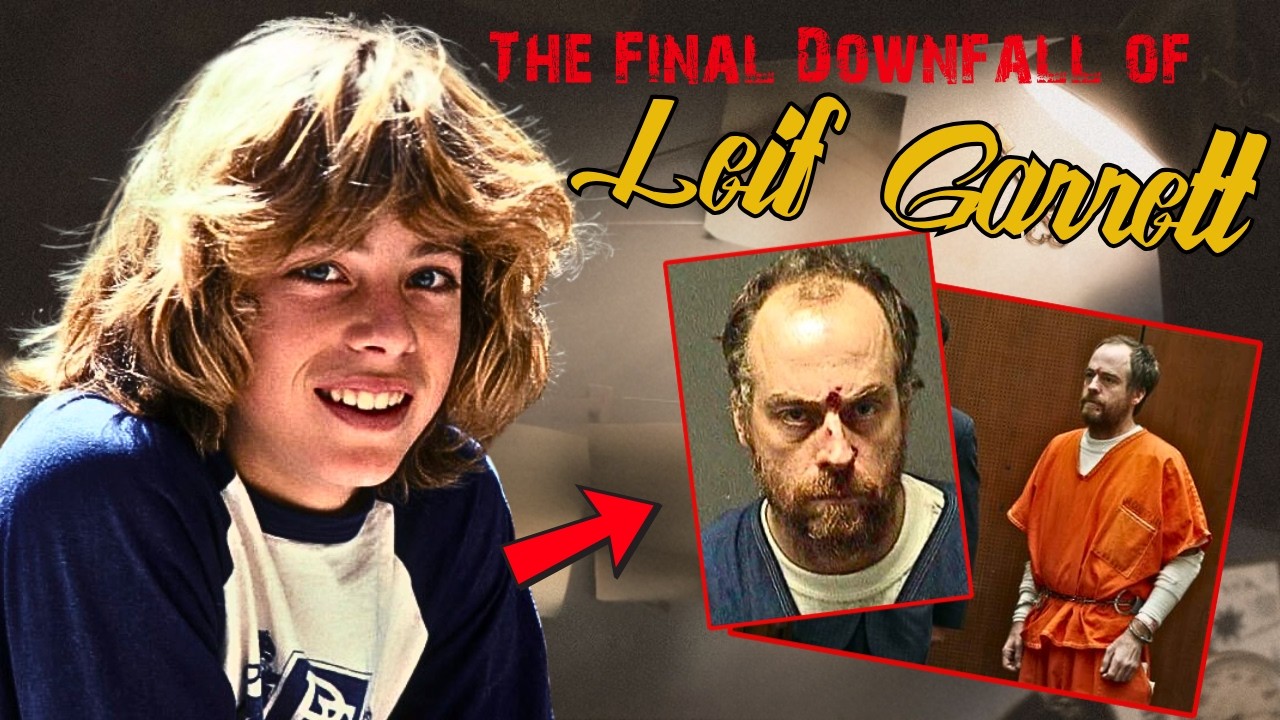
Garrett was just five years old when he began working, an age at which he could not understand the demands of the profession. His father, Rick Nervik, had abandoned the family when Garrett was young, leaving his mother as the sole authority in both his home life and his career. His younger sister, Summer Dawn Lynn, was also pushed into acting, and the siblings often auditioned and appeared in projects together, including the films Walking Tall (1973) and Macon County Line (1974). For years, Garrett took on minor television roles in shows like Gunsmoke, Family Affair, and The Odd Couple, steadily building a resume as a working child actor without becoming a star.
That changed in 1975, when CBS cast him in Three for the Road. The show was canceled after just one season, but it had accomplished something far more important for his career: it placed him in front of a national audience of teenagers. The teen magazine industry, led by publications like Tiger Beat and 16 Magazine, seized on his blond hair and California look, turning him into a fixture on newsstands. At the height of his popularity, the only celebrity poster outselling his in the United States belonged to Farrah Fawcett.
Despite his wholesome image, Garrett later proved his range as an actor. In Francis Ford Coppola’s 1983 film The Outsiders, he played Bob Sheldon, a wealthy Soc whose actions trigger the film’s central conflict. Coppola deliberately separated the actors playing greasers from those playing Socs, housing Garrett and his co-stars in luxury suites while actors like Tom Cruise, Patrick Swayze, and Ralph Macchio were given modest accommodations. Garrett said the tactic created real tension that translated into the performances.
Before he could fully pursue serious acting, however, the adults managing his career pushed him into music, despite his lack of vocal training and no real interest in singing. In 1977, at age 15, he signed a five-album deal with Atlantic Records. His debut album was made entirely of sanitized covers of 1950s and 1960s hits, and it reached number 37 on the Billboard 200. His follow-up album, Feel the Need, produced the single “I Was Made for Dancing,” which reached the top 10 in the US and charted internationally.
The success triggered a worldwide promotional tour, and for a 16-year-old, the schedule was destabilizing. Surrounded by adults financially dependent on his performance, Garrett was isolated from any normal teenage experience. He began accompanying his handlers to nightclubs, where he was treated as a VIP rather than a minor. Garrett has said he started using illicit substances at age 14, well before the tour, and by 16, drug use had become a daily survival mechanism.
His management largely ignored his addiction as long as he kept performing. That unchecked escalation led to tragedy. On the night of November 3, 1979, five days before his 18th birthday, Garrett attended a party in Los Angeles and decided to drive to buy more drugs. He was behind the wheel of his mother’s Porsche 914, with a passenger named Roland Winkler, an acquaintance he had known for about a month.
Both young men were heavily intoxicated, and neither wore a seatbelt. Garrett lost control of the car on a dark canyon road, and the vehicle plummeted roughly 80 feet down an embankment. Garrett survived, but Winkler’s spinal cord was severed, leaving him permanently paralyzed. Because the crash occurred before Garrett turned 18, he was processed as a minor in parts of the legal proceedings.
His license was suspended for a year and he was placed on probation. In the civil case, the court applied comparative negligence, noting that Winkler had willingly entered the car with an intoxicated driver, knew the purpose of the drive, and did not wear a seatbelt. The ruling did not absolve Garrett, but it reduced his financial liability. His insurance covered most of Winkler’s care, and Garrett was ordered to pay $15,000 in punitive damages.
The crash shattered his carefully constructed public image. He released a song in 1981 called “I Am a Rebel,” but the public’s appetite for 1970s teen idols was fading. Garrett decided to step away from music and return to acting. Yet his management refused to let him age.
The executives who controlled his brand wanted to preserve the teen idol persona indefinitely and rejected his attempts to pursue more mature work. Frustrated and denied creative agency, Garrett watched his career stagnate. In his personal life, he sought stability in relationships with other young stars, briefly dating Justine Bateman and Tatum O’Neal before beginning a five-year relationship with actress Nicollette Sheridan. He proposed to her in 1985, and she initially accepted, but the engagement ended shortly afterward, removing one of the few stabilizing forces in his life.
In the late 1990s, Garrett found an unexpected musical outlet. He began collaborating with the Melvins, a heavy sludge metal band known for its anti-commercial sound, and recorded a cover of Nirvana’s “Smells Like Teen Spirit” for their album The Crybaby. The collaboration was a deliberate rejection of his polished pop past, an attempt to reclaim his musical identity on his own terms. But the industry continued to exploit him.
When his original label was bought out by a larger company, the new owners released a greatest hits compilation titled The Leif Garrett Collection. Garrett was asked to promote the album, yet he was entitled to no royalties from it. The realization that his early contracts had left him with no ownership of his own work was a painful confirmation of how he had been treated as a commodity. Tragedy followed.
In the late 1990s, Garrett was in a serious relationship with actress Elaine Bilstad, and friends considered the couple highly compatible. In 1999, Bilstad passed away unexpectedly. The loss was devastating for Garrett, who had relied on her stability while managing his long-standing addiction. In the aftermath of her death, he threw himself into work, founding his own independent label, Tongue and Groove Records, and forming the band Godspeed with musicians Michael Scott and Christopher Wade Damers.
The project was darker and more alternative than his earlier pop work, and for the first time, he owned his recordings. That same year, VH1’s Behind the Music profiled his life. The documentary culminated in a face-to-face reunion with Roland Winkler, twenty years after the crash. Winkler told Garrett that his actions immediately after the accident had been life-saving, and he offered his complete forgiveness.
Garrett later described the meeting as transformative, providing closure he had sought for two decades. But the closure was not the end of his struggles. On June 29, 1999, Garrett was arrested in Los Angeles after attempting to buy drugs from undercover police officers conducting a sting operation in MacArthur Park. The arrest publicly contradicted the narrative of recovery presented in the documentary.
Despite the legal turmoil, Garrett continued to work. He secured a role in the stage production of Joseph and the Amazing Technicolor Dreamcoat, which demanded the punctuality and discipline his life otherwise lacked. But when the curtain fell, his problems remained. By the early 2000s, his financial collapse was total.
Court filings from his Chapter 7 bankruptcy revealed that the one-time teen idol had essentially nothing: basic household items, clothing, and around $350 in cash. His only reliable income was a $1,000 monthly gift from his mother. His legal troubles continued through the decade. After a 2004 drug charge and a 2006 arrest at a Los Angeles metro station, a judge sentenced him to 90 days in county jail after he failed court-mandated drug tests and left a treatment facility.
The time in custody served as a harsh turning point. Following his sentence, Garrett put himself back in the public eye in low-stakes settings. He won the $50,000 grand prize on Fear Factor and later appeared as a commentator on truTV’s World’s Dumbest, willing to laugh at his own well-documented mistakes. In 2019, he published his autobiography, Idol Truth, in which he acknowledged his own poor decisions while criticizing the adults who placed an unsupervised, heavily enriched teenager in dangerous situations.
In his later years, he cared for his aging parents and worked through long-held resentments. Leif Garrett survives today not only as a cautionary tale about the exploitation of child stars, but also as someone who has spent decades fighting to reclaim his identity from the machinery that created him.