On the afternoon of Tuesday, January 26, 1932, just after four o’clock, the corner of Seventh Avenue and 133rd Street in Harlem was deep blue with winter. The temperature had not risen above freezing all day. Cold smoke rose from thousands of basement stoves and hung over the avenue, giving the streetlights a sickly brown halo. Along the street, the awnings of the fish market and the shoe-repair shop were stiff with frost.
Women came out of the buildings wearing cloth coats with mangy fur collars, carrying paper bags, their heads wrapped against the wind. Men stood in doorways in wool coats and soft hats, hands in their pockets, talking in short sentences because the cold took the words out of you. A trolley clattered up the avenue, its wheels grinding against the frozen track. Two boys sold newspapers in front of the drugstore, shouting headlines about bank failures downtown.
It was the third winter of the Great Depression, and Harlem was the tenth most densely populated black community in the country, and one of the poorest. Everyone on that street knew where the small money went. It went into the numbers. A maid riding the subway home from a house on the East Side would give a nickel or a dime to a collector she met every day, picking three numbers from a dream book, a hymn number, or a license plate, then take a slip of paper the size of a tram ticket.
The winning number was derived from the last three digits of the total daily handle at a horse-racing track, published in the evening papers, so there was no arguing with it. Five cents could return thirty dollars if the number came up. It rarely did, but it came up often enough for a woman on 138th Street to pay a doctor’s bill and be heard about for a month afterward. The business ran on tiny amounts and at breakneck speed.
The runner carried the slips to the controller. The controller passed the day’s work to a banker. The banker took the risk, paid the winners, paid the police, and kept whatever was left. In 1930, there were roughly thirty such bankers in Harlem, most of them Black or West Indian, and the money they controlled was confined to a small area.
It paid the rent for storefronts, beauty shops, taxi fleets, restaurants, and the homes of families who had no other savings. It was illegal. And this district, denied banks and insurance and ordinary credit, held the largest concentration of Black-controlled capital in the country. The man called Ellsworth Johnson was twenty-six that winter.
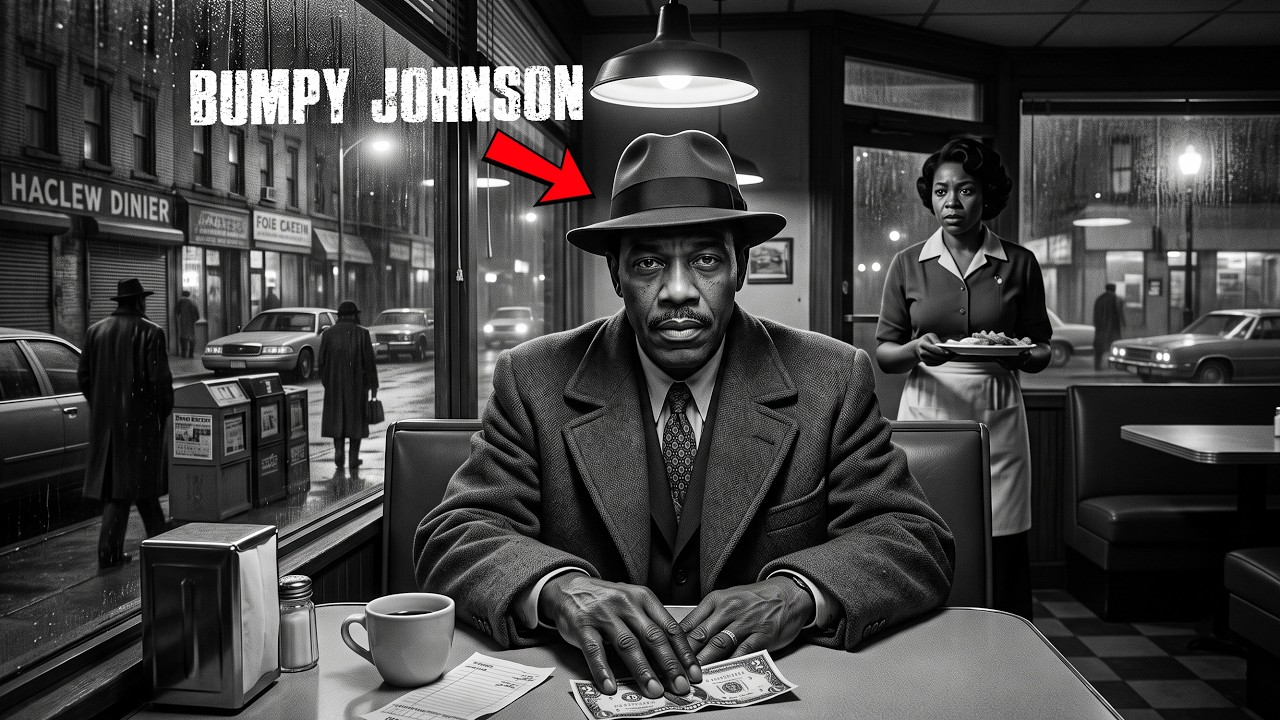
People called him “Bumpy” because of a bump on the back of his head that he had carried since childhood. He was born in Charleston, South Carolina, and was sent north at age ten to live with his older sister after trouble at home made the South unsafe for a boy his age. He grew up in these streets. He was not a large man.
He dressed neatly, simply, in a dark overcoat, a dark suit, and a hat he kept carefully cleaned. He read poetry and the papers regularly, and played chess in the back corner of a barbershop on 135th Street against men twice his age, beating most of them. He had already done time in the state prison. He worked as a collector and bodyguard for a Harlem banker, a woman from Martinique who had built her own bank from nothing and defended it publicly in the newspapers under her own name.
He was known on the street for a quiet demeanor that made other men uneasy. He was not known in January 1932 as the leader of anything. He was known as a man who worked for someone else. The change began the previous summer.
Downtown, the men who had made fortunes selling beer during Prohibition knew exactly what was on their minds. Prohibition was about to end, and the beer money would stop. They needed a new racket, and they looked at Harlem and saw its numbers banks. The numbers were already a working system, already a working network, already bringing in millions a year in bets.
The downtown men sent their people up to Harlem to make offers to the men who ran the banks—the bankers, the controllers, the runners—offers to buy them out or take them over. Some of the Harlem bankers took the money and walked away. Others refused to give up their piece of the only economy that had ever been theirs. When the violence started, it was not aimed at the street.
It was aimed at the men who ran the banks. And so Ellsworth Johnson, who had never wanted to be a leader, was pushed into the center of a war he had not started. He had been a lieutenant to the woman from Martinique, trusted with collecting her money and protecting her person. But she was gone, and the men who had bought out the others were coming for what remained.
He was standing in the back of the barbershop one evening, hat on, hands in his pockets, watching a game he had stopped playing because the pieces felt like a mockery of his real situation. A boy came in with a folded newspaper and handed it to him. On the front page, the headline said the city had just voted to repeal the law that had kept the numbers illegal. The men who had invested in his operation were expecting a return.
The men who owned the buildings where his runners took their slips were expecting protection. The police were expecting their cut. And the same men who had been his employers were now his rivals. He read the headline twice.
Eight years earlier, as a boy, he had been questioned in connection with a shooting and had kept silent. He had learned early that what you knew could get you killed, and what you said could kill you just as fast. That winter, on the corner where he grew up, the police, the politicians, and the organized crime figures downtown had all decided that the numbers were theirs by right. The men who had run them for a generation were either dead, bought off, or running scared.
But Johnson did not run. He stood under the awning of the barbershop, his hat pulled down against the wind, watching the lights come on in the apartment buildings where his runners were still taking slips for the night’s drawing.