A young American model believed she had married one of Hong Kong’s wealthiest and most notorious playboys. There was a glamorous engagement, a billionaire lifestyle, a wedding that was reported to have taken place in Singapore, and eventually the birth of a son. From the outside, Terry Holliday appeared to have entered a world most people could hardly imagine. But years later, that fairy tale fell apart when she discovered the marriage she thought connected her to property tycoon Cecil Chao had no legal foundation — a revelation that turned their private relationship into one of Hong Kong’s most talked-about society dramas.
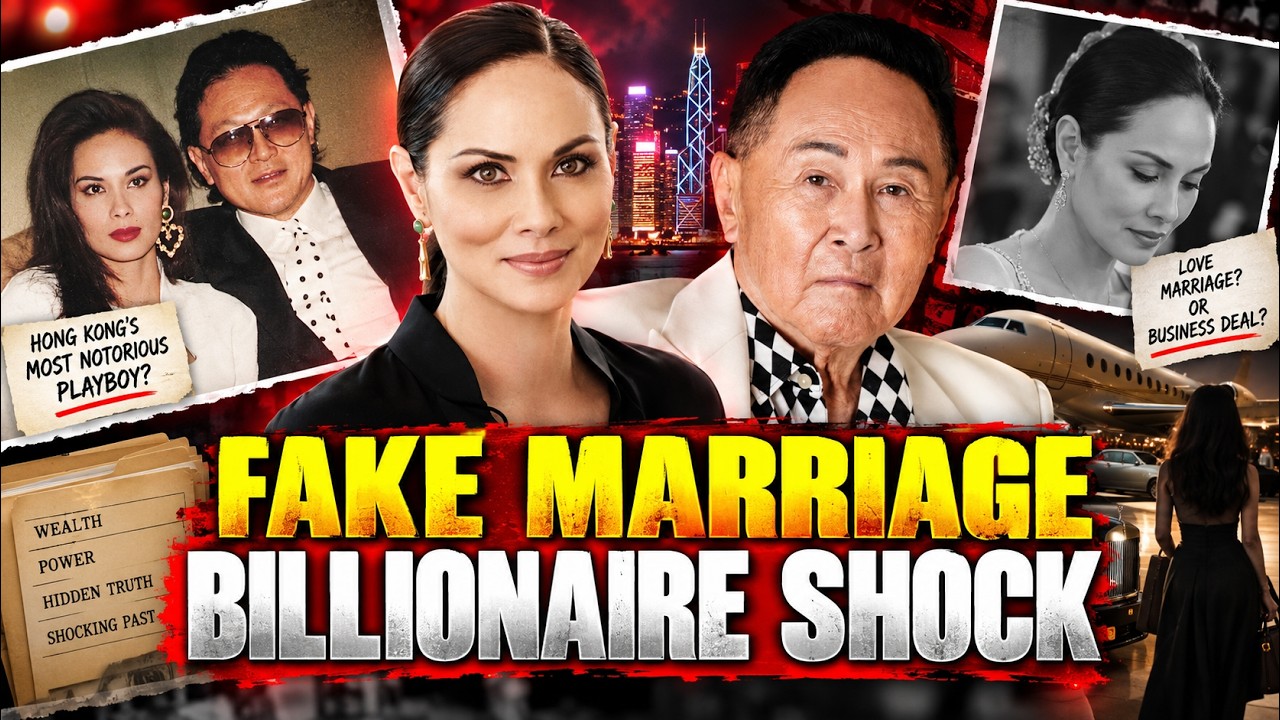
In the early 1990s, few circles in Hong Kong were more dazzling than the one surrounding billionaire property developer Cecil Chao. He was wealthy, frequently in the spotlight, and already building the reputation that would later make him one of the city’s most famous playboys. Into that world stepped Terry Holliday, a young American model whose life was about to become intertwined with his in ways she never expected. The age gap alone was striking.
Cecil was more than three decades her senior, yet the relationship moved quickly and openly. They met during Hong Kong’s nightlife scene, and it wasn’t long before Terry began traveling with him outside the city. Europe became part of their story, including a trip to Rome that Terry later recalled as a turning point. Cecil reportedly wrote her a romantic message on a wall there, and Terry later said that was when she realized she had fallen deeply in love.
By 1992, the relationship appeared to be heading toward marriage. An elaborate engagement celebration was held at Cecil’s villa in Pok Fu Lam, one of the locations most associated with the Chao family’s wealth and lifestyle. Reports from the time described a guest list filled with some of Hong Kong’s most prominent names, including Li Ka-shing, Michael Kadoorie, and David Tang. Guests were even transported on Cecil’s large yacht.
Then came a sudden shift in Terry’s personal life. She learned she was pregnant, and the timing was deeply emotional. According to reports from that period, she received the news at nearly the same time as her mother’s death. In later comments, Terry described Cecil as someone she relied on heavily during that painful period.
By early 1993, Hong Kong newspapers were circulating reports that Cecil and Terry had secretly married in Singapore. One report said the couple had moved up the wedding date because Terry was already in her early months of pregnancy. To the public, the story seemed complete. The young model met the billionaire, fell in love, became engaged in spectacular fashion, and then reportedly married him as they prepared for their first child.
This declared marriage also changed how the public viewed Terry. She was no longer just Cecil Chao’s girlfriend. In the eyes of many who followed the newspapers, she had become part of his family. She attended events, appeared in society coverage, and lived in a world that seemed to confirm the story again and again.
In June 1993, Terry gave birth to their son, Roman Chao. The arrival of Roman made the relationship seem even more stable and lasting. From the outside, every visible piece appeared to fit perfectly. There was an engagement.
There was a declared marriage. There was a child. There was a life clearly being lived within Hong Kong’s high society. Nothing in that picture hinted at the devastating legal issue that would later explode in front of the public.
By 1994, the glamorous image surrounding the couple began to crack. The relationship became unstable, and Terry entered a period where personal doubts could no longer be hidden behind society photos or public appearances. She had built her life around Cecil in ways that went far beyond romance. They had a son together, and Terry had spent years in a world where she believed her status was clearly defined.
As the relationship deteriorated, practical questions replaced emotional ones. What exactly had she been promised? What rights did she have? What would happen if she and Cecil separated permanently?
These questions pushed Terry to take a closer look at the legal foundation of everything she thought she had built. That was when the story shifted from a painful breakup to something far more alarming. The discovery was devastating. Terry eventually learned that the marriage she believed connected her to Cecil was not legally valid.
She thought she was married. The public thought she was married. The contemporary press reported that she was married. Yet legally, there was no valid marriage protecting her in the way she had assumed.
For someone who had spent years living inside that reality, this discovery was not merely a technical detail. It changed the meaning of everything. It affected her identity, her expectations, and potentially her financial position. Terry later described the emotional impact in memorable words, saying it felt like someone had killed her.
That quote captured something bigger than grief over a separation. She wasn’t just learning that the relationship had ended. She was discovering that a status she believed was real may have had no legal existence at all. The timing made the discovery even harsher.
Terry had a child with Cecil and had been publicly linked to him for years. Every decision she made while believing she was in a recognized marriage suddenly looked different. The future she thought she understood was no longer clear. In 1996, despite their romantic relationship collapsing, the pair appeared publicly together again at a major social event, in what was described as an attempt to maintain a workable relationship for the sake of Roman, who was still very young.
Cecil told the press they wanted to create a family environment for their son, even though they no longer lived together as a couple. The next phase for Terry centered on understanding what she had actually been promised. During the relationship, financial arrangements were discussed and legal documents were prepared. One document reportedly indicated that Cecil was providing financial support out of love and affection.
On paper, those words may have seemed reassuring while the relationship was stable. After the separation, they took on an entirely different meaning. Terry began to question whether the documents truly protected her interests or whether she had trusted arrangements that were weaker than she understood. She later claimed that if she had known the true legal position earlier, she might have made different decisions about staying with Cecil.
The conflict was no longer just about emotions. It became a fight over whether Terry had been properly protected while making life-changing decisions. By 1997, she took legal action against law firms connected to those arrangements, accusing them of negligence. That step moved the story into an entirely new arena.
The scandal was no longer just about Terry and Cecil. It became about professional advice, legal duties, and whether the systems meant to protect her had failed her. By 2000, the story had fully moved from romance to the courtroom. Terry was no longer fighting to save a relationship.
She was trying to determine what the collapse of that relationship had cost her. Her argument was built on the idea that she had relied on financial promises while deciding how long to stay with Cecil and how to plan her future. In court, she said that if she had realized earlier that those promises might not protect her as expected, she could have made entirely different choices. One key point was her claim that she might have ended the relationship as early as September 1994.
That detail sharpened the dispute. Terry wasn’t simply saying she deserved money after a breakup. She was arguing that her decisions were shaped by assurances she believed were genuine and reliable. The figures quickly became almost unreasonable.
Terry sought damages reported to exceed HK$300 million, turning an already dramatic society scandal into one of the most attention-grabbing legal disputes in Hong Kong’s high society at the time. The number represented the compensation Terry sought based on what she believed she had lost, not an amount Cecil had actually paid. One portion of the claim alone was estimated at millions of dollars for projected future credit card expenses. The amount was so extreme that the judge reportedly described part of it as astronomical.
That single word captured the strange distance the case had traveled. A relationship that began with romance and luxury ended with lawyers calculating the potential future value of an extravagant lifestyle. The emotional story had turned into a mathematical debate about what a life of billionaire-level security should be worth. The legal battle also forced an uncomfortable question into the open: how do you measure the value of promises made inside a relationship where one party controls enormous wealth?
For Terry, the case was never just about accessing money. She had lived for years in a world shaped by Cecil’s resources and argued that financial security had influenced her choices. The court, however, had to separate emotional expectations from obligations that could actually be enforced. Terry’s lawsuits against the legal firms added another layer.
She claimed that the lawyers involved in drafting the financial arrangements failed to protect her properly. It was a powerful shift in the story because it moved responsibility beyond Cecil alone. Terry was effectively saying she trusted professional advice and still ended up in a position where important agreements did not provide what she thought they did. The claims directed attention to how those documents were drafted, the advice she received, and whether she had been given an accurate understanding of her legal position.
In the end, reports indicated Terry received a significant financial settlement from Cecil, though public records do not support turning that into a dramatic claim about a specific final amount unless confirmed by a reliable source. The HK$300 million figure was tied to the legal battle, not a confirmed payment. What is clear is that the relationship ended with financial arrangements substantial enough to remain part of the story for years afterward. Afterward, Terry gradually moved away from the intense attention that had surrounded her.
Her focus shifted increasingly toward raising Roman, the son who connected her to Cecil permanently even after the romance and court battles ended. Cecil, meanwhile, remained one of Hong Kong’s most famous wealthy figures. His reputation as a womanizer did not fade. If anything, it grew stronger over the years with the help of his provocative public comments about his private life.
Years later, Hong Kong media still describes the saga as one of the city’s most unforgettable real-life dramas. That description makes sense because the story contained nearly every element of that genre. There was immense wealth, a large age gap, elite society, a child, disputed legal status, public humiliation, court battles, and claims of hundreds of millions of Hong Kong dollars. Yet the real power of the story comes from something simpler.
Terry believed she understood the life she was living. Then the relationship ended, and every important assumption had to be tested against the law. That was where the illusions faded. What once seemed certain turned into a series of questions about documents, promises, and responsibility.
In the end, the most shocking part of Terry Holliday’s story wasn’t the money, or even Cecil’s famous reputation. It was the difference between appearance and reality. A relationship can look official, permanent, and protected when viewed through photos, headlines, wealth, and public status. But none of those things replace legal clarity.
Terry’s years with Cecil ended up exposing that truth in one of the most dramatic ways possible.