Billy the Kid was being tracked by law enforcement years before Pat Garrett became the name tied to his final chase. The real story is not a single dramatic manhunt at the end of his life, but a long paper trail that began when he was still a teenager. His real name was Henry McCarty, though he later used names like Kid Antrim and William H. Bonney.
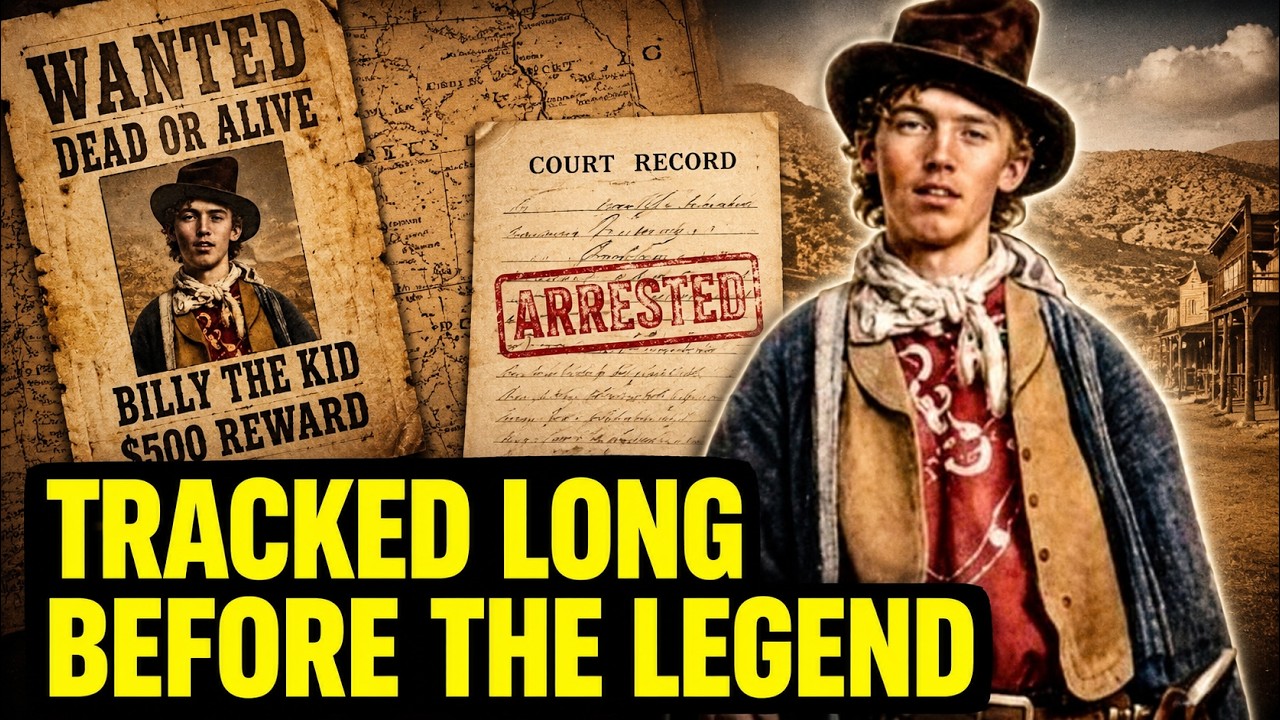
Billy’s first recorded brush with the law was not a huge outlaw event. He was a teenager when he was arrested in Silver City, New Mexico, and jailed for theft. That small arrest placed him inside the legal system, and when he escaped, he was no longer just a boy mixed up in a local case. He was a runaway prisoner, and that changed how officials saw him.
The different names Billy used can make his story feel confusing, but they also explain why records are so important. Court records might use one name, while a warrant used another. In the Old West, using different names was common, especially for people who moved often or wanted distance from a past mistake. But instead of hiding him, each new name became another clue that connected him to earlier records.
Billy’s movements took him through a border world where Anglo settlers, Hispanic communities, Native American groups, army posts, and ranch networks existed close together. These networks allowed him to find work and shelter, but they also meant people talked. Letters, telegraph lines, travelers, and newspapers all carried information. His life was not invisible, and that is why he could be both hard to catch and easy to trace.
The Lincoln County War marked a turning point. Billy became involved in a violent conflict that produced court cases and newspaper reports, making him more visible. By 1878, territorial records already placed him inside criminal cases. He was not simply a young cowboy pulled into one local feud.
He was a man whose name had become attached to official attention long before the famous final chase. One of the most important records in Billy’s story is the correspondence between him and Governor Lew Wallace. In 1879, with legal trouble closing in, Billy reached out to Wallace about possible protection and a deal. The two sides communicated directly, showing that Billy was not a man hiding blindly.
He was a young man trying to bargain with a governor while already carrying years of legal trouble behind him. Billy did testify, but the legal promise did not turn into the clean freedom he expected. The local district attorney did not simply drop the charges. The legal system remained dangerous for him, and the conflict in Lincoln County did not end neatly.
Billy was later tried, convicted, and held in Lincoln, but in April 1881 he escaped, killing two deputies during the breakout. Pat Garrett’s success in tracking Billy was not magic. He understood that Billy had favored areas, friendly communities, and habits that made him traceable. Fort Sumner mattered because Billy had friends there and had spent time in that area before.
Ranches, friends, enemies, and lawmen all formed a map around him. By the time Garrett rode into Fort Sumner, the trail was already years old. Billy’s story has always depended on scattered evidence. No single record explains him.
Court records, warrants, and legal documents show how officials saw him while events were still close to them. They make him more real. The hunt did not begin when Garrett rode into Fort Sumner.
By then, the trail had been built piece by piece, long before the famous end.