Former mob boss Michael Franzese has spent years ranking films and television shows about organized crime. In his latest ranking, he narrowed the focus to television alone, listing what he considers the ten best organized crime series ever produced.
Franzese said he judged each show on two separate questions. Was it great television? And did it understand how that life was actually lived? He noted that those are very different questions, and that his top pick will likely stir some debate.
He also made clear that authenticity matters more to him than style. Some shows get the clothing right, some get the weapons right, and some even get the dialects right, but dialogue and realism carry the most weight. When a series strays too far from reality, he said, he simply stops watching.
At number ten, Franzese placed Wiseguy, a series he said many viewers may never have seen. Ken Wahl starred as a undercover agent for a fictional law enforcement agency, and Ray Sharkey played the main mob figure. Franzese called it one of the first genuinely good organized crime shows on television, though he stopped short of calling it accurate enough for the top of the list.
At number nine he placed The Offer, a series about the making of The Godfather. Franzese said he knew Joe Colombo well and considered him a mentor, and he praised the show as brilliantly done. He singled out the studio owner, a German character, as his personal favorite.
Number eight went to Harlem Godfather, a series about Bumpy Johnson and the Harlem crime families. Franzese disputed its central premise, arguing that the Genovese family was not deeply involved in Harlem narcotics. He acknowledged that Vincent Gigante, known as "Chin," was imprisoned on drug charges, but insisted that during his own era, drug dealing was forbidden. He still praised the acting and said the show belongs on the list.
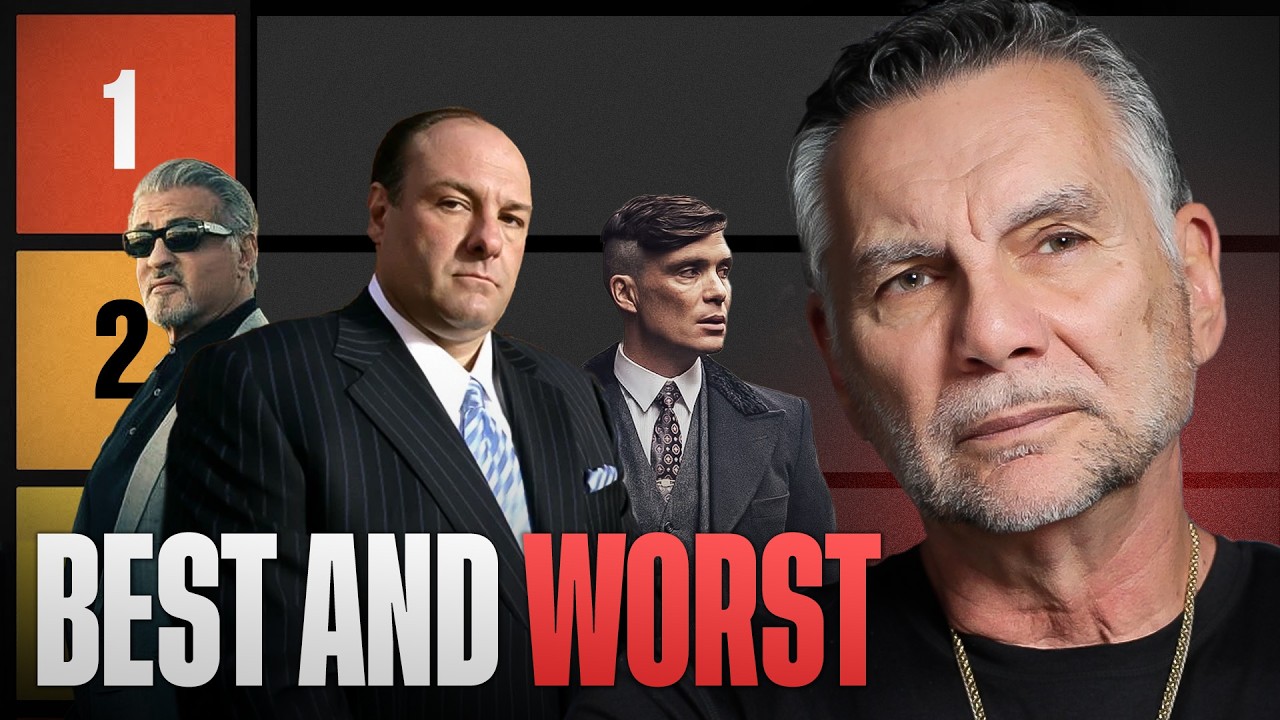
At number seven, Franzese chose Peaky Blinders. He admitted he could not finish it at first because he could not understand the accent, and said he has needed translators during question-and-answer sessions in the United Kingdom. His son-in-law persuaded him to turn on subtitles, and he then watched every season. He noted that women played major roles in the show, something he said rarely happens in American organized crime.
Number six was Narcos, which he called brilliantly made. Franzese said the Mexican cartels had more money and weapons than his world ever did, but he argued they lacked the structural organization of the Mafia. He described the cartels as resembling an independent government with artillery close to that of the Mexican state.

At number five, Franzese placed The Wire, even though he said it is not really about organized crime. He called it possibly the most honest crime program ever made, praising its treatment of the drug trade and social issues. He noted it ran for five seasons and said anyone who has not seen it should.
Number four was Boardwalk Empire, set during Prohibition in Atlantic City. Franzese said the show compressed history but was beautifully made, and he highlighted its portrayal of Rothstein, Luciano, Lansky, and a young Capone. He repeated his view that Prohibition was what made the Mafia powerful in America, recalling that New York alone had roughly 36,000 speakeasies.
Number three was Gomorrah, which he called the most authentic Italian crime series on television. He said it shows the chaos and clans of the Camorra, and he explained why Naples is nothing like New York. He also drew a sharp distinction between the Italian Mafia and the American version, noting that in Italy they pursue politicians and law enforcement, something he said was forbidden in his world.
At number two, Franzese chose Tulsa King, acknowledging he would be attacked for it. He said Sylvester Stallone does a great job as Manfredi and that the premise is not entirely unrealistic, since organized crime goes wherever there is money to be made. He added that he has never met Stallone but has met his brother Frank, and that he could imagine Stallone playing his father in a film.

Number one, unsurprisingly, was The Sopranos. Franzese called it the giant that paved the way for every great television series that followed, whether about the Mafia, gangs, or anything else. He said the show was highly entertaining with wonderful characters, though he pointed to one major inaccuracy: a mob boss seeing a psychiatrist. In real life, he said, both the boss and the psychiatrist would be dead by the end of the week.
Franzese also shared a personal story about the show. Shortly after leaving prison, while on parole, a producer friend gave him work reading scripts at Universal Studios. His agent then called with an offer to serve as a consultant on a new Fox show about the Mafia being developed by David Chase. He turned it down on his friend's advice, and the project later became The Sopranos on HBO. He called it not the smartest decision of his life, but noted that he survived.
He closed with a few honorable mentions. He praised Lilyhammer, McMafia, and The Penguin, the last of which he described as more like a comic book but very well done. He also corrected his own list to include the film Bugsy, starring Warren Beatty, before reminding listeners that it was a film and not a television series.
Franzese ended by reflecting on why audiences remain fascinated by this world. He said the best shows understand that the life was about power, money, fear, and loyalty, and whether you can trust the person standing next to you. Violence, he said, was only part of it. He also stressed that omertà means the vow of silence, not a vow to lie, steal, and kill, a point he said many people misunderstand.