MOSCOW — Lavrentiy Beria, the man Joseph Stalin once chillingly introduced to President Franklin Roosevelt as “our Himmler,” was dragged from a Kremlin meeting, smuggled out in the trunk of a car, and executed in a bunker beneath Moscow after begging for his life on his knees, according to historical accounts of one of the most dramatic power struggles in Soviet history.
Beria, who served as the longest-lived and most influential chief of Stalin’s secret police, met his end on December 23, 1953, shot through the head by Colonel-General Pavel Batitsky after a secret trial from which he was afforded no defense counsel and no right of appeal. He was 54 years old.
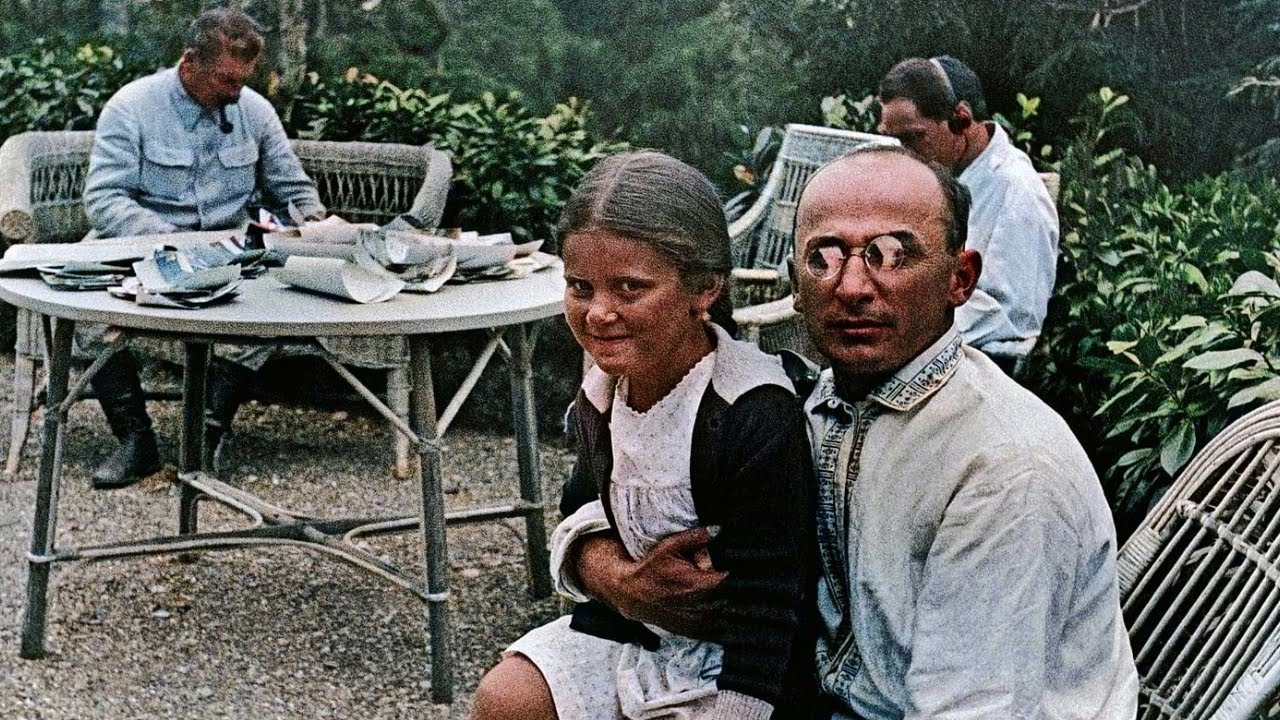 The execution marked the violent conclusion of a life steeped in blood — a career that saw Beria orchestrate purges, oversee the vast gulag system, and personally sanction the massacre of thousands of Polish officers during World War II. Yet in his final moments, the man who had instilled terror across the Soviet Union for decades collapsed in tears, screaming and pleading for mercy as armed soldiers surrounded him.
Beria’s path to power began in humble circumstances. Born to a deeply religious mother and a landowner father, he allegedly joined the Bolsheviks in March 1917. By 1920, he was working in Azerbaijan when the Red Army captured Baku.
He narrowly escaped execution — not out of mercy, but because there was insufficient time to arrange his death. Imprisoned briefly, he soon embarked on a career in state security that would span more than three decades.
By 1922, Beria had become deputy head of the Georgian branch of the OGPU, an early Soviet intelligence service. Two years later, he was involved in suppressing a nationalist uprising in Georgia, an operation that resulted in the execution of 10,000 people. The massacre cemented his reputation as a feared figure — a man not to be crossed.
His proximity to Stalin proved decisive. Beria helped Stalin consolidate power and was instrumental in dismantling Turkish and Iranian intelligence networks across the Caucasus. In 1931, he was appointed First Secretary of the Communist Party of Georgia and became a member of the Central Committee of the Communist Party of the Soviet Union.
Three years later, he began attacking other party members and ordering executions to curry favor with Stalin. His breakthrough came when he fabricated a conspiracy, claiming he had personally thwarted an assassination attempt on Stalin. From that moment, he became one of the Soviet leader’s most trusted operatives.
Beria’s loyalty was absolute and his methods merciless. He was willing to crush anyone deemed disloyal to Stalin or to the cause of communism. But it was his leadership of the NKVD — the Soviet secret police — for which he is most remembered.
He initially served as deputy head of the NKVD in August 1938, but soon took full control. Nikolai Yezhov, his predecessor, was reportedly strangled by Beria himself. Beria then purged the NKVD from within, ensuring that those in positions of power were loyal to him rather than to Yezhov.
Throughout the 1930s, Beria orchestrated a series of purges that sent thousands of politicians, writers, scientists, and peasants to prisons where they were tortured barbarically or dispatched directly to execution grounds. It was said that during these years, everyone lived in fear — that at any moment, a knock on the door in the middle of the night could prove fatal.
Beria instilled a reign of terror upon the Soviet people, mercilessly crushing any dissent. For decades, he had been involved in murders and killings, and he was the primary force behind the creation and expansion of a vast network of forced labor camps across Soviet territory — the gulags.
More than 500 camps were established, where horrific treatment and punishment were routine. Many sent to the gulags perished from the conditions. A former prisoner later testified: “The gulags existed before Beria, but he was the one who built them on a mass scale, industrializing them.
Human life had no value for him.”
 Stalin understood precisely what kind of man Beria was. His comparison to Heinrich Himmler — the architect of the Holocaust who led the SS and oversaw the mass murder of millions — was not made lightly. It was a recognition of shared brutality.
As World War II engulfed the Soviet Union, Beria became an integral part of Stalin’s policies and his treatment of his own people. The Molotov-Ribbentrop Pact, an agreement between the Soviets and Nazi Germany, stipulated that Poland would be carved up between the two nations following invasion. When Hitler’s forces struck from the west, Stalin sent his forces in from the east.
The Red Army was ruthless. The remaining Polish army was rounded up and sent to camps. But one event would define Beria’s infamy: the Katyn Massacre.
This was a series of executions in which 22,000 members of the Polish military, along with civilians including doctors and priests, were killed en masse.
Beria proposed to Stalin that all captive members of the Polish officer corps should be killed. Stalin approved. It was Beria who sanctioned the slaughter — a massive criminal act that was only discovered when mass graves were located.
The NKVD arranged a cover-up, but Beria continued his reign of terror unabated.
In 1941, he arranged another massive purge — this time of the Red Army itself. Five hundred of his own NKVD agents and operatives were executed, along with 30,000 members of the Red Army. The timing was catastrophic.
The Nazis would soon break their non-aggression pact and invade the Soviet Union during Operation Barbarossa, which saw enormous initial losses for the Red Army.
Officers spoke of the purges in hushed tones, coining a euphemism for being executed: “having a coffee with Beria.”
Known as Stalin’s most wicked henchman, Beria was actively involved in mass murders — but he was also notorious for committing rape on the streets of Moscow, prowling in his car looking for women to assault. He was a terrible and brutal man, and many of his true crimes remain classified in Soviet archives to this day.
Within the military, he rose to the rank of Marshal of the Soviet Union — the highest rank — and was involved in overseeing Soviet attempts to build an atomic bomb, forcing gulag workers to labor in uranium mines.
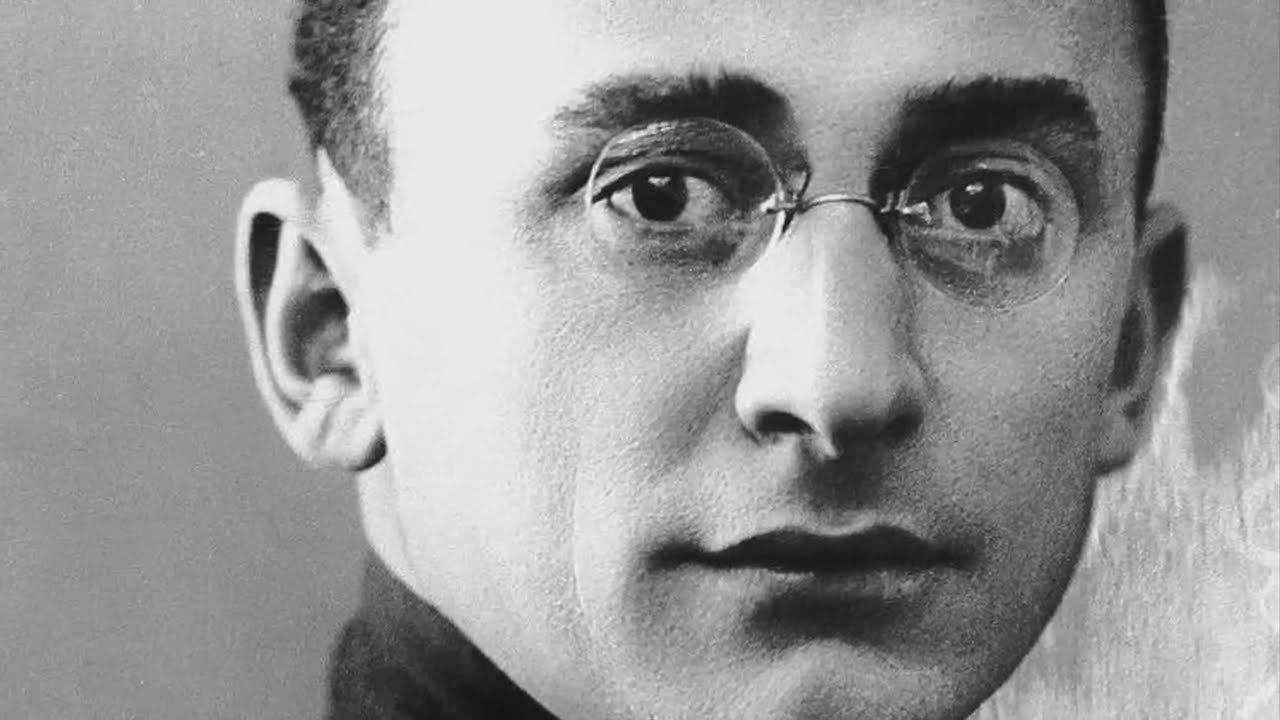 But after the war, as Stalin approached 70, a struggle for power began. Beria resigned as NKVD chief in January 1946 but remained in control as deputy prime minister. When Stalin died in March 1953 from a cerebral hemorrhage, everything changed.
Some pointed fingers at Beria, accusing him of poisoning the Soviet leader. He was allegedly mocking Stalin as he lay dying. But when Stalin died, a deadly race for the top job began.
Beria appeared well-positioned. For years, he had kept tabs on his rivals, creating dossiers of compromising material that could be used to manipulate any of them. He sought an agreement with an old ally, Georgy Malenkov, and became powerful as the controller of the Ministry of State Security and Internal Affairs — placing him in charge of the secret and normal police and giving him a small private army.
He began speaking of easing Stalin’s policies, but many feared Beria as much as they had feared Stalin. They believed he would make a power play. Instead, his downfall was orchestrated by Nikita Khrushchev, the Secretary of the Party Central Committee.
Khrushchev quietly and discreetly secured the support of other powerful figures, including Malenkov and senior army generals. He organized a meeting and launched an attack on Beria. Taken aback, Beria was confused by what was happening.
Khrushchev accused him of being in league with the British, of being paid off by British intelligence services, and declared he was no true communist.
A motion was put forward to dismiss Beria from his position. He soon realized what was happening. From behind his desk, Malenkov — his former ally — turned against him, pressing a button concealed beneath the desk.
It was a signal for Marshal Georgy Zhukov to order a group of armed soldiers into the room to seize and arrest Beria.
Beria’s men had been guarding the Kremlin at the time. He was held in a small cell until nightfall, then smuggled out in the boot of a car. He was taken to a Moscow guardhouse and then to the bunker of the Moscow Military District headquarters.
He was tried by a special session of the Supreme Court of the Soviet Union on December 23, 1953. He had no defense counsel and no right to appeal. The outcome was obvious.
He was accused of treason — allegedly attempting to negotiate peace with Hitler during World War II. He was accused of terrorism in connection with the 1941 purge of the army, and of counter-revolutionary actions during the Russian Civil War. Along with six other defendants, Beria was tried and sentenced to death.
 The six others were dragged from the courtroom and shot immediately. But Beria was not. He was separated from the others, and he fought back — striking out, kicking and screaming.
He knew his death was imminent.
Surrounded by Soviet officials, the man who had been compared to Himmler — the man with the blood of thousands on his hands — screamed and cried in his final moments. He collapsed to his knees in tears, begging for mercy, begging to be spared.
He was then shot through the head by Batitsky, who had been selected to perform the execution. His body was cremated.
Some believe, however, that it was a body double who stood trial — and that Beria had actually been executed months before his supposed death on December 23, 1953.
After his death, more rumors emerged about his life. It was claimed he was also a serial killer, known for abducting girls off the street, abusing them, and murdering them. Some were allegedly buried in his wife’s rose garden.
It was said he had a torture chamber in the basement of his Moscow home and that an underground passage likely led to burial sites of these young women. Allegedly, even the United States was aware of these claims.
Lavrentiy Beria was executed following power plays by other politicians in the wake of Stalin’s death. He should have seen what was coming. In a different world, he could easily have succeeded Stalin as the man at the top of the Soviet Union.
His brutal ways and leadership over the NKVD could have secured him the top job.
But things were not to be for the evil and brutal man Stalin referred to as “my Himmler.” The torturer who built the gulag system on an industrial scale, who ordered the slaughter of 22,000 Polish officers, who purged his own soldiers on the eve of Nazi invasion, died on his knees — weeping, begging, and utterly alone.