Beneath the smell of fresh pizza on Prince Street was something far darker. A basement that stored not just flour and cheese, but bricks of dope. From the 1950s through the 1980s, one Lucchese crew built an empire that ran from Little Italy to the Mediterranean.
They laundered duffel bags of cash through neighborhood banks and moved heroin by the kilo through a pizzeria. They even helped trigger the paranoia that made Joe Valachi flip and expose the mafia in 1963.
This was the Prince Street crew, led by Joseph "Joe Beck" DiPalermo and his brothers Charlie and Peter. They were not shy about narcotics. They embraced them.
By the mid-1950s, Joe Beck was already called the dean of dope dealers. When federal agents swept up 60 members of his ring in 1957, the fallout put not just Joe Beck in the dock, but Vito Genovese himself. That trial and the paranoia it sparked shook the mafia to its core.
The Prince Street crew was born out of Manhattan's Little Italy, a neighborhood where Sicilian immigrants carved out both community and rackets. At the center of it was Joseph "Joe Beck" DiPalermo, born on June 8, 1907, to parents from a town near Corleone, Sicily.
He grew up on Elizabeth Street and was already on police blotters as a teenager, with his first arrest in 1925. By 1930, census takers listed him as a painter, but by then DiPalermo was already moving in the underworld.
Joe Beck came up under the Gagliano faction, the Lucchese family before Tommy Lucchese took control. Like many early Lucchese members, he was Sicilian through and through, with three of his brothers, Charles and Peter among them, joining the life.
Charlie would later marry into the Cuomo family, linking the crew to Ralph Cuomo, the man behind Ray's Pizza. Peter, meanwhile, would eventually become captain of the crew by the 1980s, replacing Joe Beck.
Joe Beck was not just another neighborhood hood. In January 1943, his name surfaced in one of the most politically charged mob hits in American history: the assassination of anti-fascist newspaper editor Carlo Tresca on Fifth Avenue.
Investigators suspected Carmine Galante was the trigger man, while Joe Beck and possibly his brother Peter were accomplices. The getaway car was traced to a man living just doors away from DiPalermo's Elizabeth Street home.
No man was ever convicted of the Tresca murder, but it tied Joe Beck's crew to major mafia affairs and forged a lasting bond between Joe Beck and Galante, two men who would later dominate the narcotics trade.
By the late 1940s, Joe Beck had earned a reputation as both an enforcer and a rising narcotics trafficker. Despite his unassuming look, he was short, balding, and wore horn-rimmed glasses, newspapers still called him a most vicious criminal.
He dabbled in bootlegging and forgery, but increasingly his specialty was heroin. By the 1950s, his growing prominence made him the de facto captain of the Lucchese's Manhattan crew, running an operation centered around Prince and Elizabeth Streets.
The DiPalermo brothers were building a drug syndicate that would reshape mafia history. It all began on Prince Street.
By the mid-1950s, Joe Beck DiPalermo had earned a title whispered across New York's underworld: the dean of dope dealers. From his base in Little Italy, he had built a narcotics ring of nearly 60 men and women, moving heroin sourced from Corsica and Mediterranean labs straight into Manhattan.
In July 1957, the Federal Bureau of Narcotics and FBI agents struck, making 60 arrests in one sweep. There were couriers, middlemen, and street dealers. But two names stood out: Joe Beck DiPalermo and Vito Genovese, the boss of the Genovese family.
Their joint trial in 1959 became one of the most famous drug cases in mob history. Both men were convicted and sentenced to 15 years in prison. Vito Genovese died in prison. Joe Beck lived to see another day.
But the trial's true impact came from the testimony of a courier in Joe Beck's ring, Nelson "Nelly" Cantalupo. He was a Puerto Rican dope runner who became a rat and a federal witness.
His words not only brought down Vito Genovese, they unleashed a wave of paranoia. Behind bars in Atlanta, Genovese demanded vengeance against potential informants. That climate pushed one soldier, Joseph Valachi, over the edge.
In 1962, Valachi killed a fellow inmate he thought was sent to silence him. Racked with guilt, Valachi flipped in 1963 and became the first mob insider to publicly expose Cosa Nostra at the Senate hearings. In a twist of fate, Joe Beck's dope business indirectly cracked open the mafia's code of silence.
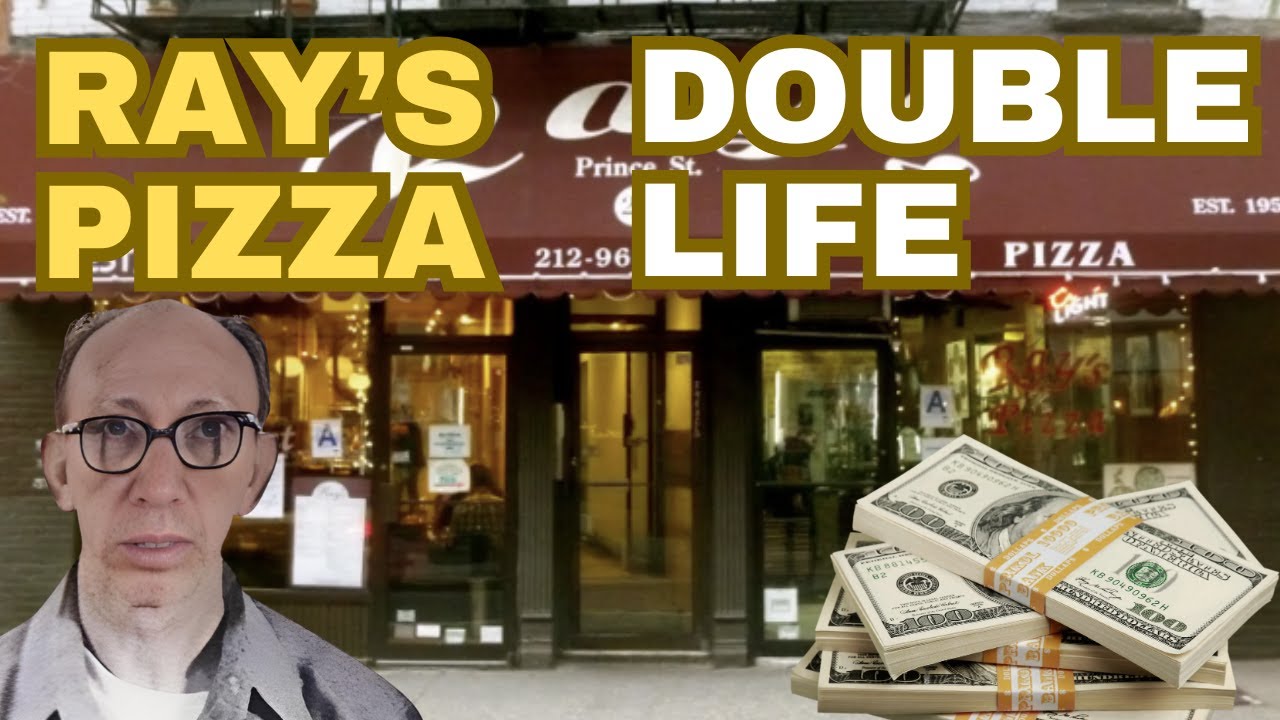
While Joe Beck sat in prison, his brothers and allies kept the pipeline running. In 1959, a young hood fresh out of prison, Ralph Cuomo, opened Ray's Pizza at 27 Prince Street.
To the public, it was just another neighborhood slice joint. But to the DiPalermos, it was the perfect front. Cuomo became their distributor and partner, literally part of the family after Joe Beck's brother Charlie married Cuomo's sister, Marian.
Ray's basement, with its whitewashed walls and dirt floor, became a packaging depot. Heroin shipments smuggled from Sicily and France were cut, bagged, and moved out by the kilo. Upstairs, customers bought slices. Downstairs, duffel bags of cash piled up.
The crew laundered the proceeds through East River Savings Bank, where they had an insider on payroll. Al D'Arco, who later became the acting boss of the Lucchese family, recalled that one of Joe Beck's sons hauled bags of bills to the bank almost daily.
This was not pocket change. By the 1980s, the federal government estimated their take at $2 billion. But not all that cash went back into the family. Wise guys from Prince Street were known for being notorious degenerate gamblers.
Cuomo himself blew fortunes at the racetrack in Atlantic City. D'Arco once said he would be at the racetrack all the time, describing a cycle where heroin profits fed gambling losses, which in turn drove the need for more dope.
The Prince Street network tapped into the broader French Connection pipeline, with Lucchese traffickers like Angelo Tuminero working with Bonanno powerhouses like Carmine Galante, moving kilos through East Harlem and Brooklyn.
Even after the French Connection was supposedly broken, Prince Street kept the heroin flowing, often through Sicilian middlemen. By the 1980s, the Sicilian Zips were running their pizza connection across the United States.
But decades before them, the DiPalermos and Ralph Cuomo had already pioneered the model: a pizza shop doubling as a heroin hub. They were never indicted in the Pizza Connection case, which suggests either blind luck or a separate supply chain.
Make no mistake, Ray's Pizza was not just famous for its slices. In mob lore, it is as notorious as John Gotti's Ravenite Social Club, except this joint was about dope, not sitdowns.

In its prime, the Prince Street crew embodied the mafia's great contradiction: a ban on narcotics that was little more than a myth. Joe Beck and his brothers showed that with the right front, the right connections, and the right neighborhood cover, you could run one of the most powerful heroin pipelines in America right under the city's nose.
By the 1970s, the Prince Street crew was not just about heroin anymore. They expanded into quaaludes and cocaine, chasing new markets. In 1977 and 1978, DEA agents uncovered a clandestine lab on Ellis Street in Staten Island tied directly to Joe Beck's crew.
In August 1978, Joe Beck and three co-defendants were convicted of conspiring to manufacture and distribute quaaludes. At nearly 70 years old, Joe Beck proved he was still in the game. Prison had not changed him at all.
The biggest blow came in April 1986, when New York State announced one of the largest narcotics busts in its history: 38 indictments, including Joe Beck, his brother Charlie, and their associates.
Investigators estimated the ring sold $2 billion worth of drugs, feeding nearly 100,000 addicts every day. Also arrested was Gus Sperling, son of Harlem heroin legend Herbie Sperling, showing the Prince Street pipeline reached deep into a multi-family network.
By the late 1980s, indictments had caught up with Joe Beck. His health had declined, and control of the crew passed to his younger brother Peter, known as Petey Beck. According to future acting boss Al D'Arco, Petey became a made man and a captain, overseeing what was left of the Prince Street operation.
But the crew's glory days were fading, and even inside the Lucchese family, resentment was growing. D'Arco once confronted Petey face to face for letting dope flood Little Italy's own streets, a dangerous breach of mob protocol.
On January 10, 1992, Joe Beck DiPalermo died at the age of 85 after six decades in the narcotics trade. He had spent nearly half his life behind bars. He never flipped, never broke with the mafia's code, and never stopped hustling.
As one account summed it up: get the drugs, sell the drugs, make the money. That was Joe Beck's creed to his final days.
One of the most fascinating side stories of the Prince Street crew is Joseph Bonanno. Born around 1933, Bonanno grew up in lower Manhattan and was first arrested alongside Ralph Cuomo in the 1956 Botch Prince Street holdup, tying him to the DiPalermo circle early.
But he never earned his button with the Luccheses. Lucchese leaders saw Bonanno as reckless, undisciplined, and a broker. He was too prone to drinking and smoking pot to be trusted.
By the late 1970s, Bonanno had drifted from Little Italy to Bath Beach in Bensonhurst, Brooklyn, and hooked up with Anthony "Old Man" Sparrow, a Bonanno captain who would later become acting boss of the family.
Sparrow saw some use in Bonanno's stickup skills and underworld connections. By the late 1980s and early 1990s, Bonanno was officially working under Sparrow and mentoring the young Bath Avenue crew.
That crew included future names like Paulie G, Jimmy Kandra, Joey Calco, and Tommy Reynolds. The kids thought Bonanno was washed up, but he taught them about armed robberies, burglaries, and how to navigate mob politics.
Even if Bonanno was washed up and a lazy pot smoker, he was a formerly inducted member of the Bonanno family, so they had to listen to him. More importantly, Bonanno was close to the one person who mattered in Bath Beach: Anthony "Old Man" Sparrow.

Sparrow was an old-timer who became consigliere and later underboss of the family, and even acting boss. He was a huge money maker, known for making millions off illegal fireworks.
Even so, Bonanno had a shaky reputation. Bonanno elders saw him as a bad influence, egging the Bath Avenue kids to deal crack without restraint. Bonanno's journey shows how fluid loyalties could be in Cosa Nostra.
He started out as a Lucchese associate, part of the Prince Street orbit, but ended his career as a Bonanno in Bath Beach. His story underscores that for mob associates, loyalty was often to individuals, to a DiPalermo or to a Sparrow, rather than to the family name.
The Prince Street crew was unlike most mafia crews. This was not just a collection of associates and wise guys working for a capo. This was a family within a family, bound by blood.
Joe Beck DiPalermo led with his brothers Charlie and Petey at his side, and even their brother-in-law Ralph Cuomo, who became indispensable through Ray's Pizza. Few crews in mob history were so heavily tied to one surname and one bloodline.
If the Gotti brothers defined a Gambino era, the DiPalermos defined the Lucchese's Little Italy crew. Above all, they were remembered as the dope crew.
While Cosa Nostra officially condemned narcotics, the DiPalermos specialized in it. For decades, Lucchese bosses looked the other way because the heroin profits were just too rich.
From Corsican and Sicilian connections to domestic labs, the Prince Street boys were knee-deep in it. Long before the Pizza Connection trial made heroin pizzerias infamous, they pioneered the tactic. Ray's Pizza at 27 Prince Street doubled as a heroin depot as early as the 1960s.
But their success came at a heavy price. Unlike other crews who kept drugs away from their own neighborhoods, the Prince Street crew sold right outside their doorsteps.
In the 1980s, heroin was peddled just blocks from St. Patrick's Old Cathedral School. Even the nuns noticed. One famously marched out and scolded the gangsters for poisoning children, including their own grandchildren.
Al D'Arco, later the acting boss of the Luccheses, nearly started a war over this, threatening Petey Beck himself if sales to local kids continued.
By the 1990s, the crew was just a shadow of its former self. Joe Beck died in 1992. Petey Beck aged out. Ralph Cuomo kept Ray's Pizza running until he pleaded guilty in 1998 to heroin charges and went to the pen.
When Ralph Cuomo died in 2008 at the age of 75, Ray's finally closed, erasing the last physical trace of the crew. The remnants of Prince Street were absorbed into other Lucchese factions. As of today, the FBI reports that the crew's capo is unknown.
In the end, the Prince Street legacy is twofold. They were the most infamous mafia dope crew in New York history, and they were proof that the mafia's so-called ban on narcotics was a myth.
Their story is one of family bonds and poison profits, of power won and neighborhoods destroyed. Even today, when you hear the name Ray's Pizza, some remember the slices, but mob historians remember the heroin.
The story of the Prince Street crew is a story of contradiction inside the mafia. A crew that specialized in what was supposedly forbidden: narcotics. A crew so tightly bound by blood, the DiPalermos, Charlie, Petey, Joe Beck, and even their brother-in-law Ralph Cuomo, that it became a family within a family.
They pioneered the idea of the pizzeria as a heroin depot decades before the Pizza Connection trial. They laundered millions through neighborhood banks while peddling dope just steps away from schools and churches.
For nearly four decades, Lucchese bosses looked the other way because the profits were too great to resist. In the end, Ray's Pizza was not just known for slices. It became infamous as a symbol of the mob's poison profits.